Traditional Balkan Pogaca Bread with Sesame Seeds (High-Protein, Wholegrain)
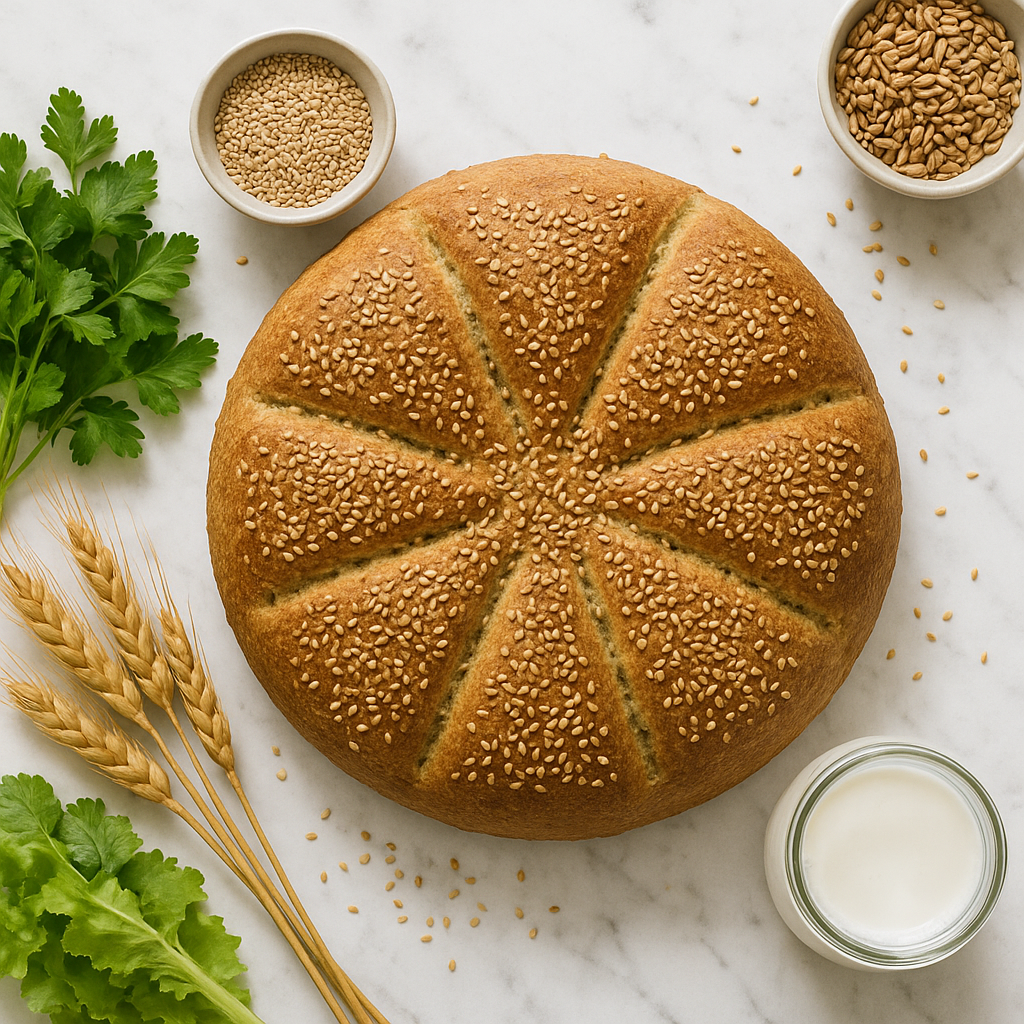
Traditional Balkan Pogaca Bread with Sesame Seeds is a wholesome, protein-rich loaf rooted in the everyday kitchen traditions of the Balkans, where home bakers have long understood that good bread does not need to be complicated or fussy. What sets this particular version apart from other quick bread recipes is the combination of wholegrain spelt flour, Greek yogurt and eggs working together to produce a loaf that is genuinely satisfying at breakfast rather than leaving you hungry an hour later. At 8 grams of protein and 3 grams of fibre per slice, this is the kind of bread that earns its place on the table. It is also a baking powder leavened loaf, which means no yeast, no proofing time and no waiting around. The whole process from mixing bowl to oven is straightforward, and the result is a round, golden bread that feels rustic and nourishing rather than processed. For anyone who wants real bread at breakfast without spending their morning tending dough, this recipe makes a convincing case for itself.
Wholegrain spelt flour forms the backbone of this recipe, and it brings more to the loaf than regular white flour ever could. Spelt is an ancient grain with a nuttier flavour than modern wheat, and the wholegrain version retains the bran and germ, which means it delivers fibre, B vitamins and a slower carbohydrate release that supports steadier energy levels through the morning. Oat flour is blended in alongside it, softening the crumb and adding its own soluble fibre, specifically beta-glucan, which is well documented for supporting healthy cholesterol levels. The 250 grams of full-fat Greek yogurt is doing significant structural work here, adding moisture, tenderness and a quiet boost to the protein count while also reacting with the bicarbonate of soda to help the loaf rise. Two free-range eggs bind everything together and contribute additional protein and fat-soluble vitamins. Extra-virgin olive oil replaces butter, keeping the fat content heart-friendly. A tablespoon of raw honey adds just enough natural sweetness to balance the tang of the apple cider vinegar, which further activates the leavening and keeps the crumb light.
When this loaf comes out of the oven, the sesame seeds on the top have toasted to a warm, nutty fragrance that fills the kitchen. The crust is firm and golden, with a slight crunch where the seeds have caught the heat, while the interior is soft and a little springy, with a close, even crumb that holds together well when sliced. The flavour is gently tangy from the yogurt and vinegar, with an earthy, whole grain depth from the spelt that plain white bread cannot match. There is a mild sweetness from the honey that is noticeable but not sweet like a cake. The olive oil gives it a subtle richness. Because this is a no-knead, bowl-mix recipe, the gluten development is minimal, which is actually intentional. Overmixing would toughen it. Folding the wet and dry ingredients together until just combined and then transferring the batter straight into a round tin keeps the texture light. Baking at a moderate heat lets the loaf cook through without the outside burning before the centre is set.
This recipe fits naturally into several eating approaches. It is suitable for vegetarians, and for those following a high-protein breakfast plan, the combination of yogurt, eggs and spelt flour across multiple servings makes it a practical choice. The wholegrain base means the glycaemic response is more gradual than white bread, which matters for people managing blood sugar or trying to sustain focus through a busy morning. The fibre content supports gut health, and the use of olive oil rather than saturated fats means this bread aligns with a Mediterranean-style approach to eating. It is a useful option for people who do their meal preparation on weekends and need breakfasts that are ready to grab through the week. Athletes and active people will appreciate the carbohydrate and protein balance for a pre-workout or post-workout morning meal. Older adults and growing children both benefit from the calcium in the yogurt and the iron present in spelt. There is nothing in this recipe that requires specialist ingredients or dietary supplements.
This loaf keeps well at room temperature for two days if wrapped tightly or stored in an airtight tin. In the fridge it stays fresh for up to five days, and slices can be toasted directly from cold to refresh the crust. For longer storage, slice the cooled loaf, layer with parchment and freeze for up to two months. Individual slices defrost quickly on a countertop in about twenty minutes, or can go straight into a toaster from frozen. On the prep side, the dry ingredients can be mixed and stored in a sealed jar for a week in advance, cutting the morning effort down considerably. There are several ways to vary this recipe depending on what you have available. Swapping sesame seeds for a mix of sunflower and pumpkin seeds adds crunch and increases the zinc and magnesium content. Replacing the honey with maple syrup keeps the sweetness but makes it suitable for strict vegetarians who avoid honey. Adding a teaspoon of dried rosemary or thyme to the batter shifts the flavour toward a more savoury profile that pairs well with eggs or soft cheese. Full instructions and quantities are set out in the recipe card below.
Ingredients
- 200 g wholegrain spelt flour (plus a little extra for dusting)
- 100 g oat flour (certified gluten-free oat flour if required)
- 2 tsp baking powder (aluminium-free preferred)
- 0.5 tsp bicarbonate of soda
- 0.5 tsp fine sea salt
- 250 g full-fat Greek yogurt (at room temperature)
- 2 large free-range eggs (1 for the dough, 1 yolk for brushing the top)
- 3 tbsp extra-virgin olive oil
- 1 tbsp raw honey (or pure maple syrup)
- 1 tbsp apple cider vinegar (helps activate the bicarbonate of soda)
- 3 tbsp sesame seeds (white or a mix of white and black for visual contrast)
- 1 tbsp whole milk (for mixing with the egg yolk wash)
Instructions
- 1
Preheat your oven to 190 degrees Celsius, fan setting. Line a round 22 cm cake tin or cast iron skillet with baking parchment and lightly oil the sides.
A cast iron skillet gives the base a beautifully golden crust if you have one available.
- 2
In a large mixing bowl, combine the wholegrain spelt flour, oat flour, baking powder, bicarbonate of soda and fine sea salt. Whisk them together briefly so the raising agents are evenly distributed throughout the flours.
- 3
In a separate jug or bowl, whisk together the Greek yogurt, 1 whole egg, olive oil, honey and apple cider vinegar until smooth and well combined. The mixture may look slightly curdled at first but keep whisking and it will come together.
Make sure your yogurt and egg are at room temperature. Cold ingredients from the fridge can make the dough stiff and uneven.
- 4
Pour the wet ingredients into the dry ingredients. Using a silicone spatula or wooden spoon, fold everything together gently until a soft, slightly sticky dough forms. Do not overmix. Stop as soon as no dry streaks of flour remain.
Overmixing activates the gluten too much and can make the crumb dense rather than soft.
- 5
Lightly dust a clean surface with a little spelt flour. Turn the dough out and shape it gently into a round disc, roughly 20 cm in diameter and about 3 to 4 cm thick. Transfer it carefully into your prepared tin.
- 6
In a small bowl, whisk together the remaining egg yolk and tablespoon of whole milk. Brush this mixture generously and evenly over the entire top surface of the pogaca. This gives it that gorgeous deep golden colour as it bakes.
Use a pastry brush for even coverage. Do not skip this step as it makes a real difference to the finished look.
- 7
Scatter the sesame seeds evenly over the glazed top, pressing them down very gently with your fingertips or the back of a spoon so they adhere to the surface and do not all roll off during baking.
A mix of white and black sesame seeds looks particularly striking and gives a slight variation in flavour.
- 8
Place the tin in the centre of the preheated oven and bake for 35 to 38 minutes, until the top is deep golden brown, the sesame seeds are toasted and fragrant, and a skewer inserted into the centre comes out clean.
If the top colours too quickly after 25 minutes, loosely tent it with a piece of foil to prevent the sesame seeds from burning.
- 9
Remove the pogaca from the oven and allow it to cool in the tin for 10 minutes before transferring to a wire rack. It is best served slightly warm, torn into wedges at the table in the traditional Balkan style.
Nutrition per serving
198kcal
Calories
8g
Protein
24g
Carbs
8g
Fat
3g
Fibre
3g
Sugar
220mg
Sodium
Pro Tips
- ✓
Room temperature ingredients make a noticeably softer dough, so take your yogurt and eggs out of the fridge 30 minutes before you start.
- ✓
Do not substitute all the spelt flour with oat flour or the loaf will be too crumbly and will not hold its round shape.
- ✓
Toasting the sesame seeds in a dry pan for 2 minutes before scattering them on top intensifies their nutty flavour considerably.
- ✓
The apple cider vinegar is doing important work here, do not leave it out as it reacts with the bicarbonate of soda to create a lighter crumb.
- ✓
For a more savoury pogaca, reduce the honey to half a teaspoon and add a pinch of garlic powder or dried oregano to the dough.
- ✓
Scoring a cross or a simple pattern into the top of the dough before brushing with egg wash gives a beautifully authentic Balkan look.
Frequently Asked Questions
Variations
- •
Feta and Herb Sesame Pogaca
Flatten the dough into two equal discs. Scatter 80g of crumbled reduced-fat feta and 2 tablespoons of chopped fresh dill or parsley over one disc, then place the second disc on top and seal the edges before glazing and seeding as normal. This adds protein and a deliciously savoury flavour.
- •
Seeded Grain Pogaca
Add 2 tablespoons of mixed seeds, such as sunflower, pumpkin and flaxseed, directly into the dough along with the sesame topping. This boosts the fibre and healthy fat content considerably and gives every slice a satisfying crunch throughout.
- •
Olive and Rosemary Pogaca
Fold 60g of pitted and roughly chopped Kalamata olives and 1 teaspoon of finely chopped fresh rosemary into the dough before shaping. Reduce the honey to half a teaspoon. This creates a deeply savoury, Mediterranean-inflected version that pairs wonderfully with a bowl of vegetable soup.
- •
Mini Pogaca Rolls
Divide the dough into 10 equal portions and shape each into a small round ball. Place them close together in a circular pattern in your prepared tin, brush with egg wash, scatter sesame seeds on top and bake for 22 to 25 minutes. These pull-apart rolls are great for meal prep and portion control.
Substitutions
- •Wholegrain spelt flour → Wholegrain wheat flour (Works as a direct one-to-one substitute. The flavour will be slightly earthier and the crumb a touch denser, but still very good.)
- •Oat flour → Buckwheat flour (Buckwheat adds a nuttier, more robust flavour and keeps the recipe naturally gluten-free friendly. Start with 80g as buckwheat is more absorbent.)
- •Greek yogurt → Low-fat quark or plain kefir (Quark gives a slightly denser crumb but higher protein content. Kefir is thinner so reduce it to 220g and expect a marginally more batter-like dough.)
- •Raw honey → Pure maple syrup or date syrup (All work as a direct one-to-one swap. Date syrup gives the most depth of flavour and a slightly lower glycemic impact.)
- •Sesame seeds → Poppy seeds or nigella seeds (Both are traditional Balkan toppings. Nigella seeds have a slightly peppery flavour that works particularly well with a savoury pogaca.)
- •Extra-virgin olive oil → Avocado oil or cold-pressed rapeseed oil (Both are neutral enough not to overpower the sesame flavour and have similarly healthy fat profiles to olive oil.)
🧊 Storage
Store completely cooled pogaca wrapped in a clean tea towel or in an airtight container at room temperature for up to 2 days. For longer storage, slice into portions and freeze in a zip-lock bag for up to 1 month. Reheat from frozen in a 170 degree Celsius oven for 10 to 12 minutes or toast individual slices directly from frozen.
📅 Make Ahead
You can mix the dry ingredients and the wet ingredients separately the evening before, storing them in covered bowls in the fridge. Combine them in the morning, shape and bake fresh. Alternatively, bake the whole loaf the day before and reheat gently in a low oven at 160 degrees Celsius for 8 minutes before serving. It refreshes beautifully.
You might also like
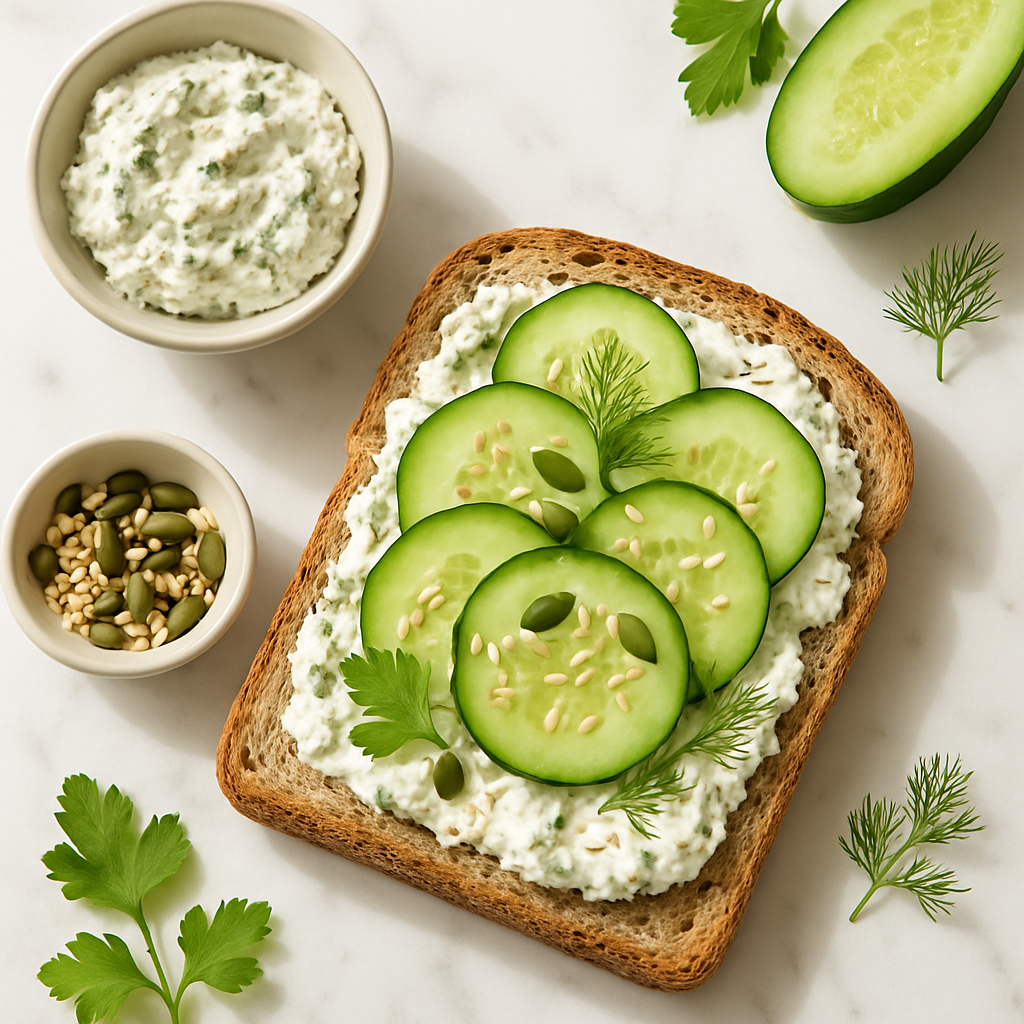
Homemade White Cheese and Cucumber Open Sandwich with Herbs and Seeds
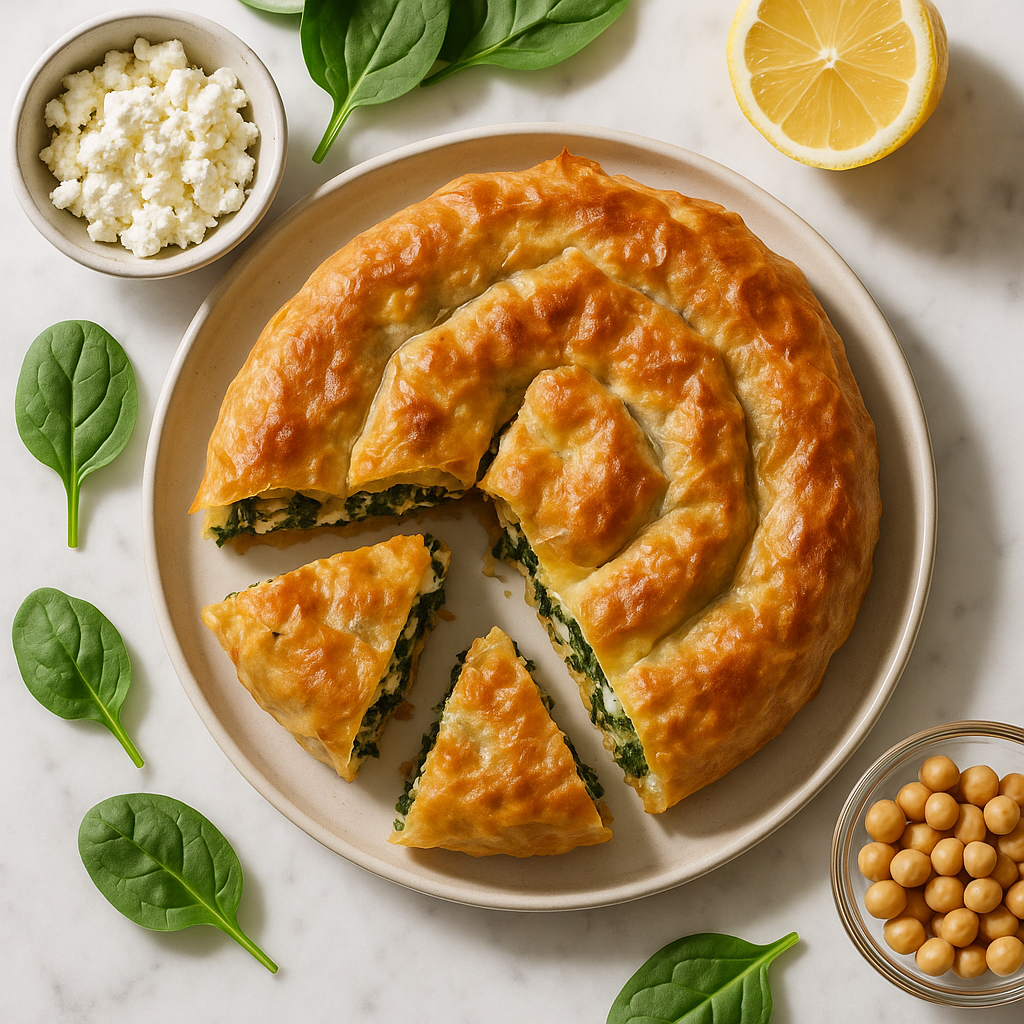
Crispy Burek with Feta Cheese and Spinach Filling (High-Protein, Light Phyllo Version)