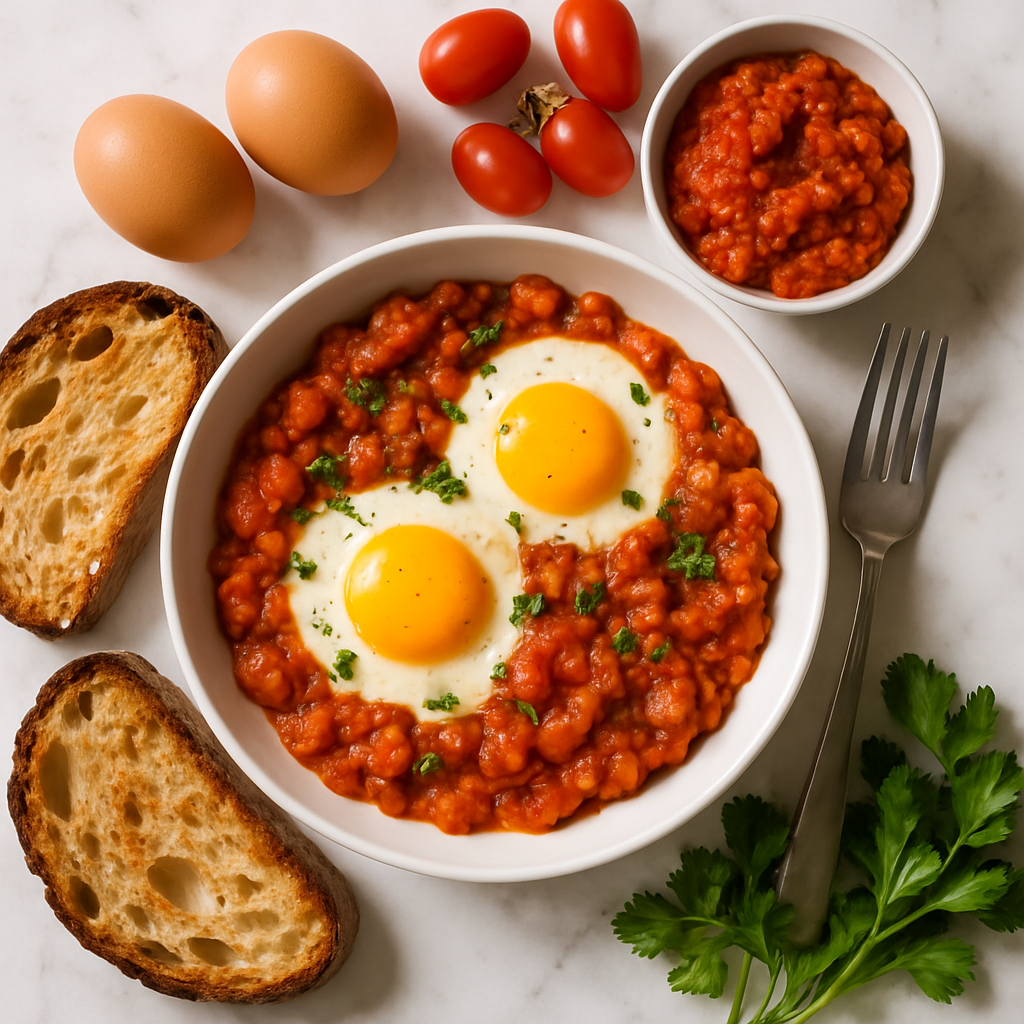
High Protein Ajvar with Eggs and Sourdough Toast is one of those breakfast recipes that makes you genuinely rethink what morning food can be. Most high protein breakfasts lean on the same rotation of scrambled eggs, Greek yoghurt bowls, or protein shakes, but this one pulls from Balkan cooking traditions to deliver something far more interesting. The headline number here is 28 grams of protein per serving, which is a serious amount for a breakfast sitting at only 380 calories. The combination of roasted vegetables, cottage cheese, eggs, and wholegrain sourdough works together so efficiently that no single ingredient has to carry the protein load alone. That balance also means the meal feels genuinely satisfying rather than heavy. You get a full 7 grams of fibre alongside those 28 grams of protein, which is a pairing that keeps hunger at bay for hours. If you have been cycling through the same egg dishes every week and want something with real depth of flavour and strong nutritional foundations, this recipe gives you both without requiring any specialist ingredients or techniques.
The red bell peppers are the backbone of the ajvar itself. Two large peppers contribute meaningful amounts of vitamin C, well above your daily requirement when roasted, and they provide natural sweetness that balances the smokiness from the smoked paprika. The medium aubergine adds bulk, fibre, and a creamy texture once roasted and blended, and it absorbs the garlic and olive oil beautifully during cooking. Three cloves of garlic bring allicin compounds with well-documented anti-inflammatory properties, and they deepen the savoury quality of the spread considerably. The tablespoon of extra virgin olive oil carries fat-soluble vitamins from the vegetables into your system more effectively and contributes heart-healthy monounsaturated fats. Apple cider vinegar sharpens the overall flavour and assists with blood sugar management when consumed at the start of a meal. The four tablespoons of cottage cheese fold into the ajvar to add roughly 7 grams of protein before the eggs even come into the picture, while keeping the fat content low. Four free-range eggs bring around 24 grams of protein total alongside choline and B12. Wholegrain sourdough adds complex carbohydrates and additional fibre from the whole grain content.
When you pull the peppers and aubergine from the oven after roasting, the kitchen smells genuinely wonderful. The charred skin on the peppers carries a sweet, slightly bitter aroma that softens into something rich and smoky once the vegetables are blended with the garlic, paprika, and chilli flakes. The ajvar itself is a deep red-orange colour with a slightly coarse, thick texture. It spreads easily but has enough body to sit on the toast without soaking through. The cottage cheese blends in smoothly, lightening the colour slightly and adding a gentle creaminess that you can taste but would never identify as cottage cheese if you did not know it was there. The eggs can be prepared however you prefer, but fried or poached eggs with a runny yolk work particularly well here because the yolk mixes into the ajvar as you eat and creates a sauce-like consistency across the toast. Each bite has layers: the tang and chew of the sourdough, the smoky sweetness of the roasted pepper spread, and the richness of the egg on top.
This recipe supports a high protein dietary approach for anyone focusing on muscle maintenance, weight management, or sustained morning energy. The protein-to-calorie ratio of roughly 1 gram of protein per 14 calories is genuinely strong for a whole food breakfast. The 7 grams of fibre support digestive health and contribute to that lasting fullness, making this a good choice for people managing appetite across a busy morning. The recipe fits naturally into a Mediterranean-style eating pattern given the olive oil, vegetables, and whole grains at its centre. It is also suitable for those following a low-sugar diet, with only 9 grams of sugar, most of which comes from the natural sweetness of the roasted peppers. People who train in the morning and need a substantial recovery meal will find the macronutrient profile genuinely useful. It does contain gluten from the sourdough and eggs, so it is not appropriate for coeliac or egg-free diets, but for everyone else it covers a broad range of nutritional bases in a single meal.
The ajvar component is where meal prep becomes genuinely practical. You can roast and blend a large batch of the pepper and aubergine mixture at the weekend, then store it in an airtight jar in the fridge for up to five days. The cottage cheese can be stirred through each morning before serving, or blended into the batch upfront with no loss of quality. The spread also freezes well for up to two months in small portions. When reheating, a quick warm in a small saucepan over low heat or a brief spell in the microwave works fine. For variations, try swapping the sourdough for rye crispbreads if you want a lower carbohydrate option that still delivers crunch and fibre. You could also stir a tablespoon of tahini into the ajvar for a nuttier flavour and additional calcium. A third option is adding a handful of baby spinach wilted into the pan before the eggs for extra iron and folate with almost no extra effort. All the ingredient quantities and timing details are in the recipe card below.
Ingredients
- 2 large red bell peppers (halved and deseeded)
- 1 medium aubergine (eggplant) (halved lengthways)
- 3 cloves garlic (unpeeled, roasted alongside the vegetables)
- 1 tablespoon extra virgin olive oil (divided)
- 1 teaspoon apple cider vinegar
- 0.5 teaspoon smoked paprika
- 0.3 teaspoon chilli flakes (optional, adjust to taste)
- 0.5 teaspoon sea salt (plus extra to taste)
- 0.3 teaspoon black pepper (freshly ground)
- 4 tablespoons low-fat cottage cheese (2 tablespoons per serving, stirred into the warm ajvar)
- 4 large free-range eggs (poached or soft-scrambled)
- 4 slices wholegrain sourdough bread (genuine fermented sourdough, seeded variety recommended)
- 1 handful fresh flat-leaf parsley (roughly chopped, to serve)
- 1 teaspoon white wine vinegar or apple cider vinegar (for poaching the eggs if poaching)
Instructions
- 1
Preheat your oven to 220 degrees Celsius (200 fan, 425 Fahrenheit). Line a baking tray with parchment paper. Place the halved red peppers skin-side up and the halved aubergine flesh-side down on the tray. Tuck the unpeeled garlic cloves alongside them. Drizzle with half the olive oil and place in the oven.
Getting the oven properly hot before the vegetables go in is key to achieving good charring and deep flavour.
- 2
Roast for 28 to 32 minutes until the pepper skins are blistered and dark in patches, and the aubergine flesh feels very soft when pressed. Remove from the oven and transfer the peppers immediately into a heatproof bowl. Cover tightly with a plate or cling film and leave for 10 minutes. This steams the skins loose.
Do not skip the steaming step. It makes peeling the peppers effortless and improves the texture of the ajvar considerably.
- 3
Peel the skins from the peppers and discard them. Scoop the aubergine flesh away from the skin with a spoon and discard the skin. Squeeze the roasted garlic out of its papery casing. Add all three to a food processor or blender.
- 4
Add the apple cider vinegar, smoked paprika, chilli flakes if using, salt, black pepper, and the remaining half tablespoon of olive oil to the food processor. Pulse until you reach your preferred texture. A few short pulses gives you a chunky, rustic ajvar. Blending for longer gives a smoother, creamier result. Both work brilliantly here.
Taste and adjust seasoning at this stage. The ajvar should taste vibrant and slightly smoky.
- 5
Transfer the ajvar to a small saucepan and warm it gently over a low heat for 3 to 4 minutes, stirring occasionally. Once warmed through, stir in the cottage cheese until it has fully incorporated and the mixture is creamy and smooth. Keep it on the lowest heat setting while you prepare the eggs and toast.
Warming the ajvar gently before adding the cottage cheese helps it melt in evenly without curdling.
- 6
To poach the eggs, bring a medium saucepan of water to a gentle simmer. Add a splash of vinegar. Crack each egg into a small cup first. Create a gentle swirl in the water with a spoon, then carefully slide each egg in one at a time. Poach for 3 minutes for a runny yolk or 4 minutes for a jammy set yolk. Lift out with a slotted spoon and place briefly on a folded kitchen towel to drain.
Fresh eggs poach better than older eggs. If poaching feels fiddly, softly scrambling the eggs in a non-stick pan with a tiny bit of olive oil works just as well and keeps the protein content identical.
- 7
Toast the sourdough slices in a toaster or under the grill until golden and crisp at the edges. Place two slices on each plate. Spoon a generous amount of the warm cottage cheese ajvar over the toast, spreading it right to the edges. Place two poached eggs on top. Scatter the chopped parsley over everything and add a small pinch of extra smoked paprika if you like. Serve immediately.
Nutrition per serving
380kcal
Calories
28g
Protein
34g
Carbs
13g
Fat
7g
Fibre
9g
Sugar
520mg
Sodium
Pro Tips
- ✓
Make the ajvar up to five days ahead and store it in a sealed jar in the fridge. Reheat a portion in a small pan each morning for a fast, nutritious breakfast.
- ✓
The cottage cheese protein boost works best when the ajvar is warm. Adding it to cold ajvar can leave it lumpy rather than creamy.
- ✓
Seeded or sprouted wholegrain sourdough adds more fibre and protein than plain white sourdough. Look for a loaf with visible seeds like sunflower, flax or pumpkin.
- ✓
For an extra protein hit, add a tablespoon of hemp seeds or pumpkin seeds scattered over the finished dish. They add around 3 to 4 extra grams of protein per serving.
- ✓
If you prefer scrambled eggs, cook them low and slow in a non-stick pan with no added fat and just a tablespoon of plain Greek yogurt stirred in at the end for extra creaminess and protein.
Frequently Asked Questions
Variations
- •
Feta and Ajvar Toast
Skip the cottage cheese and instead crumble 25 grams of light feta cheese over the warm ajvar after spreading it on the toast. The salty, tangy feta pairs beautifully with the smoky peppers. Protein content stays high and the flavour becomes even more Mediterranean.
- •
Spicy Harissa Ajvar
Stir half a teaspoon of harissa paste into the ajvar while it warms in the pan. This adds a North African heat that complements the smoky base. Great for people who like their breakfasts with a real kick.
- •
Greek Yogurt Ajvar
Replace the cottage cheese with two tablespoons of plain 0 percent fat Greek yogurt per serving. The flavour is slightly tangier and the texture a little lighter. Protein content is nearly identical and the creaminess is wonderful.
- •
Ajvar Egg White Scramble
Use 6 egg whites instead of 4 whole eggs across two servings for a lower fat, higher protein version. Soft scramble them in a non-stick pan and pile them straight onto the ajvar toast. Protein per serving climbs to around 32 grams.
Substitutions
- •Low-fat cottage cheese → Plain 0 percent Greek yogurt (Use the same quantity. Stir into the warm ajvar off the heat to prevent it splitting. Protein content is nearly identical.)
- •Low-fat cottage cheese → Blended silken tofu (Makes the recipe dairy free. Use the same quantity and blend the tofu smooth before stirring in. Adds similar creaminess and around 7 to 8 grams of protein.)
- •Wholegrain sourdough → Gluten-free sourdough bread (Makes the recipe suitable for those avoiding gluten. Look for a seeded variety for better fibre content.)
- •Red bell peppers → Jarred roasted red peppers (drained) (Saves considerable time. Use 200 grams of drained jarred peppers and skip steps 1 and 2. The flavour will be slightly less smoky but still very good.)
- •Fresh flat-leaf parsley → Fresh basil or fresh coriander (Both work beautifully as a garnish. Coriander gives a slightly more Middle Eastern feel, basil keeps it more Mediterranean.)
🧊 Storage
Store leftover ajvar in a clean, sealed jar or airtight container in the fridge for up to 5 days. The cottage cheese can be stirred in fresh each morning when you reheat a portion. Poached eggs are best made fresh. Toasted sourdough should be made to order.
📅 Make Ahead
The roasted ajvar base, before the cottage cheese is added, can be made in a large batch at the weekend and kept in the fridge for up to 5 days. Each morning, scoop out a serving, warm it in a small pan for 3 minutes, stir in the cottage cheese, and the bulk of the work is already done. Total active time drops to about 8 minutes.
You might also like
Homemade White Cheese and Cucumber Open Sandwich with Herbs and Seeds
Crispy Burek with Feta Cheese and Spinach Filling (High-Protein, Light Phyllo Version)