Crispy Burek with Feta Cheese and Spinach Filling (High-Protein, Light Phyllo Version)
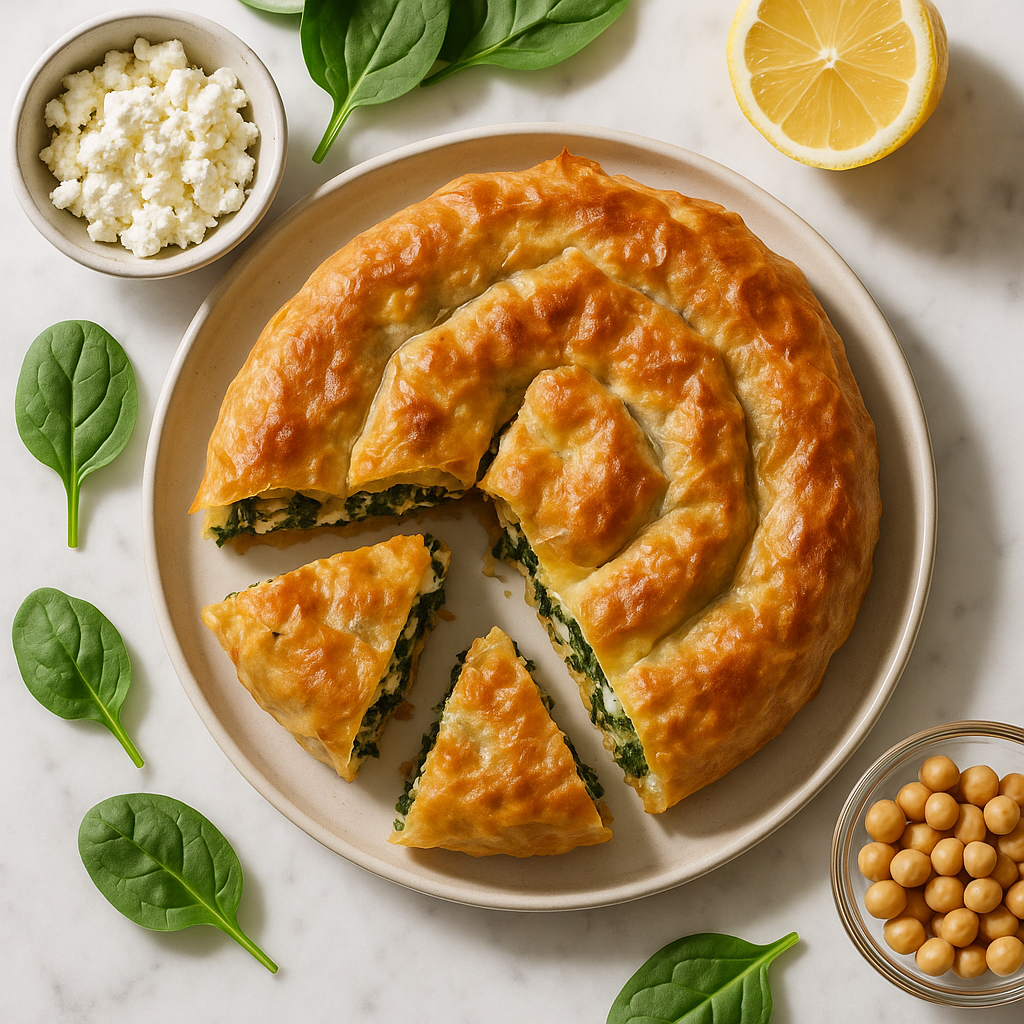
Crispy Burek with Feta Cheese and Spinach Filling is the kind of recipe that earns a permanent spot in your breakfast rotation. Traditional burek is often made with generous amounts of butter and full-fat cheese, which pushes the calorie count up fast. This version takes a smarter approach, using phyllo pastry brushed lightly with olive oil instead of butter, and a combination of reduced-fat feta and low-fat cottage cheese to keep the protein high without the excess fat. Each serving delivers 14 grams of protein and sits at 218 calories, which is a genuinely satisfying macro split for a morning meal. The spinach filling adds fibre and micronutrients that most breakfast pastries completely lack. If you have been looking at traditional Balkan pastry recipes and feeling put off by the heaviness, this lighter take gives you all the flakiness and savoury depth without that weighted feeling afterwards. It is meal prep friendly too, which means you can make a full tray on Sunday and eat well all week.
The ingredient list here is doing some serious nutritional work. Phyllo pastry keeps the carbohydrate count reasonable at 22 grams per serving while giving you that characteristic crunch, and because you are brushing it with olive oil rather than layering it in butter, the fat stays at just 9 grams. Reduced-fat feta cheese contributes a salty, tangy backbone to the filling and provides a solid hit of calcium and protein without the heavy cream-cheese richness you find in some burek recipes. Low-fat cottage cheese is the quiet workhorse here. It adds creaminess, boosts the protein further, and helps bind the filling so it holds together when you slice into it. Fresh baby spinach brings iron, folate and vitamin K, and it wilts down dramatically so you get real vegetable density in every bite. The three free-range eggs act as a binder and add another layer of protein while giving the filling a slightly custard-like set. Brown onion and garlic cooked together in a small amount of olive oil build the savoury base, and dried dill plus ground nutmeg give the filling its distinctly Mediterranean, slightly aromatic character.
When this comes out of the oven, the phyllo sheets have turned a deep golden amber at the edges and blistered slightly on top, giving you audible crunch when you cut through them. The filling inside is soft, almost creamy, with pockets of feta that stay a little chunky rather than melting completely. You get that contrast between the shattering pastry layers and the yielding, savoury interior in every forkful. The spinach, once wilted with the onion and garlic, turns deep green and slightly silky, which threads through the white cheese mixture beautifully. The smell while it bakes is herby and savoury, with the nutmeg giving a very subtle warmth that you notice in the background rather than upfront. The process is straightforward: cook your filling, let it cool slightly so it does not steam the pastry, layer phyllo sheets with light olive oil brushing between them, add the filling, roll or fold to your preferred shape, and bake until golden. Allowing it to rest for five minutes before cutting gives the filling time to firm up so slices come out cleanly.
This recipe is built for people who want a high-protein breakfast that also fits into a balanced approach to fat and carbohydrates. With 14 grams of protein and 3 grams of fibre per serving, it supports muscle maintenance, keeps blood sugar more stable than a plain pastry would, and provides lasting satiety through the morning. It fits naturally into a Mediterranean-style eating pattern, and because it uses no meat, it works well for lacto-vegetarian diets too. The fat content is moderate and comes primarily from olive oil and dairy rather than saturated animal fats. People managing their calorie intake will appreciate that the 218-calorie count is low for a pastry-based breakfast without any sense of deprivation. Athletes, busy parents, and anyone doing morning meal prep will find this practical and filling. If you are building a higher-protein eating pattern but want food that feels like real cooking rather than diet food, this burek sits firmly in that category and holds up well against any standard cafe breakfast pastry on both taste and nutrition.
For meal prep, bake the full tray and allow it to cool completely before covering. It keeps well in the refrigerator for up to four days in an airtight container. To reheat, use an oven at 180 degrees Celsius for about eight to ten minutes rather than a microwave, which would soften the phyllo and rob it of its crunch. For freezing, cut into individual portions, wrap each piece separately, and freeze for up to two months. Thaw in the fridge overnight and reheat from cold in the oven. For variations, you can swap the baby spinach for silverbeet or kale, both of which hold up well in the filling and add slightly earthier flavour. A handful of sun-dried tomatoes stirred through the cheese mixture adds a sweet-savoury depth that works very well. If you want a higher-fat version closer to the traditional style, full-fat feta and a little melted butter brushed on the top layer will give you a richer result while keeping the same basic structure. The full recipe with measurements, layering instructions, and baking times is in the recipe card below.
Ingredients
- 12 sheets phyllo pastry (thawed if frozen, kept covered with a damp cloth)
- 3 tablespoons extra virgin olive oil (for brushing the phyllo layers)
- 300 g fresh baby spinach (roughly 10 cups loosely packed)
- 200 g reduced-fat feta cheese (crumbled)
- 200 g low-fat cottage cheese (drained of excess liquid)
- 3 large free-range eggs (2 for the filling, 1 for the egg wash)
- 1 medium brown onion (finely diced)
- 2 cloves garlic (minced)
- 1 teaspoon olive oil (for sauteing the onion and garlic)
- 1 teaspoon dried dill
- 0.3 teaspoon ground nutmeg
- 0.5 teaspoon freshly ground black pepper
- 0.3 teaspoon fine sea salt (adjust to taste, feta is already salty)
- 1 tablespoon sesame seeds (for topping, optional but recommended)
Instructions
- 1
Preheat your oven to 190 degrees Celsius (375 degrees Fahrenheit). Lightly grease a 30x20cm baking tray with a small amount of olive oil and set aside.
A rimmed baking tray works better than a loose-based tin as it catches any filling that may seep out.
- 2
Heat one teaspoon of olive oil in a large frying pan over medium heat. Add the diced onion and cook for 4 to 5 minutes until softened and translucent. Add the minced garlic and cook for another minute, stirring frequently.
- 3
Add the baby spinach to the pan in two or three batches, stirring each batch until wilted before adding the next. This takes about 3 minutes total. Remove from heat and allow to cool for 10 minutes, then squeeze out as much excess moisture as you can using a clean kitchen cloth or your hands.
Removing moisture from the spinach is the single most important step. Wet spinach will make your burek soggy. Do not skip this.
- 4
In a large mixing bowl, combine the crumbled feta, drained cottage cheese, two of the eggs, dried dill, ground nutmeg, black pepper and sea salt. Mix well until evenly combined. Fold in the cooled, squeezed spinach and the sauteed onion and garlic mixture.
Taste the filling at this point and adjust seasoning carefully. Feta varies in saltiness, so go easy with added salt.
- 5
Lay one sheet of phyllo pastry onto the greased baking tray, letting the edges drape over the sides if needed. Brush lightly with olive oil. Repeat with three more sheets, brushing each with olive oil, so you have four layers as your base.
Keep unused phyllo sheets covered with a lightly damp cloth at all times to prevent drying and cracking.
- 6
Spoon the filling evenly over the phyllo base, spreading it gently to the edges with the back of a spoon.
- 7
Layer the remaining eight phyllo sheets on top, brushing each one lightly with olive oil before adding the next. Fold the overhanging edges inward and tuck them under the top layers to create a neat border.
Do not worry if a phyllo sheet tears. Simply patch it with the next sheet. It will all come together once baked.
- 8
Beat the remaining egg with one teaspoon of water to make an egg wash. Brush the top surface of the burek generously with the egg wash, then scatter sesame seeds over the top. Using a sharp knife, score the top few layers into eight portions without cutting all the way through.
Scoring before baking guides your cuts after and allows steam to escape, keeping the pastry crispier.
- 9
Bake in the preheated oven for 28 to 32 minutes until the top is deeply golden and crisp. Remove from the oven and rest for 5 minutes before slicing along the scored lines and serving.
Resting the burek before slicing helps the filling firm up slightly so portions hold together better on the plate.
Nutrition per serving
218kcal
Calories
14g
Protein
22g
Carbs
9g
Fat
3g
Fibre
2g
Sugar
480mg
Sodium
Pro Tips
- ✓
Always squeeze the spinach very thoroughly. Excess moisture is the main cause of soggy burek.
- ✓
Thaw frozen phyllo dough overnight in the fridge rather than at room temperature for the best texture.
- ✓
If your baking tray is smaller, fold the phyllo sheets in half rather than cutting them to reduce waste.
- ✓
Brushing with olive oil rather than melted butter significantly reduces saturated fat without sacrificing the golden, crispy result.
- ✓
Let the filling cool before assembling. Warm filling can steam the pastry and make it limp.
- ✓
Serve with a simple side of sliced cucumber, fresh tomato and a squeeze of lemon for a complete and balanced breakfast plate.
Frequently Asked Questions
Variations
- •
Egg-Free Version
Replace the two eggs in the filling with two tablespoons of plain unsweetened Greek yoghurt to maintain creaminess and binding. Use a tablespoon of plant-based milk mixed with one teaspoon of olive oil as a top glaze instead of egg wash.
- •
Added Protein Boost
Mix in 100g of crumbled firm tofu along with the cottage cheese and feta to increase the protein content further. The tofu blends seamlessly with the other filling ingredients and adds a subtle creaminess.
- •
Herb and Lemon Lift
Add the zest of one lemon and two tablespoons of finely chopped fresh flat-leaf parsley to the filling mixture for a brighter, more vibrant flavour that works especially well in warmer months.
- •
Mini Individual Burek Rolls
Instead of a tray bake, cut each phyllo sheet in half lengthways, spoon a tablespoon of filling at one end and roll into a cigar shape. Arrange on a lined baking tray, brush with egg wash and bake at 190 degrees Celsius for 20 minutes. Great for meal prep and portion control.
Substitutions
- •Phyllo pastry → Gluten-free phyllo sheets (Available in some specialty health food stores. Handle gently as gluten-free phyllo can be more fragile than regular phyllo.)
- •Reduced-fat feta cheese → Full-fat feta cheese (Full-fat feta has a richer, creamier flavour. The calorie count per serving will increase by approximately 20 to 25 calories.)
- •Low-fat cottage cheese → Ricotta cheese (Ricotta gives a slightly creamier, milder filling. Use the same quantity and drain it well before mixing.)
- •Fresh baby spinach → Frozen chopped spinach, thawed and drained (Use 250g frozen weight. Must be thoroughly squeezed dry before adding to the filling or the burek will be soggy.)
- •Extra virgin olive oil → Avocado oil (Avocado oil has a neutral flavour and a high smoke point. It brushes on the phyllo just as well as olive oil.)
🧊 Storage
Store cooled burek slices in an airtight container in the refrigerator for up to 4 days. Reheat in the oven at 180 degrees Celsius for 8 to 10 minutes to restore crispiness. Avoid microwaving if possible as this softens the pastry. For freezing, wrap individual slices tightly in cling film and place in a freezer-safe bag. Freeze for up to 2 months. Reheat from frozen at 190 degrees Celsius for 15 to 18 minutes.
📅 Make Ahead
Assemble the burek fully in the baking tray, cover tightly with cling film and refrigerate for up to 24 hours before baking. Add the egg wash and sesame seeds just before it goes into the oven. This is ideal for prepping the evening before a morning gathering or a busy weekday breakfast.