Healthy Pastel de Nata Portuguese Custard Tarts Recipe (High Protein, Lower Sugar)
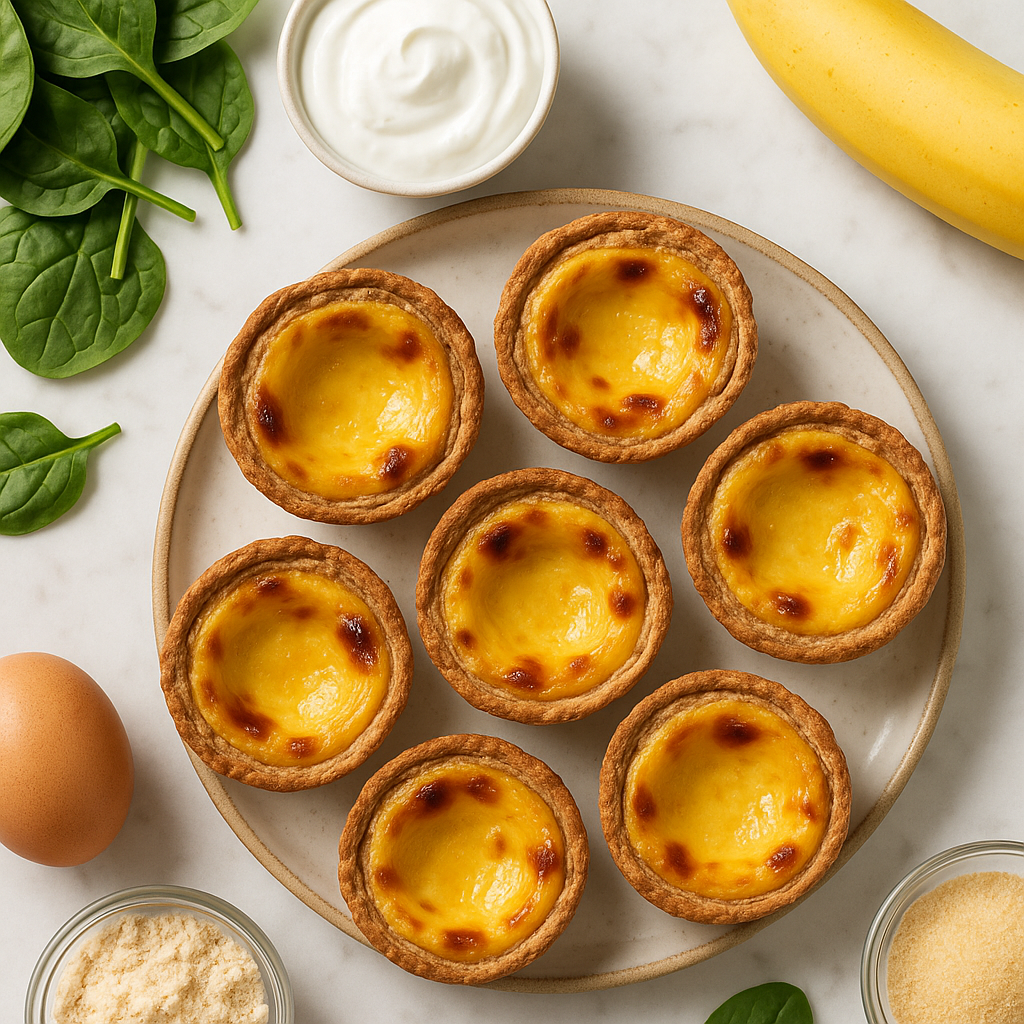
Healthy Pastel de Nata Portuguese Custard Tarts bring one of Lisbon's most beloved street foods into your kitchen with a nutritional overhaul that does not sacrifice any of the charm. Each tart comes in at just 145 calories with 5.2 grams of protein and only 6.4 grams of sugar, which is a meaningful reduction compared to the traditional bakery version. The reason to choose this recipe over a standard pastel de nata is that it uses Greek yogurt and whole eggs to boost the protein content of the custard without changing the creamy, set texture that makes these tarts so satisfying. Most people assume a lighter version of a classic pastry means a pale imitation, but this recipe holds up. The crisp puff pastry shell still shatters when you bite into it, the custard still has that characteristic wobble, and the edges still catch a little colour in the oven. These are genuinely good tarts that happen to fit a health-conscious approach to eating, not a compromise version made for people who have given up on flavour.
The ingredient list is doing a lot of quiet work here. Light ready-rolled puff pastry keeps the base flaky and convenient without loading the tart with excess saturated fat. A small brush of olive oil on the pastry cases helps them crisp and colour evenly in the high heat of the oven, adding a subtle richness without butter. Whole milk forms the liquid base of the custard and contributes calcium and fat-soluble vitamins that help the custard set smoothly. Full-fat Greek yogurt is the real upgrade in this recipe. It adds creaminess and body to the filling while contributing a meaningful protein boost, around 9 to 10 grams of protein per 100 grams, which is considerably higher than cream or standard milk alone. Coconut sugar replaces refined white sugar and has a lower glycaemic index, along with trace minerals like zinc and iron. The cinnamon stick and lemon zest are not decoration. They infuse the warm milk and sugar syrup with aromatic depth that is fundamental to authentic pastel de nata flavour. Plain flour stabilises the custard, and the combination of whole eggs and extra yolks gives the filling its structure and colour.
The process begins by making a simple syrup with coconut sugar, water, cinnamon, and lemon zest, warming them together until the sugar dissolves and the spices release their fragrance. Your kitchen will smell warm and faintly citrusy at this point, which is a good sign. The milk is heated separately with the flour whisked in to create a thin, smooth paste, and then the syrup is poured in and everything is combined off the heat before the eggs and yogurt are added. This careful temperature management stops the eggs from scrambling and keeps the custard smooth and glossy. The pastry cases are pressed into a muffin tin, filled, and baked at high heat. That intense heat is what creates the signature charred spots on the surface of the custard, a caramelised blistering that looks almost burnt but tastes sweet and slightly smoky. The contrast between the golden, slightly charred custard top and the pale, creamy interior is visually striking and texturally satisfying in a way that feels indulgent even though the numbers tell a different story.
This recipe sits comfortably within several dietary approaches. At 145 calories per tart, it suits anyone tracking intake without wanting to give up baked goods entirely. The protein content at 5.2 grams per tart is notably higher than a standard custard tart, which makes it a more balanced snack or breakfast option than it appears. People focused on blood sugar management will appreciate the use of coconut sugar in place of refined white sugar, as it causes a gentler rise in blood glucose. The recipe is suitable for those following a low-sugar diet and for anyone on a higher-protein eating plan who still wants something that feels like a treat. It is not suitable for vegans or those with egg or dairy allergies, but it is naturally gluten-adaptable if you can source a gluten-free puff pastry and swap the plain flour for a gluten-free alternative. Athletes, active people who need portable protein-containing snacks, and anyone who wants a breakfast that feels special without derailing their goals will find this recipe genuinely useful.
This recipe is very well suited to batch cooking. You can make a full tray of twelve tarts at the weekend and have them ready to grab throughout the week. Once baked and fully cooled, the tarts keep well in an airtight container in the fridge for up to four days. They are good eaten cold straight from the fridge, which gives the custard a firmer, denser texture, or you can reheat them in the oven at 180 degrees Celsius for five to six minutes to revive the crispness of the pastry shell. Avoid the microwave if you can, as it softens the pastry and makes the custard slightly rubbery. For variations, you can swap the cinnamon stick for a couple of cardamom pods if you want a more floral, spiced note. A few drops of orange extract in place of vanilla works well and gives the tarts a brighter citrus finish. You can also use a dairy-free yogurt such as coconut yogurt to reduce the lactose content while keeping the creamy texture. Scroll down to the recipe card for the full method and step-by-step instructions.
Ingredients
- 1 sheet light ready-rolled puff pastry (about 320g, kept cold until use)
- 1 tsp olive oil (for greasing the tin)
- 180 ml whole milk
- 120 g full-fat Greek yogurt (adds protein and creaminess)
- 70 g coconut sugar (lower GI than refined white sugar)
- 2 tbsp water
- 1 small cinnamon stick
- 1 strip lemon zest (about 5cm long, use a vegetable peeler)
- 2 tbsp plain flour (or spelt flour for added fibre)
- 3 large whole eggs (room temperature)
- 2 large egg yolks (room temperature)
- 1 tsp pure vanilla extract
- 1 pinch fine sea salt
- 1 tsp ground cinnamon (for dusting to serve)
Instructions
- 1
Place your oven rack in the top third of the oven and preheat to the highest temperature your oven will reach, ideally 250 to 270 degrees Celsius (480 to 520 Fahrenheit). Place a 12-hole standard muffin tin inside the oven to preheat at the same time. This step is crucial for getting that shatteringly crisp pastry base.
If your oven has a fan or convection setting, use it. The extra air circulation helps blister the custard top the way traditional pasteis de nata look.
- 2
Unroll the cold puff pastry sheet on a lightly floured surface. Roll it a little thinner so it is about 2mm thick, then roll the pastry tightly into a log from the short end. Wrap in cling film and refrigerate for 20 minutes while you make the custard. Cold pastry is much easier to cut and holds its shape in the tin.
Rolling from the short end creates the circular layers you need to press into the muffin holes.
- 3
Make the sugar syrup. Combine the coconut sugar, water, cinnamon stick and lemon zest strip in a small saucepan over medium heat. Stir just until the sugar dissolves, then stop stirring and let it come to a gentle simmer for 2 minutes. Remove from the heat and set aside to cool for 5 minutes, then fish out the cinnamon stick and lemon zest.
The syrup should reach about 100 degrees Celsius but does not need to caramelise. You just want it slightly thickened and infused.
- 4
Whisk the flour and a splash of the measured milk together in a medium saucepan until completely smooth with no lumps. Whisk in the remaining milk and place over medium-low heat, stirring constantly, until the mixture just begins to thicken into a loose paste, about 2 to 3 minutes. Remove from the heat immediately.
This flour-milk base is what helps the custard set with a silky texture rather than turning grainy.
- 5
Slowly pour the warm coconut sugar syrup into the milk mixture while whisking continuously. Then whisk in the Greek yogurt, vanilla extract and salt until smooth. In a separate bowl, lightly beat the whole eggs and egg yolks together, then slowly stream them into the custard base while whisking. Pass the finished custard through a fine mesh sieve into a jug for easy pouring. Discard any solids caught in the sieve.
Straining removes any accidentally scrambled egg bits and gives you a perfectly silky custard every time.
- 6
Remove the pastry log from the fridge and slice it into 12 equal rounds, each about 1.5cm thick. Working quickly so the pastry stays cold, use your thumbs to press each round into the holes of the hot muffin tin, pushing from the centre outward and up the sides to create a thin, even shell that comes right up to the rim.
Dipping your thumb in cold water stops the pastry sticking to your skin as you press.
- 7
Carefully pour the custard into each pastry shell, filling them to about three-quarters full. Do not overfill or the custard will bubble over during baking. Slide the tin onto the top oven rack immediately.
Pouring from a jug with a spout gives you much more control over filling each shell neatly.
- 8
Bake for 15 to 18 minutes until the pastry is deep golden and crisp and the custard top has dark, irregular char spots. The custard will still look wobbly in the centre when you pull them out. That is exactly right. Remove the tin from the oven and let the tarts cool in the tin for 10 minutes before transferring to a wire rack.
The dark spots are caramelised custard, not burnt. They are the hallmark of a properly made pastel de nata and add a lovely bittersweet depth.
- 9
Dust each tart with a little ground cinnamon just before serving. These are at their absolute best eaten warm, about 10 to 15 minutes after coming out of the oven, when the custard is just set and the pastry is still crisp.
A tiny pinch of flaky sea salt on each tart just before eating makes the custard flavour extraordinary.
Nutrition per serving
145kcal
Calories
5.2g
Protein
15.8g
Carbs
7.1g
Fat
0.6g
Fibre
6.4g
Sugar
98mg
Sodium
Pro Tips
- ✓
Always start with very cold pastry. If it warms up while you are working, pop it back in the fridge for 10 minutes before continuing.
- ✓
Preheating the muffin tin is not optional. It is what gives the pastry base its instant sear and prevents a soggy bottom.
- ✓
Do not open the oven door during the first 12 minutes of baking. Temperature drops kill the blister on the custard.
- ✓
If your oven has a grill or broiler element at the top, turning it on for the last 2 minutes creates extra char on the custard surface.
- ✓
The custard mixture can be made up to 24 hours ahead and stored covered in the fridge. Give it a good whisk before pouring.
- ✓
For the crispest results, reheat leftover tarts in an oven at 200 degrees Celsius for 5 to 6 minutes rather than using a microwave.
Frequently Asked Questions
Variations
- •
Orange and Cardamom Custard Tarts
Replace the lemon zest strip with a strip of orange zest in the syrup, and add half a teaspoon of ground cardamom to the custard. The combination is fragrant and warming, working especially well in autumn and winter.
- •
Spelt Rough Puff Pastry Version
Make a rough puff pastry using 150g spelt flour, 100g cold unsalted butter cut into cubes, a pinch of salt and 60ml cold water. Fold and roll three times with resting in between. This version adds more fibre and a nutty flavour that complements the custard beautifully.
- •
Vanilla Bean and Honey Custard Tarts
Replace the coconut sugar syrup with 50g of raw honey warmed slightly so it pours easily, and use the scraped seeds of one vanilla bean instead of extract. A slightly more delicate, floral flavour profile.
- •
Protein-Boosted Version
Add one tablespoon of unflavoured or vanilla protein powder to the custard mixture along with the flour. It blends in seamlessly and pushes the protein content per tart up by an additional 2 grams without affecting the texture noticeably.
Substitutions
- •Full-fat Greek yogurt → Full-fat coconut yogurt (Works well for a dairy-free version. The flavour is slightly sweeter and more tropical, which pairs nicely with cinnamon.)
- •Whole milk → Full-fat oat milk (A good dairy-free swap. Oat milk has a natural creaminess that holds up well in cooked custard.)
- •Coconut sugar → Raw honey or maple syrup (Use 60g of honey or maple syrup instead. Add it directly to the warm milk mixture rather than making a separate syrup.)
- •Plain flour → Cornflour or rice flour (Use the same quantity. Both make the recipe gluten-free if you also use a gluten-free puff pastry. Cornflour gives a slightly silkier set.)
- •Light puff pastry sheet → Gluten-free puff pastry (Several supermarket brands offer gluten-free puff pastry that works very well in this recipe when kept cold and handled gently.)
- •Lemon zest strip → Orange zest strip (A straightforward swap that shifts the flavour to something slightly sweeter and more aromatic.)
🧊 Storage
Store cooled tarts in an airtight container at room temperature for up to 1 day, or refrigerate for up to 3 days. Reheat in an oven at 200 degrees Celsius for 5 to 6 minutes before eating to restore the pastry crunch. Avoid the microwave as it makes the pastry soggy. These tarts can also be frozen for up to 1 month. Reheat from frozen at 200 degrees Celsius for 10 to 12 minutes.
📅 Make Ahead
The custard filling can be prepared up to 24 hours ahead and kept covered in the fridge. Whisk well before using as it may thicken slightly on chilling. The pastry log can also be made and refrigerated up to 12 hours ahead, making same-morning assembly very quick. Do not fill the pastry shells ahead of time as the raw custard will make the unbaked shells soggy.