High Protein Portuguese Omelette with Fresh Herbs
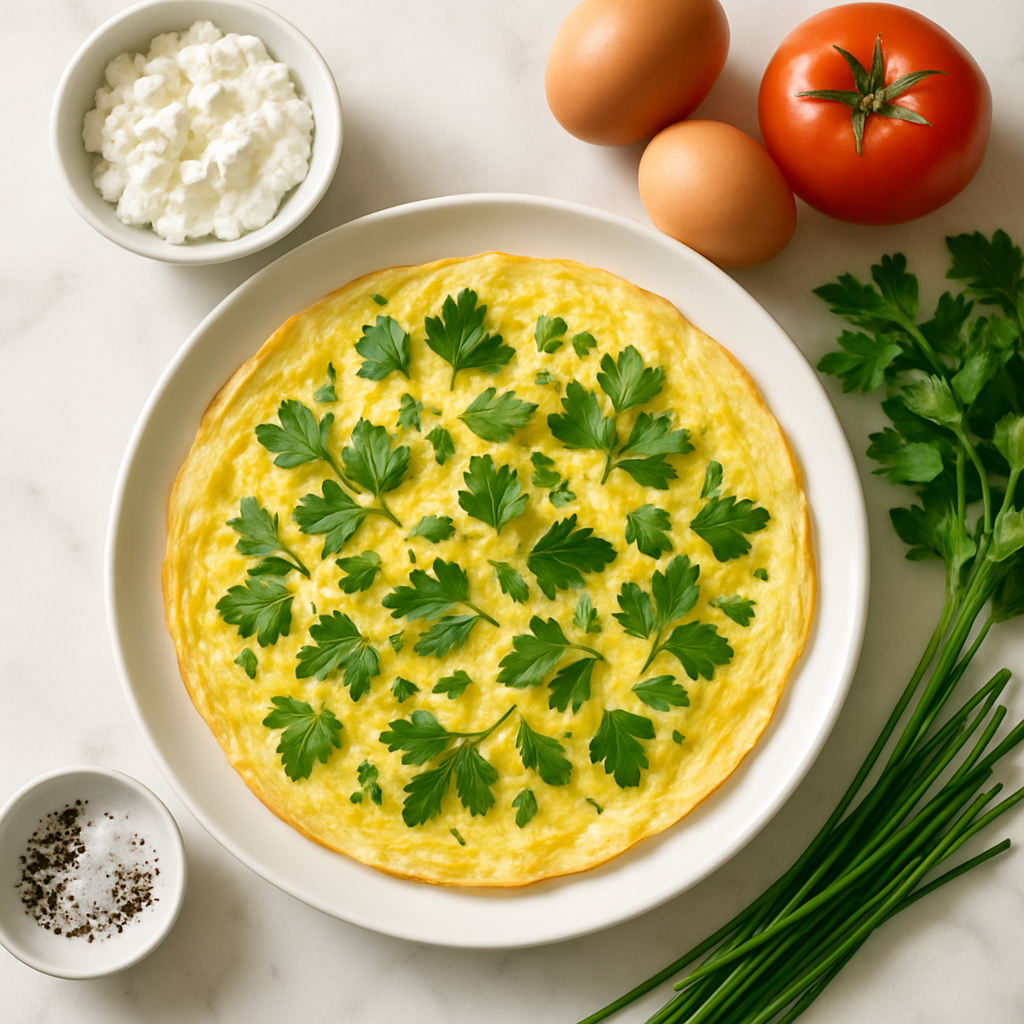
High Protein Portuguese Omelette with Fresh Herbs is the kind of breakfast that earns its place on the table through substance rather than novelty. At 32 grams of protein and only 318 calories per serving, it gives you a genuinely satisfying meal without the heavy, sluggish feeling that often follows a cooked breakfast. Most egg dishes at this calorie count feel thin or underwhelming, but this one layers flavour from multiple sources: smoky chorizo, sharp feta, bright fresh herbs, and a base of whole eggs boosted with extra egg whites. The Portuguese-style approach means the omelette is not folded over itself like a French one. Instead it stays open, almost like a frittata in character, with the filling baked into the egg rather than hidden inside. That technique makes it easier to cook evenly and more forgiving for anyone who has ever torn an omelette trying to flip it. It comes together in about 20 minutes, which makes it realistic on a weekday morning without any compromises on nutrition or flavour.
The ingredient list here is short but every item is carrying its weight. The four large whole eggs provide the structural base along with fat-soluble vitamins including vitamin D and choline, which supports brain function and is often under-consumed. The four egg whites bring extra protein with almost no additional fat, pushing the protein total significantly higher than a standard four-egg omelette would reach. Chicken chorizo rather than traditional pork chorizo keeps the saturated fat lower while still delivering that deep, smoky, slightly spiced flavour that defines the dish. Baby spinach adds iron, folate, and magnesium. It wilts quickly in the pan, so it incorporates without making the omelette watery. The reduced-fat feta contributes calcium and a salty tang that ties the herbs together without overwhelming them. Smoked paprika is small in quantity but large in effect, reinforcing the chorizo's warmth and giving the finished dish a reddish hue that looks far more dramatic than the effort involved. Extra virgin olive oil adds heart-healthy monounsaturated fats and helps prevent sticking during cooking.
The finished omelette has a golden, slightly frilled edge where the egg has set against the hot pan, with a surface that is just firm to the touch but still tender through the middle. The herbs sit on top and underneath, so every bite has that fresh, grassy note from the parsley and chives cutting through the richness of the egg and feta. The chorizo adds small pockets of smokiness and a little chew. The spinach becomes soft and almost silky within the egg. When you lift a wedge from the pan it holds together cleanly, which is satisfying in a purely practical way. Smell-wise, the moment the chorizo hits the olive oil you get that warm, paprika-heavy aroma that immediately signals something worth eating is coming. The garlic and onion follow quickly, and by the time the eggs go in the kitchen smells genuinely good. The cooking process involves sauteing the chorizo, onion, and garlic first to build a proper flavour base, then pouring the beaten egg mixture over everything and finishing under a moderate grill to set the top without drying the whole thing out.
This recipe is built around a high-protein, low-carbohydrate framework, making it a strong fit for anyone tracking macros for body composition goals, managing blood sugar, or following a ketogenic or gluten-free eating pattern. With only 7 grams of carbohydrate and 17 grams of fat, it keeps insulin response low while providing lasting satiety, which matters if you are trying to avoid mid-morning hunger that leads to poor snack choices. Protein at this level also supports muscle recovery, so it is a useful option after an early workout. People managing their weight often find high-protein breakfasts reduce total daily calorie intake without any conscious restriction, because the appetite-regulating effect of protein is well-documented. The feta and eggs provide calcium, which is relevant for bone health across all age groups. The spinach and parsley bring antioxidants and folate. This is not a dish aimed at a single narrow audience. It works for older adults prioritising muscle maintenance, for active people needing recovery nutrition, and for anyone who finds most breakfasts leave them hungry again within an hour.
This omelette lends itself well to preparation in advance. You can cook the full thing the night before, let it cool completely, then store it covered in the fridge for up to three days. Reheating works best in a dry non-stick pan over low heat rather than a microwave, which tends to make egg dishes rubbery. If you want to freeze individual portions, wrap each wedge tightly in cling film and freeze for up to one month, then thaw overnight in the fridge before reheating. For variations, swapping chicken chorizo for smoked salmon gives a completely different flavour profile that works especially well with the chives and dill if you add it. A vegetarian version using sun-dried tomatoes and roasted red capsicum in place of the chorizo keeps the colour and intensity without any meat. You can also add a small handful of cherry tomatoes to the pan with the onion for a little sweetness and extra vitamin C. The base egg ratio stays the same across all variations, so the protein numbers hold reasonably close. The full method with timings and step-by-step instructions is in the recipe card below.
Ingredients
- 4 large whole eggs (free-range if possible)
- 4 large egg whites (from fresh eggs or carton egg whites)
- 90 g chicken chorizo (sliced into thin rounds)
- 1 small brown onion (finely diced)
- 1 clove garlic (minced)
- 1 tbsp extra virgin olive oil (divided)
- 60 g baby spinach (roughly chopped)
- 3 tbsp fresh flat-leaf parsley (finely chopped)
- 2 tbsp fresh chives (finely snipped)
- 1 tsp fresh oregano leaves (or 0.5 tsp dried oregano)
- 40 g reduced-fat feta cheese (crumbled)
- 0.5 tsp smoked paprika
- 0.3 tsp black pepper (freshly ground)
- 1 pinch sea salt (feta is already salty, so use sparingly)
- 1 tsp cold water (added to egg mixture for lightness)
Instructions
- 1
Crack the 4 whole eggs into a medium bowl, add the 4 egg whites and the teaspoon of cold water. Season with black pepper and a small pinch of salt. Whisk thoroughly until fully combined and slightly frothy. Stir in the chopped parsley, chives, and oregano, then set the bowl aside.
Adding a tiny splash of cold water to the egg mixture creates steam as it cooks, giving the omelette a lighter, fluffier texture.
- 2
Heat half the olive oil in a medium non-stick frying pan over medium heat. Add the diced onion and cook for 3 to 4 minutes, stirring occasionally, until softened and just starting to turn golden at the edges. Add the minced garlic and cook for a further 30 seconds.
Do not rush the onion. Properly softened onion adds natural sweetness that balances the saltiness of the chorizo and feta.
- 3
Add the sliced chicken chorizo to the pan and cook for 2 minutes, turning the pieces halfway through, until the edges start to caramelise lightly. Sprinkle in the smoked paprika and stir well so it coats the chorizo and onion. Remove the mixture from the pan and set aside in a small bowl. Wipe the pan clean with a folded piece of kitchen paper.
Wiping the pan before adding your eggs ensures the omelette does not stick to any caramelised bits left behind.
- 4
Return the pan to low to medium heat and add the remaining olive oil. Once the oil shimmers gently, pour in the egg and herb mixture. Let it sit undisturbed for about 30 seconds until the edges begin to set. Using a spatula, gently pull the set edges inward and tilt the pan slightly so the uncooked egg flows to the edges. Repeat this a couple of times across different sides of the pan.
Keep the heat on the lower side throughout this step. A slow cook gives you a tender, slightly golden omelette rather than a rubbery one.
- 5
When the egg is about 80 percent set but the top surface is still slightly glossy, scatter the chorizo and onion mixture evenly over one half of the omelette. Add the chopped baby spinach over the same half, followed by the crumbled feta. The residual heat will begin to wilt the spinach immediately.
If you prefer your spinach more cooked, pop a lid on the pan for 30 seconds before folding.
- 6
Fold the empty half of the omelette over the filled half using your spatula. Slide the omelette onto a warmed plate. Repeat the process from step 4 for the second omelette, or if your pan is large enough and you prepared both portions of filling together, you can make one large omelette and cut it in half to serve.
Serving on a warmed plate keeps the omelette hot for longer, especially if you are cooking the second one while the first person starts eating.
Nutrition per serving
318kcal
Calories
32g
Protein
7g
Carbs
17g
Fat
2g
Fibre
3g
Sugar
620mg
Sodium
Pro Tips
- ✓
Use a non-stick pan in good condition for the easiest fold and cleanest result.
- ✓
Chicken chorizo varies in spice level by brand, so taste a small piece before adding salt to the egg mixture.
- ✓
Fresh herbs make a noticeable difference here. Dried herbs will work in a pinch but the aroma and brightness will be much more muted.
- ✓
If you are tracking calories carefully, use a cooking spray instead of the olive oil to cook the eggs.
- ✓
Let the egg mixture come to room temperature for about 5 minutes before cooking if you have stored it in the fridge overnight.
Frequently Asked Questions
Variations
- •
Vegetarian Herb Omelette
Skip the chicken chorizo and add 80g of diced roasted red peppers along with a handful of cherry tomatoes halved and lightly crushed into the pan. Increase the smoked paprika to 1 teaspoon to compensate for the lost smokiness from the chorizo. This version is still high in protein from the eggs and feta.
- •
Spicy Portuguese Omelette
Add half a teaspoon of dried chilli flakes to the onion when cooking, and stir a teaspoon of harissa paste into the egg mixture before pouring it into the pan. This creates a boldly spiced version that works especially well with a dollop of plain Greek yogurt on the side to cool things down.
- •
Extra Greens Protein Omelette
Double the baby spinach and add a small handful of finely chopped kale along with a tablespoon of fresh dill. This version pushes the fibre content higher and introduces a slightly brighter, more complex herbal flavour profile while keeping the same core structure of the recipe.
Substitutions
- •Chicken chorizo → Turkey sausage or beef chorizo (Slice thin and cook the same way. Turkey sausage will be milder, so add an extra pinch of smoked paprika to compensate.)
- •Egg whites → 4 additional whole eggs (This increases the calorie and fat content but is still a protein-rich option. The texture will be slightly richer.)
- •Reduced-fat feta → Goat cheese or dairy-free feta (Goat cheese gives a creamier, milder tang. Dairy-free feta keeps the recipe dairy free while maintaining the salty flavour contrast.)
- •Fresh flat-leaf parsley → Fresh coriander (This gives a more vivid, citrusy herbal note and works beautifully with the smoked paprika and chorizo.)
- •Baby spinach → Rocket or finely shredded cavolo nero (Rocket adds a peppery bite and does not need cooking. Cavolo nero should be blanched for 1 minute before adding to soften it.)
- •Extra virgin olive oil → Avocado oil or olive oil cooking spray (Avocado oil has a slightly higher smoke point. Cooking spray reduces the calorie count if you are tracking carefully.)
🧊 Storage
Store any leftover omelette in an airtight container in the refrigerator for up to 2 days. Reheat gently in a non-stick pan over low heat with a lid on, or in a microwave on 60 percent power for 60 to 90 seconds. Avoid reheating on high power as this toughens the egg.
📅 Make Ahead
Whisk together the eggs, egg whites, and herbs up to 24 hours ahead and store covered in the refrigerator. Cook the chorizo and onion base ahead of time and refrigerate separately in a sealed container. Assemble and cook fresh in the morning for the best texture and flavour.
You might also like
Torrada com Manteiga: Healthy Portuguese Buttered Toast Recipe with Protein Twist

Bola de Berlim Portuguese Filled Donuts Recipe (Baked, High-Protein Version)