Bola de Berlim Portuguese Filled Donuts Recipe (Baked, High-Protein Version)
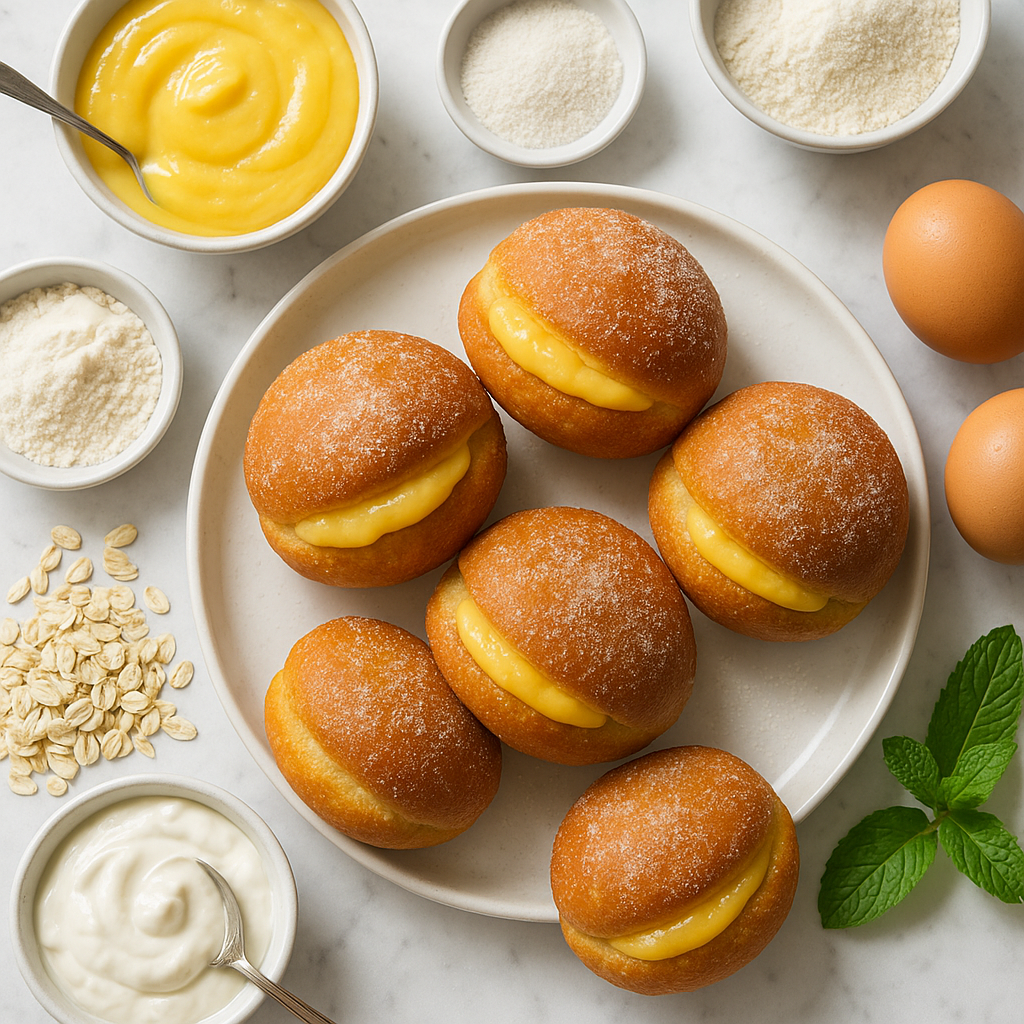
Bola de Berlim Portuguese Filled Donuts, baked and high in protein, is the kind of recipe that earns a permanent spot in your rotation once you try it. The original bola de berlim is a beloved Portuguese beach snack, a yeasted dough ball split open and filled with a thick egg custard cream, sold from carts along the Algarve coast. This version keeps the soul of that tradition intact while doing something the street version never does: it delivers 9 grams of protein per donut and uses a Greek yogurt filling instead of a custard loaded with egg yolks and sugar. The dough is baked in the oven rather than submerged in hot oil, which cuts the fat content significantly without sacrificing the soft, pillowy interior that makes this treat so satisfying. For anyone who has tried to enjoy classic filled donuts without the post-sugar crash, this recipe offers a genuinely worthwhile alternative. The lemon zest lifts the whole thing in a way that feels authentic to Portuguese baking, not like a compromise.
The ingredient list here is doing real work on the nutritional side. White spelt flour forms the base of the dough and contributes a mild nuttiness along with more fibre and minerals than standard plain flour, including manganese and magnesium. Oat flour is blended in to increase the fibre content further, hitting 3 grams per donut, and it gives the crumb a slightly tender, moist quality that spelt alone would not achieve. Fast-action dried yeast is the leavening agent that creates that classic domed shape and chewy texture. Raw honey provides the gentle sweetness in both the dough and the filling, and unlike refined white sugar it brings trace enzymes and antioxidants. Whole milk adds fat-soluble vitamins and helps activate the yeast properly. The two free-range eggs contribute to the structure and add protein, as does the star of the filling: 400 grams of full-fat plain Greek yogurt, which provides casein protein and live cultures beneficial for gut health. Extra virgin olive oil replaces butter in the dough and brings heart-healthy monounsaturated fats.
When these donuts come out of the oven they are a deep golden colour on top with a soft, barely set crust that gives slightly under your thumb. The smell as they bake is warm and yeasty with a background note of lemon, which intensifies as the vanilla in both the dough and filling starts to come through. The dough itself is soft and pulls apart in layers when you split each ball open for filling. The Greek yogurt cream, mixed with raw honey and vanilla extract, is thick and cool against the warm baked dough, and that contrast is part of what makes this so satisfying to eat. The flavour is clean and lightly sweet with the tang of yogurt sitting underneath the honey. There is nothing heavy about it. The baking process, done at a high temperature for a short time after a single prove, helps the dough stay tender inside without forming a hard crust. Rolling the finished donuts in a fine dusting of caster sugar just before serving gives them that recognisable sparkle from the original.
This recipe supports a high-protein dietary approach, making it genuinely useful for people who train in the morning and want a post-workout breakfast that still feels like a treat. Each donut sits at 210 calories with a macro split that leans into protein and moderate carbohydrate, which supports muscle recovery without spiking blood sugar sharply. The combination of oat flour fibre and protein from eggs and Greek yogurt slows digestion and extends satiety compared to a traditional fried donut made with refined flour. This recipe fits naturally into a Mediterranean-style eating pattern given the olive oil, spelt flour and honey. It is suitable for lacto-vegetarians and for those following high-protein or balanced macro diets. People managing their weight who still want baked goods in their week will find the halved sugar content and protein-forward filling much easier to fit into their daily targets. It is also a strong option for families with children who need more protein at breakfast without noticing the difference from a flavour perspective.
For meal prep, the dough can be made the evening before, shaped into balls, placed on a lined tray, covered with cling film, and left in the fridge overnight for a slow cold prove. The next morning you bring them to room temperature for 20 minutes before baking. Baked unfilled donuts keep well in an airtight container at room temperature for up to two days, and they reheat beautifully in a low oven at 150 degrees Celsius for five minutes before splitting and filling. The Greek yogurt cream should always be stored separately in the fridge, where it keeps for up to three days. For variations, you can swap the honey in the filling for a ripe mashed banana to add natural sweetness and potassium. A second option is to fold a teaspoon of cinnamon into the yogurt cream for a warmer spiced note. A third variation uses orange zest in place of lemon zest in the dough, which gives a rounder, slightly sweeter fragrance that works especially well in winter. Head to the recipe card below for the full method and exact timings.
Ingredients
- 200 g white spelt flour (plus extra for dusting)
- 100 g oat flour (certified gluten-free if needed)
- 7 g fast-action dried yeast (one standard sachet)
- 1 tbsp raw honey (or maple syrup)
- 120 ml warm whole milk (around 38 degrees C, not hot)
- 2 large free-range eggs (room temperature)
- 2 tbsp extra virgin olive oil
- 1 tsp fine sea salt
- 1 tsp lemon zest (from one unwaxed lemon)
- 1 tsp pure vanilla extract (for the dough)
- 400 g full-fat plain Greek yogurt (strained overnight through a muslin cloth if possible)
- 2 tbsp raw honey (for the filling)
- 1.5 tsp pure vanilla extract (for the filling)
- 1 tbsp cornflour (helps the filling hold its shape)
- 2 tbsp coconut sugar (for dusting the finished donuts)
- 1 tbsp unsalted butter (softened, for enriching the dough)
Instructions
- 1
Start with the filling so it has time to chill. In a medium bowl, combine the strained Greek yogurt, 2 tablespoons of honey, 1.5 teaspoons of vanilla extract, and the cornflour. Whisk until completely smooth and silky. Taste and adjust sweetness if needed. Transfer to a piping bag or a zip-lock bag, seal it and refrigerate for at least one hour or overnight. The filling firms up as it chills, making piping much easier.
Straining the yogurt overnight in a fine mesh sieve lined with muslin removes excess whey and gives you a thicker, richer cream that closely mimics traditional pastry cream in texture.
- 2
In a small bowl or jug, combine the warm milk, honey and yeast. Stir gently and leave for 8 to 10 minutes until frothy and active. If it does not froth, your yeast may be old or the milk was too hot. Start again with fresh yeast.
- 3
In the bowl of a stand mixer fitted with a dough hook, combine the spelt flour, oat flour, salt and lemon zest. Add the eggs, olive oil, softened butter and vanilla extract, then pour in the activated yeast mixture. Mix on low speed for 2 minutes, then increase to medium and knead for 8 to 10 minutes until the dough is smooth, soft and slightly tacky but not sticky. It will pull away cleanly from the sides of the bowl.
Oat flour makes the dough slightly softer than an all-spelt version. Resist adding too much extra flour or the donuts will be dense rather than fluffy.
- 4
Shape the dough into a ball, place it in a lightly oiled bowl and cover with cling film or a damp tea towel. Leave to rise in a warm spot for 60 to 75 minutes until doubled in size. Alternatively, place it covered in the fridge overnight for a slow rise and improved flavour.
- 5
Once risen, tip the dough onto a lightly floured surface and gently knock it back. Divide it into 10 equal portions, each around 50 to 55 grams. Roll each piece into a smooth ball by cupping your hand over the dough and moving it in small circles on the work surface.
Use a digital scale to get evenly sized donuts so they bake at the same rate.
- 6
Line a large baking tray with parchment paper and space the dough balls well apart. Cover loosely with oiled cling film and leave to prove for a second time at room temperature for 30 to 40 minutes until noticeably puffed. Meanwhile, preheat your oven to 190 degrees C, fan 170 degrees C.
- 7
Bake the donuts for 12 to 14 minutes until golden on top and cooked through. They should sound hollow when tapped on the base. Remove from the oven and transfer to a wire rack. Allow to cool for at least 15 minutes before filling.
Do not overbake. A pale golden colour is ideal. Overbaking dries out the crumb and makes the texture tough.
- 8
Once the donuts are cooled but still slightly warm, use a serrated knife to cut each one almost in half horizontally, leaving a hinge on one side, just like a traditional bola de berlim. This exposes the interior and allows for a generous filling.
- 9
Take the chilled vanilla yogurt cream from the fridge. Snip the tip of the piping bag or zip-lock bag to create a medium opening. Pipe a generous amount of cream into each sliced donut, allowing it to be visible from the sides.
Piping the cream when it is cold and firm keeps it from seeping out immediately. If you make these ahead, keep filled donuts refrigerated and serve within a few hours.
- 10
Finish each bola de berlim with a light dusting of coconut sugar over the top surface. Serve immediately and enjoy the little taste of Portugal you have just created in your own kitchen.
Coconut sugar has a subtle caramel note that complements the lemon and vanilla beautifully. You can also mix the coconut sugar with a pinch of cinnamon for a warm spiced finish.
Nutrition per serving
210kcal
Calories
9g
Protein
28g
Carbs
6g
Fat
3g
Fibre
8g
Sugar
145mg
Sodium
Pro Tips
- ✓
Strain your Greek yogurt the night before. The thicker it is, the better your filling will hold its shape inside the donut.
- ✓
A slow overnight cold rise in the fridge develops more complex flavour in the dough and makes your morning easier.
- ✓
Use a digital kitchen scale rather than volume measurements for the dough. Bread baking rewards precision.
- ✓
Do not rush the second prove. Under-proved donuts bake up dense and bread-like rather than light and fluffy.
- ✓
Serve these fresh on the day of baking for the best texture. The dough softens slightly as it sits, which is still delicious but not at its peak.
Frequently Asked Questions
Variations
- •
Passion Fruit Cream Filling
Replace 3 tablespoons of the Greek yogurt in the filling with strained fresh passion fruit pulp. The tartness pairs beautifully with the honey and vanilla and gives a tropical Portuguese twist.
- •
Lemon Curd and Yogurt Filling
Swirl 3 tablespoons of good quality lemon curd into the yogurt cream before chilling. This gives a bright, citrus-forward filling that complements the lemon zest in the dough.
- •
Chocolate Hazelnut Filling
Blend 2 tablespoons of a natural chocolate hazelnut spread into the yogurt cream for a richer, dessert-style filling that still keeps the calorie count well below a traditionally fried version.
- •
Dairy-Free Version
Use a thick, strained coconut yogurt in place of Greek yogurt for the filling, and swap the whole milk in the dough for oat milk. The texture is slightly different but the flavour is genuinely lovely.
Substitutions
- •White spelt flour → Whole wheat pastry flour (Whole wheat pastry flour is finer than standard wholemeal and will give a slightly denser but still pleasant result with more fibre.)
- •Oat flour → Plain white flour (Using plain white flour in place of oat flour gives a more traditional donut texture but reduces the fibre content of the recipe.)
- •Raw honey → Maple syrup (Maple syrup works at a 1:1 ratio in both the dough and the filling. It adds a subtle warmth to the flavour.)
- •Full-fat Greek yogurt → Strained coconut yogurt (For a dairy-free filling. Choose the thickest coconut yogurt you can find and strain overnight for best results.)
- •Whole milk → Oat milk (Oat milk activates the yeast well and gives a mild flavour that works nicely in this dough. Use full-fat oat milk for the best result.)
🧊 Storage
Store unfilled baked donuts in an airtight container at room temperature for up to 2 days. Once filled, keep refrigerated in a covered container and consume within 24 hours for best texture and food safety. The yogurt cream filling must stay chilled at all times.
📅 Make Ahead
Prepare the Greek yogurt filling the night before and refrigerate in a sealed piping bag. The dough can also do its first rise overnight in the fridge. Remove the dough from the fridge 30 minutes before shaping to allow it to come back to room temperature before the second prove.