Nourishing Congee Breakfast Bowl with Soft Boiled Egg and Ginger
Nourishing Congee Breakfast Bowl with Soft Boiled Egg and Ginger is the kind of breakfast that genuinely changes how you feel before 9am. Most people reach for toast or cereal out of habit, but this bowl delivers 28 grams of protein alongside slow-burning carbohydrates and gut-supportive ingredients that keep hunger at bay for hours. It sits in a category of its own among breakfast options because it is warm, deeply savoury, and built around a cooking tradition that spans centuries across East and Southeast Asia. Congee has always been eaten as a restorative meal, something you make when you want real nourishment rather than something to eat on autopilot. What makes this version stand out is the combination of short-grain brown rice with cauliflower rice, which trims the carbohydrate load without sacrificing that signature silky, porridge-like consistency. The result is a bowl that feels indulgent and comforting while hitting genuine nutritional targets. It is high protein, gluten-free, dairy-free, and meal prep friendly, which means it works for a broad range of eating goals without requiring any compromise on flavour.
Every ingredient in this recipe earns its place. Short-grain brown rice forms the base, and it matters that it is brown rather than white because the bran layer provides fibre, B vitamins, and a slower glucose release that supports sustained energy. Cauliflower rice is folded in to bulk out the bowl and add another layer of fibre and vitamin C without pushing the carbohydrate count higher. Low-sodium chicken broth is the cooking liquid, and it does two things at once: it infuses the grains with a savoury depth while contributing collagen and minerals that support gut lining health. Fresh ginger is not decorative here. It contains gingerols, compounds with well-documented anti-inflammatory and digestive properties that are especially active when ginger is used fresh rather than dried. Garlic adds allicin, a sulphur compound with immune-supporting qualities. Toasted sesame oil and low-sodium tamari provide umami without loading the bowl with sodium. Four large eggs across two servings contribute the protein backbone, with each egg delivering around 6 grams of complete protein plus choline for brain function. Frozen edamame adds another 4 to 5 grams of plant protein per serving alongside fibre and folate.
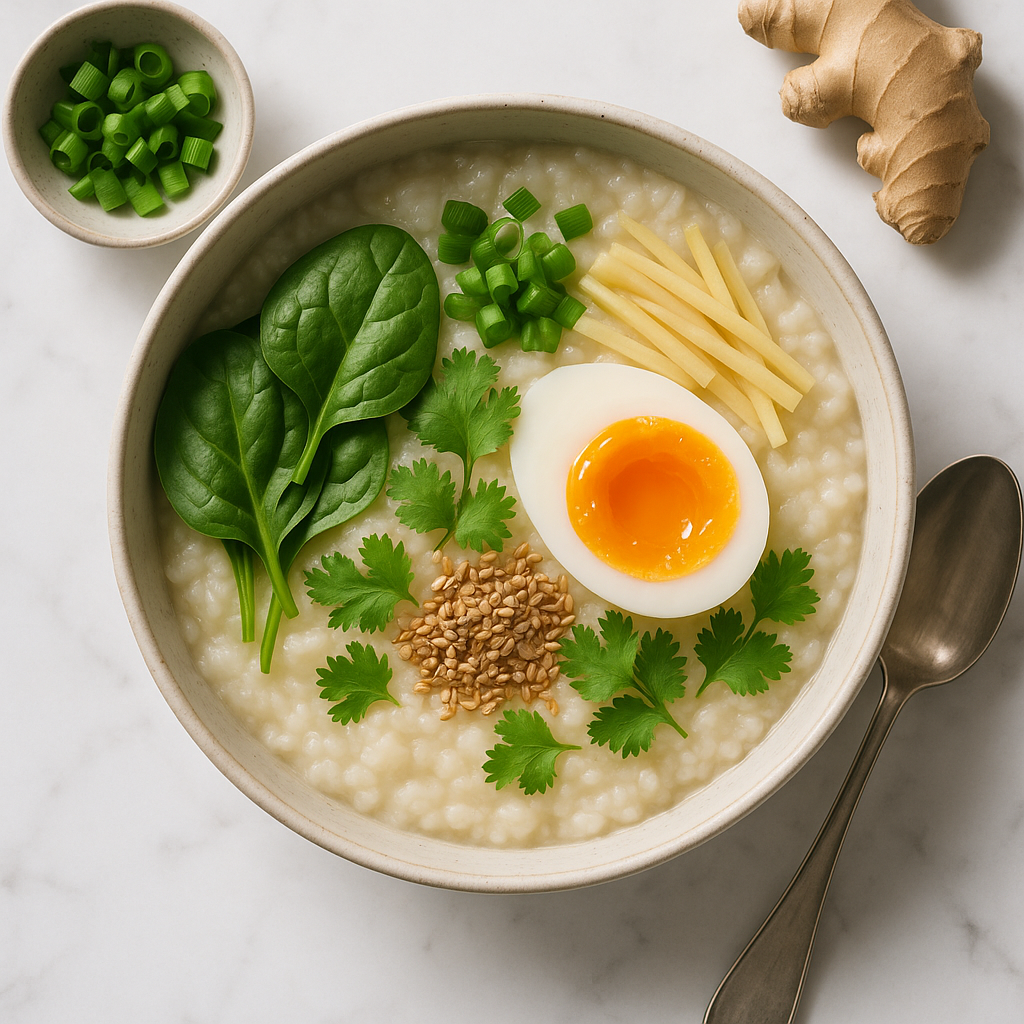
The finished bowl is a study in contrast and comfort. The congee base is thick and creamy, almost velvety, with a consistency somewhere between a loose risotto and a proper porridge. It clings to the spoon and has a pale golden colour from the broth. The smell when it is cooking is deeply warming: ginger and garlic hitting a hot pot first, then the broth absorbing into the rice over a long, slow simmer. That slow cook is what transforms raw, nutty brown rice into something soft enough to eat with a spoon but still with a little body from the cauliflower. The soft-boiled eggs are halved over the top, their yolks set to a jammy, orange-centred consistency that bleeds slightly into the congee when you break them. Edamame adds small pops of firmness and a bright green colour against the pale bowl. Spring onion and coriander go on last, adding sharpness and a herbaceous lift that cuts through the richness of the sesame oil. The tamari provides a quiet saltiness that ties every element together without one flavour dominating.
This recipe supports several specific health goals. The combination of complete protein from eggs and complementary plant protein from edamame makes it relevant for muscle maintenance and recovery, which is why it fits well as a post-exercise breakfast. The brown rice and cauliflower rice together provide a fibre intake that supports gut motility and helps feed beneficial gut bacteria, which is meaningful for anyone managing digestive health. The absence of gluten and dairy makes this accessible for people with coeliac disease, lactose intolerance, or those following elimination protocols. The low sodium approach, using both low-sodium broth and tamari, makes it suitable for people monitoring blood pressure. Ginger and garlic contribute to anti-inflammatory eating patterns, which are relevant for people managing conditions like arthritis, metabolic syndrome, or chronic fatigue. The 385-calorie count with a 28-gram protein hit and 7 grams of fibre creates a breakfast that genuinely satisfies rather than leaving you hungry by mid-morning. People following gluten-free, dairy-free, or high-protein eating plans will find this fits without any modification needed.
For meal prep, this congee is one of the better options you can make in a batch. The base keeps well in the fridge for up to four days in a sealed container, though it will thicken considerably as it sits. Reheat it gently in a small saucepan with a splash of water or broth to loosen it back to a porridge consistency, stirring over low heat for a few minutes. The soft-boiled eggs are best made fresh each morning, as the texture changes when refrigerated and reheated. If you want to freeze the congee base, it holds up for around one month and defrosts well overnight in the fridge. For variations, try replacing chicken broth with a good vegetable broth for a fully plant-based version, then add tofu cubes in place of eggs for a comparable protein result. A spoonful of miso stirred in at the end adds a fermented depth that pairs well with the ginger. You can also swap edamame for shelled frozen peas or sliced mushrooms depending on what you have. The full ingredient quantities and step-by-step method are in the recipe card below.
Ingredients
- 1 cup short-grain brown rice (rinsed well)
- 1 cup cauliflower rice (fresh or frozen, thawed)
- 4 cups low-sodium chicken broth (or vegetable broth for vegetarian)
- 1 cup water
- 1 tablespoon fresh ginger (finely grated, plus extra slices for topping)
- 2 cloves garlic (minced)
- 1 teaspoon toasted sesame oil
- 1 tablespoon low-sodium tamari (or soy sauce)
- 4 large eggs (free range, 2 per serving)
- 1 cup frozen edamame (shelled, thawed)
- 3 stalks spring onions (thinly sliced)
- 1 cup fresh coriander leaves (loosely packed)
- 1 teaspoon sesame seeds (white or mixed)
- 1 teaspoon white pepper (freshly ground if possible)
- 1 teaspoon chilli oil (optional, for serving)
- 1 teaspoon fine sea salt (adjust to taste)
Instructions
- 1
Add the rinsed brown rice and chicken broth to a medium heavy-bottomed saucepan. Bring to a boil over medium-high heat, then reduce to a gentle simmer. Stir in the minced garlic and grated ginger. Cook uncovered, stirring every 8 to 10 minutes, for about 35 minutes until the rice is very soft and beginning to break down.
Brown rice takes longer to break down than white rice. Be patient and keep stirring. If the congee thickens too quickly, add the water gradually as needed.
- 2
Stir in the cauliflower rice and continue to cook for a further 8 to 10 minutes, stirring frequently. The cauliflower will dissolve almost completely into the porridge, giving it extra body and a creamier texture without any distinct cauliflower flavour.
Use a whisk to vigorously stir the congee at this stage. This helps break down the rice grains further and creates a smoother, silkier consistency.
- 3
While the congee finishes cooking, bring a small saucepan of water to a rolling boil. Gently lower in the eggs using a spoon. Cook for exactly 6 minutes and 30 seconds for a custard-like yolk. Immediately transfer the eggs to a bowl of cold water and leave for 2 minutes, then peel carefully.
The ice water bath stops the cooking process instantly and makes the eggs much easier to peel. Do not skip this step.
- 4
Season the congee with tamari, white pepper and sea salt. Stir in the sesame oil and remove from the heat. The congee should be thick and creamy but still pourable. If it is too thick, stir in a splash of hot water.
Taste before adding salt as the tamari and broth already bring a good amount of saltiness.
- 5
Ladle the congee into two wide bowls. Halve each egg and nestle two halved eggs into each bowl. Scatter the edamame, spring onions, sliced fresh ginger and coriander over the top.
- 6
Finish each bowl with a sprinkle of sesame seeds and a drizzle of chilli oil if using. Serve immediately while piping hot.
A few extra drops of tamari at the table let each person season to their own preference.
Nutrition per serving
385kcal
Calories
28g
Protein
38g
Carbs
13g
Fat
7g
Fibre
3g
Sugar
480mg
Sodium
Pro Tips
- ✓
Rinse your brown rice thoroughly until the water runs clear. This removes excess starch and prevents the congee from becoming overly gluey.
- ✓
Batch cook the congee base on a Sunday for fast weekday breakfasts. Store in an airtight container in the fridge for up to 4 days.
- ✓
The congee will thicken considerably as it cools. When reheating, add a splash of broth or water and stir over medium heat until loosened.
- ✓
For an even silkier texture, use the back of a spoon to mash some of the rice grains against the side of the pot as the congee cooks.
- ✓
Fresh ginger delivers far more flavour and nutritional benefit than dried ground ginger in this recipe. Do not substitute if you can avoid it.
- ✓
If your eggs are coming straight from the fridge, add 30 extra seconds to the boiling time to account for the cold start.
Frequently Asked Questions
Variations
- •
Miso Ginger Congee
Stir one tablespoon of white miso paste into the congee at the end of cooking instead of tamari. This adds a probiotic boost and a deeper, slightly sweeter umami flavour. Top with thinly sliced radish and a sprinkle of nori flakes alongside the soft boiled egg.
- •
Turkey Mince and Ginger Congee
Brown 150 grams of lean ground turkey with garlic, ginger and a pinch of five spice in a separate pan. Spoon it over the congee base instead of edamame for a heartier, even higher protein breakfast bowl.
- •
Mushroom and Ginger Vegan Congee
Skip the eggs and use vegetable broth. Top with sauteed shiitake mushrooms cooked in sesame oil and tamari, extra edamame, sliced avocado and a sprinkle of hemp seeds for a fully plant-based version with a good protein and healthy fat profile.
- •
Turmeric Ginger Healing Congee
Add half a teaspoon of ground turmeric and a quarter teaspoon of ground black pepper to the broth at the start of cooking. This amplifies the anti-inflammatory properties and gives the bowl a beautiful golden colour. Finish with a swirl of extra virgin olive oil.
Substitutions
- •Brown rice → Short-grain white rice (Reduce cooking time to 20 to 25 minutes. The texture will be silkier but fibre content will be lower.)
- •Chicken broth → Low-sodium vegetable broth (Makes the recipe fully vegetarian and vegan if eggs are also omitted. The flavour is lighter but still delicious with the ginger and garlic.)
- •Tamari → Coconut aminos (A lower-sodium, slightly sweeter option that is also fully soy-free and paleo-friendly.)
- •Fresh coriander → Fresh flat-leaf parsley or Thai basil (Use if coriander is not to your taste. Both provide a fresh herby finish without overpowering the ginger.)
- •Edamame → Frozen shelled peas or diced firm tofu (Peas are slightly lower in protein but still add colour and fibre. Tofu keeps the protein level high and suits a soy-friendly preference.)
- •Eggs → Silken tofu slices (For a vegan version, soft silken tofu provides a similar creamy texture to soft boiled egg yolk. Season the tofu with a tiny drizzle of sesame oil and tamari before placing on the bowl.)
🧊 Storage
Store the congee base in an airtight container in the refrigerator for up to 4 days. Keep toppings separate and add fresh when serving. To reheat, place the congee in a small saucepan over medium heat with a splash of broth or water, stirring frequently until hot and at your desired consistency. Soft boiled eggs should be stored unpeeled in the fridge for up to 2 days and reheated in warm water for 1 minute before serving.
📅 Make Ahead
The congee base is excellent for meal prep. Cook a double batch on the weekend and portion into containers for quick weekday breakfasts. Soft boil a batch of eggs and store them unpeeled in the fridge. In the morning, reheat the congee, warm the eggs briefly in hot water, add your toppings and breakfast is on the table in under 5 minutes.