High Protein Scrambled Egg Breakfast Bowl with Crispy Potatoes
High Protein Scrambled Egg Breakfast Bowl with Crispy Potatoes is the kind of breakfast that actually keeps you full until lunch without leaving you feeling heavy or sluggish. The standout feature here is that 38 grams of protein per serving, which puts it well ahead of most morning meals. A lot of high-protein breakfasts lean on powder supplements or complicated prep, but this bowl gets there with whole food ingredients that are easy to find and straightforward to cook. The combination of whole eggs, egg whites, and Greek yogurt working together is what makes the protein number so impressive without any artificial additions. The crispy potatoes bring real substance to the bowl, meaning you get carbohydrates that actually fuel your morning rather than spiking your blood sugar and crashing an hour later. At 410 calories with a balanced split across protein, carbs, and fat, this is a meal that earns its place on your regular rotation. It suits people who train in the mornings, have long workdays, or simply want a breakfast that works as hard as they do.
Baby potatoes form the carbohydrate base of this bowl, and they earn their spot with more than just bulk. Potatoes are a good source of potassium, vitamin C, and resistant starch, especially when cooked and cooled, which supports digestive health. The four whole eggs contribute around 24 grams of protein between them, plus essential fat-soluble vitamins including A, D, and B12. Adding four egg whites on top of the whole eggs pushes the protein content higher without significantly increasing the fat or calorie count, which is a practical trick worth knowing. The 60 grams of Greek yogurt stirred into the eggs might surprise you, but it serves a dual purpose: it adds another protein boost and creates a creamier, softer texture in the scramble without any cream or butter needed. Smoked paprika and garlic powder on the potatoes are not just flavour choices. Paprika contains capsaicin compounds with anti-inflammatory properties, and garlic powder carries prebiotic benefits. Red bell pepper adds vitamin C and a natural sweetness, while baby spinach contributes iron, folate, and fibre to round out the nutritional profile.
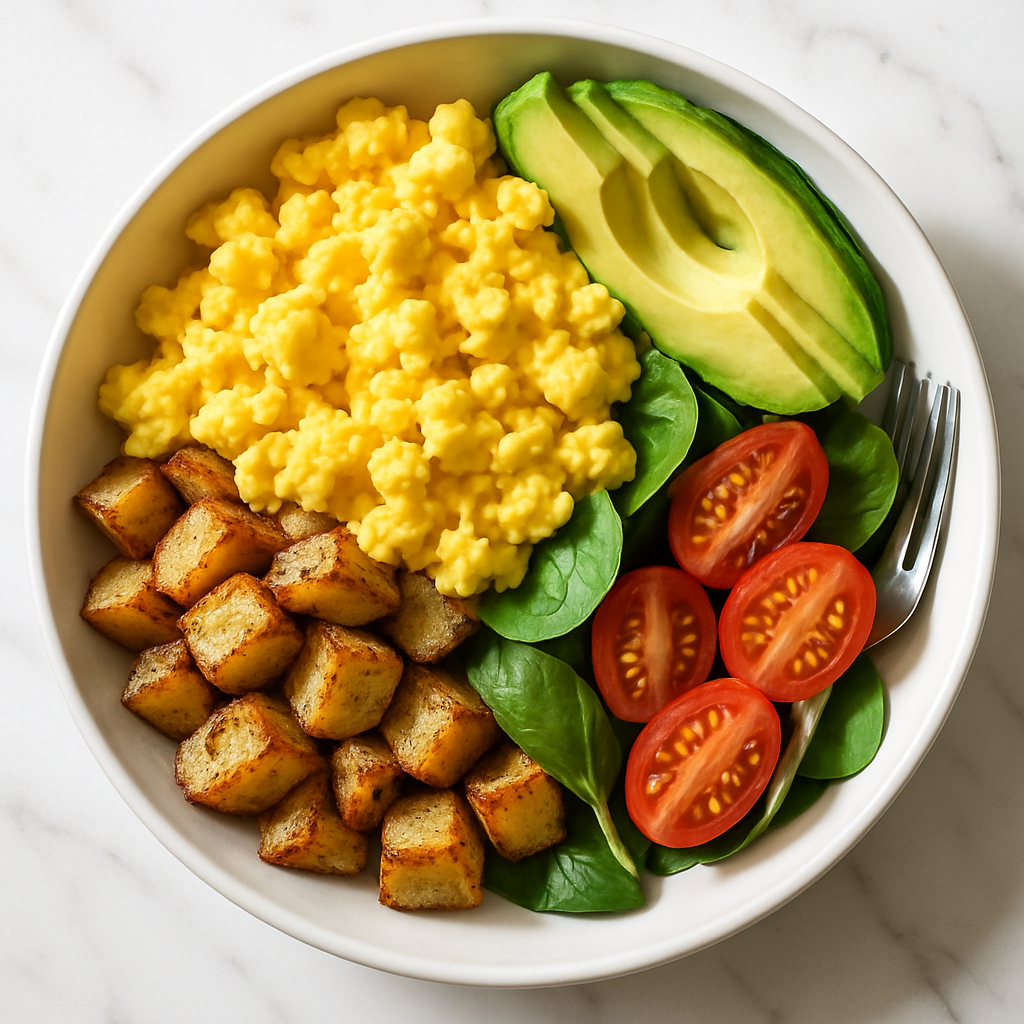
The potatoes come out of the oven with a genuine crisp on the outside from roasting in olive oil at high heat, and that contrast with the soft, creamy eggs is what makes this bowl satisfying to eat rather than monotonous. The smoked paprika gives the potatoes a warm, slightly smoky colour and a gentle depth of flavour that you notice immediately. The scrambled eggs have a pale, almost custard-like appearance because of the Greek yogurt, and they stay soft and moist rather than rubbery or dry. Cooking the eggs low and slow over medium-low heat, pulling the pan off the heat while they are still slightly underdone, lets the residual heat finish the job without overcooking them. The spring onions bring a fresh, mild bite that cuts through the richness of the eggs. Baby spinach wilted briefly in the pan with the peppers adds a soft, earthy undertone. When you assemble everything in the bowl, you get layers of colour, from the golden potatoes and bright red pepper to the green spinach and pale yellow eggs, which makes it feel like a proper meal rather than something thrown together.
This recipe is built around a very specific health goal: sustained energy and muscle support through the morning hours. The high protein content supports muscle repair and growth, making it a strong choice post-workout. At the same time, the fibre from potatoes, spinach, and bell pepper helps slow digestion and keeps blood sugar more stable compared to a carbohydrate-heavy breakfast with little protein. The recipe is naturally gluten-free, which matters for anyone managing coeliac disease or gluten sensitivity, and it requires no substitutions to achieve that. It fits comfortably into a lower-fat diet as well, since the fat content of 16 grams comes mostly from olive oil and egg yolks rather than processed sources. Athletes, people managing their weight through a high-protein approach, and anyone with demanding mornings will find this particularly useful. It is also worth noting that the recipe contains no added sugar, with the 5 grams of naturally occurring sugar coming from the vegetables, making it a sound choice for people monitoring their sugar intake.
For meal prep, the potatoes roast well in advance and reheat beautifully. Cook a large batch on Sunday, store them in an airtight container in the fridge for up to four days, and warm them in a dry frying pan or air fryer to bring the crispiness back. The scrambled eggs are best made fresh since reheating eggs can make them rubbery, but the prep time is only about five minutes once your potatoes are ready. You can chop the pepper and spring onions ahead of time and keep them refrigerated in a small container. For variations, swap baby potatoes for sweet potato chunks if you want a slightly higher beta-carotene content and a sweeter flavour. A handful of cherry tomatoes added to the pan with the peppers works well and adds lycopene. If you want more fat to support a higher-calorie target, a quarter of an avocado sliced on top fits naturally with the other flavours. The full ingredient quantities and step-by-step cooking instructions are laid out in the recipe card below.
Ingredients
- 300 g baby potatoes (halved, no need to peel)
- 1 tbsp olive oil (for roasting the potatoes)
- 1 tsp smoked paprika
- 1 tsp garlic powder
- 1 tsp fine sea salt (divided)
- 4 large whole eggs (free-range if possible)
- 4 large egg whites (from carton or fresh eggs)
- 60 g plain Greek yogurt (full-fat or 2 percent, not fat-free)
- 1 tsp olive oil (for scrambling the eggs)
- 1 medium red bell pepper (finely diced)
- 2 stalks spring onions (thinly sliced, white and green parts)
- 60 g baby spinach (roughly chopped)
- 40 g reduced-fat feta cheese (crumbled, to serve)
- 1 tsp black pepper (freshly ground)
- 1 pinch chilli flakes (optional, for heat)
Instructions
- 1
Preheat your oven to 220 degrees Celsius (200 fan, 425 Fahrenheit). Halve the baby potatoes and place them on a lined baking tray. Drizzle over 1 tablespoon of olive oil, then sprinkle with smoked paprika, garlic powder, and half the salt. Toss well to coat every cut surface, then spread them cut-side down in a single layer.
Placing the potatoes cut-side down directly on the tray is the key to getting that crispy golden crust without any extra oil.
- 2
Roast the potatoes for 25 to 28 minutes, flipping once at the halfway point, until they are deeply golden on the outside and tender when pierced with a fork. Remove from the oven and set aside.
Do not overcrowd the tray. If the potatoes are touching, they will steam rather than crisp. Use two trays if needed.
- 3
While the potatoes are in their final 10 minutes of cooking, whisk together the whole eggs, egg whites, Greek yogurt, remaining salt, and black pepper in a bowl until the mixture is smooth and slightly frothy. The yogurt will blend right in.
Whisking the yogurt into the eggs before cooking, rather than stirring it in at the end, gives you a much more consistent creamy texture throughout.
- 4
Place a non-stick skillet over medium heat and add 1 teaspoon of olive oil. Once warm, add the diced red bell pepper and the white parts of the spring onions. Cook for 2 to 3 minutes, stirring occasionally, until the pepper has softened slightly.
- 5
Add the chopped spinach to the pan and stir until it wilts down, which takes about 30 seconds. Spread the vegetable mixture evenly across the pan, then reduce the heat to medium-low.
Dropping the heat before adding the eggs is essential for soft, creamy scrambled eggs. High heat makes them rubbery.
- 6
Pour the egg mixture over the vegetables. Leave it undisturbed for about 20 seconds until you see the edges just starting to set. Using a silicone spatula, gently fold the eggs from the edges toward the centre in slow, sweeping strokes. Continue folding every 15 to 20 seconds, removing the pan from the heat while stirring if needed, until the eggs are just set but still look slightly glossy. This takes about 2 to 3 minutes total.
Pull the pan off the heat 30 seconds before the eggs look fully done. Residual heat will finish the job, and you will never have dry scrambled eggs again.
- 7
Divide the crispy potatoes between two bowls. Top each bowl with half the scrambled egg and vegetable mixture. Scatter over the crumbled feta, the green parts of the spring onions, and chilli flakes if using. Serve immediately.
Nutrition per serving
410kcal
Calories
38g
Protein
29g
Carbs
16g
Fat
5g
Fibre
5g
Sugar
520mg
Sodium
Pro Tips
- ✓
Use a kitchen scale to halve the potato portion accurately if you are tracking macros closely.
- ✓
Greek yogurt is the secret to creamier scrambled eggs with extra protein. Do not skip it.
- ✓
For even crispier potatoes, parboil them for 5 minutes before roasting and let them steam-dry before tossing in oil.
- ✓
A cast iron skillet retains heat very evenly and works brilliantly for the scrambled eggs if you have one.
- ✓
If reheating from meal prep, always reheat the potatoes separately in an air fryer or hot oven to restore the crisp texture.
- ✓
Season the eggs only after whisking in the yogurt. Salting raw eggs too early can break down the proteins slightly.
Frequently Asked Questions
Variations
- •
Turkey Sausage and Egg Bowl
Cook 100g of sliced turkey or chicken breakfast sausage in the skillet before adding the vegetables. It adds extra protein and a hearty, savoury flavour that makes the bowl feel even more substantial.
- •
Southwest Style Bowl
Add 1/2 teaspoon of cumin and a pinch of cayenne to the potato seasoning. Top the finished bowl with a spoonful of fresh tomato salsa, sliced avocado, and a squeeze of lime juice for a vibrant, Mexican-inspired breakfast.
- •
Mediterranean Bowl
Swap the red pepper for sun-dried tomatoes and a handful of pitted Kalamata olives. Add a sprinkle of dried oregano to the eggs. Serve with a dollop of hummus on the side and a few sliced cucumber rounds.
- •
Dairy Free and Avocado Bowl
Replace the Greek yogurt with plain coconut yogurt and omit the feta. Top the finished bowl with half a ripe sliced avocado and a sprinkle of hemp seeds for healthy fats and extra protein without any dairy.
Substitutions
- •Baby potatoes → Sweet potato (Dice sweet potato into 1.5cm cubes and roast at the same temperature. It adds a natural sweetness and slightly more fibre, while keeping the dish just as filling.)
- •Plain Greek yogurt → Cottage cheese (Blend the cottage cheese smooth before whisking it with the eggs. It has a similar protein content and gives a comparable creamy texture in the finished scramble.)
- •Egg whites (from carton) → Extra whole eggs (If you prefer to avoid carton egg whites, use 2 additional whole eggs instead. The fat content will increase slightly but the protein will remain similar.)
- •Feta cheese → Goats cheese or nutritional yeast (Crumbled soft goats cheese melts slightly more and has a milder tang. Nutritional yeast works well for a dairy-free option, adding a savoury, cheesy flavour along with B vitamins.)
- •Red bell pepper → Cherry tomatoes or mushrooms (Halved cherry tomatoes or sliced chestnut mushrooms both cook at the same speed and add great flavour. Mushrooms will also add a small additional protein boost.)
🧊 Storage
Store the roasted potatoes and scrambled eggs in separate airtight containers in the refrigerator for up to 4 days. Do not store them assembled, as the potatoes will lose their crisp texture when in contact with the eggs. Reheat potatoes in an air fryer or hot oven. Scrambled eggs can be gently reheated in a non-stick pan over low heat with a splash of water, stirring constantly, or in the microwave in 20-second bursts.
📅 Make Ahead
Roast a double batch of potatoes and store in the fridge for up to 4 days. Dice and store the raw vegetables in a container so they are ready to cook each morning. Whisk together the egg and yogurt mixture the evening before and keep it covered in the fridge overnight. In the morning, you only need to cook the eggs and reheat the potatoes, bringing the total active time down to under 10 minutes.