Halal Beef Sujuk and Egg Breakfast Skillet with Roasted Peppers and Spinach
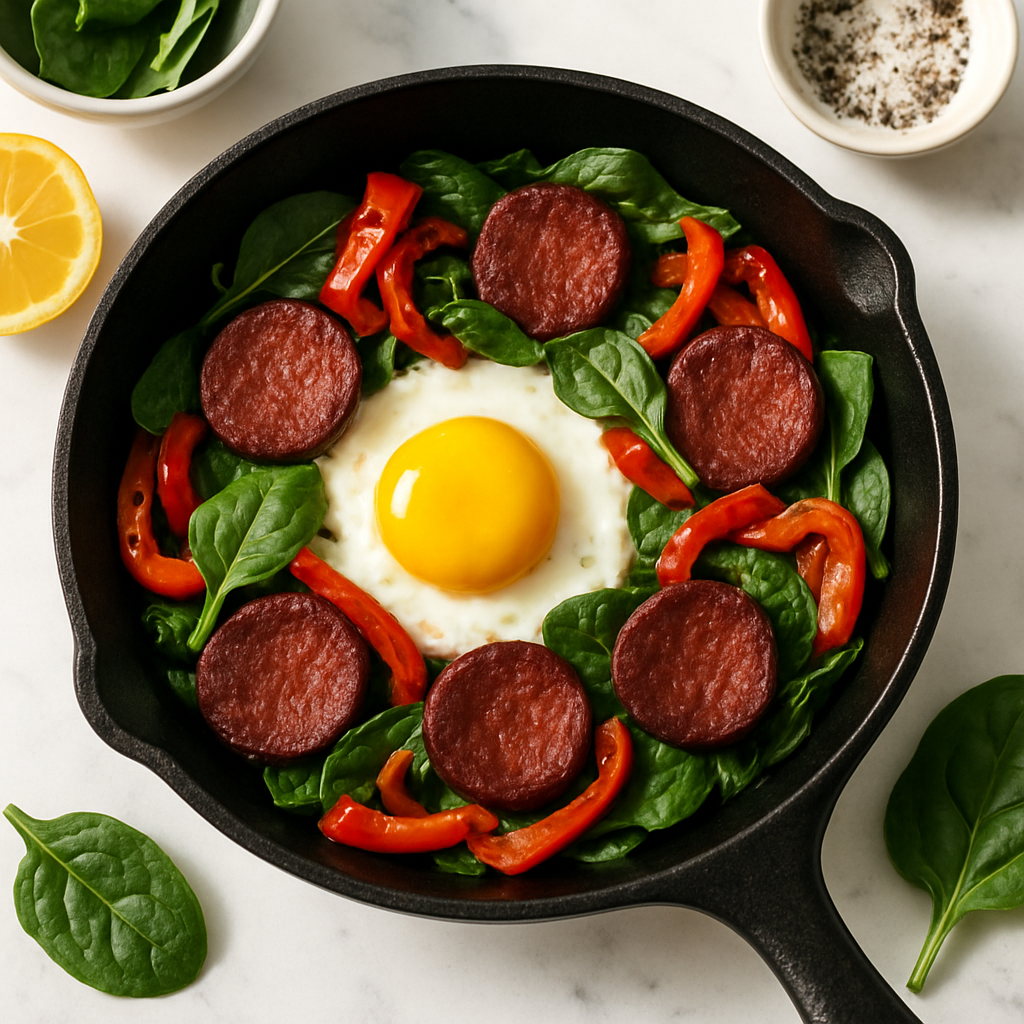
Halal Beef Sujuk and Egg Breakfast Skillet with Roasted Peppers and Spinach is the kind of morning meal that earns its place on a weekly rotation fast. The primary appeal here is the protein content: 28 grams per serving from a combination of spiced beef sujuk and eggs, which makes it a genuinely satisfying start that holds you through a long morning without reaching for snacks by ten. What sets this apart from a standard eggs-and-veg skillet is the sujuk itself. This cured beef sausage brings a deep, warm spice profile that does most of the flavour heavy lifting before you add a single extra seasoning. Unlike a plain turkey or chicken sausage option, sujuk has built-in complexity from the fermentation and spicing process, so the dish rewards you with layers of flavour that take far more effort to achieve with other proteins. At 385 calories with only 11 grams of carbohydrates, it sits comfortably in a low-carb, high-protein framework without feeling like a sacrifice. This is a proper, filling breakfast.
The ingredient list in this recipe is deliberate and each component has a reason to be there. The 120 grams of halal beef sujuk provides the bulk of the protein and fat, with the fat in this case carrying fat-soluble spice compounds that release into the pan and build the flavour base for everything else. The four large free-range eggs add around 24 grams of additional protein combined, along with choline, vitamin D, and B12, nutrients that are important for brain function and energy metabolism first thing in the morning. Baby spinach contributes iron, folate, and vitamin K, and two cups of it cooks down significantly, so you are getting a concentrated dose of those nutrients without a large volume on the plate. Cherry tomatoes bring vitamin C and lycopene, and the roasting process concentrates both. Red onion and garlic together provide quercetin and allicin, compounds associated with supporting immune function and circulation. The cumin, smoked paprika, and chilli flakes are not decorative. They add antioxidants and support digestion. The 30 grams of reduced-fat feta adds a small calcium and protein boost with a salty, tangy contrast that ties the whole skillet together.
In the pan, the sujuk renders its own fat as it heats, filling the kitchen with the smell of warming spice, garlic, and a faint smokiness that is hard to describe accurately but instantly recognisable as something good is cooking. The slices or crumbles of sujuk take on slightly caramelised edges where they meet the hot skillet, and that texture matters. It gives you a contrast between the crisp outer layer and the tender, spiced interior. The softened red onion and garlic go in next, picking up the rendered fat and becoming sweet and golden at the edges. The roasted peppers and spinach wilt into the mixture, adding colour and a soft, silky texture against the firmer sausage pieces. Once the eggs are added, either cracked in and cooked to a set white with a runny yolk, or scrambled through depending on preference, the whole skillet becomes cohesive. The feta crumbled on top softens slightly from the residual heat and adds small bursts of salty creaminess. The parsley finishes it with a bright, fresh note that cuts through the richness.
This recipe is built for people managing their weight while maintaining muscle, or anyone following a high-protein, low-carbohydrate eating pattern. The macronutrient ratio of 28 grams of protein and 11 grams of carbohydrates to 26 grams of fat fits well within ketogenic, low-carb, and general high-protein dietary frameworks. It is also naturally gluten-free as written, provided your sujuk is certified free from wheat-based fillers, so it works for those managing coeliac disease or gluten sensitivity. The iron from spinach combined with the vitamin C from the cherry tomatoes means you get better non-haem iron absorption than you would from spinach alone, which is useful for anyone prone to low iron levels. Athletes or active people who train in the morning will find the protein content supports muscle recovery and the calorie density gives sustained energy without a blood sugar spike. The low sugar content of 5 grams, coming primarily from the vegetables, means no sharp energy crash mid-morning. This is a recipe with a clear nutritional purpose.
For meal prep, the vegetable base of this skillet can be prepared in advance. Cook the sujuk, onion, garlic, peppers, and spinach together, cool completely, and store in an airtight container in the fridge for up to three days. When you are ready to eat, reheat the base in a skillet over medium heat for two to three minutes, then crack the eggs straight in and finish cooking fresh. This keeps the eggs from going rubbery, which is the main reason to hold them back until serving. The base can also be frozen for up to one month, making it useful for batch cooking. For variations, swap the beef sujuk for a lamb-based version if you prefer a slightly milder spice profile. You could also stir through a tablespoon of harissa paste with the onions for a North African flavour direction. If you want to increase the carbohydrate content for a post-workout version, serve the skillet spooned over a slice of toasted sourdough or with warm flatbread on the side. The full method and timings are in the recipe card below.
Ingredients
- 120 g halal beef sujuk (sliced into 5mm rounds, casing removed if needed)
- 4 large free-range eggs
- 2 cups baby spinach (loosely packed, about 60g)
- 150 g cherry tomatoes (halved)
- 1 medium roasted red pepper (from a jar or homemade, sliced into strips)
- 1 small red onion (finely sliced)
- 2 cloves garlic (minced)
- 0.5 tsp ground cumin
- 0.5 tsp smoked paprika
- 0.3 tsp dried chilli flakes (optional, adjust to taste)
- 30 g reduced-fat feta cheese (crumbled, to finish)
- 1 tbsp fresh flat-leaf parsley (roughly chopped, to serve)
- 1 tsp extra virgin olive oil (only if the sujuk is very lean)
- 0.3 tsp freshly ground black pepper (to season)
Instructions
- 1
Place a medium cast iron skillet or non-stick frying pan over medium heat. No oil needed yet. Add the sujuk slices in a single layer and cook for 2 to 3 minutes per side until the edges are lightly crisped and the fat has rendered out into the pan.
Do not crowd the pan. Cook in batches if needed so the sujuk crisps rather than steams.
- 2
Use a slotted spoon to transfer the sujuk to a small plate and set aside. Leave the rendered fat in the pan. If the pan looks dry, add the teaspoon of olive oil now.
A little rendered sujuk fat in the pan is what gives the whole dish its depth of flavour, so do not drain it off.
- 3
Add the sliced red onion to the pan and cook over medium heat for 3 minutes, stirring occasionally, until softened and starting to colour at the edges.
- 4
Add the minced garlic, ground cumin, smoked paprika, and chilli flakes if using. Stir for 30 seconds until fragrant, then add the cherry tomatoes and roasted red pepper strips. Cook for 2 minutes until the tomatoes begin to blister and soften.
If the tomatoes are releasing a lot of liquid, turn the heat up briefly to let it reduce slightly before adding the spinach.
- 5
Add the baby spinach to the pan and stir gently for about 1 minute until just wilted. Nestle the crisped sujuk slices back into the vegetable mixture, spreading everything into an even layer.
- 6
Make 4 small wells in the mixture using the back of a spoon. Crack one egg into each well. Season the eggs with black pepper. Cover the pan with a lid or a large flat plate and cook over low to medium heat for 3 to 4 minutes, until the whites are fully set but the yolks are still slightly soft.
If you prefer fully set yolks, cook for an extra minute. Watch carefully as the residual heat will continue cooking the eggs after you remove the lid.
- 7
Remove from the heat. Scatter the crumbled feta and chopped parsley over the top and bring the skillet straight to the table. Serve immediately.
Serving from the skillet keeps everything warm and looks great with very little effort.
Nutrition per serving
385kcal
Calories
28g
Protein
11g
Carbs
26g
Fat
3g
Fibre
5g
Sugar
740mg
Sodium
Pro Tips
- ✓
Buy your halal beef sujuk from a Middle Eastern or Turkish grocery store for the best quality and flavour. Many large supermarkets also stock it now.
- ✓
Thin slices, around 5mm, crisp up much better than thick ones. Thicker cuts tend to stay soft in the middle rather than developing those delicious caramelised edges.
- ✓
Covering the pan at the end is the key to evenly cooked eggs without having to flip them or spoon hot fat over the top.
- ✓
If you are watching sodium, choose a sujuk brand with lower salt content and skip the feta, using a squeeze of lemon juice for brightness instead.
- ✓
A wholegrain flatbread or two slices of seeded toast alongside this skillet adds satisfying fibre and makes it feel like a complete, balanced morning meal.
Frequently Asked Questions
Variations
- •
Spicy Harissa Sujuk Skillet
Stir 1 teaspoon of rose harissa paste into the pan with the garlic and spices for a deep, smoky heat. Top with a dollop of plain low-fat yogurt to cool things down and add extra protein.
- •
Sujuk Skillet with Za'atar Flatbread
Serve the finished skillet with warm wholegrain flatbread lightly brushed with olive oil and scattered with za'atar. The herby, sesame flavour of za'atar pairs beautifully with the spiced sujuk.
- •
Mediterranean Sujuk and Egg Bowl
Spoon the finished skillet contents over a base of cooked bulgur wheat or quinoa instead of serving in the pan. This increases fibre significantly and turns it into a heartier bowl-style breakfast.
- •
Low-Carb Keto Version
Skip the roasted peppers and tomatoes to bring the carb count right down. Use extra spinach, a few sliced mushrooms, and finish with full-fat feta and a sprinkle of sesame seeds for a keto-friendly high-fat, high-protein morning meal.
Substitutions
- •Halal beef sujuk → Halal beef merguez sausage (Merguez has a similar bold, spiced profile with North African flavours. Slice or crumble it into the pan in the same way.)
- •Baby spinach → Kale or Swiss chard (Chop finely and add 1 to 2 minutes earlier than the spinach as these greens take slightly longer to wilt.)
- •Reduced-fat feta → Low-fat halloumi, crumbled (Halloumi adds a saltier, chewier contrast. Use sparingly as it is higher in sodium.)
- •Cherry tomatoes → Diced vine tomatoes (Use one medium vine tomato, chopped. It releases more liquid so cook for slightly longer before adding spinach.)
- •Roasted red pepper → Fresh red or yellow capsicum (Add with the onion and cook for an extra 2 to 3 minutes until softened.)
🧊 Storage
This skillet is best eaten fresh straight from the pan. If you have leftovers, store them in an airtight container in the refrigerator for up to 2 days. Reheat gently in a covered skillet over low heat. Note that the egg yolks will be fully set after reheating, which changes the texture slightly.
📅 Make Ahead
You can prep all the vegetables the night before and store them separately in the fridge. The sujuk can also be sliced in advance. In the morning you simply cook everything from step 1, which takes under 15 minutes. This makes it a great option for busy weekday mornings.
You might also like
Homemade White Cheese and Cucumber Open Sandwich with Herbs and Seeds
Crispy Burek with Feta Cheese and Spinach Filling (High-Protein, Light Phyllo Version)