Healthy Arroz Caldo Recipe: High-Protein Chicken Rice Porridge
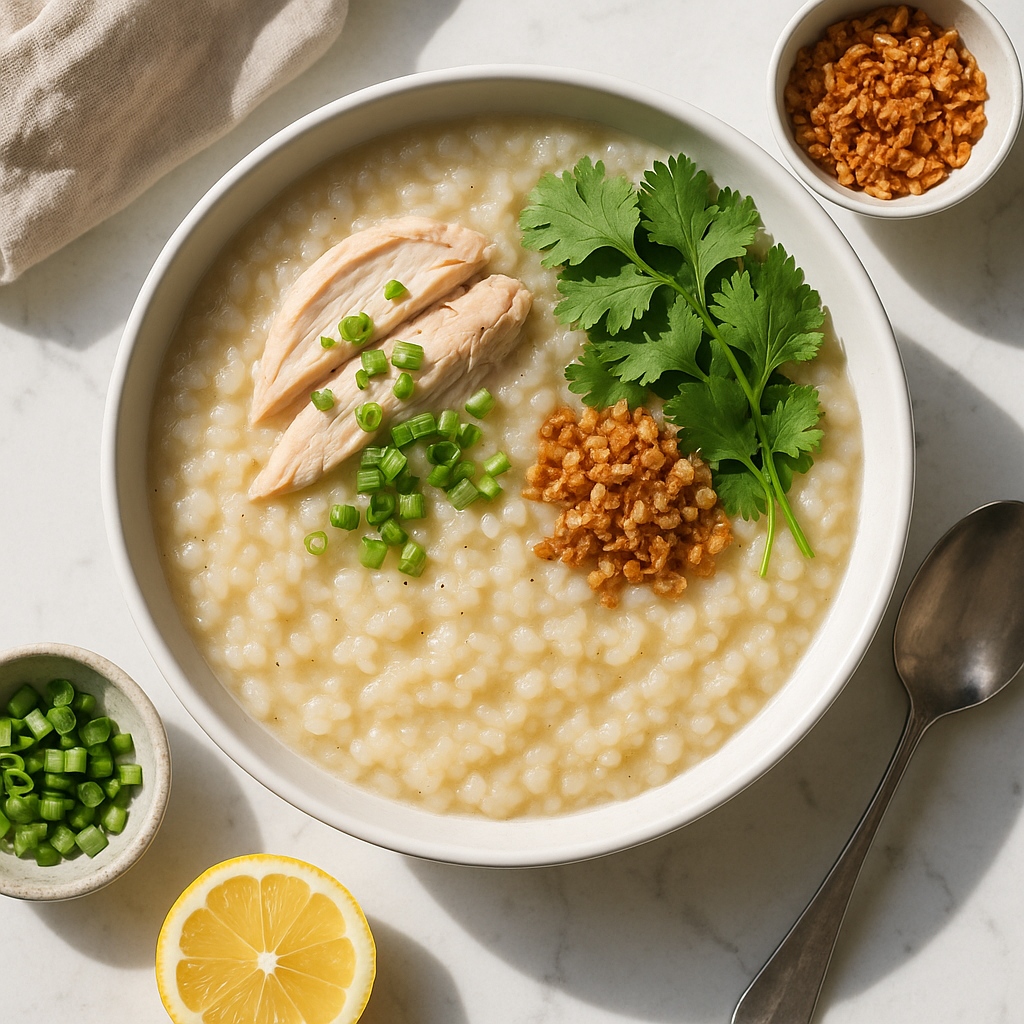
Healthy Arroz Caldo is the kind of bowl that earns its place in your weekly rotation not because it is trendy but because it genuinely delivers on every front. This Filipino chicken rice porridge has been reimagined here with a focus on high protein and lower carbohydrates, pulling in 38 grams of protein per serving while keeping calories at a very manageable 342. The traditional version of arroz caldo leans heavily on white rice, which means the carbohydrate load climbs fast. This version splits the starch base between brown jasmine rice and riced cauliflower, so you get that familiar thick, creamy porridge consistency without the blood sugar spike that follows a full white rice bowl. For anyone who loves Filipino comfort food but wants something that fits around a fitness goal or a calorie-conscious day, this recipe sits in a rare spot. It is hearty enough to feel like a proper meal, light enough to leave you functional rather than sluggish, and it holds together as a serious meal prep option for busy weekday mornings or post-workout lunches.
The ingredient list here is deliberately functional. The 400 grams of skinless chicken breast are the backbone of that 38 gram protein count. Chicken breast provides roughly 31 grams of protein per 100 grams and is extremely low in saturated fat, making it the right choice when you want muscle-supporting protein without excess calories from fat. Brown jasmine rice contributes slow-releasing complex carbohydrates along with a small but meaningful amount of fibre and B vitamins, particularly B1 and B3, which support energy metabolism. The 200 grams of riced cauliflower adds bulk and texture while contributing vitamin C, folate, and additional fibre, all for very few calories. Fresh ginger is not just a flavour choice. It contains gingerols and shogaols, compounds with documented anti-inflammatory properties. Ground turmeric brings curcumin into the mix, another well-studied anti-inflammatory compound that works well alongside the black pepper here, since piperine in black pepper enhances curcumin absorption by up to 2000 percent. The four large eggs add further protein and provide choline, a nutrient important for brain function that many people consistently under-consume.
When you first start this recipe, the kitchen smells like a proper home cook is at work. The garlic and shallot go into the olive oil first, and within a couple of minutes that sharp raw edge softens into something sweet and nutty. The ginger follows, and the smell shifts, becoming warmer and slightly peppery. When turmeric goes in, the oil turns a deep golden yellow immediately, and that colour carries through the whole dish. The chicken breast is poached directly in the simmering broth rather than seared, which keeps the meat tender and allows the cooking liquid to absorb all the chicken flavour. Once the brown rice has cooked through and the cauliflower rice is stirred in toward the end, the porridge takes on a thick, almost risotto-like consistency. The cauliflower breaks down partially and thickens the broth naturally. The finished bowl is golden, fragrant, and deeply savoury, with a gentle heat from the ginger and pepper. The soft-boiled eggs on top add a rich, creamy contrast to the clean, brothy base.
This recipe is built around several specific health goals. The combination of high protein and moderate complex carbohydrates makes it a strong choice for anyone focused on body composition, whether that means building lean muscle or managing weight. Protein at this level, around 38 grams per serving, supports muscle protein synthesis and also promotes satiety, meaning you stay full considerably longer than you would after a lower-protein breakfast or lunch. The recipe is naturally gluten-free because none of the core ingredients contain gluten, but you do need to check your fish sauce label carefully as some brands add wheat. It is also fully dairy-free. The anti-inflammatory ingredients, ginger, turmeric, and black pepper, make this a good regular meal for people managing inflammation-related conditions or simply trying to eat in a way that supports long-term joint and gut health. Athletes in recovery, people eating to support thyroid or metabolic health, and anyone who runs on calorie deficits without wanting to feel deprived will all find this fits their needs well.
For meal prep, this recipe works extremely well and actually improves slightly after a night in the fridge because the flavours deepen as it sits. Store it in an airtight container for up to four days. The porridge will thicken significantly once cold, so when reheating add a splash of low-sodium chicken broth or water and stir it back to your preferred consistency over medium heat on the stovetop. It reheats well in a microwave too, in two-minute intervals with stirring in between. For freezing, portion it without the eggs and store for up to three months. Thaw overnight in the fridge before reheating. There are a few variations worth knowing about. You can swap the chicken breast for bone-in chicken thighs if you want more flavour and do not mind slightly more fat. For a vegetarian version, replace the chicken with firm tofu and use vegetable broth, swapping fish sauce for low-sodium soy sauce or coconut aminos. If you want a lower carbohydrate version, replace all of the brown rice with riced cauliflower entirely. All the quantities, timing, and step-by-step instructions are in the recipe card below.
Ingredients
- 400 g skinless chicken breast (cut into bite-sized chunks)
- 120 g brown jasmine rice (rinsed well under cold water)
- 200 g riced cauliflower (fresh or frozen, thawed if frozen)
- 1.5 litres low-sodium chicken broth (good quality, check label for no added MSG)
- 6 cloves garlic (4 cloves minced, 2 cloves thinly sliced for toasted topping)
- 1 large shallot (finely diced)
- 30 g fresh ginger (peeled and finely grated, about a 3cm piece)
- 1 tsp ground turmeric (adds colour and anti-inflammatory benefits)
- 1.5 tbsp low-sodium fish sauce (plus extra to serve)
- 1 tbsp olive oil (divided)
- 1 tsp freshly ground black pepper
- 4 large eggs (for soft-boiling, optional but recommended)
- 3 stalks green onions (thinly sliced, for serving)
- 1 whole lemon (cut into wedges for serving)
- 1 tsp sesame oil (drizzle on top when serving, optional)
Instructions
- 1
Start by toasting the garlic chips. Heat half the olive oil in a large heavy-bottomed pot over medium heat. Add the 2 thinly sliced garlic cloves and cook, stirring frequently, for about 2 to 3 minutes until golden and crispy. Watch them carefully as they can burn quickly. Scoop them out onto a paper towel and set aside for topping.
Do this first so the oil left in the pot is already garlic-flavoured, giving the base an extra depth of flavour.
- 2
In the same pot, add the remaining olive oil over medium-high heat. Add the diced shallot and minced garlic, cooking for 2 minutes until softened and fragrant. Add the grated ginger and turmeric, stirring constantly for another 60 seconds.
Frying the turmeric briefly in oil makes its active compounds more bioavailable to your body.
- 3
Add the chicken chunks to the pot. Season with black pepper and cook, stirring occasionally, for 4 to 5 minutes until the outside is no longer pink. The chicken does not need to be cooked all the way through at this point.
- 4
Pour in the chicken broth and add the rinsed brown jasmine rice. Stir well to combine everything. Bring the pot to a boil, then reduce the heat to low. Cover with a lid and simmer gently for 25 minutes, stirring every 8 to 10 minutes to prevent the rice from sticking to the bottom.
Brown rice takes longer to break down than white rice, so this simmer time is important for getting that creamy porridge consistency.
- 5
After 25 minutes, stir in the riced cauliflower. Use a spoon to gently break up any larger chunks. Continue simmering uncovered for another 10 minutes, stirring regularly. The porridge should thicken noticeably and take on a creamy texture. Add fish sauce and taste, adjusting seasoning as needed.
If the porridge thickens too much for your liking, stir in a splash of extra broth or water to loosen it.
- 6
While the porridge finishes, bring a small saucepan of water to a boil. Carefully lower in the eggs and cook for exactly 7 minutes for a soft jammy yolk. Transfer immediately to a bowl of ice water for 2 minutes, then peel and halve.
The ice bath stops the cooking instantly and makes the eggs much easier to peel cleanly.
- 7
Ladle the arroz caldo into bowls. Top each serving with 2 egg halves, a scatter of green onions, the toasted garlic chips, a squeeze of lemon, and a tiny drizzle of sesame oil if using. Serve immediately with extra fish sauce on the side.
Nutrition per serving
342kcal
Calories
38g
Protein
28g
Carbs
8g
Fat
4g
Fibre
3g
Sugar
480mg
Sodium
Pro Tips
- ✓
Rinse the brown rice very thoroughly before cooking. This removes excess surface starch and helps you control the final thickness of the porridge.
- ✓
Grating the ginger on a microplane rather than chopping it releases far more of its flavour and natural juices into the broth.
- ✓
Leftovers thicken considerably in the fridge. When reheating, add a good splash of broth or water and stir over medium heat until loosened.
- ✓
For meal prep, cook the rice porridge base and store separately from the toppings. Add fresh toppings when you are ready to serve each bowl.
- ✓
Using a rotisserie chicken breast (skin removed) instead of raw chicken cuts the cook time down significantly on busy mornings.
Frequently Asked Questions
Variations
- •
Turkey and Ginger Arroz Caldo
Swap chicken breast for an equal quantity of ground turkey, browning it first with the aromatics before adding the broth. This creates a heartier, slightly different texture while keeping the protein content high.
- •
Vegetable and Egg White Arroz Caldo
Skip the chicken entirely and add 4 to 5 whisked egg whites into the simmering porridge in the last 5 minutes of cooking. Stir gently as they set. Add extra broth and a handful of baby spinach for a lighter, high-protein vegetarian version.
- •
Spicy Chilli Arroz Caldo
Add one finely chopped red chilli to the pot with the ginger and garlic. Finish each bowl with a drizzle of chilli oil. The heat pairs exceptionally well with the cooling lemon and helps boost metabolism.
- •
Ginger Lemongrass Arroz Caldo
Add 2 bruised lemongrass stalks to the broth along with the rice. Remove before serving. This adds a fragrant citrusy note that makes the whole bowl feel lighter and more aromatic.
Substitutions
- •Brown jasmine rice → White jasmine rice (White rice will cook faster and produce a softer texture, but you lose some fibre. Reduce the cooking time in step 4 to about 15 to 18 minutes.)
- •Riced cauliflower → Finely chopped zucchini (Zucchini breaks down similarly and adds volume without many calories. It does not thicken the broth quite as much as cauliflower, so the porridge will be slightly thinner.)
- •Fish sauce → Low-sodium soy sauce or coconut aminos (Use 1 teaspoon as a starting point and adjust to taste. Coconut aminos is the lower-sodium option and also keeps the dish gluten free.)
- •Chicken breast → Skinless chicken thighs (Thighs are more forgiving to cook and add slightly more richness. Trim visible fat and expect a small increase in fat content per serving.)
- •Low-sodium chicken broth → Homemade chicken bone broth (Bone broth adds extra collagen and a deeper flavour profile. It also increases the protein count slightly per serving.)
- •Lemon → Calamansi lime (Calamansi is the traditional Filipino citrus used with arroz caldo. It is slightly sweeter and more fragrant than lemon. If you can find it, use 3 to 4 calamansi per serving.)
🧊 Storage
Allow the arroz caldo to cool completely before transferring to an airtight container. Store in the refrigerator for up to 3 days. Keep toppings like green onions, toasted garlic, and eggs stored separately. Reheat on the stovetop over medium heat, adding a splash of broth or water to restore the creamy consistency. Do not store with the soft-boiled eggs already halved, as they dry out quickly.
📅 Make Ahead
The porridge base can be made up to 2 days ahead and stored in the fridge. It actually tastes even better the next day as the flavours deepen overnight. Soft-boil fresh eggs each morning for the best texture. Toasted garlic chips should be made fresh as they lose their crunch after storage.
You might also like
Healthy Sinangag Garlic Fried Rice Recipe Filipino Style with Cauliflower and Brown Rice
Sinangag Garlic Fried Rice with Egg Silog (Healthy High-Protein Filipino Breakfast)