Arroz Caldo Filipino Chicken Rice Congee High Protein Breakfast Bowl
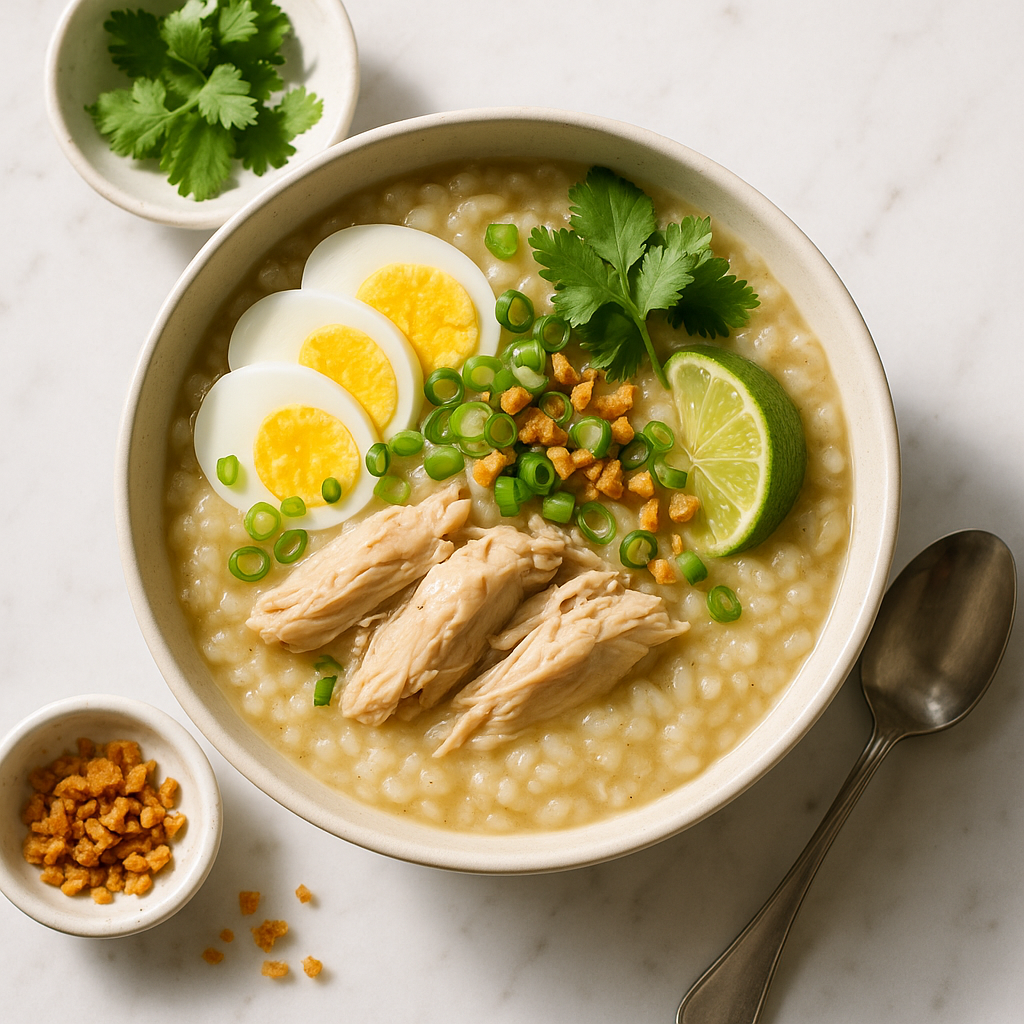
Arroz Caldo Filipino Chicken Rice Congee High Protein Breakfast Bowl is the kind of morning meal that earns genuine loyalty. Most congee recipes hover around 15 to 20 grams of protein, which leaves you hungry well before lunch. This version delivers 38 grams of protein per bowl by combining two protein sources, chicken breast and eggs, in a single pot of slow-cooked rice porridge. The calorie count sits at 420 per serving, which is satisfying without being heavy, and the fat comes in at a sensible 12 grams. What separates this recipe from a standard arroz caldo is the swap of a portion of white rice for cauliflower rice, which quietly lifts the fibre to 5 grams per bowl without changing the creamy texture you expect from a Filipino congee. Sodium is kept lower than traditional versions by using low sodium broth and a measured hand with fish sauce. If you want a breakfast that keeps you full, supports muscle recovery, and still tastes like proper comfort food, this recipe does all three without compromise.
Jasmine white rice forms the base and cooks down into that characteristic thick, starchy porridge texture that defines arroz caldo. It provides steady-release carbohydrates, giving you 34 grams of carbs per bowl to fuel a busy morning. Cauliflower rice, blended in at a ratio that keeps the porridge creamy rather than grainy, adds extra fibre and a modest boost of vitamin C and folate without announcing itself in flavour. Boneless skinless chicken breast is the primary protein source, contributing lean, high-quality complete protein, roughly 31 grams of protein per 100 grams of cooked chicken. Eggs add a second layer of protein along with choline, which supports brain function and is often under-consumed at breakfast. Fresh ginger brings anti-inflammatory compounds called gingerols and also aids digestion, which matters when you are eating a large, filling bowl first thing. Garlic adds allicin, known to support immune function. Ground turmeric, present here more than in many congee recipes, provides curcumin, a compound with well-researched anti-inflammatory properties. Pumpkin seeds finish the bowl with magnesium, zinc, and an extra gram or two of protein per tablespoon. Avocado oil and sesame oil contribute healthy monounsaturated and polyunsaturated fats respectively.
The finished bowl is pale golden in colour, stained softly by turmeric, with shredded white chicken pooled through the thick, creamy porridge. The surface catches the shimmer of a few drops of sesame oil, and the pumpkin seeds add small flecks of green. The aroma when this cooks is warm and grounding: ginger and garlic hit the pan first in avocado oil, releasing a sharp, savoury fragrance that mellows as the broth goes in and the rice begins to soften. After about 40 minutes of gentle simmering with occasional stirring, the rice breaks down and swells into the liquid, creating a porridge that is smooth but not completely uniform. Shredded chicken folds through at the end rather than being cooked separately, so it absorbs all the ginger-garlic-turmeric broth. Eggs can be soft-boiled alongside and halved over the top, or stirred in during the last few minutes to create a silkier, slightly thicker consistency. The taste is savoury, mildly spiced, and deeply satisfying, with warmth from the ginger and a faint earthiness from the turmeric rather than any sharp heat.
This recipe is built around high protein intake, which makes it useful for anyone managing their body composition, recovering from training, or trying to reduce mid-morning hunger. Thirty-eight grams of protein at breakfast is toward the upper end of what most people eat at any single meal, and research consistently links higher protein breakfasts with better appetite control across the day. The recipe is naturally gluten-free because rice and all other ingredients here carry no gluten, making it a reliable choice for people with coeliac disease or gluten sensitivity. It is fully dairy-free, so it works for people who are lactose intolerant or following a dairy-free diet. The reduced sodium version makes this appropriate for people monitoring blood pressure, since standard arroz caldo can carry a high sodium load. Athletes and active people will appreciate the combination of protein and complex carbohydrates for morning fuelling. Older adults benefit from the soft texture, high protein content to support muscle retention, and the anti-inflammatory ingredients. It is also a genuinely good choice during illness recovery, when warm, easy-to-digest food matters.
Arroz caldo is one of the most practical recipes for meal prep because it holds beautifully and actually improves in flavour after a night in the fridge. Cook a full batch and portion it into airtight containers, where it will keep for up to four days refrigerated. The porridge thickens considerably as it sits, so add a splash of water or broth when reheating on the stovetop or in the microwave, stirring well until it returns to its original creamy consistency. For longer storage, freeze individual portions without the eggs, which do not freeze well in congee. Frozen portions keep for up to two months and defrost overnight in the fridge. For variations, swap chicken breast for poached salmon to shift the flavour profile while keeping the protein high. Brown rice can replace some or all of the jasmine rice if you want more fibre and a nuttier taste, though it will need an extra 20 to 25 minutes of cooking. A vegetarian version works well using firm tofu and vegetable broth with a little extra fish sauce substitute such as soy sauce. Scroll down for the full recipe card with exact quantities and step-by-step instructions.
Ingredients
- 200 g jasmine white rice (rinsed well until water runs clear)
- 150 g cauliflower rice (fresh or frozen, thawed)
- 600 g boneless skinless chicken breast (whole pieces for poaching then shredding)
- 8 large eggs (2 per serving, soft-boiled and halved)
- 1.8 litres low sodium chicken broth (plus extra for reheating leftovers)
- 6 cm fresh ginger (peeled and cut into thin matchsticks)
- 6 cloves garlic (4 cloves minced, 2 cloves thinly sliced for topping)
- 1 tsp ground turmeric
- 1.5 tbsp fish sauce (or coconut aminos for lower sodium)
- 1 tbsp avocado oil
- 1 tsp toasted sesame oil (for sauteing base aromatics)
- 4 tbsp pumpkin seeds (lightly toasted in a dry pan)
- 4 stalks spring onions (thinly sliced, green parts only)
- 2 whole calamansi or lemons (quartered, for serving)
- 0.5 tsp white pepper
- 0.5 tsp sea salt (adjust to taste at the end)
Instructions
- 1
Place the chicken breasts in a medium saucepan and cover with 600ml of the chicken broth. Bring to a gentle simmer over medium heat. Poach for 18 to 20 minutes until cooked through, then remove the chicken and set aside to cool slightly. Reserve the poaching liquid and add it back into your remaining broth.
Do not boil the chicken vigorously. A gentle simmer keeps the breast tender and juicy, not rubbery.
- 2
While the chicken poaches, bring a small saucepan of water to a boil. Lower the eggs in gently and cook for exactly 7 minutes for a jammy, slightly runny yolk. Transfer immediately to a bowl of ice cold water and leave for 5 minutes before peeling. Set aside.
Older eggs peel more easily than very fresh ones. If your eggs are straight from the fridge, add an extra 30 seconds to the cooking time.
- 3
Heat the avocado oil and sesame oil in a large heavy-bottomed pot over medium heat. Add the minced garlic and ginger matchsticks. Saute for 2 to 3 minutes, stirring frequently, until fragrant and just starting to turn golden at the edges.
- 4
Add the ground turmeric and white pepper to the pot and stir for 30 seconds to bloom the spices in the oil. Add the rinsed jasmine rice and stir well to coat every grain in the spiced oil mixture. Toast for 2 minutes, stirring constantly.
Toasting the rice before adding liquid is a simple step that adds a subtle nutty depth to the finished congee.
- 5
Pour in the remaining chicken broth, including the reserved poaching liquid, bringing the total liquid to approximately 1.8 litres. Stir well and increase heat to bring to a boil. Once boiling, reduce heat to low, cover partially with a lid, and simmer for 25 minutes, stirring every 5 minutes to prevent sticking.
The rice should break down and become very soft. If the congee thickens too quickly, add an extra splash of hot water or broth.
- 6
Stir in the cauliflower rice and fish sauce. Simmer uncovered for a further 8 to 10 minutes, stirring frequently. The cauliflower will soften and blend into the congee almost invisibly, thickening the texture further without adding significant calories.
- 7
Use two forks to shred the cooled chicken breasts into generous pieces. Stir the shredded chicken into the congee and cook for 2 more minutes to heat through. Taste and adjust seasoning with sea salt and extra fish sauce or coconut aminos as needed.
Shred the chicken while it is still slightly warm. It pulls apart much more easily than cold chicken does.
- 8
In a small dry frying pan, toast the sliced garlic cloves over low to medium heat with a tiny drop of avocado oil for 2 to 3 minutes until golden and crisp. Watch carefully because garlic burns quickly. Drain on a piece of kitchen paper.
- 9
Ladle the arroz caldo into four bowls. Top each bowl with 2 halved soft-boiled eggs, a handful of sliced spring onions, the crispy garlic slices, and a tablespoon of toasted pumpkin seeds. Serve immediately with calamansi or lemon wedges on the side for squeezing over.
Do not skip the citrus. That squeeze of lemon or calamansi at the table is what transforms a good bowl into a great one.
Nutrition per serving
420kcal
Calories
38g
Protein
34g
Carbs
12g
Fat
5g
Fibre
2g
Sugar
610mg
Sodium
Pro Tips
- ✓
Stir the congee frequently during cooking to encourage the starch to release from the rice, which creates that signature silky, thick texture.
- ✓
For an even higher protein count, stir in two tablespoons of unflavoured collagen peptides when you add the cauliflower rice. They dissolve completely and add no noticeable flavour.
- ✓
If you prefer a smoother congee texture, use a potato masher to gently mash some of the rice against the side of the pot before adding the shredded chicken.
- ✓
Ginger matchsticks are intentional here. They give little bursts of warming heat as you eat rather than an even background note, which makes each spoonful interesting.
- ✓
Make a double batch of the congee base and freeze individual portions without the eggs or toppings. The toppings should always be added fresh.
Frequently Asked Questions
Variations
- •
Turkey and Ginger Arroz Caldo
Swap the chicken breast for the same weight of boneless turkey breast. Turkey breast is slightly leaner than chicken and has a milder flavour that pairs beautifully with the bold ginger and turmeric broth. Cook and shred in exactly the same way.
- •
Spicy Arroz Caldo
Add one sliced fresh red chilli or half a teaspoon of chilli flakes along with the garlic and ginger in step 3. A drizzle of chilli garlic sauce over each bowl before serving adds a fiery, addictive kick that pairs brilliantly with the cool egg yolk.
- •
Dairy Free Creamy Version
Stir in 60ml of full fat coconut milk just before serving for a richer, creamier bowl with subtle coconut sweetness. This keeps the recipe fully dairy free while adding a luxurious texture upgrade and a small dose of healthy medium chain triglycerides.
- •
Extra Vegetable Arroz Caldo
Add a large handful of baby spinach and half a cup of frozen edamame beans in the final 3 minutes of cooking for extra fibre, iron, and plant-based protein. This variation takes the fibre content up significantly and adds beautiful colour to the bowl.
Substitutions
- •Fish sauce → Coconut aminos (Use the same quantity. Coconut aminos is sweeter and less salty, so taste and adjust accordingly.)
- •Jasmine white rice → Long grain brown rice (Increase cooking time by 15 to 20 minutes and add extra broth as needed. Texture will be chewier.)
- •Cauliflower rice → Finely grated zucchini (Squeeze excess moisture from the zucchini before adding. It will blend into the congee just as seamlessly.)
- •Calamansi → Lemon or lime (Lemon is the closest in flavour profile. Lime works too and adds a slightly more tropical edge.)
- •Pumpkin seeds → Sunflower seeds (Sunflower seeds are equally nutritious and have a similar mild, nutty flavour when toasted.)
- •Avocado oil → Light olive oil (Use in the same quantity. Light olive oil has a neutral enough flavour that it will not overpower the aromatics.)
🧊 Storage
Store cooled arroz caldo in airtight containers in the refrigerator for up to 4 days. Keep soft-boiled eggs stored separately in their shells and peel just before serving. The congee base freezes well in individual portions for up to 2 months. Thaw overnight in the fridge and reheat in a saucepan over low heat with a splash of broth or water, stirring until hot and creamy again.
📅 Make Ahead
The full congee base, including the shredded chicken, can be made 3 to 4 days ahead and refrigerated. Soft-boil the eggs fresh each morning for the best texture, as refrigerated peeled eggs can become rubbery. Prepare the toasted garlic and pumpkin seeds up to 3 days ahead and store in a small airtight jar at room temperature to keep them crispy.
You might also like
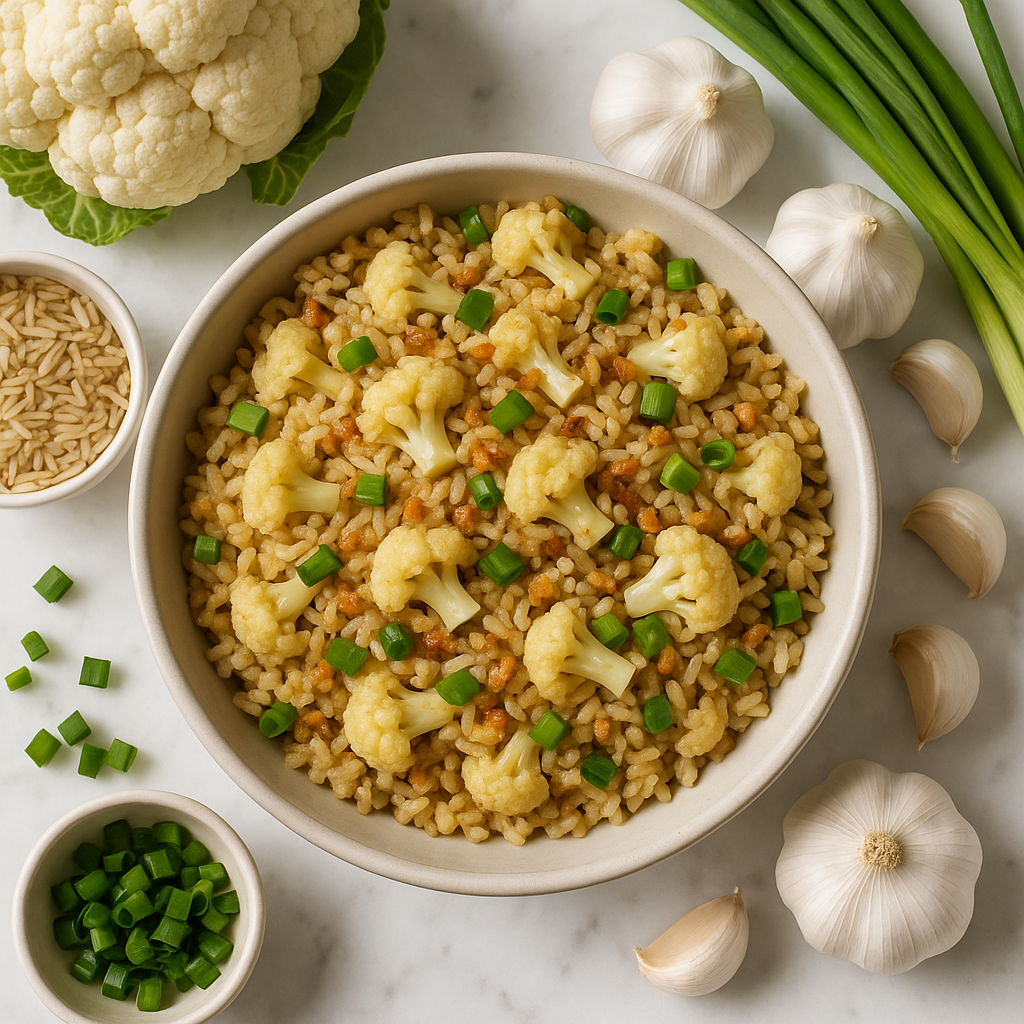
Healthy Sinangag Garlic Fried Rice Recipe Filipino Style with Cauliflower and Brown Rice
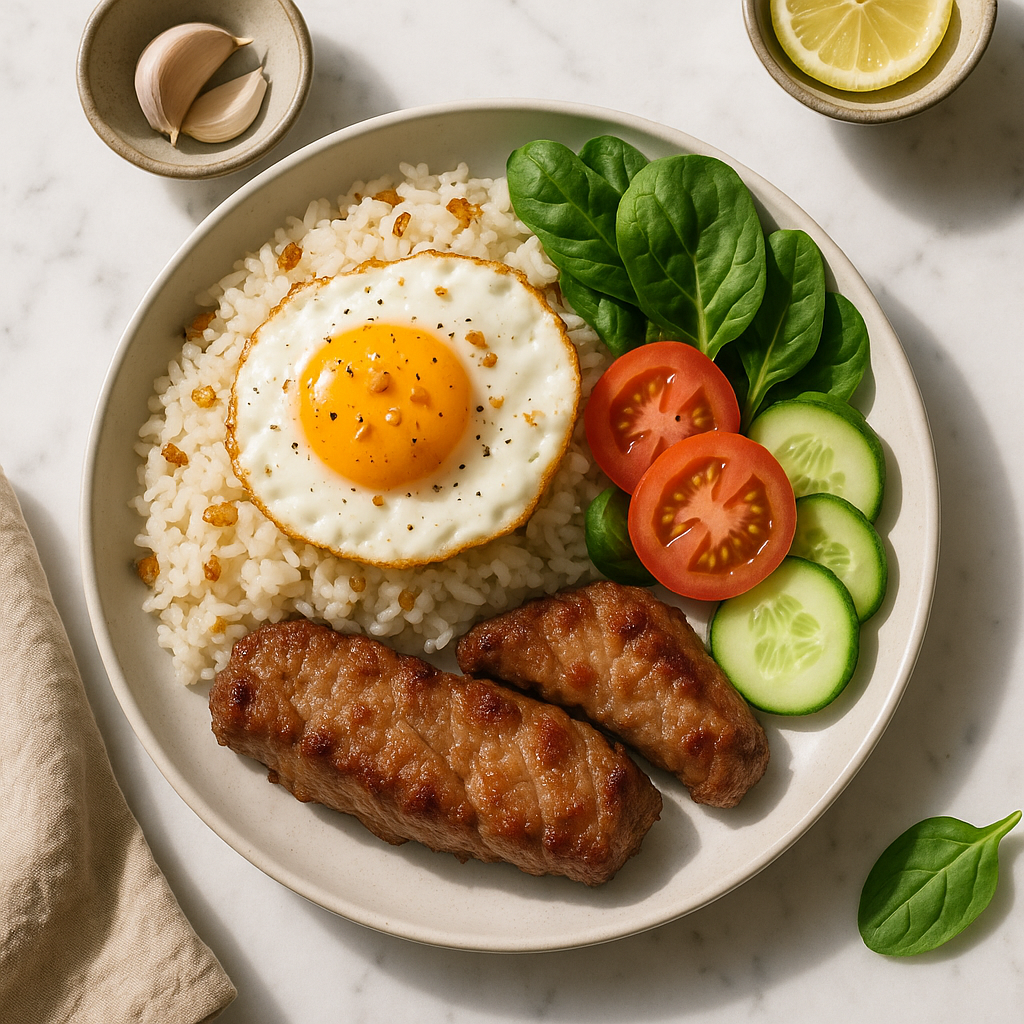
Sinangag Garlic Fried Rice with Egg Silog (Healthy High-Protein Filipino Breakfast)