Vegetable Frittata Recipe High Protein with Cottage Cheese and Greens
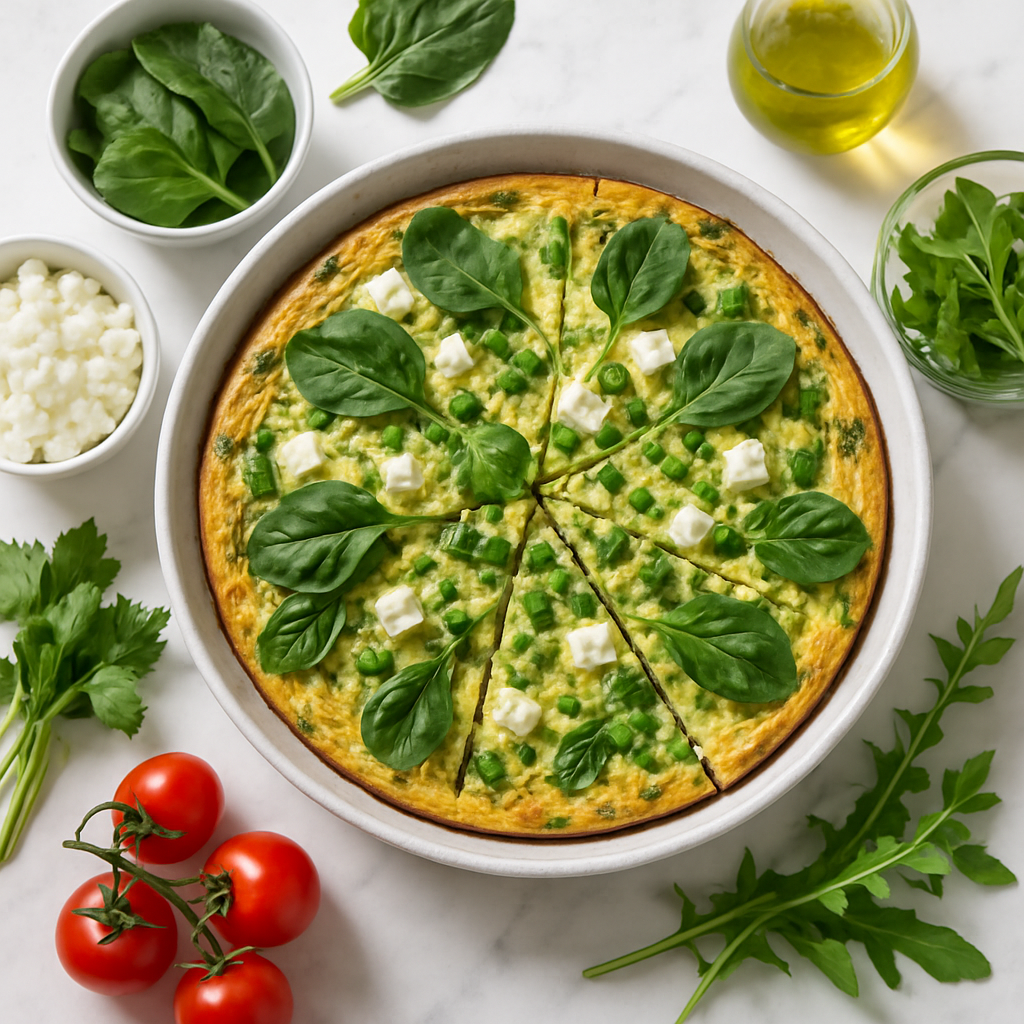
Vegetable Frittata Recipe High Protein with Cottage Cheese and Greens is one of those recipes that earns a permanent spot in your weekly rotation. At 22 grams of protein per serving and only 218 calories, it delivers serious staying power without feeling heavy. Most egg-based breakfasts lean on butter and cream to get that rich, set texture, but this one uses cottage cheese instead, which quietly boosts the protein content while keeping the fat reasonable. The result is a frittata that holds its structure when you slice it, tastes satisfying at any temperature, and works as well on a busy Tuesday morning as it does on a slow Sunday brunch. With a keto-friendly 6 grams of carbohydrates and no gluten anywhere in the ingredient list, it covers a lot of dietary ground in one bake. The fact that it comes together in 35 minutes, including prep, makes it genuinely practical rather than a weekend-only project. This is a recipe built around real nutrition, not just good intentions.
Each ingredient in this frittata carries its weight. The 8 large eggs form the protein foundation, contributing roughly 6 grams of protein each and providing all nine essential amino acids. The 180 grams of low-fat cottage cheese is the real surprise here. It blends into the egg mixture almost invisibly, adding around 14 extra grams of protein while contributing calcium and B vitamins. Zucchini keeps carbohydrates low and adds potassium and vitamin C without overpowering the other flavours. Red capsicum brings a natural sweetness alongside a strong hit of vitamin C and antioxidants like beta-carotene. Baby spinach is folded in for iron, folate, and vitamin K, and it wilts down to almost nothing during cooking so even spinach-reluctant eaters rarely notice it. Spring onions add a mild allium flavour along with quercetin, a plant compound with anti-inflammatory properties. The 60 grams of reduced-fat feta provides salty, tangy contrast plus extra calcium, while smoked paprika and oregano layer in flavour without adding calories.
Before the frittata goes into the oven, the kitchen smells like a proper cooked breakfast. Garlic and spring onion softening in olive oil, followed by capsicum and zucchini, release a warm, savoury fragrance that fills the room quickly. The egg and cottage cheese mixture, whisked together until smooth, pours over the vegetables in a golden stream and starts to set around the edges almost immediately on the stovetop. Tiny white curds from the cottage cheese are barely visible, giving the batter a slightly thicker consistency than plain eggs alone. Once it moves into the oven, the top puffs slightly and turns a deep golden colour with lightly browned spots where the feta sits. The finished frittata is firm enough to cut cleanly but still has a soft, custardy interior. The spinach turns a deep jewel green against the pale egg, the capsicum adds flashes of red, and the whole thing looks as good as it tastes. Each forkful is savoury, slightly tangy from the feta, and has that creamy egg texture that only a properly cooked frittata achieves.
This recipe supports several specific health goals at once. The high protein content, 22 grams per serve, makes it useful for muscle maintenance and recovery, which is why it suits people doing morning training sessions or anyone trying to reduce snacking by staying full through the morning. The low carbohydrate count fits both ketogenic and low-carb eating patterns comfortably, and the absence of gluten makes it reliable for people with coeliac disease or non-coeliac gluten sensitivity. Because the fat comes primarily from eggs, olive oil, and small amounts of dairy rather than processed sources, the fat profile is predominantly unsaturated. The fibre from zucchini, capsicum, and spinach supports gut health even at 1.8 grams per serve. Older adults benefit from the calcium in cottage cheese and feta for bone density. People managing blood sugar will appreciate the minimal sugar content at 3.5 grams, all coming from the vegetables. This is not a recipe that makes dramatic promises. It is one that consistently delivers a nutritionally solid, filling breakfast that fits into a disciplined eating pattern without requiring sacrifice.
For meal prep, this frittata is one of the most reliable options available. Bake it on a Sunday, let it cool completely, then slice it into individual portions and store them in an airtight container in the refrigerator for up to four days. The texture holds well and does not become watery the way some vegetable-heavy egg dishes can. To reheat, a brief 60 to 90 seconds in the microwave works fine, or warm it in a low oven at around 160 degrees Celsius for 8 minutes if you want to preserve the edges. It also freezes well for up to two months. Wrap individual slices in baking paper before placing them in a freezer bag to prevent sticking. For variations, swap the zucchini for broccolini florets when you want a more robust vegetable bite. Sun-dried tomatoes stirred through the egg mixture add sweetness and depth without disrupting the macros significantly. Goat cheese can replace the feta for a creamier, milder flavour. You can also add a handful of fresh basil or flat-leaf parsley for a brighter finish. Scroll down to the recipe card for full quantities, timing, and step-by-step instructions.
Ingredients
- 8 large eggs (free-range preferred)
- 180 g low-fat cottage cheese (blended smooth or whisked well)
- 2 tablespoons olive oil (divided)
- 1 medium zucchini (grated and squeezed dry in a clean towel)
- 1 medium red capsicum (diced small)
- 80 g baby spinach (roughly chopped)
- 3 medium spring onions (thinly sliced, white and green parts)
- 2 cloves garlic (minced)
- 60 g reduced-fat feta cheese (crumbled for topping)
- 1 teaspoon dried oregano
- 0.5 teaspoon smoked paprika
- 0.3 teaspoon ground black pepper (or to taste)
- 0.3 teaspoon fine sea salt (adjust to preference)
- 2 tablespoons fresh flat-leaf parsley (chopped, for serving)
Instructions
- 1
Preheat your oven to 190 degrees Celsius (375 F). Position a rack in the centre of the oven.
Getting the oven hot before you start cooking means the frittata goes in at the right moment without sitting and overcooking on the stovetop.
- 2
In a blender or using a stick blender, combine the eggs, cottage cheese, dried oregano, smoked paprika, salt and pepper. Blend for about 20 seconds until completely smooth and slightly frothy. Set aside.
Blending the cottage cheese into the eggs removes any lumpy texture and ensures even protein distribution throughout the frittata.
- 3
Heat one tablespoon of olive oil in a 25 cm oven-safe non-stick skillet over medium heat. Add the diced capsicum and cook for 3 minutes, stirring occasionally, until it begins to soften.
- 4
Add the garlic and spring onions to the skillet and cook for one more minute until fragrant. Add the grated and squeezed zucchini and cook for a further 2 minutes. Stir in the baby spinach and cook just until wilted, about 1 minute. Spread the vegetables evenly across the pan.
Make sure the squeezed zucchini is as dry as possible. Excess moisture is the main cause of a wet, undercooked frittata centre.
- 5
Drizzle the remaining tablespoon of olive oil over the vegetables. Pour the egg and cottage cheese mixture evenly over the vegetables. Tilt the pan gently to ensure it settles into all the gaps. Scatter the crumbled feta over the top.
- 6
Cook on the stovetop over medium-low heat for 3 to 4 minutes without stirring, just until the outer edges begin to turn opaque and pull slightly from the sides of the pan.
Do not rush this stage. Letting the edges set on the stovetop first means the frittata holds its shape cleanly when you slice it after baking.
- 7
Carefully transfer the skillet to the preheated oven. Bake for 12 to 14 minutes until the centre is just set and the top is lightly golden. A clean knife inserted in the middle should come out without wet egg on it.
Every oven runs slightly differently. Start checking at 12 minutes to avoid overcooking, which makes the texture rubbery.
- 8
Remove from the oven using oven mitts and allow to rest in the pan for 5 minutes before slicing. The residual heat will finish setting the centre perfectly. Scatter fresh parsley over the top and slice into 6 wedges to serve.
Resting the frittata before slicing is important. Cutting too early causes the wedges to fall apart.
Nutrition per serving
218kcal
Calories
22g
Protein
6g
Carbs
12g
Fat
1.8g
Fibre
3.5g
Sugar
390mg
Sodium
Pro Tips
- ✓
Squeeze the grated zucchini in a clean kitchen towel as firmly as you can. This single step prevents a soggy base more than anything else.
- ✓
Use a cast iron or oven-safe non-stick skillet. Never use a pan with a plastic handle in the oven.
- ✓
For extra protein, stir 30 g of crumbled firm tofu or an extra egg white into the egg mixture.
- ✓
Let the frittata come to room temperature for about 10 minutes before eating for the best flavour and texture.
- ✓
If your feta is very salty, reduce the added sea salt in the egg mixture to a small pinch.
- ✓
A wide spatula or a fish slice makes serving the wedges much cleaner than a regular spoon.
Frequently Asked Questions
Variations
- •
Mediterranean Style
Add 40 g of sliced Kalamata olives and a handful of sun-dried tomatoes alongside the capsicum. Replace the feta with crumbled goat cheese and add a pinch of dried thyme.
- •
Spicy Harissa Frittata
Stir one tablespoon of harissa paste into the egg mixture before pouring. Top with sliced cherry tomatoes and a drizzle of plain Greek yoghurt when serving for a cooling contrast.
- •
Green Goddess Version
Use all green vegetables: broccolini florets, peas, extra spinach, and sliced courgette. Add a tablespoon of pesto stirred into the egg mixture and top with torn fresh basil leaves after baking.
- •
Dairy-Free High Protein
Replace the cottage cheese with silken tofu blended smooth, and omit the feta or substitute with a dairy-free feta alternative. The protein count remains strong and the texture is very similar.
Substitutions
- •Cottage cheese → Silken tofu (Blend silken tofu smooth and use the same quantity. It keeps the frittata creamy and protein-rich while making it dairy-free.)
- •Feta cheese → Goat cheese or ricotta (Both melt slightly during baking and add a similar creaminess. Ricotta adds extra protein; goat cheese gives a more tangy flavour.)
- •Baby spinach → Kale or Swiss chard (Both work well. Remove tough stems and chop finely. Kale may need an extra minute of sautéing to soften properly.)
- •Red capsicum → Cherry tomatoes or roasted sweet potato (Cherry tomatoes add freshness; sweet potato adds sweetness and extra fibre. Reduce sweet potato to small cubes and roast before adding.)
- •Olive oil → Avocado oil (Avocado oil has a higher smoke point and works well for the stovetop sauté stage. Use in the same quantity.)
🧊 Storage
Store cooled frittata slices in an airtight container in the refrigerator for up to 4 days. Keep slices separated with a small piece of baking paper to prevent sticking. Reheat in a microwave on medium power for 60 to 90 seconds, or in an oven at 160 C for 8 minutes. Can be eaten cold. Freeze individual wrapped slices for up to 1 month.
📅 Make Ahead
The full frittata can be baked on a Sunday and stored in the fridge for weekday breakfasts. You can also prepare the vegetable mixture the night before, cover and refrigerate it in the skillet, then pour the egg mixture over it and bake fresh in the morning to cut down on morning prep time.