Shakshuka Recipe with Fresh Tomatoes and Feta (High-Protein, Low-Calorie)
Shakshuka Recipe with Fresh Tomatoes and Feta is one of those breakfasts that earns its place on the table through pure substance. At 220 calories per serving with 18 grams of protein, it delivers serious nutritional value without leaving you feeling weighed down before the day has even started. Most shakshuka recipes rely on tinned tomatoes as a shortcut, and while that works, building the sauce from 700 grams of ripe fresh tomatoes produces a brightness and depth that canned versions simply cannot match. The addition of crumbled feta sets this version apart from the classic, layering in a creamy, salty contrast that makes every bite more interesting. It is ready in 30 minutes, naturally gluten-free, and sits comfortably within a high-protein, low-calorie framework. If you have been looking for a savoury breakfast that genuinely keeps hunger at bay through the morning, this is a recipe worth returning to again and again. It holds its own as a weekend brunch centrepiece and works just as well on a Tuesday morning.
Each ingredient in this recipe has a clear purpose, and nothing is filler. The 700 grams of ripe fresh tomatoes form the backbone of the sauce. Fresh tomatoes are rich in vitamin C, lycopene, and potassium, and when cooked down they release natural sugars that balance the heat from the spices. One medium red onion adds quercetin, a flavonoid with anti-inflammatory properties, along with a sweet, mellow base note once softened. The red bell pepper contributes additional vitamin C, more natural sweetness, and a gentle textural contrast within the finished sauce. Four cloves of garlic bring allicin, which supports immune function and adds that warm, savoury depth you want underpinning a spiced dish. Tomato paste concentrates the umami and thickens the sauce so the eggs have something substantial to poach in. Ground cumin, smoked paprika, turmeric, cayenne, and ground coriander are not decorative. They work together to build a layered, warming spice profile, and turmeric in particular adds curcumin, which has well-documented anti-inflammatory properties. The olive oil carries fat-soluble compounds from the spices into the dish, improving both flavour and nutrient absorption.
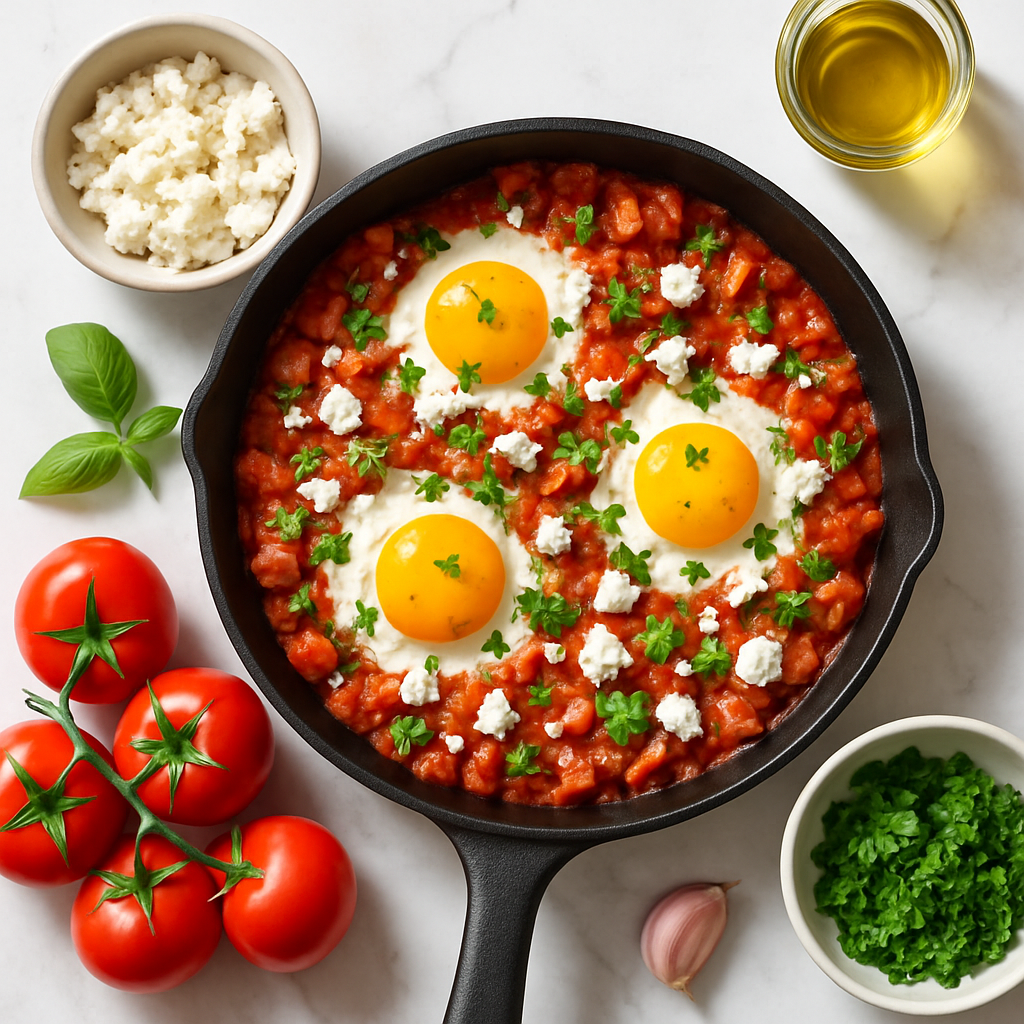
The sauce starts as a rough, bubbling mixture of softened onion, pepper, and garlic coated in fragrant spices, and as the chopped fresh tomatoes cook down over moderate heat, the whole pan transforms. The tomatoes collapse and release their liquid, the paste tightens everything, and after ten to fifteen minutes you have a thick, rust-coloured sauce that smells of smoked paprika and cumin with a distinct warmth from the cayenne. The colour is deep orange-red, glossy from the olive oil, with visible chunks of tomato and pepper throughout. Small wells are made in the sauce and the eggs are cracked directly in, then covered so they poach gently in the residual steam. The whites set firm while the yolks stay soft and runny, creating that characteristic moment when you break through and the yolk bleeds into the spiced sauce. Crumbled feta goes over the top at the end so it softens slightly without melting completely, giving little pockets of cool, creamy, salty flavour against the heat of the sauce. A few torn herbs brighten the plate visually and add a fresh finish.
This recipe supports several specific health goals at once. The protein content, 18 grams per serving, comes primarily from the eggs and feta, making it a strong option for anyone managing appetite through the morning or following a high-protein eating pattern. The 4 grams of fibre from the tomatoes, peppers, and onion support digestive health and slow the absorption of carbohydrates, which helps maintain stable blood sugar levels after eating. At 14 grams of carbs and 11 grams of fat, the macronutrient balance works well for low-calorie and Mediterranean-style diets. It is naturally gluten-free, which matters for anyone with coeliac disease or non-coeliac gluten sensitivity. The combination of lycopene from cooked tomatoes and healthy monounsaturated fat from olive oil is well-supported for cardiovascular health. Active people, those managing their weight, and anyone trying to eat more anti-inflammatory foods will find this recipe fits their goals without requiring any adaptation. It is also a strong choice for those transitioning away from sweet breakfasts who want something filling and savoury without excessive calories.
This recipe holds up well for meal prep, which makes it practical for busy mornings. The tomato sauce base, without the eggs, can be made up to four days ahead and stored in an airtight container in the fridge. When you are ready to eat, reheat the sauce in a pan over medium heat until it is gently simmering, then crack in fresh eggs and cook as normal. The complete dish, eggs included, keeps in the fridge for up to two days and reheats carefully in a covered pan on low heat, though the yolks will set more firmly on reheating. For variations, swap the feta for goat cheese if you want a creamier, milder topping. You can add a handful of baby spinach to the sauce before the eggs go in for extra iron and folate. A drained tin of chickpeas stirred into the sauce boosts the protein and fibre further while keeping the dish fully plant-based if you leave out the eggs. Serve with a slice of sourdough or warm flatbread on the side if you need more carbohydrates. The full ingredient quantities, timings, and step-by-step method are in the recipe card below.
Ingredients
- 1 tbsp extra virgin olive oil
- 1 medium red onion (finely diced)
- 1 medium red bell pepper (deseeded and diced)
- 4 cloves garlic (minced)
- 700 g ripe fresh tomatoes (roughly chopped, about 5 to 6 medium tomatoes)
- 2 tbsp tomato paste (no added salt where possible)
- 1 tsp ground cumin
- 1 tsp smoked paprika
- 0.5 tsp ground turmeric
- 0.3 tsp cayenne pepper (adjust to taste)
- 0.5 tsp ground coriander
- 0.3 tsp fine sea salt (or to taste)
- 0.3 tsp black pepper (freshly ground)
- 60 g baby spinach (fresh, roughly chopped)
- 6 large free-range eggs
- 60 g reduced-fat feta cheese (crumbled)
- 2 tbsp fresh flat-leaf parsley or coriander (roughly chopped, to serve)
- 0.5 tsp chilli flakes (optional, for serving)
Instructions
- 1
Heat the olive oil in a large, deep skillet or wide saucepan over medium heat. Add the diced red onion and red bell pepper. Cook for 5 to 6 minutes, stirring occasionally, until softened and the onion is just starting to turn translucent.
Do not rush this step. Soft, slightly sweet onion is the backbone of a good sauce.
- 2
Add the minced garlic to the pan and cook for another 60 seconds, stirring constantly, until fragrant. Stir in the cumin, smoked paprika, turmeric, cayenne, and ground coriander. Toast the spices in the oil for 30 seconds, stirring continuously.
Toasting the spices directly in the oil unlocks far more flavour than adding them with the tomatoes.
- 3
Add the chopped fresh tomatoes and tomato paste. Stir everything together well, pressing the tomatoes slightly with the back of your spoon. Season with salt and black pepper. Reduce the heat to medium-low and simmer uncovered for 12 to 15 minutes, until the tomatoes have broken down into a thick, rich sauce.
If your tomatoes are not very ripe or juicy, add 2 to 3 tablespoons of water or vegetable stock to keep the sauce from catching.
- 4
Stir the baby spinach into the sauce and allow it to wilt for about 1 minute.
- 5
Use a spoon to create 6 small wells in the tomato sauce. Crack one egg into each well. Scatter half the crumbled feta over the sauce around the eggs. Place a lid on the pan and cook over low heat for 5 to 7 minutes, until the egg whites are just set but the yolks are still slightly runny.
Check at 5 minutes. The residual heat will continue cooking the eggs after you remove the lid, so pull them slightly before your preferred doneness.
- 6
Remove from the heat. Scatter the remaining crumbled feta over the top, followed by the fresh parsley or coriander and optional chilli flakes. Serve immediately, straight from the pan.
Serve with warm wholegrain flatbread or toasted sourdough for dipping.
Nutrition per serving
220kcal
Calories
18g
Protein
14g
Carbs
11g
Fat
4g
Fibre
8g
Sugar
390mg
Sodium
Pro Tips
- ✓
Use the ripest fresh tomatoes you can find. Roma or vine-ripened tomatoes work especially well because they have a lower water content and a richer flavour.
- ✓
If you prefer fully set yolks, simply leave the lid on for an extra 2 to 3 minutes on low heat.
- ✓
Crack each egg into a small bowl or ramekin first before sliding it into the sauce. This helps you avoid shell fragments and gives you more control over placement.
- ✓
A wide, heavy-based pan ensures even heat distribution and helps the sauce simmer without burning at the edges.
- ✓
Do not skip the tomato paste. It adds concentrated depth that fresh tomatoes alone cannot fully provide.
- ✓
Taste the sauce before adding the eggs and adjust seasoning. The feta will add saltiness, so err on the side of less salt at this stage.
Frequently Asked Questions
Variations
- •
Spicy Harissa Shakshuka
Stir 1 tablespoon of harissa paste into the tomato sauce along with the spices for a deeper, more complex heat. Reduce or omit the cayenne if you prefer a milder overall spice level.
- •
Chickpea Shakshuka
Add one 400g can of drained, rinsed chickpeas to the tomato sauce before the eggs go in. This boosts the plant-based protein and fibre content significantly and makes the dish even more substantial.
- •
Green Shakshuka Variation
Replace the fresh tomatoes with a base of blended tomatillos, courgette, and extra spinach for a green shakshuka. Keep the feta topping and spice profile the same.
- •
Turkey Mince Shakshuka
Brown 150g of lean turkey mince in the skillet before adding the onion. Drain any excess liquid, then proceed with the recipe as normal. This version is especially high in protein, coming in at around 28 grams per serving.
Substitutions
- •Fresh tomatoes → One 400g can of chopped tomatoes (If fresh ripe tomatoes are not available, a good quality can of chopped tomatoes works well. Reduce the simmering time to 8 to 10 minutes as canned tomatoes break down faster.)
- •Reduced-fat feta cheese → Full-fat feta or goat cheese (Full-fat feta gives a creamier result. Goat cheese crumbles similarly and adds a slightly more tangy, earthy note to the finished dish.)
- •Baby spinach → Kale or Swiss chard (Finely shredded kale or Swiss chard can replace spinach. Both take slightly longer to wilt, so add them 2 to 3 minutes before the spinach would normally go in.)
- •Red bell pepper → Yellow bell pepper or roasted peppers (Any colour of bell pepper works here. Jarred roasted peppers can be used for a sweeter, smokier flavour and no additional cooking time needed.)
- •Olive oil → Avocado oil (Avocado oil has a higher smoke point and a neutral flavour. It is a solid swap if you prefer it or are cooking at a slightly higher heat.)
🧊 Storage
Shakshuka is best eaten fresh, directly from the pan. If you have leftover sauce without eggs, store it in an airtight container in the refrigerator for up to 3 days. Reheat the sauce gently on the stovetop and add fresh eggs when serving. Leftover shakshuka with eggs already cooked in it can be refrigerated for up to 1 day, though the yolks will firm up on reheating.
📅 Make Ahead
The spiced fresh tomato base can be prepared up to 3 days in advance and stored in an airtight container in the refrigerator. This cuts the morning cooking time down to around 10 minutes. Reheat the sauce gently in a skillet, add the spinach, create wells, crack in the eggs, and finish as directed. The sauce can also be frozen for up to 2 months. Thaw overnight in the refrigerator before reheating.