High-Protein Shakshuka Recipe with Feta Cheese and Spinach
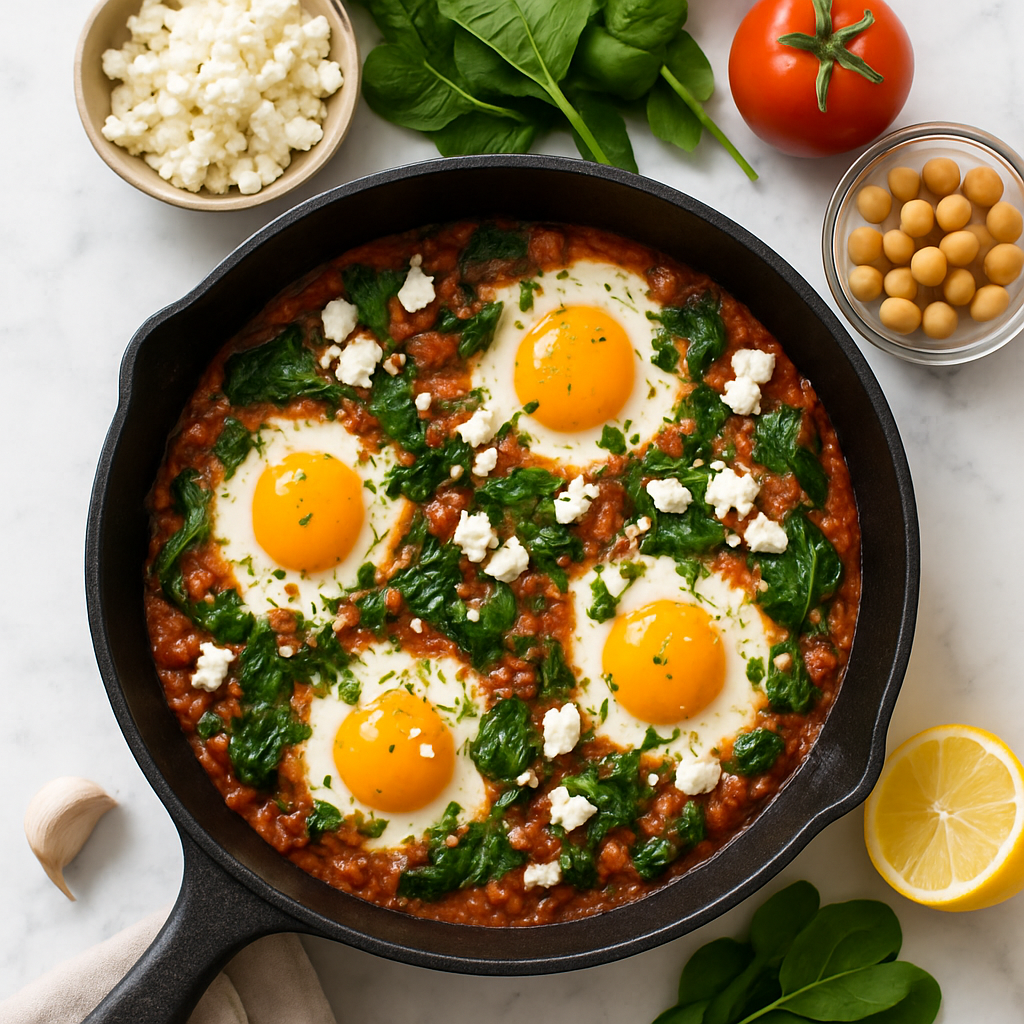
High-Protein Shakshuka Recipe with Feta Cheese and Spinach brings a bold, nourishing one-pan meal to your breakfast table that earns its place on the weekly rotation fast. With 22 grams of protein per serving, this is not the kind of breakfast that leaves you reaching for snacks an hour later. Most shakshuka recipes stop at eggs and tomatoes, but this version layers in chickpeas and baby spinach alongside creamy feta, turning a classic North African and Middle Eastern dish into something far more substantial. The base comes together in a single skillet, which keeps washing up minimal and the whole process relaxed. It suits anyone tracking macros, anyone eating gluten-free, or anyone who wants a proper morning meal without standing over the stove for an hour. The spice blend does real work here, building warmth and depth without being aggressive. This is a breakfast that feels intentional, the kind of thing you cook on a slow weekend morning and then immediately want to make again the following week.
Every ingredient in this recipe pulls its weight nutritionally. Extra virgin olive oil starts the base and carries fat-soluble vitamins from the spices into the sauce, while also providing heart-friendly monounsaturated fats. Yellow onion adds natural sweetness as it softens and contributes quercetin, an antioxidant linked to inflammation reduction. Red bell pepper brings a gentle sweetness and is one of the richest vegetable sources of vitamin C, which matters here because it helps your body absorb the non-haem iron from the spinach and chickpeas more efficiently. The three cloves of garlic go in once the onion is soft and add both allicin compounds and a sharp aromatic depth to the sauce. Ground cumin, smoked paprika, turmeric, coriander, and cayenne are not just flavour additions. Turmeric contains curcumin, which has documented anti-inflammatory properties, and cumin supports digestion. The 240 grams of canned chickpeas add around 10 grams of plant protein and 7 grams of fibre on their own. Baby spinach wilts into the sauce quickly and delivers iron, folate, and magnesium without adding significant calories.
The sauce starts with a softened onion and pepper base cooked in olive oil until it turns translucent and fragrant, about seven minutes over medium heat. Garlic goes in next, followed almost immediately by the spices, which bloom in the residual oil and release their oils properly rather than sitting raw in the sauce. The crushed tomatoes go in after that, creating a thick, rust-coloured base that simmers down and concentrates over around ten minutes. Chickpeas fold in and absorb the spiced tomato flavour as they heat through, and the baby spinach wilts on top in about two minutes, turning dark green and tender without losing its body entirely. Small wells get pressed into the sauce for the eggs, which poach directly in the liquid and set with just-firm whites and still-soft yolks if you pull the pan at the right moment. Crumbled feta goes on last, softening into creamy pockets across the surface. The finished dish smells of warm spices, sweet tomato, and something slightly grassy from the spinach. The texture contrasts between silky eggs, chunky chickpeas, and the soft yielding sauce are what make each spoonful satisfying.
This recipe is built around sustained energy and satiety, which makes it a strong choice for anyone managing blood sugar, following a high-protein eating plan, or trying to shift their protein intake earlier in the day. The combination of protein from eggs and chickpeas, fibre from chickpeas and spinach, and healthy fat from olive oil and feta means the meal digests steadily rather than spiking and crashing. It fits a gluten-free diet without any modification needed. It works within a Mediterranean-style eating pattern given the olive oil base, legumes, and vegetable-forward approach. People who train in the mornings will appreciate the macro balance, 22 grams of protein and 26 grams of carbohydrates, which supports muscle recovery without being overly heavy. It also suits vegetarians comfortably. Those managing iron-deficiency anaemia will find the combination of spinach, chickpeas, and bell pepper particularly useful given the vitamin C present to support iron absorption. It is a filling, complete meal from a single pan, which suits busy households as much as it suits someone cooking only for themselves.
The sauce in this recipe is ideal for making ahead. Cook everything up to the point of adding the eggs, then cool the tomato and chickpea base and refrigerate it in an airtight container for up to four days. When you are ready to eat, reheat the sauce gently in a skillet, add fresh spinach, and poach the eggs to order so the yolks stay runny. The sauce also freezes well for up to three months without the eggs or feta, so batch cooking the base is a practical move. For variations, swap the baby spinach for chopped kale or Swiss chard, both of which hold up slightly better in the sauce if you are reheating from frozen. A handful of chopped olives stirred through before serving adds a briny, salty note that works well with the feta. For a higher-protein version, add a second egg per serving or stir in a spoonful of white bean paste directly into the tomato base before the chickpeas go in. The full recipe with exact timings and quantities is in the recipe card below.
Ingredients
- 1 tbsp extra virgin olive oil
- 1 medium yellow onion (finely diced)
- 1 medium red bell pepper (diced)
- 3 cloves garlic (minced)
- 1 tsp ground cumin
- 1 tsp smoked paprika
- 0.5 tsp ground turmeric
- 0.3 tsp cayenne pepper (adjust to taste)
- 0.5 tsp ground coriander
- 400 g crushed tomatoes (one standard can, no added sugar)
- 240 g canned chickpeas (drained and rinsed)
- 60 g baby spinach (roughly two large handfuls)
- 4 large eggs (free-range if possible)
- 60 g reduced-fat feta cheese (crumbled)
- 2 tbsp fresh flat-leaf parsley (chopped, for serving)
- 0.5 tsp sea salt (or to taste)
- 0.3 tsp black pepper (freshly ground)
- 1 tsp lemon juice (fresh, added at the end)
Instructions
- 1
Heat the olive oil in a large oven-safe skillet or deep frying pan over medium heat. Add the diced onion and cook for 5 to 6 minutes, stirring occasionally, until softened and just starting to turn golden at the edges.
Letting the onion caramelise slightly here adds a natural sweetness to the sauce without any added sugar.
- 2
Add the diced red bell pepper and cook for another 3 minutes until it softens. Stir in the minced garlic and cook for 30 seconds until fragrant.
- 3
Add the cumin, smoked paprika, turmeric, cayenne, and ground coriander directly to the pan. Stir everything together and cook the spices for about 60 seconds. This step blooms the spices in the oil, deepening the flavour of the whole dish.
Do not skip this step. Toasting spices briefly in oil before adding liquid makes a significant difference to the depth of flavour.
- 4
Pour in the crushed tomatoes and stir well to combine with the spiced vegetable base. Season with salt and black pepper. Bring the sauce to a gentle simmer and cook for 6 to 8 minutes, stirring occasionally, until it thickens slightly.
- 5
Stir in the drained chickpeas and the baby spinach. Cook for 2 minutes, stirring gently, until the spinach is fully wilted and the chickpeas are warmed through.
The spinach will look like a lot when you add it raw, but it wilts down to almost nothing within 90 seconds.
- 6
Use a spoon to create four small wells in the tomato sauce, spacing them evenly around the pan. Crack one egg into each well carefully. Scatter half of the crumbled feta over the sauce around the eggs.
Crack each egg into a small bowl first before sliding it into the well. This gives you full control and prevents broken yolks.
- 7
Reduce the heat to low, cover the pan with a lid or a large piece of foil, and cook for 6 to 8 minutes. Check at 6 minutes for runny yolks, or cook for the full 8 minutes for set yolks.
Every stove is different, so keep a close eye from the 5-minute mark. The whites should be fully set and opaque while the yolks remain slightly soft.
- 8
Remove from the heat. Squeeze the fresh lemon juice over the top, scatter the remaining crumbled feta and the chopped parsley over everything, and serve immediately straight from the pan.
Nutrition per serving
318kcal
Calories
22g
Protein
26g
Carbs
14g
Fat
8g
Fibre
9g
Sugar
620mg
Sodium
Pro Tips
- ✓
Use a wide skillet so the sauce spreads into a shallow layer, which helps the eggs cook evenly from the bottom up.
- ✓
Room temperature eggs cook more evenly in the sauce than cold ones straight from the fridge.
- ✓
If your sauce reduces too much before the eggs are done, add a small splash of water, around two tablespoons, and replace the lid.
- ✓
Taste the sauce before adding the eggs and adjust the spice level. The feta will add saltiness, so be conservative with salt at first.
- ✓
Fresh herbs make a real difference here. Parsley, fresh coriander, or a few torn mint leaves all work beautifully as a finish.
- ✓
For a slightly smoky depth, add half a teaspoon of harissa paste when you stir in the tomatoes.
Frequently Asked Questions
Variations
- •
Green Shakshuka with Feta
Replace the tomato base entirely with a blend of blended tomatillos, extra spinach, courgette, and a handful of kale. Cook the same way and finish with feta and a squeeze of lime instead of lemon. This version is slightly lower in carbs and very high in vitamin K.
- •
Spicy Harissa Shakshuka
Stir one tablespoon of harissa paste into the tomato sauce along with the canned tomatoes. This builds a deeper, smokier heat profile. Pair with a dollop of plain low-fat Greek yogurt on top when serving to balance the heat.
- •
Shakshuka with Chickpeas Only
For a higher-fibre, egg-free version, double the chickpeas to 480 grams and skip the eggs entirely. The chickpeas become the protein anchor. Finish with feta, parsley, and a drizzle of tahini thinned with a little water and lemon juice.
- •
Winter Shakshuka with Butternut Squash
Add 200 grams of roasted butternut squash cubes to the sauce alongside the chickpeas for a sweeter, heartier winter version. The squash adds beta-carotene and a gorgeous orange depth to the sauce that pairs beautifully with the salty feta.
Substitutions
- •Reduced-fat feta cheese → Full-fat feta (Works perfectly if you prefer the richer flavour. The calorie and fat content will increase slightly.)
- •Baby spinach → Kale or Swiss chard (Both work well. Remove tough stems from kale first and add it a minute or two earlier than you would spinach, as it takes longer to wilt.)
- •Chickpeas → Cannellini beans or black beans (All work in this recipe. Black beans give a slightly different flavour profile that leans more toward a Tex-Mex direction.)
- •Crushed tomatoes → Passata or diced canned tomatoes (Passata gives a very smooth sauce. Diced tomatoes give a chunkier texture. Both are equally nutritious.)
- •Fresh parsley → Fresh coriander or fresh mint (Coriander is a very traditional garnish for shakshuka and brings a bright, citrus-like freshness. Mint adds a cooling contrast.)
- •Red bell pepper → Yellow or orange bell pepper (Any colour works. All bell peppers are high in vitamin C. Red and yellow are slightly sweeter than green.)
🧊 Storage
Store leftover shakshuka in an airtight container in the refrigerator for up to 2 days. Note that the egg yolks will be fully set once refrigerated. Reheat gently in a skillet over low heat with a splash of water to loosen the sauce, or microwave in 60-second intervals, stirring between each. Add a fresh sprinkle of feta and herbs before serving.
📅 Make Ahead
The tomato, chickpea, and spinach sauce base can be prepared up to 3 days in advance. Allow it to cool completely before transferring to an airtight container and storing in the fridge. When ready to serve, reheat the sauce in your skillet, bring it to a gentle simmer, then proceed from step 6 with fresh eggs and feta. This approach actually makes weekday breakfasts very fast.