Scrambled Eggs with Cottage Cheese High Protein Breakfast Bowl
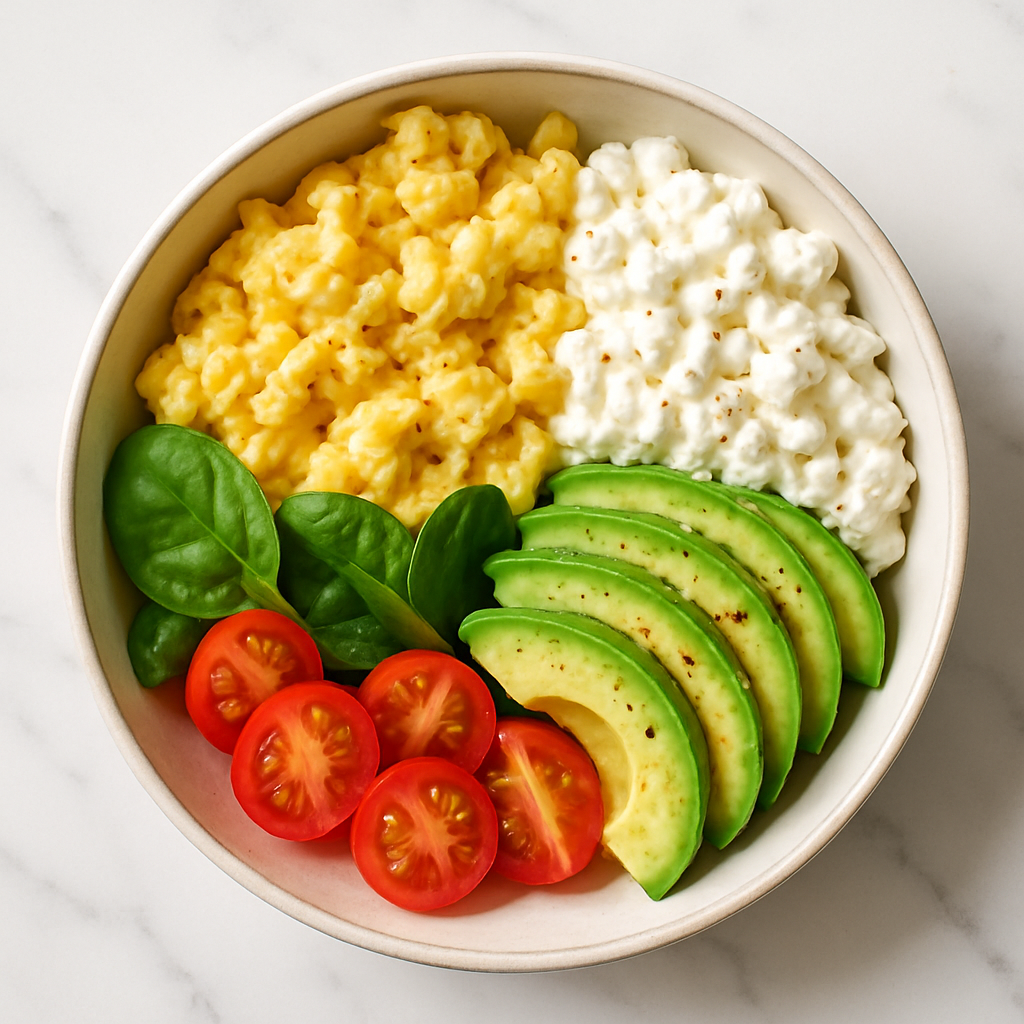
Scrambled Eggs with Cottage Cheese High Protein Breakfast Bowl earns its place as a genuine morning staple by delivering 24 grams of protein in a single bowl that comes together in under ten minutes. Most high-protein breakfasts ask you to compromise somewhere, usually on taste, time, or both. This one does not. The combination of whole eggs and cottage cheese hits a nutritional target that a standard three-egg scramble on its own cannot reach, and it does so without protein powder, supplements, or anything that feels remotely like a health food compromise. For anyone tracking macros or following a keto or gluten-free approach, the numbers here are genuinely useful: 282 calories, 4 grams of carbohydrates, and 18 grams of fat make this a bowl that sustains energy through a long morning rather than sending blood sugar on a ride. It is the kind of breakfast you come back to repeatedly because it works on a Tuesday when you have fifteen minutes and it works on a slow weekend when you want something that actually satisfies.
The ingredient list is short, and every item is doing real work. Three large eggs form the protein base, contributing roughly 18 grams of protein along with fat-soluble vitamins A, D, and B12, plus choline, which supports brain function and is something many people chronically under-consume. Sixty grams of low-fat cottage cheese adds a further six grams of protein, mostly from casein, a slower-digesting protein that complements the whey present in eggs and extends satiety well past mid-morning. Baby spinach brings iron, folate, and vitamin K to the bowl without adding meaningful carbohydrates. It wilts down to almost nothing in the pan, so even people who are not enthusiastic about cooked greens barely notice it. Olive oil provides monounsaturated fats and acts as the cooking medium that stops the eggs from sticking and drying out. The seasoning layer, garlic powder, onion powder, smoked paprika, sea salt, and black pepper, adds complexity that makes the bowl taste far more considered than its prep time suggests. Fresh chives finish everything with a mild allium flavour and a small hit of vitamin C.
The texture here is what keeps people making this recipe. When cottage cheese is folded into beaten eggs and cooked low and slow in a little olive oil, the curds from the cheese melt partially into the egg mixture, creating something creamier and more custardy than a plain scramble achieves. The result is soft folds of egg that hold their shape without becoming rubbery. The spinach wilts quickly, staying tender rather than going soggy, and adds a faint earthiness that grounds the richness of the eggs. The smoked paprika gives the finished bowl a warm, lightly smoky aroma when the pan is hot, and it colours the eggs a gentle orange-gold that looks appealing without any extra effort. The chives stay fresh and bright green on top, adding a subtle sharpness against the creamy base. The key to the texture is patience: medium-low heat and a spatula moved slowly across the pan every few seconds. Rushing the heat produces tough, weeping eggs. Taking ninety seconds longer produces something genuinely good.
This recipe supports a high-protein, low-carbohydrate dietary approach with real precision. With only four grams of carbohydrates per serving, it fits comfortably within ketogenic macros and suits anyone managing blood sugar, including people with type 2 diabetes or insulin resistance who benefit from minimising glucose spikes at the first meal of the day. The high protein content supports muscle retention and repair, making this a strong choice for people who train in the morning and need recovery nutrition quickly afterwards. It also suits older adults who are advised to increase protein intake to counter age-related muscle loss. The gluten-free nature of the recipe makes it accessible without modification for anyone with coeliac disease or a gluten sensitivity. Because the fat content comes primarily from eggs and olive oil rather than processed sources, it fits a whole-food approach to eating. Athletes, busy parents, people working from home, and anyone who has found themselves hungry again by ten in the morning will find this bowl genuinely addresses that problem.
For meal preparation, the eggs themselves are best cooked fresh since reheated scrambled eggs lose their texture quickly. However, you can beat the eggs with the cottage cheese and all the seasonings the night before and store the mixture covered in the fridge for up to twelve hours. In the morning you pour the mixture straight into the pan, saving the two minutes of measuring and mixing. If you want to prep components further ahead, wash and dry the spinach and chop the chives up to three days in advance, storing them separately in the fridge. Variations worth trying include swapping baby spinach for finely chopped kale, which holds up slightly firmer and adds more iron. Sun-dried tomatoes, roughly chopped, stirred through at the end add a concentrated sweetness and a small amount of lycopene. For a higher fat version that suits strict keto macros, replace the low-fat cottage cheese with full-fat cottage cheese, which also makes the texture even creamier. Crumbled feta in place of cottage cheese changes the flavour profile entirely, giving a saltier and more tangy result. Scroll down to the recipe card for full measurements and step-by-step instructions.
Ingredients
- 3 large eggs (free-range if possible)
- 60 g low-fat cottage cheese (1% or 2% fat, small curd works best)
- 1 large handful baby spinach (roughly 30g, fresh)
- 1 tsp olive oil (or a light spray of cooking oil)
- 2 tbsp fresh chives (finely chopped, or use spring onion greens)
- 0.3 tsp garlic powder
- 0.3 tsp onion powder
- 1 pinch sea salt (to taste)
- 1 pinch black pepper (freshly cracked)
- 0.3 tsp smoked paprika (optional, for finishing)
Instructions
- 1
Crack the eggs into a small bowl. Add the garlic powder, onion powder, a pinch of salt and black pepper. Whisk briskly with a fork for about 30 seconds until the yolks and whites are fully combined and slightly frothy.
Whisking well incorporates air and helps the eggs turn out fluffier once cooked.
- 2
Spoon the cottage cheese into the egg mixture and stir gently to combine. You do not need to break down the curds fully. They will melt into the eggs as they cook.
Stirring the cottage cheese in before cooking rather than adding it to the pan mid-cook gives a more even, creamy result.
- 3
Place a small non-stick skillet over the lowest heat setting your hob allows. Add the olive oil and let it warm gently for 30 seconds. Pour in the egg and cottage cheese mixture.
Low heat is the most important part of this recipe. High heat makes scrambled eggs rubbery and dry. Be patient here.
- 4
Leave the eggs undisturbed for about 45 seconds until you see the edges just beginning to set. Use a silicone spatula to gently fold the eggs from the outside edge toward the centre. Repeat this folding motion every 20 to 30 seconds rather than stirring constantly.
Slow, gentle folding creates large, soft curds. Constant stirring breaks the curds down too much and can make the texture grainy.
- 5
When the eggs are about 80 percent set but still look slightly glossy on top, add the baby spinach. Fold it gently through the eggs and let the residual heat wilt the leaves for about 30 seconds.
The eggs will finish cooking from residual heat after you remove the pan, so pull them off the heat while they still look a little underdone.
- 6
Slide the eggs immediately onto a warm plate or into a bowl. Scatter the chopped chives over the top, finish with a crack of black pepper and a light dusting of smoked paprika if using. Serve straight away.
Serve within two minutes of plating for the best texture. Scrambled eggs continue to cook on a warm plate if you leave them sitting.
Nutrition per serving
282kcal
Calories
24g
Protein
4g
Carbs
18g
Fat
1.2g
Fibre
2.5g
Sugar
390mg
Sodium
Pro Tips
- ✓
Always use the lowest heat your hob has for scrambled eggs. This single change makes the biggest difference to texture and creaminess.
- ✓
Full-fat cottage cheese works too, but low-fat keeps the calorie count lower while the protein stays high.
- ✓
Do not season with salt until after cooking. Adding salt too early can draw moisture from the eggs and make them watery.
- ✓
If you prefer firmer scrambled eggs, simply leave them on the heat a little longer before folding in the spinach.
- ✓
A warm plate makes a real difference. Run hot water over your serving plate for 30 seconds, dry it quickly and plate the eggs straight away.
- ✓
This recipe doubles easily. Use a slightly larger skillet if cooking for two and increase the cooking time by about 90 seconds.
Frequently Asked Questions
Variations
- •
Sun-Dried Tomato and Herb
Stir 2 tablespoons of finely chopped sun-dried tomatoes and a teaspoon of dried Italian herbs into the egg mixture before cooking. Finish with a few fresh basil leaves instead of chives for a Mediterranean-inspired version.
- •
Spiced Turmeric and Ginger
Add a quarter teaspoon of ground turmeric and a pinch of grated fresh ginger to the egg mixture before whisking. Turmeric gives a golden colour and anti-inflammatory benefits. Top with sliced spring onions and a squeeze of lemon juice.
- •
Turkey Sausage and Pepper
Dice one cooked turkey sausage link and half a small red bell pepper. Sauté the pepper in the olive oil for 2 minutes before adding the egg mixture. Stir the turkey sausage through during the final folding stage for extra protein and satisfying texture.
- •
Mushroom and Thyme
Slice 80 grams of chestnut mushrooms and cook them in the olive oil over medium heat for 3 minutes until golden before lowering the heat and adding the egg mixture. The earthiness of the mushrooms pairs brilliantly with the creamy cottage cheese eggs.
Substitutions
- •Low-fat cottage cheese → Full-fat cottage cheese (Works perfectly and adds a richer taste. Adds roughly 20 extra calories and 2 extra grams of fat per serving.)
- •Baby spinach → Kale or rocket (Kale needs an extra minute to wilt. Rocket wilts slightly but retains a peppery bite. Both add similar nutritional value.)
- •Fresh chives → Spring onion greens or fresh parsley (Spring onion greens have a similar mild onion flavour. Fresh parsley adds a brighter, slightly herbal note instead.)
- •Olive oil → Avocado oil or coconut oil spray (Avocado oil has a high smoke point and neutral taste. Coconut oil spray keeps the calorie count from cooking fat very low.)
- •Whole eggs → Two whole eggs plus two egg whites (Reduces fat by around 4 grams and saves approximately 40 calories while keeping protein similar. The texture is slightly less rich.)
🧊 Storage
Scrambled eggs are best eaten immediately after cooking. If you do need to store leftovers, transfer to an airtight container and refrigerate for up to 1 day. Reheat very gently in a non-stick pan over low heat for about 1 minute, adding a teaspoon of water to help loosen the eggs. Microwaving is possible but tends to make the texture rubbery.
📅 Make Ahead
You can whisk the eggs together with the cottage cheese and seasonings the night before and store the mixture covered in the fridge for up to 12 hours. Give it a quick stir before cooking. The spinach and chives are best added fresh on the day.