Healthy Rabanadas Portuguese French Toast Recipe with Whole Grain Bread and Honey
Healthy Rabanadas Portuguese French Toast Recipe with Whole Grain Bread and Honey brings a centuries-old Iberian tradition into the modern kitchen without sacrificing the warmth and comfort that made it beloved in the first place. Where most rabanadas recipes lean heavily on white bread soaked in full-fat milk and fried in generous amounts of oil, this version uses whole grain sourdough and oat milk to keep things lighter while actually boosting the nutritional profile. At 18 grams of protein and 310 calories per serving, it holds its own against any high-protein breakfast you might find on a fitness-focused recipe site, but it tastes like something your Portuguese grandmother would recognise. The cinnamon sugar dusting is still there. The golden crust is still there. What has changed is what happens beneath that crust, and those changes are worth paying attention to. This is a recipe that respects its origins while making a strong case for eating better without feeling like you are compromising on anything that actually matters.
The ingredients here are chosen with care, and each one pulls its weight. The whole grain sourdough bread is the foundation, bringing 6 grams of fibre per serving from the complex carbohydrates and bran present in the grain. Sourdough specifically adds a mild tang and a denser crumb that holds up to soaking without falling apart, which is a genuine functional advantage over regular sliced bread. The combination of two whole eggs and one egg white provides the bulk of that 18-gram protein count, with whole eggs also contributing choline and fat-soluble vitamins like A and D. Unsweetened oat milk keeps the recipe dairy-free while adding a faint natural sweetness and a creamy texture to the soaking mixture. Raw honey brings a small amount of antioxidants alongside its sweetness, and it disperses more evenly through a liquid mixture than granulated sugar would. Ground cinnamon appears twice in the recipe, once in the soak and once in the coating, because it does two different jobs: it flavours the interior of the bread as it cooks, and it forms that signature fragrant crust on the outside. Coconut sugar, used in the dusting blend, has a slightly lower glycaemic impact than white sugar and a natural caramel note that pairs well with nutmeg.
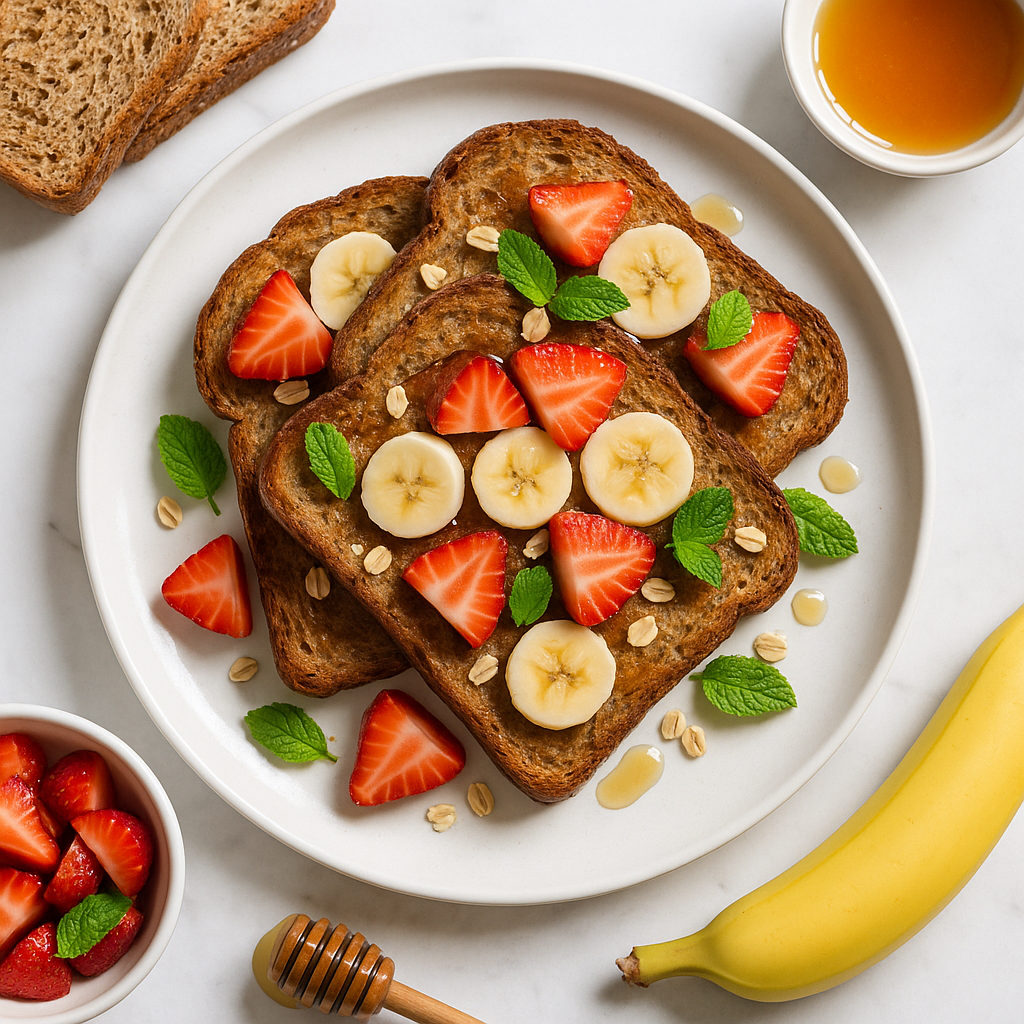
When you pull a finished rabanada from the pan, you get something that looks distinctly different from standard French toast. The surface is a deep amber gold, almost russet in places, with the cinnamon and coconut sugar coating slightly crystallised from the heat. The edges of the sourdough caramelise where the bread meets the coconut oil in the pan, creating a thin, almost lacquer-like crust that gives an audible crunch when you press it gently. Inside, the bread is custard-soft from the egg and oat milk soak, with enough structure from the sourdough to stay coherent on the plate. The smell while cooking is genuinely arresting, warm cinnamon and vanilla rising from the pan in a way that fills a kitchen quickly. The taste is subtly sweet rather than cloying, with the nuttiness of the whole grain bread grounding the spice notes. The process itself takes about 30 minutes from start to finish. You soak the bread slices thoroughly in the egg and oat milk mixture, allow any excess to drip off briefly, then cook in coconut oil over medium heat until each side is properly golden and set.
This recipe supports several specific health goals at once. The high protein content makes it useful for anyone managing appetite through the morning, since protein slows gastric emptying and helps maintain stable energy levels compared to a carbohydrate-heavy breakfast alone. The dairy-free construction means it works for people with lactose intolerance or a sensitivity to cow's milk proteins, and it suits those following a plant-forward diet who still eat eggs. The fibre from the whole grain bread supports digestive health and contributes to that feeling of sustained fullness. Athletes and active people who need a calorie-adequate, protein-rich meal before or after morning training will find the macros practical. Families with children will find the flavour profile approachable because it is warm, sweet and familiar. People managing blood sugar will appreciate the use of raw honey and coconut sugar in modest amounts rather than refined white sugar in large quantities. The balanced carbohydrate-to-protein ratio of roughly 42 grams of carbs to 18 grams of protein also makes this a reasonable choice for those following structured nutrition plans without being restrictive.
For meal prep, rabanadas reheat well, which sets this recipe apart from more delicate egg-based breakfasts. Cook a full batch, allow the slices to cool completely on a wire rack, then layer them between sheets of parchment in an airtight container. They keep in the refrigerator for up to four days without becoming soggy, provided the sourdough was properly toasted during cooking. To reheat, a dry skillet over medium heat for two minutes per side restores much of the original crispness, though a toaster oven at 180 degrees Celsius for six to eight minutes works even better. For freezing, place cooled slices on a flat tray until solid, then transfer to a freezer bag. They keep for up to two months and go straight from frozen into the toaster oven without thawing. Variations worth trying include swapping the vanilla extract for orange zest, which is more traditional in Portuguese households, or using ripe banana mashed into the soaking liquid in place of honey for a naturally sweeter result. A savoury version with the sugar removed and a pinch of smoked paprika added works well alongside eggs. Scroll down to the recipe card for the full measurements and step-by-step instructions.
Ingredients
- 8 thick slices whole grain sourdough bread (cut 2.5cm thick and left uncovered overnight to go stale)
- 2 whole large eggs (room temperature)
- 1 whole egg white (adds protein with less fat)
- 240 ml unsweetened oat milk (or any plant milk of choice)
- 1 tablespoon raw honey (plus extra for drizzling to serve)
- 1.5 teaspoons ground cinnamon (divided)
- 0.5 teaspoon vanilla extract
- 0.3 teaspoon sea salt
- 0.3 teaspoon ground nutmeg
- 1.5 tablespoons coconut sugar (for the cinnamon topping)
- 1 teaspoon extra cinnamon (to mix with coconut sugar for topping)
- 2 teaspoons coconut oil (for pan frying, divided)
- 150 grams fresh mixed berries (strawberries, blueberries or raspberries, to serve)
Instructions
- 1
The night before, slice your whole grain sourdough into thick 2.5cm slices. Arrange them on a wire rack or baking sheet and leave uncovered at room temperature overnight. This drying process is essential. Stale bread soaks up the custard without turning to mush, giving you that classic rabanadas texture.
If you forgot to do this the night before, place the slices in an oven at 90 degrees Celsius for 30 minutes to speed up the drying process.
- 2
Preheat your oven to 180 degrees Celsius and line a baking tray with parchment paper. In a wide, shallow bowl, whisk together the 2 whole eggs and 1 egg white until fully combined and slightly frothy. Add the oat milk, raw honey, 1 teaspoon of ground cinnamon, vanilla extract, sea salt and nutmeg. Whisk again until everything is smooth and well blended.
Use a dish wide enough to fit a slice of bread flat, this makes soaking much easier.
- 3
Mix the coconut sugar and the remaining 1 teaspoon of cinnamon together in a small bowl and set aside. This is your finishing dust and it goes on while the toast is still hot so it sticks perfectly.
- 4
Working in batches, place 2 slices of stale bread into the egg mixture. Let them soak for 90 seconds on each side. The bread should feel heavy and saturated but still hold its shape. Do not rush this step.
Press down gently on the bread with your fingertips while soaking to help the custard absorb evenly.
- 5
Heat half a teaspoon of coconut oil in a large non-stick frying pan over medium heat. Once the oil is shimmering, add 2 soaked slices to the pan. Cook for 2 to 3 minutes on each side until both surfaces are deep golden brown. Transfer to the lined baking tray. Repeat with the remaining slices, adding a little coconut oil between each batch.
Keep the heat at medium rather than high. Too hot and the outside burns before the inside heats through.
- 6
Once all slices are pan-fried, slide the baking tray into the preheated oven and bake for 5 minutes. This final oven step crisps the exterior further without needing extra oil, mimicking the texture you would get from deep-frying.
- 7
Remove the rabanadas from the oven and immediately dust both sides generously with the cinnamon coconut sugar mixture while they are still hot. Plate them up, drizzle lightly with raw honey, and serve alongside fresh berries.
Dust the cinnamon sugar right away while they are fresh from the oven. The warmth helps it stick to the surface.
Nutrition per serving
310kcal
Calories
18g
Protein
42g
Carbs
8g
Fat
6g
Fibre
11g
Sugar
320mg
Sodium
Pro Tips
- ✓
Stale bread is non-negotiable. Fresh bread will dissolve in the soak and fall apart in the pan.
- ✓
Whole grain sourdough works best here because it has a tighter crumb that holds the custard without becoming soggy.
- ✓
Do not overcrowd the pan. Cooking 2 slices at a time lets each one brown properly rather than steam.
- ✓
The oven finish is what separates a good rabanada from a great one. Do not skip it.
- ✓
For extra protein, serve alongside a small pot of Greek yogurt instead of or in addition to the berries.
- ✓
If your honey has crystallised, gently warm it in a small bowl of hot water for a minute to loosen it before using.
Frequently Asked Questions
Variations
- •
Orange Zest Rabanadas
Add the zest of one large orange to the custard soak mixture. Orange and cinnamon is a traditional Portuguese flavour pairing that works beautifully here and adds a bright, fragrant note without any extra sugar.
- •
High Protein Rabanadas
Replace 60ml of the oat milk with 60ml of cottage cheese blended smooth. This adds extra protein per serving and creates an even richer, creamier custard interior.
- •
Air Fryer Rabanadas
Skip the pan frying entirely. Spray each soaked slice with coconut oil cooking spray and cook in your air fryer at 190 degrees Celsius for 8 to 10 minutes, flipping once at the halfway point. Finish with cinnamon coconut sugar while still hot.
- •
Lemon and Honey Rabanadas
Add a teaspoon of lemon zest and a tiny pinch of cardamom to the custard mixture. Serve drizzled with extra raw honey and a scatter of toasted flaked almonds for crunch. The citrus lifts the richness beautifully.
Substitutions
- •Whole grain sourdough bread → Whole wheat baguette or dense gluten free bread (Choose a bread with a tight, firm crumb that will hold up during soaking. Avoid soft sandwich bread.)
- •Oat milk → Semi-skimmed dairy milk, almond milk or soy milk (Any milk works here. Soy milk adds extra protein. Full-fat dairy milk gives the richest custard.)
- •Raw honey → Maple syrup or date syrup (Use the same quantity. Maple syrup gives a slightly lighter flavour while date syrup adds a deeper caramel note.)
- •Coconut sugar → Light brown sugar or erythritol for a lower-calorie option (Use the same quantity. Erythritol gives a similar cinnamon sugar crunch with fewer calories.)
- •Coconut oil → Avocado oil or light olive oil (Use any neutral oil with a high smoke point. Avoid extra virgin olive oil as its strong flavour can compete with the cinnamon and honey.)
🧊 Storage
Store any leftover rabanadas in an airtight container in the refrigerator for up to 3 days. Reheat in the oven at 180 degrees Celsius for 8 to 10 minutes to restore the crispy exterior. Avoid microwaving as this makes the bread soft and soggy. Do not add the cinnamon sugar topping until after reheating.
📅 Make Ahead
Slice and dry the bread up to 3 days in advance and store uncovered at room temperature. The custard soak mixture can be whisked and stored in a sealed jar in the fridge for up to 24 hours. The full recipe can be cooked ahead and reheated in the oven when ready to serve. The cinnamon sugar topping should always be applied fresh after the final heating.