Pão de Deus Portuguese Sweet Bread Rolls Recipe (Lighter, High-Protein Version)
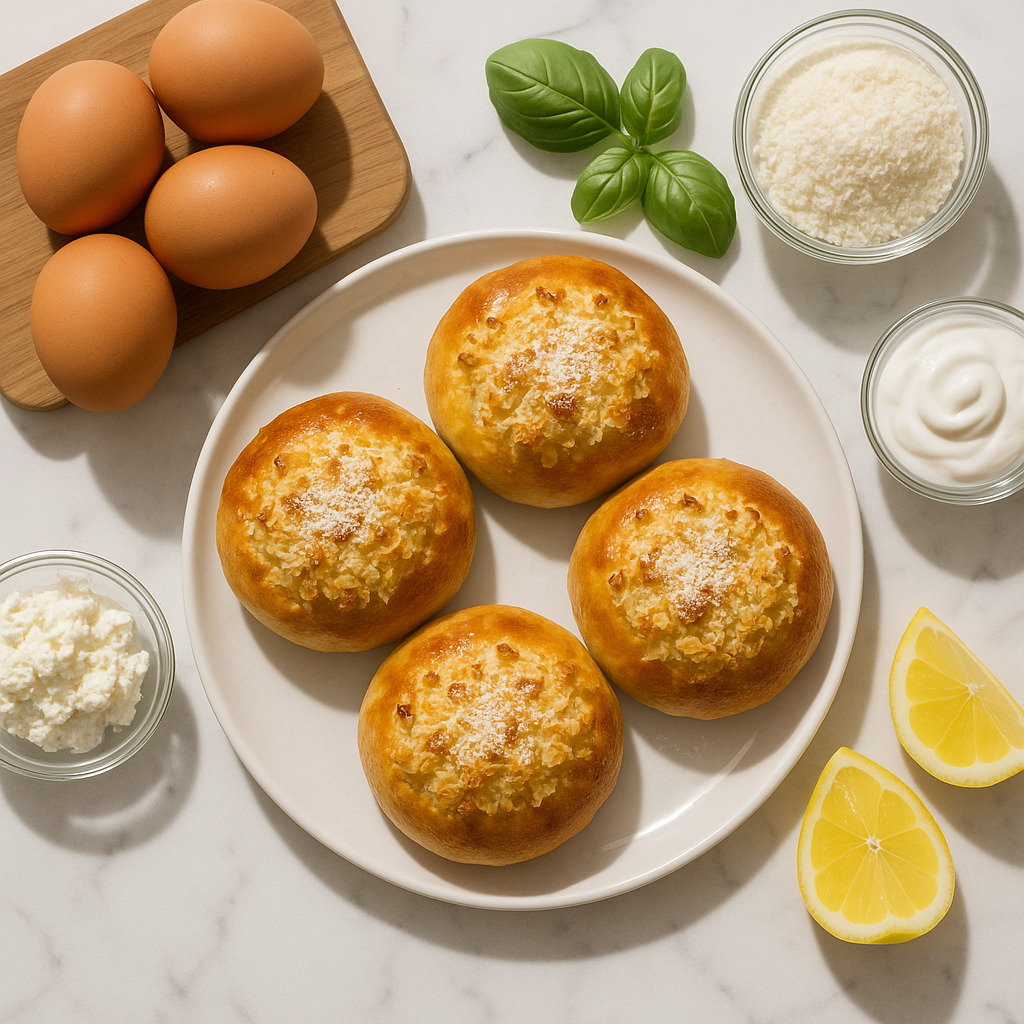
Pão de Deus Portuguese Sweet Bread Rolls, reimagined as a lighter, high-protein version, bring a beloved bakery classic into everyday healthy eating without stripping away what makes them worth baking. The name translates to "Bread of God," and the traditional version is rich, sweet, and indulgent. This recipe keeps the soul of that original intact while working with smarter ingredients that bump up the protein to 7 grams per roll and bring the sugar down to just 7 grams. Each roll clocks in at 198 calories with 3 grams of fibre, which is a meaningful number for a sweet bread. Most sweet roll recipes offer little beyond refined carbohydrates and butter. This one uses a combination of flours, adds Greek yogurt to the dough, and leans on coconut sugar for a more complex sweetness. The result is a roll that fits into a balanced breakfast without the blood sugar spike that usually follows a pastry. If you have been looking for a baked good that feels genuinely special but still supports your nutrition goals, this is a solid answer.
The ingredient list here is doing real work. White whole wheat flour makes up half the flour blend and brings fibre, B vitamins, and a slightly nutty flavour without the heavy density of standard whole wheat. Plain all-purpose flour balances that out, keeping the crumb light and the texture properly soft. Greek yogurt is the quiet star of this dough. Eighty grams of full-fat plain Greek yogurt adds moisture, a gentle tang, and a meaningful protein contribution while replacing some of the fat that a richer dough would need. Two large eggs contribute both structure and protein, helping the rolls hold their shape through the rise and bake. Coconut sugar replaces refined white sugar, offering a lower glycaemic index and a mild caramel note. The unsweetened desiccated coconut on top is not just decorative. Coconut contains medium-chain triglycerides and adds fibre to each bite. Lemon zest brightens the whole flavour profile, and a small amount of butter keeps the crumb tender without dominating the fat content.
The dough itself is soft and slightly sticky when you first bring it together, which is exactly how it should be. The warmth of the milk activates the yeast, and you will notice the mixture starting to smell faintly yeasty and sweet within ten minutes or so. As you knead, the dough smooths out into something supple and elastic that springs back gently when you press a finger into it. After the first rise, the dough puffs up noticeably, and shaping the rolls is satisfying work. Each ball of dough gets a generous mound of coconut topping pressed on before the second short rest. In the oven, the rolls turn a deep golden brown on the base while the coconut on top toasts to a warm amber. Fresh out of the oven they smell of vanilla, lemon zest, and toasted coconut together. The crust has a slight firmness that gives way to a genuinely fluffy, tender crumb inside. There is a subtle sweetness throughout without anything cloying. Eating one warm is the kind of experience that makes you want to bake them again the same week.
This recipe supports people working on blood sugar management, weight maintenance, or muscle recovery. The moderate protein per serving matters for a baked good, and the fibre from whole wheat flour and coconut helps slow digestion, which means you stay satisfied longer after breakfast. The recipe fits a vegetarian diet and can work for people following a lower-sugar approach to eating. Athletes and active people will find the carbohydrate content appropriate for fuelling a morning workout without excess. Families with children will find these rolls popular at the table because they taste genuinely sweet and feel like a treat, which makes them useful for anyone trying to shift household eating habits toward more nutritious options without complaints. People managing portion control benefit from the individual roll format, where each serving is clearly defined at 198 calories. The combination of eggs, yogurt, and whole grain flour means these rolls carry you through the morning rather than leaving you hungry an hour later, which is what separates them from most bakery sweet breads.
For meal prep, these rolls are straightforward to prepare in advance. You can shape the dough balls and refrigerate them overnight after the first rise, then let them come to room temperature and complete the second rise before baking fresh in the morning. Baked rolls keep well at room temperature in an airtight container for two days. In the refrigerator they last up to five days, and they respond well to a brief warm in a low oven at around 150 degrees Celsius for eight minutes, which brings the crust back and revives the crumb. They also freeze well for up to three months. To freeze, cool completely, wrap individually, and thaw overnight in the fridge. For variations, you can swap the lemon zest for orange zest, which gives a warmer, slightly sweeter aromatic note that pairs beautifully with the coconut topping. Adding a teaspoon of ground cardamom to the dough creates a more fragrant, spiced version that feels distinct from the original. You can also fold a small amount of dried cranberry into the dough for colour and a tart contrast to the sweet coconut crust. The full method, quantities, and step-by-step guidance are all waiting for you in the recipe card below.
Ingredients
- 180 g white whole wheat flour (also called white wholemeal flour)
- 180 g plain all-purpose flour (plus extra for dusting)
- 7 g sachet instant dry yeast (one standard sachet)
- 2 tbsp coconut sugar (or light brown sugar)
- 120 ml warm low-fat milk (temperature around 38-40C, warm but not hot)
- 2 large eggs (one for the dough, one for the coconut topping)
- 80 g full-fat plain Greek yogurt (adds moisture and protein in place of excess butter)
- 2 tbsp unsalted butter (softened, at room temperature)
- 1 tsp pure vanilla extract
- 1 large lemon (zest only, finely grated)
- 0.5 tsp fine sea salt
- 100 g unsweetened desiccated coconut (not sweetened or toasted)
- 1 tbsp raw honey (for the coconut topping)
- 1 tbsp low-fat milk (for the coconut topping to loosen the mixture)
- 1 large egg (beaten, for egg wash)
Instructions
- 1
Pour the warm milk into a small bowl and stir in one tablespoon of the coconut sugar. Sprinkle the instant yeast over the surface, give it a gentle stir, and leave it to sit for 8 to 10 minutes until it looks foamy and active.
If the yeast does not foam after 10 minutes, your milk may have been too hot or the yeast is old. Start again with fresh yeast.
- 2
In a large mixing bowl, combine both flours, the remaining tablespoon of coconut sugar, and the salt. Make a well in the centre. Add the activated yeast mixture, one beaten egg, the Greek yogurt, softened butter, vanilla extract, and lemon zest into the well.
Zesting the lemon directly over the bowl means you catch all the essential oils, which adds even more flavour.
- 3
Mix everything together until a rough dough forms, then turn it out onto a lightly floured surface and knead for 10 to 12 minutes by hand, or 7 minutes on medium speed in a stand mixer with a dough hook. The dough should feel smooth, slightly tacky, and elastic. It will be softer than a standard bread dough.
Resist adding too much extra flour. A slightly sticky dough gives you a softer roll.
- 4
Shape the dough into a ball and place it in a lightly oiled bowl. Cover with a clean damp cloth or cling film and leave to rise in a warm spot for 60 minutes, or until roughly doubled in size.
A switched-off oven with just the light on makes an ideal warm proving environment.
- 5
While the dough proves, make the coconut topping. In a small bowl, combine the unsweetened desiccated coconut, raw honey, one egg, and the tablespoon of milk. Stir well until everything is evenly coated and the mixture holds together loosely. Set aside.
- 6
Once the dough has risen, punch it down gently and divide it into 10 equal portions, each weighing roughly 65 to 70 grams. Roll each portion into a smooth ball and place them on a large baking tray lined with parchment paper, spacing them about 5 cm apart.
Using a kitchen scale here keeps the rolls a consistent size so they bake evenly.
- 7
Cover the shaped rolls loosely with oiled cling film and leave them to prove again for 30 minutes. Meanwhile, preheat your oven to 190C (fan 170C) or 375F.
- 8
Brush each roll gently with the beaten egg wash. Spoon a generous tablespoon of the coconut topping onto the surface of each roll, pressing it down very lightly so it stays in place without flattening the roll.
Do not press too hard. You want the coconut to sit on top of the dome, not crush the air out of your dough.
- 9
Bake in the preheated oven for 16 to 18 minutes until the rolls are golden and the coconut topping is lightly toasted and set. The bases should sound hollow when tapped. Remove from the oven and leave to cool on the tray for 5 minutes before transferring to a wire rack.
Watch the coconut topping from the 14-minute mark as it can catch quickly. Rotate the tray if your oven has hot spots.
Nutrition per serving
198kcal
Calories
7g
Protein
29g
Carbs
6g
Fat
3g
Fibre
7g
Sugar
145mg
Sodium
Pro Tips
- ✓
Always use warm milk, not hot. Milk that is too hot will kill the yeast before it can activate.
- ✓
White whole wheat flour is lighter in texture than regular wholemeal but still gives you the fibre benefit. It is worth seeking out for this recipe.
- ✓
The lemon zest is a core part of the authentic Portuguese flavour here. Do not skip it.
- ✓
These rolls are best eaten on the day of baking, slightly warm from the oven.
- ✓
If your kitchen is cold, the proving time may need to be extended by 15 to 20 minutes. Trust the look of the dough, not just the clock.
- ✓
For a glossy golden coconut topping, make sure the egg in the coconut mixture is well beaten before combining.
Frequently Asked Questions
Variations
- •
Orange Zest Version
Swap the lemon zest for the zest of one large orange. This gives the rolls a slightly sweeter, more floral aroma and pairs especially well with a drizzle of honey when serving.
- •
Protein-Boosted Rolls
Replace 30g of the plain flour with an unflavoured or vanilla protein powder. This increases the protein content per roll without noticeably changing the texture, as long as you do not exceed 30g.
- •
Dairy-Free Version
Use unsweetened oat milk in place of the low-fat milk and substitute the Greek yogurt with a thick unsweetened coconut yogurt. Replace the butter with a plant-based baking spread. The rolls will be slightly less structured but still delicious.
- •
Mini Rolls for Kids
Divide the dough into 16 smaller portions instead of 10 and reduce the bake time to 13 to 14 minutes. These smaller rolls are a great lunchbox addition or after-school snack.
Substitutions
- •White whole wheat flour → Spelt flour (Spelt flour gives a slightly nuttier flavour and also provides good fibre. Use the same quantity and expect a very similar texture.)
- •Greek yogurt → Thick plain skyr (Skyr has even more protein than Greek yogurt and works identically in this dough. Use full-fat skyr for the closest texture.)
- •Coconut sugar → Light brown sugar or maple sugar (Any unrefined sugar works here. Coconut sugar is preferred as it has a lower glycaemic index, but the difference in the final bake is minimal.)
- •Unsalted butter → Coconut oil, slightly softened (Use refined coconut oil to avoid a strong coconut flavour competing with the desiccated coconut topping. The texture of the dough will be very similar.)
- •Raw honey → Pure maple syrup (Maple syrup works equally well in the coconut topping and gives a slightly deeper, more caramel-like flavour note.)
🧊 Storage
Store cooled rolls in an airtight container at room temperature for up to 2 days. For best texture, warm them briefly in a low oven at 160C for 5 minutes before eating. They can also be frozen for up to 2 months once fully cooled.
📅 Make Ahead
Make the dough the evening before, complete the first rise, then cover the bowl and refrigerate overnight. The next morning, remove from the fridge, shape into rolls, and allow to prove at room temperature for 45 minutes before adding the coconut topping and baking. This slow, cold fermentation actually deepens the flavour beautifully.