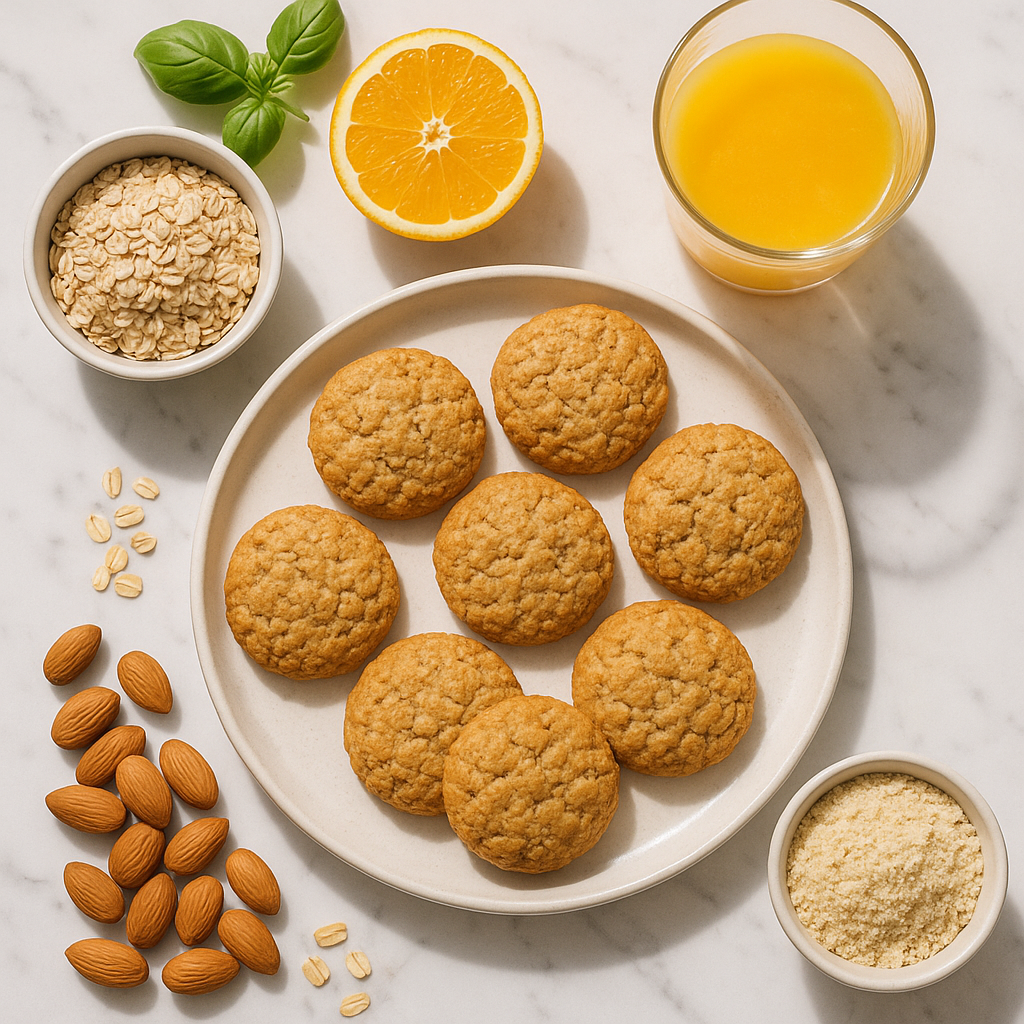
Easy Italian Breakfast Cookies with Oat and Almond Flour bring a genuinely different energy to the breakfast table. Most breakfast cookies lean heavily on oats, chocolate chips, and enough sugar to call them dessert in disguise. These are something else entirely. The flavour profile is rooted in the Italian tradition of morning cookies meant for dipping into coffee or tea, where the cookie itself is meant to be subtly sweet, aromatic, and satisfying rather than indulgent. At 95 calories per cookie with 3.4 grams of protein and only 3.1 grams of sugar, they hold up nutritionally in a way that most grab-and-go baked goods do not. The 30-minute prep-to-oven timeline means you are not committing a Sunday afternoon to make them. They are gluten-free and genuinely meal prep friendly, so a single baking session can cover your weekday mornings without any compromise on quality or flavour. If you have been looking for a breakfast that feels a bit more refined than a bowl of cereal but requires no more effort, this is it.
The ingredient list here is short and every item is pulling real weight. Oat flour forms the base and brings a mild, slightly sweet flavour along with soluble fibre that helps slow glucose absorption. Almond flour adds body, moisture, and healthy monounsaturated fats while contributing meaningfully to the protein count. Together these two flours create a cookie that holds together without any gluten structure needed. The two large eggs bind the dough and add the bulk of the protein in each cookie. Greek yogurt, just two tablespoons, adds a quiet tang and keeps the crumb tender while sneaking in a small additional protein boost. Raw honey provides sweetness with trace minerals and a lower glycaemic response than refined sugar. Extra virgin olive oil replaces butter entirely, adding heart-healthy oleic acid and keeping the texture light rather than heavy. The fresh lemon zest is not decorative. It lifts the entire flavour and makes the anise seeds sing rather than overwhelm. Anise seeds themselves contain small amounts of iron, calcium, and antioxidants, and they are the ingredient that makes these feel authentically Italian rather than just another gluten-free bake.
The dough comes together quickly and has a slightly soft, almost paste-like consistency before baking, which is expected given the almond flour content. You scoop it into rounds, and the cookies spread modestly in the oven, coming out with a pale golden edge and a slightly domed top. The surface develops a very light crust while the interior stays tender and just a touch chewy. The scent while baking is genuinely lovely. The anise seeds release their gentle liquorice-like fragrance early in the bake, and the lemon zest creates a bright citrus note that balances it perfectly. The vanilla adds warmth underneath everything. Biting into one, the texture is more tender than crisp, with a fine crumb from the almond flour. The flavour is aromatic and gently sweet, with the lemon and anise working together in a way that tastes considered and measured, not accidental. Dunked into a strong espresso or a cup of chamomile tea, the cookie softens slightly and the flavours open up even more, which is exactly how these are meant to be eaten.
These cookies support a few specific health goals worth naming. The low sugar content makes them suitable for anyone managing blood sugar, including people following a low-glycaemic eating pattern. The combination of protein, fat, and fibre at each serving helps create satiety without a blood sugar spike, which is useful if you tend to feel hungry again an hour after breakfast. The gluten-free construction using certified oat flour and almond flour means anyone with gluten sensitivity can eat them without substitution. They also fit a Mediterranean-style eating pattern given the olive oil, almond flour, and honey. Athletes doing morning training sessions will find the moderate carbohydrate content useful as a light pre-workout snack without anything heavy sitting in the stomach. Children and older adults who need nutrient-dense snacks in small portions will benefit from the calorie and protein balance. For anyone doing intermittent fasting who wants to break their fast gently with something small and sustaining, one or two of these with coffee covers that need cleanly.
For meal prep, these cookies are one of the most reliable things you can make at the start of the week. Once baked and fully cooled, they store in an airtight container at room temperature for up to four days, and their texture actually improves slightly on day two as the flavours settle. In the refrigerator they keep for up to a week without any change in quality. For longer storage, freeze them in a single layer first, then transfer to a freezer bag where they will keep for up to two months. To thaw, leave them at room temperature for twenty minutes or warm them briefly in a low oven for five minutes. Variations worth trying include swapping the anise seeds for fennel seeds, which are milder and slightly sweeter. Adding a tablespoon of finely chopped pistachios to the dough gives a nice textural contrast. For a warmer spice profile, a quarter teaspoon of cinnamon and a pinch of cardamom replaces the anise entirely for a different but equally appealing version. The full measurements, baking temperature, and step-by-step instructions are all in the recipe card below.
Ingredients
- 1 cup oat flour (certified gluten-free if needed)
- 1 cup almond flour (blanched, finely ground)
- 1 teaspoon baking powder
- 0.3 teaspoon fine sea salt
- 1 teaspoon anise seeds (or substitute fennel seeds for a milder flavour)
- 2 large eggs (room temperature)
- 3 tablespoons raw honey (or pure maple syrup)
- 3 tablespoons extra virgin olive oil (light flavoured works well too)
- 1 teaspoon pure vanilla extract
- 1.5 teaspoons fresh lemon zest (from about 1 large lemon)
- 2 tablespoons plain Greek yogurt (full-fat or low-fat both work, adds moisture and protein)
Instructions
- 1
Preheat your oven to 170 degrees Celsius (340 degrees Fahrenheit) and line a large baking tray with parchment paper.
A lower oven temperature helps these cookies bake evenly without browning too quickly on the bottom.
- 2
In a large mixing bowl, whisk together the oat flour, almond flour, baking powder, sea salt and anise seeds until evenly combined.
Make sure there are no lumps in the almond flour by sifting it if needed.
- 3
In a separate smaller bowl, whisk together the eggs, honey, olive oil, vanilla extract, lemon zest and Greek yogurt until smooth and well combined.
Room temperature eggs incorporate more smoothly into the wet mixture.
- 4
Pour the wet ingredients into the dry ingredients and stir with a spatula until a soft, slightly sticky dough forms. Do not overmix.
The dough will be softer than a traditional flour dough. This is normal and correct.
- 5
Using a tablespoon or small cookie scoop, portion the dough into 18 balls and place them onto the lined baking tray, spacing them about 4 centimetres apart.
Lightly oiling your hands makes it easier to roll the portions into neat shapes without sticking.
- 6
Gently press each ball slightly flat with the back of a spoon or your fingers to form a rounded disc shape about 1.5 centimetres thick. For the classic S shape, roll each portion into a short log and curve it gently.
The S shape is traditional and looks beautiful, but discs bake just as well if you are short on time.
- 7
Bake in the preheated oven for 16 to 18 minutes, until the cookies are lightly golden on the edges and firm to a gentle touch on top.
Start checking at 15 minutes as all ovens vary. The cookies will firm up more as they cool.
- 8
Remove from the oven and allow the cookies to cool on the baking tray for 5 minutes before transferring to a wire rack to cool completely.
Cooling on the tray first helps them set properly without crumbling.
Nutrition per serving
95kcal
Calories
3.4g
Protein
8.2g
Carbs
5.8g
Fat
1.8g
Fibre
3.1g
Sugar
58mg
Sodium
Pro Tips
- ✓
Do not skip the lemon zest. It is a small amount but it lifts the entire flavour profile and is key to that classic Italian biscuit taste.
- ✓
For a crispier cookie, bake for an extra 2 minutes and allow to cool fully on a wire rack uncovered.
- ✓
If your dough feels too sticky to shape, refrigerate it for 10 minutes before portioning.
- ✓
Use a light-flavoured extra virgin olive oil rather than a very robust peppery one, as a strong oil can compete with the delicate anise and lemon flavours.
- ✓
These cookies are intentionally lightly sweet. If you prefer a slightly sweeter result, increase the honey to 4 tablespoons maximum.
- ✓
Dunking in espresso or black coffee is the most authentic way to enjoy these, and the coffee complements the anise beautifully.
Frequently Asked Questions
Variations
- •
Lemon and Poppy Seed
Replace the anise seeds with 1.5 teaspoons of poppy seeds and double the lemon zest to 1 tablespoon. This gives a bright, zesty cookie that is lighter and more floral in flavour.
- •
Orange and Dark Chocolate Chip
Swap the lemon zest for orange zest and stir 2 tablespoons of 70 percent dark chocolate chips into the dough. Omit the anise seeds for a more crowd-pleasing flavour that kids will love too.
- •
Vanilla and Almond
Leave out the anise seeds and add half a teaspoon of almond extract alongside the vanilla. This creates a delicate marzipan-like flavour that is classic Italian and deeply satisfying.
- •
Spiced Cardamom and Honey
Add half a teaspoon of ground cardamom and a pinch of cinnamon in place of the anise seeds. Increase the honey by half a tablespoon for a warming, aromatic cookie that is lovely in cooler months.
Substitutions
- •Eggs → Flax eggs (Mix 1 tablespoon ground flaxseed with 3 tablespoons water per egg. Rest for 5 minutes until gel-like. This makes the recipe vegan but results in a slightly denser texture.)
- •Greek yogurt → Dairy-free coconut yogurt (A plain unsweetened coconut yogurt works well and keeps the recipe dairy-free without significantly affecting flavour or texture.)
- •Honey → Pure maple syrup or agave nectar (Both are one-to-one swaps. Maple syrup gives a slightly deeper flavour while agave is more neutral and has a lower glycaemic index.)
- •Almond flour → Sunflower seed flour (Ideal for nut-free versions. Process sunflower seeds in a food processor until a fine flour forms. Use in equal measure to the almond flour.)
- •Extra virgin olive oil → Melted coconut oil (Refined coconut oil has almost no flavour and works as a neutral substitute. Unrefined coconut oil adds a faint coconut note which can work nicely with the lemon zest.)
🧊 Storage
Store cooled cookies in an airtight container at room temperature for up to 4 days. For longer storage, keep them in the refrigerator for up to 7 days. The cookies may soften slightly in the fridge but a few minutes at room temperature will bring them back. They can also be frozen in a zip-lock bag or airtight container for up to 2 months. Thaw at room temperature for 20 minutes before eating.
📅 Make Ahead
This is a brilliant recipe for meal prep. Make a double batch on the weekend and store them in an airtight container for weekday breakfasts. The unbaked dough can also be made ahead and refrigerated for up to 24 hours before baking. Alternatively, shape the cookies and freeze them unbaked on a tray, then transfer to a freezer bag. Bake from frozen by adding 3 to 4 extra minutes to the baking time.
You might also like
Italian Ricotta Frittata Recipe: High Protein Spinach and Sun-Dried Tomato
Italian Baked Frittata with Peas and Vegetables (High Protein, Low Calorie)