Italian Baked Frittata with Peas and Vegetables (High Protein, Low Calorie)
Italian Baked Frittata with Peas and Vegetables is the kind of recipe that earns a permanent spot in your weekly rotation. It delivers 22 grams of protein per serving at only 218 calories, which makes it one of the more efficient high-protein breakfast options you can put together on a weekday morning. Unlike a stovetop omelette, which demands constant attention and precise timing, this frittata goes into the oven and largely takes care of itself. That hands-off cooking window gives you time to make coffee, pack a bag, or set the table without hovering over a pan. The combination of whole eggs, egg whites, and ricotta creates a base that is rich enough to feel satisfying but light enough that you will not feel weighed down before a busy morning. With just one pan to wash and a total time of 35 minutes, this sits in a different category from the elaborate egg bakes that require a dozen components and twice the effort. The vegetables are straightforward and affordable, and the result looks far more impressive than the work involved.
The ingredient list here is doing real nutritional work, not just adding colour. The four whole eggs bring complete protein, B12, choline, and fat-soluble vitamins including D and A. Adding four egg whites on top of those whole eggs bumps the protein content significantly while keeping the fat and calorie count controlled. Reduced-fat ricotta contributes a creamy texture and adds extra protein and calcium without the density of full-fat cheese. The 30 grams of Parmigiano Reggiano is used sparingly but strategically: it has a concentrated, savoury depth that means a small quantity carries real flavour throughout the whole dish. Frozen garden peas bring around 5 grams of plant protein per 100 grams along with fibre and vitamin C, and they hold their shape well during baking. Baby spinach is rich in iron, folate, and magnesium, and it wilts down to almost nothing, so it integrates into the egg mixture without becoming the dominant flavour. Courgette adds bulk and moisture, the roasted capsicum contributes natural sweetness and vitamin C, and the garlic and Italian herb blend tie everything together with very little added sodium or fat.
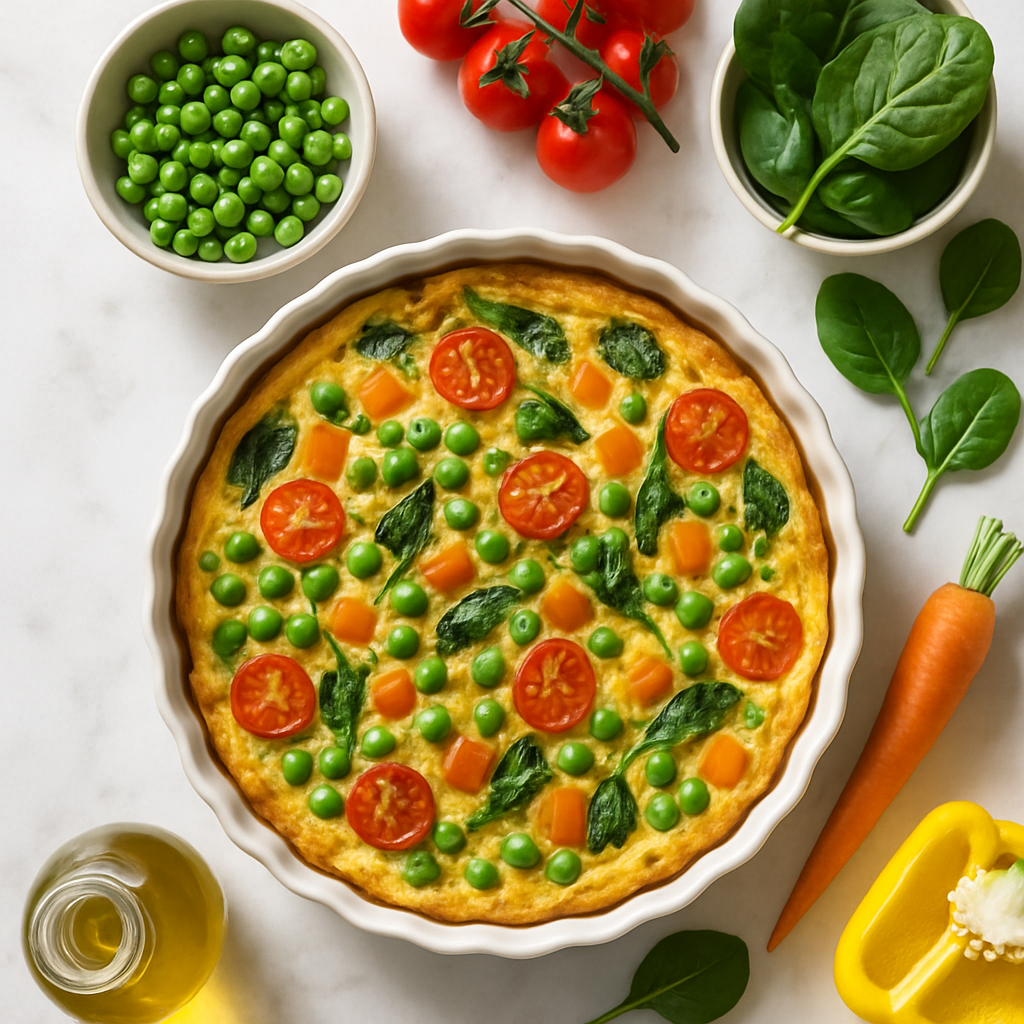
When this frittata comes out of the oven, it has a golden, lightly puffed surface with visible flecks of green pea and spinach throughout. The edges set slightly firmer than the centre, which stays soft and almost custardy from the ricotta. Cut into it and you get clean slices that hold their shape on a plate, which matters if you are serving it to others or packing it for later. The smell during baking is warm and herby, with the Parmigiano toasting slightly on top and the garlic and dried herbs infusing through the egg base. The flavour is savoury and mild, with a gentle sweetness from the roasted capsicum and peas cutting through the richness of the cheese. The courgette becomes tender and almost disappears into the structure, adding moisture without any bitterness. Starting the onion and garlic in olive oil on the stovetop before adding everything to the oven makes a noticeable difference to the depth of flavour compared to adding them raw.
This recipe is a strong fit for anyone managing their weight while trying to maintain muscle, because the protein-to-calorie ratio is genuinely good. At 22 grams of protein and 9 grams of carbohydrates per serving, it aligns with low-carb and high-protein eating patterns without requiring any specialist ingredients. It is naturally gluten-free, which makes it accessible for people with coeliac disease or gluten sensitivity, and there is no need for any substitutions to make that work. The fibre from the peas, spinach, and courgette supports digestive health and contributes to satiety, meaning this breakfast tends to keep hunger at bay through a long morning. Athletes, people in a calorie deficit, older adults focused on protein intake, and anyone eating in a way that prioritises nutrient density over volume will all find this a useful recipe. It does not rely on processed ingredients or anything that needs a specialist shop. Everything here is available in a standard supermarket, which matters for making a recipe sustainable to repeat week after week.
Meal prep is where this frittata really shows its value. You can bake the whole thing on a Sunday, slice it into portions, and store it in an airtight container in the fridge for up to four days. It reheats well in a low oven at around 160 degrees Celsius for eight to ten minutes, or in a microwave for about 90 seconds if you want something quicker. It also eats well at room temperature, so it works as a cold breakfast or a packed lunch without any reheating at all. For freezing, wrap individual slices in baking paper and store them in a freezer bag for up to two months. Thaw overnight in the fridge before reheating. If you want to vary the recipe, swap the courgette for mushrooms or asparagus depending on the season. You can replace the ricotta with cottage cheese for a slightly higher protein and lower fat version, though the texture will be a little less smooth. A handful of sun-dried tomatoes stirred through before baking adds a concentrated flavour that works well with the Italian herbs. All the specific quantities and timings are set out in the recipe card below.
Ingredients
- 4 large free-range whole eggs (at room temperature)
- 4 large free-range egg whites (at room temperature)
- 120 g reduced-fat ricotta cheese
- 30 g Parmigiano Reggiano (finely grated, divided)
- 150 g frozen garden peas (thawed and drained)
- 80 g baby spinach leaves (loosely packed)
- 1 medium courgette (thinly sliced into rounds)
- 1 medium roasted red capsicum (from a jar, drained and sliced into strips)
- 1 small white onion (finely diced)
- 2 cloves garlic (minced)
- 1 tbsp extra virgin olive oil
- 1 tsp dried Italian herb blend (or mixed herbs)
- 0.5 tsp fine sea salt (or to taste)
- 0.3 tsp black pepper (freshly ground)
- 1 small handful fresh basil leaves (to serve)
Instructions
- 1
Preheat your oven to 180 degrees Celsius (fan 160 degrees, or 350 degrees Fahrenheit). Position a rack in the middle of the oven.
Getting the oven fully preheated before the frittata goes in ensures an even, gentle bake with no raw centre.
- 2
Crack the 4 whole eggs and 4 egg whites into a large mixing bowl. Add the reduced-fat ricotta, half the grated Parmigiano Reggiano, the dried Italian herbs, salt and black pepper. Whisk everything together firmly until the ricotta is mostly incorporated and the mixture is smooth and slightly airy. Set aside.
A few small streaks of ricotta are fine. They will create lovely creamy pockets in the finished frittata.
- 3
Heat the extra virgin olive oil in a 24cm oven-safe, non-stick skillet over a medium heat. Add the diced onion and cook for 3 to 4 minutes, stirring occasionally, until softened and translucent. Add the minced garlic and cook for a further 30 seconds until fragrant.
Do not let the garlic brown. It should just bloom in the oil for that mellow, sweet flavour rather than a bitter bite.
- 4
Add the courgette slices to the pan and cook for 2 minutes, turning once, until just beginning to soften. Add the baby spinach and stir through the vegetables. Cook for about 1 minute until the spinach wilts. Scatter in the thawed peas and the roasted red capsicum strips and stir gently to combine everything evenly across the pan.
Spread the vegetables out into an even single layer before adding the egg mixture. This gives every slice a good distribution of colour and texture.
- 5
Reduce the heat to low. Pour the egg and ricotta mixture evenly over the vegetables in the skillet. Tilt the pan very gently so the egg base settles into any gaps. Leave it on the low heat for 2 to 3 minutes without stirring, just until the very edges begin to set and look opaque.
Resist the urge to stir or move the mixture once it is in the pan. Let the bottom set before transferring to the oven.
- 6
Scatter the remaining Parmigiano Reggiano evenly over the surface. Carefully transfer the skillet to the preheated oven. Bake for 16 to 18 minutes until the frittata is set all the way through, the top is lightly golden and a gentle shake of the pan shows no liquid wobble in the centre.
If the top is not quite golden enough at the 18 minute mark, switch to the grill function on high for 1 to 2 minutes. Watch it closely so it does not over-brown.
- 7
Remove the skillet from the oven using oven gloves and leave the frittata to rest in the pan for 5 minutes before slicing. This resting time is important as it allows the frittata to firm up and makes clean slices much easier to achieve.
- 8
Run a flexible spatula around the edge of the frittata to loosen it, then slice into 4 wedges directly in the pan or slide it onto a board. Scatter fresh basil leaves over the top and serve warm.
A small drizzle of extra virgin olive oil over each wedge just before serving adds a beautiful glossy finish and deepens the flavour.
Nutrition per serving
218kcal
Calories
22g
Protein
9g
Carbs
10g
Fat
3g
Fibre
4g
Sugar
390mg
Sodium
Pro Tips
- ✓
Use an oven-safe skillet with no plastic handles. A well-seasoned cast iron pan or a heavy non-stick pan with a metal handle both work brilliantly.
- ✓
Thaw frozen peas fully and pat them dry with kitchen paper before adding to the pan. Excess water can make the frittata slightly watery in the centre.
- ✓
Do not overcook the frittata in the oven. Pull it out while it still has just a very slight give in the very centre as it will continue to cook from residual heat during the resting period.
- ✓
Room temperature eggs whisk together more smoothly and create a fluffier texture than cold eggs straight from the fridge.
- ✓
For extra flavour, add a pinch of smoked sweet paprika to the egg mixture before whisking.
- ✓
Let leftovers come to room temperature for 10 minutes before eating. Cold frittata can taste rubbery. A brief reheat in a low oven at 140 degrees for 5 minutes brings it back beautifully.
Frequently Asked Questions
Variations
- •
Sun-Dried Tomato and Olive
Replace the roasted capsicum with 6 halved sun-dried tomatoes (drained of oil) and scatter 8 to 10 halved kalamata olives through the vegetable base before adding the egg mixture. The briny depth pairs beautifully with the sweet peas.
- •
Asparagus and Lemon
Swap the courgette for 6 to 8 thin asparagus spears, trimmed and cut into 3cm pieces. Add the finely grated zest of half a lemon to the egg mixture before whisking for a bright, spring-forward version.
- •
Dairy-Free Version
Replace the ricotta with 120g of firm silken tofu blended until smooth. Replace the Parmigiano with 2 tablespoons of nutritional yeast stirred into the egg base and another tablespoon sprinkled on top. The result is a lighter, dairy-free frittata that still has a savoury, satisfying depth.
- •
Spicy Calabrian-Style
Add half a teaspoon of dried chilli flakes to the onion and garlic while they soften on the stovetop. Stir a teaspoon of Calabrian chilli paste into the egg mixture for a gently fiery version with a southern Italian character.
Substitutions
- •Reduced-fat ricotta → Full-fat ricotta or cottage cheese (Full-fat ricotta gives a richer result. Blended cottage cheese is a higher-protein option and keeps the calorie count lower.)
- •Parmigiano Reggiano → Pecorino Romano or Grana Padano (Both work well. Pecorino is slightly saltier so reduce the added salt by a pinch. Nutritional yeast works for a dairy-free option.)
- •Baby spinach → Kale or Swiss chard (Remove tough stems and roughly chop. Kale and chard take slightly longer to wilt so add them to the pan 2 minutes before the courgette.)
- •Roasted red capsicum from a jar → Fresh red capsicum (Dice and add with the onion at the beginning of the stovetop stage to soften fully before the egg mixture is added.)
- •Courgette → Thinly sliced fennel or leek (Both add a gentle anise or onion sweetness that works beautifully in an Italian-style frittata.)
🧊 Storage
Cool the frittata completely before storing. Wrap individual wedges in beeswax wrap or place in an airtight container and refrigerate for up to 4 days. To freeze, wrap each slice tightly in cling film and place in a freezer-safe bag for up to 1 month. Thaw overnight in the fridge before reheating in a low oven.
📅 Make Ahead
The vegetables can be sauteed the night before and stored covered in the fridge. The egg and ricotta mixture can also be whisked and stored covered in the fridge for up to 12 hours. When ready to cook, simply reheat the vegetables briefly in the skillet, pour over the egg mixture and proceed with the baking steps.