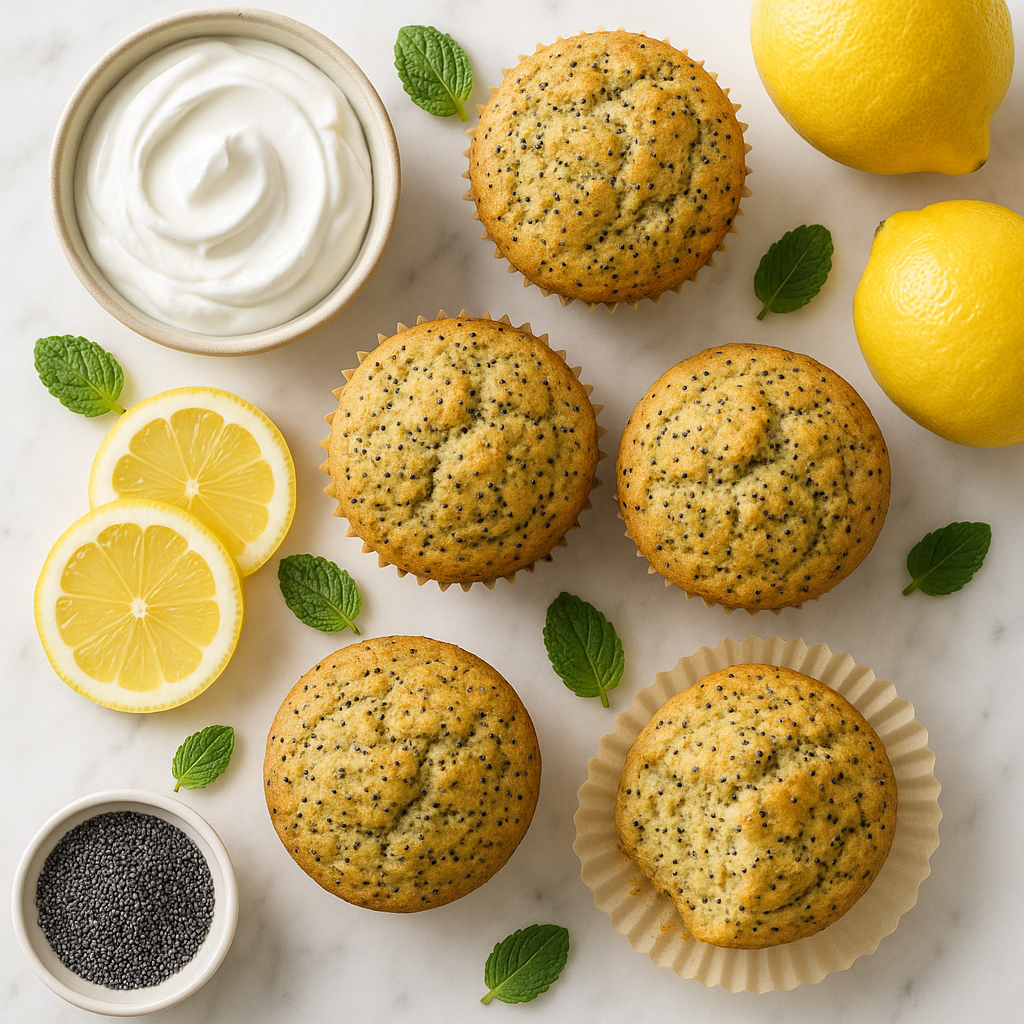
Greek Yogurt Lemon Poppy Seed Breakfast Muffins bring together sharp citrus, nutty seeds and a genuinely satisfying protein hit in a single batch you can bake in half an hour. At 175 calories and 8 grams of protein per muffin, these sit in a different category from the usual coffee shop version, which tends to be twice the calories and a fraction of the nutrition. The high-protein label here is not just marketing. The Greek yogurt does serious work, keeping each muffin tender and moist while adding real macronutrient substance. These are also meal prep friendly in the truest sense, meaning you bake once and have a solid breakfast ready for five days. For anyone tired of choosing between a quick breakfast and a nourishing one, this recipe handles both. The lemon zest keeps things bright and fresh, so these never feel heavy or stodgy, even though the base is built from whole grain flours. They are the kind of muffin that actually keeps you full until lunch.
The ingredient list is short but every item has a job to do. Whole wheat pastry flour makes up the bulk of the batter and brings fibre, B vitamins and a slightly nutty depth that plain white flour cannot offer. It is milled finely enough to keep the crumb soft rather than dense. Oat flour works alongside it, adding a mild sweetness and contributing to the 3 grams of fibre per serving, which matters for sustained energy and digestive comfort. Full-fat plain Greek yogurt is the backbone of this recipe. A single cup provides a significant portion of the protein across the whole batch, and the lactic acid in yogurt reacts with the baking soda to create lift, so these rise well without needing extra leavening agents. Two large eggs add structure and bind everything together. Light olive oil supplies the fat needed for moisture without weighing the batter down. Raw honey and coconut sugar provide sweetness at a combined level that keeps sugar to 8 grams per muffin, well below most commercial equivalents. Two tablespoons of fresh lemon zest, not juice, deliver concentrated citrus oil that perfumes the entire batter.
The batter comes together in two bowls. Dry ingredients in one, wet in the other, then you fold them together until just combined. Overmixing is the one thing to avoid here because it develops gluten and toughens the crumb. Because of the Greek yogurt and the ratio of oat flour to whole wheat pastry flour, the raw batter is thicker than a typical muffin mix. Spooned into a lined tin and baked at around 190 degrees Celsius, they dome nicely and develop a lightly golden top. The poppy seeds stay suspended throughout the crumb rather than sinking, giving a pleasant visual texture and a faint crunch in every bite. Fresh from the oven, these smell of warm citrus with a bakery softness underneath. The taste is clean and bright. The lemon zest is forward without being sharp, the sweetness is restrained, and the yogurt gives a very subtle tang that rounds everything out. The crumb is moist and tight, not cakey, which is exactly what makes them satisfying rather than just sweet.
These muffins support a few specific health goals at once. The protein and fibre combination, 8 grams and 3 grams respectively, promotes satiety and helps stabilise blood sugar after eating, which matters if you have a long morning ahead without a snack break. At 175 calories each, they work within most calorie-conscious eating patterns without requiring careful measuring at breakfast time. The whole grain base means the carbohydrates come with nutrients attached, including magnesium, iron and B vitamins from the wheat and oats. This recipe fits comfortably into Mediterranean-style eating given the olive oil, yogurt and honey base. It is also suitable for vegetarians. The moderate fat content, 6 grams per muffin, comes largely from the olive oil and egg yolks, both of which provide unsaturated fats and fat-soluble vitamins. Active people, desk workers managing energy across long mornings, and parents looking for a school-week breakfast that comes together on Sunday all get genuine value from this recipe. Nothing here is filler.
Meal prep is where this recipe really proves its worth. Bake a full batch on Sunday and store the cooled muffins in an airtight container at room temperature for up to two days, or refrigerate them for up to five days. They also freeze extremely well. Wrap each one individually, place in a freezer bag, and they keep for up to three months. To reheat from frozen, 30 to 40 seconds in the microwave is enough. From the fridge, a quick 15 seconds brings back the softness. For variations, you can swap the lemon zest for orange zest and add a handful of dried cranberries for a different citrus profile. Replacing the poppy seeds with chia seeds works well and adds a small omega-3 contribution. A tablespoon of vanilla extract alongside the lemon zest softens the citrus edge if you prefer something warmer in flavour. You can also use low-fat Greek yogurt if that is what you have on hand, though the crumb will be slightly less rich. All the quantities, temperatures and timings you need are in the recipe card below.
Ingredients
- 1 cup whole wheat pastry flour (spooned and levelled, not packed)
- 1 cup oat flour (certified gluten-free oat flour if needed)
- 1 tsp baking powder
- 1 tsp baking soda
- 1 tsp fine sea salt
- 2 tbsp poppy seeds
- 1 cup full-fat plain Greek yogurt (plus 3 tbsp extra for the optional glaze)
- 2 large eggs (room temperature)
- 3 tbsp light olive oil (or melted coconut oil)
- 3 tbsp raw honey
- 1 tbsp coconut sugar
- 2 tbsp fresh lemon zest (from approximately 2 large lemons)
- 3 tbsp fresh lemon juice (from the same lemons after zesting)
- 1 tsp pure vanilla extract
- 1 tbsp fresh lemon juice (for the optional glaze)
- 2 tsp raw honey (for the optional glaze)
Instructions
- 1
Preheat your oven to 190 degrees Celsius (375 degrees Fahrenheit). Line a standard 12-cup muffin tin with paper liners or lightly grease each cup with a little olive oil spray.
Paper liners make removal much easier and keep the muffins looking neat.
- 2
In a large mixing bowl, combine the whole wheat pastry flour, oat flour, baking powder, baking soda, sea salt and poppy seeds. Whisk together for about 20 seconds until everything is evenly distributed.
Whisking the dry ingredients together ensures the leavening agents are spread evenly, which gives you a consistent rise.
- 3
In a separate medium bowl, whisk together the Greek yogurt, eggs, olive oil, honey, coconut sugar, lemon zest, lemon juice and vanilla extract until smooth and well combined.
Room temperature eggs blend more smoothly into the yogurt mixture and help the batter come together without lumps.
- 4
Pour the wet ingredients into the dry ingredients. Using a spatula, fold gently together with slow, sweeping strokes. Stop folding as soon as you can no longer see streaks of dry flour. The batter will look slightly lumpy and that is completely fine.
Overmixing develops gluten and makes muffins tough and chewy. A gentle hand is everything here.
- 5
Divide the batter evenly among the 12 muffin cups, filling each one about three-quarters full. Smooth the tops very gently with the back of a spoon if needed.
Using an ice cream scoop makes portioning fast and keeps all the muffins the same size so they bake evenly.
- 6
Bake in the preheated oven for 18 to 20 minutes, until the tops are lightly golden and a toothpick inserted into the centre of a muffin comes out clean or with just a few moist crumbs attached.
Start checking at 18 minutes. Every oven runs slightly differently, so keep a close eye from that point.
- 7
Remove the muffin tin from the oven and allow the muffins to cool in the tin for 5 minutes. Then transfer them to a wire rack to cool completely.
Cooling in the tin briefly lets the structure set so the muffins do not fall apart when you lift them out.
- 8
To make the optional lemon-yogurt glaze, stir together the 3 tablespoons of Greek yogurt, 1 tablespoon of lemon juice and 2 teaspoons of honey in a small bowl until completely smooth. Drizzle lightly over cooled muffins just before serving.
Only glaze muffins you plan to eat that day, as the glaze softens the top over time. Keep unglazes muffins stored separately.
Nutrition per serving
175kcal
Calories
8g
Protein
22g
Carbs
6g
Fat
3g
Fibre
8g
Sugar
145mg
Sodium
Pro Tips
- ✓
Zest your lemons before juicing them. It is much easier to zest a whole lemon than a squeezed one.
- ✓
Do not skip the coconut sugar entirely even if it seems small. It adds a gentle caramel depth that balances the tartness of the lemon beautifully.
- ✓
If your Greek yogurt is very thick, let it sit at room temperature for 10 minutes before using it so it blends more easily into the batter.
- ✓
For extra lemony flavour, add a few drops of pure lemon extract alongside the vanilla, but go carefully as it is very concentrated.
- ✓
These muffins freeze brilliantly. Wrap individually and freeze for up to 2 months. Thaw overnight in the fridge or for 30 seconds in the microwave.
Frequently Asked Questions
Variations
- •
Blueberry Lemon Poppy Seed
Fold 100 grams of fresh or frozen blueberries into the batter at the very end along with the poppy seeds. The berries add natural sweetness and extra antioxidants, and the lemon and blueberry combination is a classic for good reason.
- •
Orange Poppy Seed
Swap the lemon zest and juice for fresh orange zest and juice in equal quantities. Orange gives a sweeter, slightly softer citrus note that works beautifully with the yogurt base and is a lovely change if you want something a little less tart.
- •
Lemon Chia Seed
Replace the poppy seeds with an equal amount of chia seeds for an extra omega-3 and fibre boost. Chia seeds add a slightly different texture and turn these into an even more nutritionally dense breakfast option.
- •
Protein-Boosted Version
Add 30 grams of unflavoured or vanilla protein powder to the dry ingredients, reducing the oat flour by the same amount. This pushes each muffin to approximately 12 grams of protein, making them an excellent post-workout breakfast.
Substitutions
- •Whole wheat pastry flour → Spelt flour (Spelt flour has a similar fine texture and mild nutty flavour. Use it in the same quantity as a direct swap.)
- •Oat flour → Almond flour (Almond flour adds healthy fats and a slightly denser texture. Use the same quantity but note that the muffins will be lower in carbs and higher in fat.)
- •Honey → Pure maple syrup (Maple syrup swaps in at a 1-to-1 ratio and gives a subtly different, slightly earthy sweetness that pairs nicely with lemon.)
- •Light olive oil → Melted coconut oil (Coconut oil works perfectly here in the same quantity. Use refined coconut oil if you do not want any coconut flavour in the final muffin.)
- •Greek yogurt → Dairy-free coconut yogurt (A thick, plain dairy-free yogurt works well for a dairy-free version. Make sure it is unsweetened and as thick as possible, similar to the consistency of full-fat Greek yogurt.)
- •Eggs → Flax eggs (Mix 1 tablespoon of ground flaxseed with 3 tablespoons of water per egg and let it sit for 5 minutes until gel-like. This works for a vegan version, though the texture will be slightly denser.)
🧊 Storage
Store cooled muffins in an airtight container at room temperature for up to 2 days. For longer storage, keep them in the refrigerator for up to 5 days. To freeze, wrap each muffin individually in cling film or place in a zip-lock freezer bag and freeze for up to 2 months. Thaw at room temperature or warm briefly in the microwave for 30 seconds.
📅 Make Ahead
You can mix the dry ingredients and wet ingredients in separate bowls the night before, store them covered in the fridge, then fold them together and bake fresh in the morning. This saves about 10 minutes on busy weekday mornings. Alternatively, bake the full batch at the weekend and refrigerate or freeze for the week ahead.
You might also like
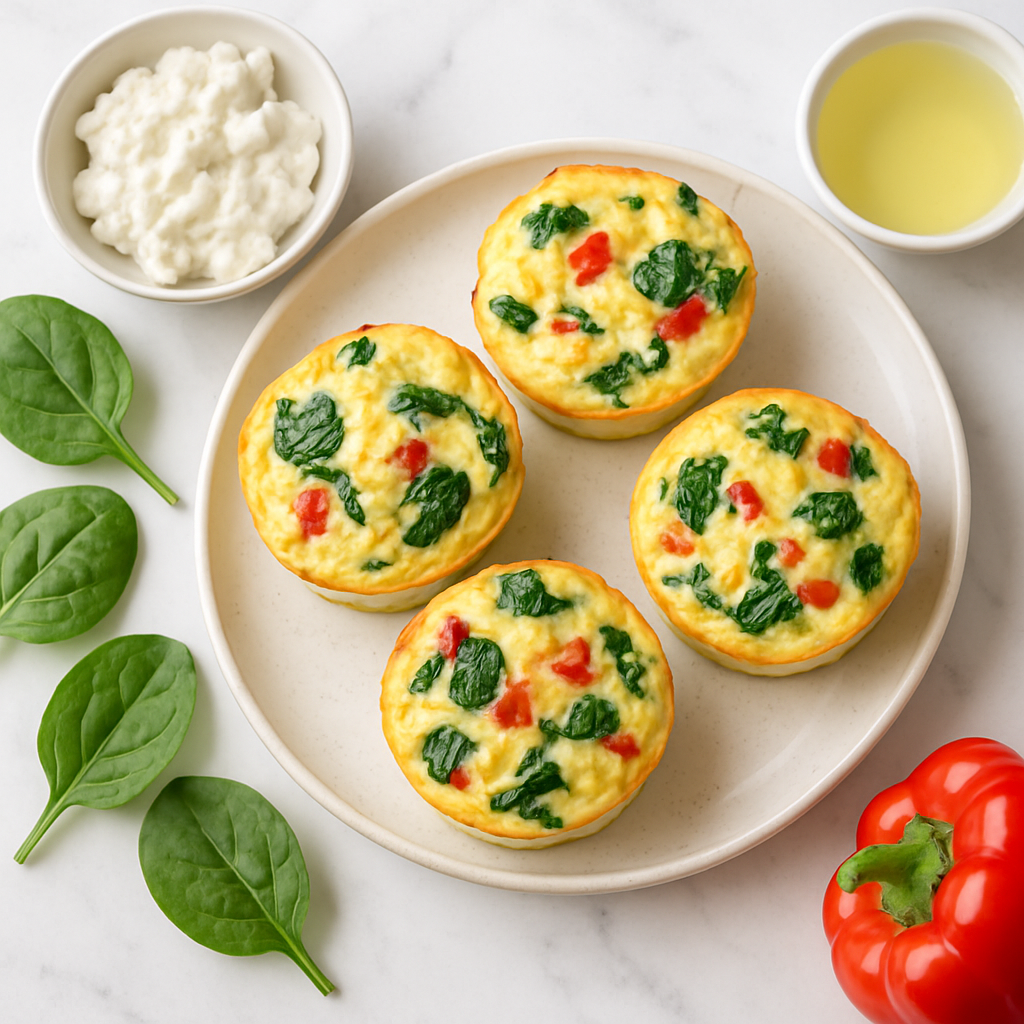
Cottage Cheese Egg White Breakfast Muffins High Protein with Spinach and Red Pepper
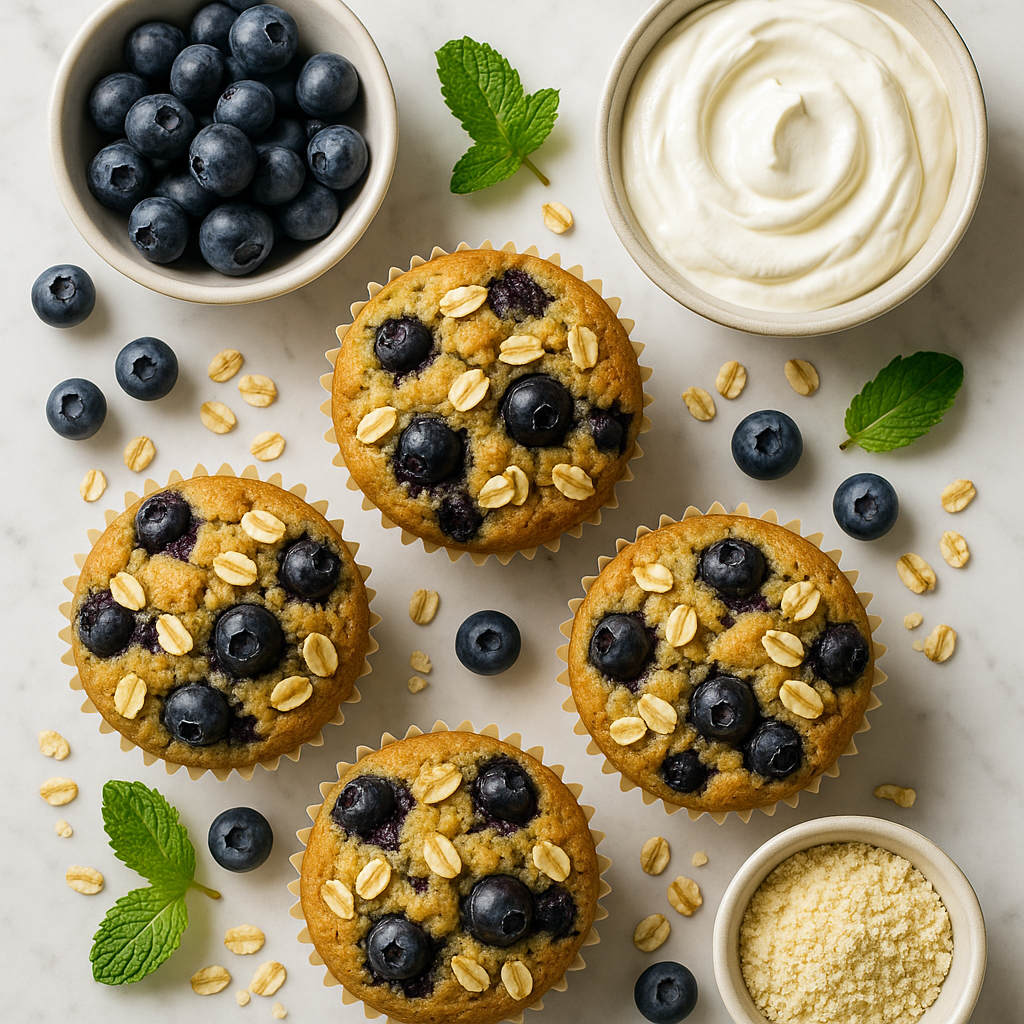
Blueberry Oat Breakfast Muffins High Protein with Greek Yogurt and Almond Flour