Blueberry Oat Breakfast Muffins High Protein with Greek Yogurt and Almond Flour
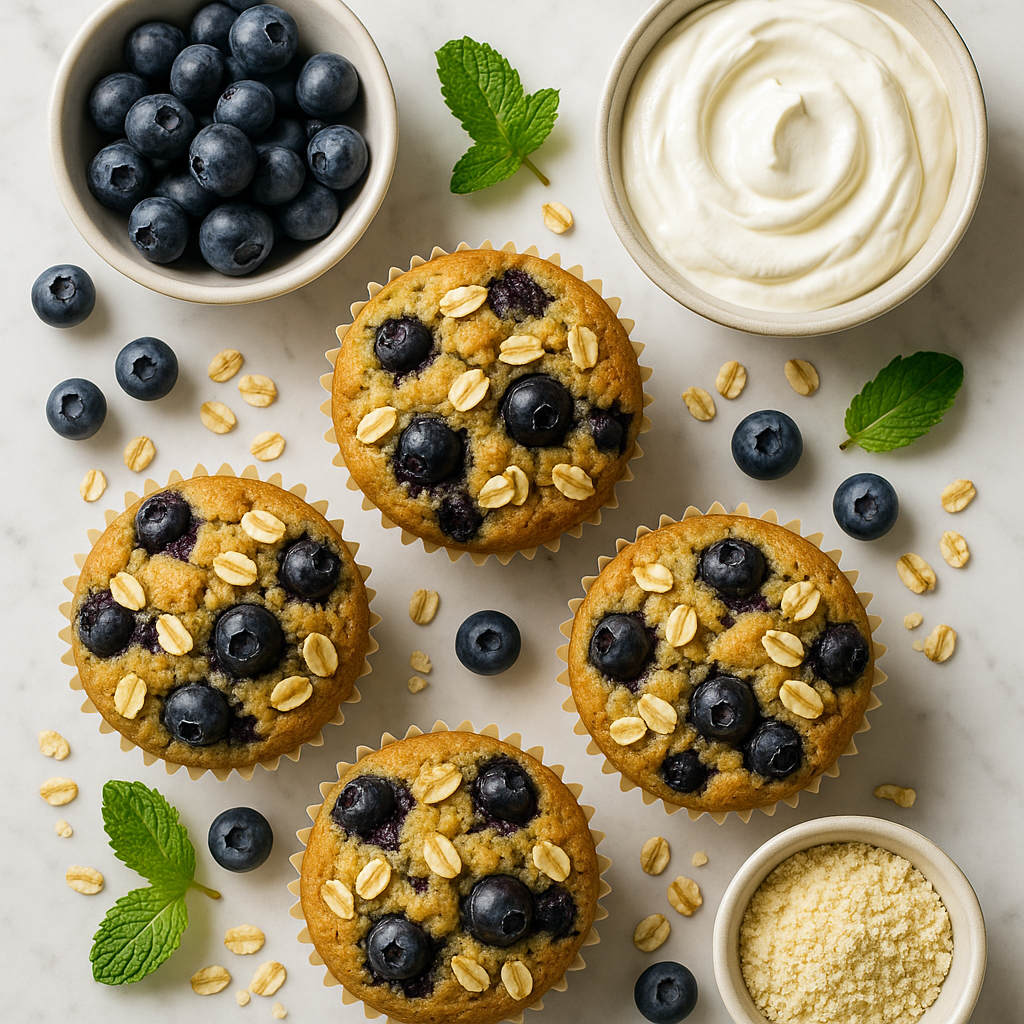
Blueberry Oat Breakfast Muffins with Greek Yogurt and Almond Flour solve one of the most common morning problems: getting a genuinely satisfying, high protein breakfast on the table without spending half your morning in the kitchen. Each muffin clocks in at 168 calories and delivers 13 grams of protein, which is a remarkable return for something that tastes like a treat. Most blueberry muffins from coffee shops or supermarket shelves are essentially cake in disguise, loaded with refined flour and sugar while offering almost nothing in the way of protein or lasting fullness. These are built differently from the ground up. The combination of Greek yogurt, protein powder, eggs, and almond flour works together to push that protein number to a place where two or three muffins can genuinely anchor your morning. They are also naturally sweetened, rely on wholesome carbohydrates, and carry 2.5 grams of fibre per muffin. For anyone who does regular meal prep on Sundays, these bake in a single batch and keep well through the week.
The ingredient list here is deliberate. Rolled oats form the structural backbone of the batter, providing slow-digesting complex carbohydrates and soluble fibre that supports steady blood sugar levels rather than a sharp spike. Almond flour brings healthy monounsaturated fats, a small additional protein contribution, and a fine crumb that keeps the muffin tender without any refined white flour. The vanilla protein powder is the workhorse that pushes each muffin to 13 grams of protein per serving, and using a vanilla-flavoured variety means you get a pleasant base note throughout without needing extra flavourings. Plain non-fat Greek yogurt adds a significant protein hit as well, roughly 10 grams per half cup, while keeping the fat content controlled and contributing to a moist interior. Two large eggs bind everything and provide additional protein along with choline and fat-soluble vitamins. Pure maple syrup is the only added sweetener, used sparingly at three tablespoons for the whole batch, which keeps the sugar at just 5 grams per muffin. Coconut oil adds richness and helps the muffins release cleanly from the tin.
The batter comes together in two bowls. Dry ingredients, oats, almond flour, protein powder, baking powder, baking soda, cinnamon, and salt, get mixed first. Wet ingredients, eggs, Greek yogurt, maple syrup, melted coconut oil, and vanilla extract, go in a separate bowl before the two are folded together. The result is a thick, scoopable batter that smells of warm vanilla and cinnamon even before it hits the oven. Once baked, the muffins develop a lightly golden, slightly domed top with a matte finish from the oat and almond flour base. The inside is dense but genuinely moist, not rubbery, which is the usual pitfall when using protein powder in baked goods. The blueberries burst during baking and create soft, jammy pockets throughout the crumb. You get a gentle sweetness from the berries and maple syrup, a warm background note from the cinnamon, and the faintest tang from the yogurt. They smell wonderful straight out of the oven, like a wholesome bakery rather than anything clinical or diet-coded.
These muffins are a practical fit for anyone working toward a high protein diet, managing blood sugar, or trying to build consistent healthy eating habits without relying on willpower every single morning. The macros sit at a ratio that supports muscle maintenance or growth, making them a sensible choice after morning exercise. They fit a gluten-free diet as long as your oats are certified gluten-free and your protein powder is clean, which is worth checking on the label. The low added sugar content and presence of fibre and protein means they are suitable for people watching glycaemic response, including those managing pre-diabetes or insulin sensitivity. Parents who want to put a genuinely nourishing breakfast in front of kids without pushback will find these go down well. Older adults trying to meet higher protein targets without eating large meals benefit from the compact calorie-to-protein ratio here. Athletes, busy professionals, and anyone who has ever skipped breakfast because there was nothing quick and filling available will find these useful in a very practical, no-drama way.
For meal prep, bake the full batch of twelve on a Sunday and let them cool completely on a wire rack before storing. They keep well in an airtight container at room temperature for two days, or in the refrigerator for up to five days. For longer storage, wrap each muffin individually in cling film and freeze for up to three months. Reheat from frozen in the microwave for about 60 to 90 seconds or in a low oven at 160 degrees Celsius for ten minutes. A few variations worth trying: swap the blueberries for raspberries and add a tablespoon of lemon zest to the batter for a sharper flavour profile. Stir a tablespoon of natural almond butter into the wet ingredients for extra richness and fat if you are less focused on keeping calories low. For a chocolate version, replace the vanilla protein powder with chocolate flavour and fold in a small handful of dark chocolate chips instead of the berries. All three variations follow the same method and bake times. Full quantities, timings, and step-by-step instructions are laid out in the recipe card below.
Ingredients
- 1.5 cups rolled oats (certified gluten-free if needed)
- 0.8 cup almond flour (blanched, finely ground)
- 1 scoop vanilla protein powder (approximately 30g, whey or plant-based both work)
- 1.5 tsp baking powder
- 0.5 tsp baking soda
- 0.5 tsp ground cinnamon
- 0.3 tsp fine sea salt
- 2 large eggs (at room temperature)
- 1 cup plain non-fat Greek yogurt (at room temperature)
- 3 tbsp pure maple syrup (or honey)
- 2 tbsp melted coconut oil (or light olive oil, cooled slightly)
- 1 tsp pure vanilla extract
- 1 cup fresh or frozen blueberries (do not thaw if frozen)
- 2 tbsp rolled oats (for topping)
Instructions
- 1
Preheat your oven to 200 degrees Celsius (390 degrees Fahrenheit). Line a standard 12-hole muffin tin with paper liners or lightly grease each cavity with coconut oil spray.
Starting at a higher temperature helps create that lovely domed muffin top.
- 2
In a large mixing bowl, combine the rolled oats, almond flour, protein powder, baking powder, baking soda, cinnamon, and sea salt. Whisk everything together until evenly distributed.
Make sure there are no clumps of protein powder hiding in the mix before adding your wet ingredients.
- 3
In a separate medium bowl, whisk together the eggs, Greek yogurt, maple syrup, melted coconut oil, and vanilla extract until completely smooth and well combined.
Room temperature eggs and yogurt blend together far more easily than cold ones, giving you a smoother batter.
- 4
Pour the wet ingredient mixture into the bowl of dry ingredients. Using a spatula, fold gently until just combined. A few dry streaks are fine at this point. Do not overmix.
Overmixing develops gluten in the oats and can make your muffins dense and tough. Gentle folding is the key.
- 5
Add the blueberries to the batter and fold in carefully with just two or three strokes so they remain mostly whole. If using frozen blueberries, work quickly so they do not start to bleed into the batter.
Tossing frozen blueberries in a teaspoon of almond flour before adding them helps prevent them sinking to the bottom.
- 6
Divide the batter evenly among the 12 prepared muffin cavities, filling each one about three-quarters full. Scatter the reserved rolled oats over the tops of each muffin.
An ice cream scoop makes portioning the batter quick, clean, and perfectly even.
- 7
Place the tin in the preheated oven and bake for 5 minutes at 200 degrees Celsius. Then, without opening the oven door, reduce the temperature to 175 degrees Celsius (350 degrees Fahrenheit) and continue baking for a further 17 to 18 minutes.
The muffins are done when a toothpick inserted into the centre comes out clean or with just a few moist crumbs attached.
- 8
Remove the muffin tin from the oven and allow the muffins to cool in the tin for 5 minutes. Then transfer them to a wire cooling rack to cool completely before storing.
Cooling on a wire rack prevents the bottoms from going soggy from trapped steam.
Nutrition per serving
168kcal
Calories
13g
Protein
16g
Carbs
7g
Fat
2.5g
Fibre
5g
Sugar
148mg
Sodium
Pro Tips
- ✓
Use old-fashioned rolled oats rather than quick oats for better texture and a lower glycaemic impact.
- ✓
If your protein powder is unsweetened, you may want to add an extra tablespoon of maple syrup to taste.
- ✓
Do not swap the Greek yogurt for regular yogurt as you need its thicker consistency to hold the batter together properly.
- ✓
Let the batter rest for 5 minutes before scooping so the oats can absorb some of the moisture and the batter thickens slightly.
- ✓
For extra protein, add 2 tablespoons of hemp seeds directly into the dry ingredients mix.
- ✓
A light press of a few extra blueberries onto the tops of each muffin just before baking makes them look beautiful and bakery-worthy.
Frequently Asked Questions
Variations
- •
Lemon Blueberry Oat Protein Muffins
Add the zest of one large lemon and a tablespoon of fresh lemon juice to the wet ingredients for a bright, citrusy lift that pairs beautifully with the blueberries.
- •
Banana Blueberry Protein Muffins
Replace the maple syrup with one very ripe mashed banana for natural sweetness and a subtle banana flavour. This also adds potassium and extra fibre to each muffin.
- •
Chocolate Chip Blueberry Oat Muffins
Swap half the blueberries for dark chocolate chips (70 percent cocoa or higher) for a touch of indulgence while still keeping the sugar relatively low.
- •
Pumpkin Spice Blueberry Oat Muffins
Replace the coconut oil with 3 tablespoons of pumpkin puree and swap the cinnamon for a pumpkin spice blend. This adds extra fibre and a lovely autumnal warmth to the flavour.
Substitutions
- •Greek yogurt → Dairy-free coconut yogurt (Use a thick, unsweetened variety. The muffins will be slightly less high in protein but will be completely dairy free and vegan friendly when combined with flax eggs.)
- •Eggs → Flax eggs (Mix 2 tablespoons of ground flaxseed with 6 tablespoons of water and let sit for 5 minutes until gel-like. This makes the recipe fully vegan when paired with dairy-free yogurt.)
- •Almond flour → Oat flour (Use the same quantity of oat flour if you need a nut-free version. The texture will be slightly denser and less moist but still very good.)
- •Maple syrup → Honey or date syrup (Use the same quantity. Date syrup adds a richer, more caramel-like sweetness and is lower on the glycaemic index than regular maple syrup.)
- •Coconut oil → Light olive oil or avocado oil (Any neutral-flavoured oil works perfectly here at the same quantity. Avocado oil adds a small amount of healthy monounsaturated fats.)
🧊 Storage
Store cooled muffins in an airtight container at room temperature for up to 3 days, or in the refrigerator for up to 7 days. To freeze, wrap individual muffins in cling film then place in a zip-lock freezer bag. They will keep frozen for up to 3 months. Reheat from frozen in the microwave for 30 to 45 seconds.
📅 Make Ahead
These muffins are ideal for meal prep. Bake a full batch on the weekend and refrigerate or freeze portions ready for the week ahead. The batter can also be prepared the night before and stored covered in the fridge, though the baked muffins hold up better over time than unbaked batter.