Greek Yogurt Egg Muffins with Bell Pepper and Feta
Greek Yogurt Egg Muffins with Bell Pepper and Feta are a genuinely satisfying breakfast that earns a permanent spot in your weekly rotation. Each muffin delivers around 8 grams of protein and sits under 110 calories, which means you can eat two or three and still stay well within a sensible morning calorie budget. What sets these apart from standard egg muffins is the addition of Greek yogurt directly into the egg base. That one move changes the texture completely, giving you something far fluffier and more tender than a plain egg mixture ever produces. Most egg muffin recipes lean on heavy cream or skip the dairy altogether, but the yogurt here adds protein while keeping the fat moderate. The keto and gluten-free credentials come naturally from the ingredient list rather than from any clever substitutions, which means nothing tastes like it is missing. For anyone who needs a fast, protein-forward breakfast they can pull from the fridge on a busy morning, this recipe does exactly that without demanding much from you in the kitchen.
The ingredients in these muffins are doing real nutritional work, not just adding flavour. The eight large eggs form the structural base and bring roughly 6 grams of protein each, along with choline, vitamin D, and a solid dose of B12. Full-fat Greek yogurt contributes additional protein and probiotics that support gut health, and its thick texture is what creates that cloud-like interior. Red bell pepper is one of the most vitamin C-dense vegetables you can cook with, and a full cup here adds colour and mild sweetness without pushing the carb count high. Baby spinach wilts into the mix and brings iron, folate, and vitamin K without any noticeable bulk once baked. Crumbled feta adds calcium and a sharp, salty flavour while contributing to the fat content that makes these muffins genuinely filling. Yellow onion provides prebiotic fibre and a gentle savouriness. The olive oil coats the pan and adds a small amount of heart-healthy monounsaturated fat. The dried oregano, garlic powder, paprika, salt, and pepper pull the Mediterranean flavours together so every muffin tastes cohesive rather than like a random collection of vegetables.
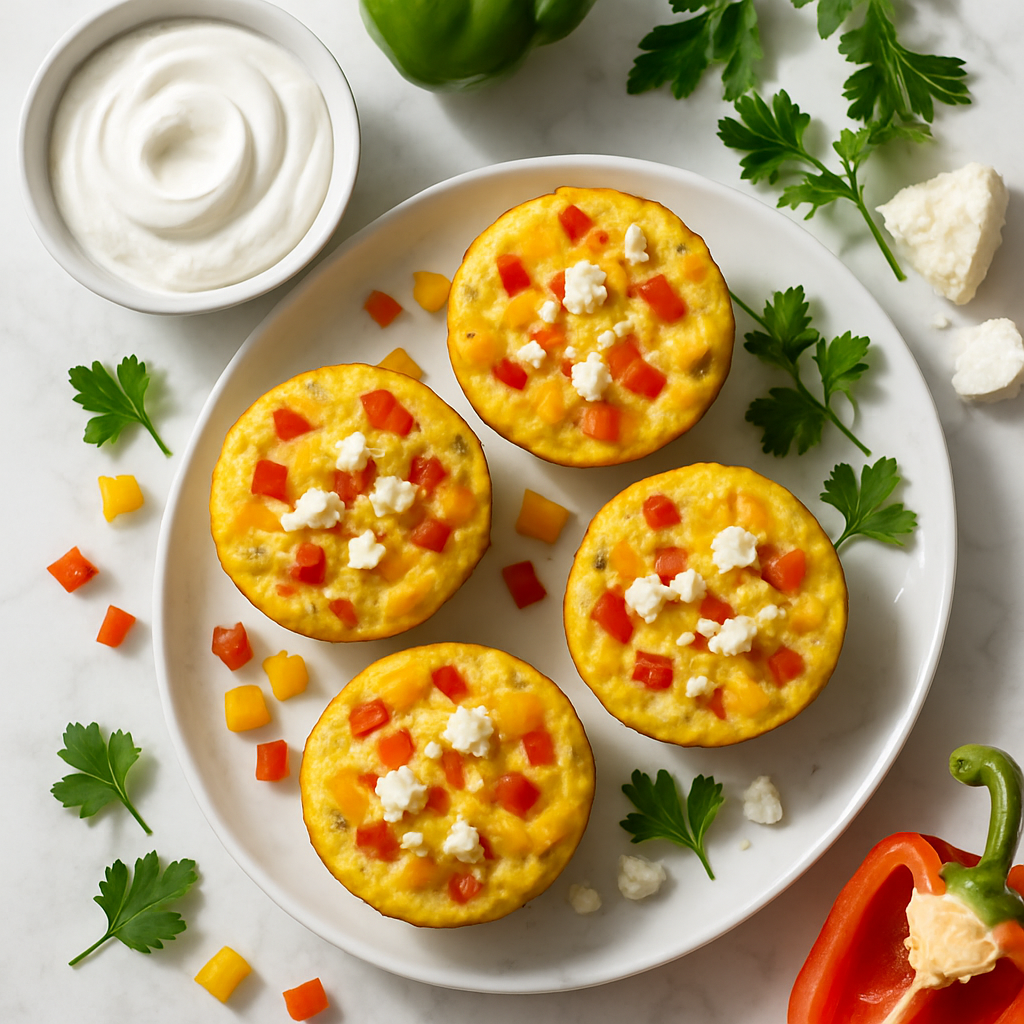
When these come out of the oven, they have a lightly golden top with visible flecks of red pepper, dark green spinach, and white crumbles of feta throughout. They smell warm and savoury, with that particular herby note that oregano and paprika produce together when heated. The texture inside is noticeably soft and springy rather than dense or rubbery, which is the Greek yogurt doing its work. The feta gives little pockets of saltiness that contrast nicely against the mild egg base. To make them, you whisk eggs and yogurt together until smooth, fold in the sauteed vegetables and feta, then pour the mixture into a greased muffin tin. Sauteing the onion and bell pepper briefly in olive oil first is worth the extra five minutes because it softens them enough that they integrate into the egg rather than sitting on top like raw chunks. The muffins bake at 375 degrees for around 20 to 22 minutes until the centres are set and the edges have a faint golden colour. Letting them cool in the tin for five minutes makes them easier to release cleanly.
These muffins support several specific health goals at once, which is part of why they work for such a wide range of people. The high protein content helps with satiety and muscle repair, making them a strong choice for anyone following a fitness-focused eating plan or trying to manage hunger between meals. The low carbohydrate count of 3 grams per muffin fits comfortably within ketogenic and low-carb dietary frameworks. Because there is no flour or grain of any kind in the recipe, it is naturally gluten-free without any modification, which matters for people managing coeliac disease or gluten sensitivity. The moderate fat content from eggs, yogurt, and feta provides sustained energy that many people find keeps them fuller longer than a carb-heavy breakfast would. Athletes, busy parents, people managing blood sugar levels, and anyone trying to build a higher-protein diet without relying on protein powders will find these genuinely useful. The calorie count also makes them a reasonable fit for people in a calorie deficit who still want a breakfast that feels substantial.
For meal prep, this recipe produces 12 muffins in one bake, which covers three to four days of breakfasts for most people. Once fully cooled, they store well in an airtight container in the refrigerator for up to four days. For longer storage, they freeze beautifully. Wrap each muffin individually in cling film, place them in a freezer bag, and freeze for up to three months. To reheat from the fridge, 45 to 60 seconds in the microwave brings them back to a good temperature without drying them out. From frozen, two minutes on medium power works well. For variations, you can swap the red bell pepper for roasted cherry tomatoes, which add a slightly sweeter flavour profile. A handful of chopped sun-dried tomatoes stirred into the mixture works very well if you want something more intense and Mediterranean. Swapping feta for sharp cheddar and using green onion instead of yellow onion gives you a completely different but equally satisfying muffin. You can also add a pinch of chilli flakes if you want a gentle heat running through the whole batch. The full recipe with exact quantities, oven settings, and step-by-step instructions is available in the recipe card below.
Ingredients
- 8 large eggs (free-range if possible)
- 3 cup plain full-fat Greek yogurt (or low-fat works too)
- 1 cup red bell pepper (finely diced, about 1 large pepper)
- 1 cup yellow onion (finely diced)
- 1 cups baby spinach (roughly chopped)
- 3 cup crumbled feta cheese (reduced-fat feta works fine)
- 1 tsp olive oil (for sautéing)
- 1 tsp dried oregano
- 1 tsp garlic powder
- 1 tsp ground black pepper
- 1 tsp fine sea salt (feta is salty so go easy here)
- 1 tsp sweet paprika (optional, adds gentle warmth)
- 1 tbsp fresh chives (finely sliced, for topping, optional)
Instructions
- 1
Preheat your oven to 375°F (190°C). Grease a 12-hole standard muffin tin generously with a little olive oil or line with silicone muffin liners. Silicone liners are highly recommended as egg muffins can stick even in well-greased tins.
Spray or brush the tin carefully, making sure to coat the sides all the way up, not just the base.
- 2
Heat the olive oil in a small frying pan over medium heat. Add the diced onion and red bell pepper. Sauté for 4 to 5 minutes, stirring occasionally, until the onion is soft and translucent and the pepper has just started to caramelise at the edges.
Do not rush this step. Softening the vegetables first prevents excess moisture from making your muffins soggy at the base.
- 3
Add the chopped baby spinach to the pan and stir for about 60 seconds until wilted. Remove the pan from the heat and set aside to cool for a couple of minutes.
- 4
Crack all 8 eggs into a large mixing bowl. Add the Greek yogurt, dried oregano, garlic powder, black pepper, sea salt, and paprika if using. Whisk vigorously for about 90 seconds until the mixture is completely smooth, pale, and slightly frothy. The yogurt needs to be fully incorporated with no lumps remaining.
A balloon whisk works better than a fork here. You want plenty of air beaten in for a fluffier final texture.
- 5
Fold the sautéed vegetable mixture into the egg and yogurt mixture, stirring gently to distribute evenly.
- 6
Pour or ladle the egg mixture evenly into the prepared muffin tin, filling each cavity to about three-quarters full. Scatter the crumbled feta evenly across the top of each muffin.
Adding feta on top rather than stirring it in means it stays as distinct, slightly golden pockets rather than melting away entirely into the egg.
- 7
Bake in the preheated oven for 18 to 20 minutes. The muffins are done when the tops are set and lightly golden, they spring back gently when touched in the centre, and the edges have pulled away very slightly from the sides of the tin.
Start checking at 17 minutes. Every oven runs slightly differently and you do not want to over-bake these or they will lose that soft, custard-like texture.
- 8
Remove from the oven and leave the muffins to cool in the tin for 5 minutes before running a thin spatula or butter knife around the edges to release them. Transfer to a wire rack. Scatter with fresh chives if using and serve warm.
Resting in the tin for a few minutes helps them firm up slightly and makes them much easier to remove cleanly.
Nutrition per serving
105kcal
Calories
8g
Protein
3g
Carbs
6g
Fat
0.5g
Fibre
2g
Sugar
230mg
Sodium
Pro Tips
- ✓
Use silicone muffin liners rather than paper ones. Egg muffins stick to paper liners and you will lose half your muffin trying to peel it off.
- ✓
Always sauté your vegetables first. Raw bell pepper releases water as it bakes, which creates steam and leaves soggy bottoms.
- ✓
Whisk the eggs and Greek yogurt for longer than you think you need to. Fully aerating the mixture is what gives you that light, fluffy texture rather than a dense egg puck.
- ✓
Do not overfill the muffin cavities. Three-quarters full is the sweet spot. Any more and the muffins will overflow as they puff up in the oven.
- ✓
If your feta is very salty, reduce the added sea salt to just a small pinch or leave it out entirely and taste the mixture before adding any.
- ✓
For easy portioning during meal prep, use a ladle or a measuring cup with a pour spout to fill the tin neatly.
Frequently Asked Questions
Variations
- •
Spicy Mediterranean
Add a quarter teaspoon of dried chilli flakes and a tablespoon of finely chopped sun-dried tomatoes to the vegetable mixture. A few sliced Kalamata olives scattered on top with the feta add a briny, bold punch.
- •
Green Goddess
Replace the red bell pepper with diced courgette and swap the spinach for finely chopped kale. Add a tablespoon of fresh dill and a teaspoon of lemon zest to the egg mixture for a bright, herby flavour profile.
- •
Smoky Chicken and Pepper
Add half a cup of cooked, finely diced smoked chicken breast to the vegetable mixture along with half a teaspoon of smoked paprika. Use a mix of red and orange bell peppers for extra sweetness and colour.
- •
Sun-Dried Tomato and Basil
Replace the sautéed onion with a handful of chopped sun-dried tomatoes and stir in two tablespoons of freshly torn basil at the end. This version needs no sautéing at all as the sun-dried tomatoes add no excess moisture, making it an even faster assembly.
Substitutions
- •Full-fat Greek yogurt → Low-fat Greek yogurt or skyr (Both work well and reduce the overall fat content. Avoid regular plain yogurt as it is too thin and will make the mixture watery.)
- •Red bell pepper → Orange or yellow bell pepper (All sweet peppers work equally well here. Green bell pepper is slightly more bitter and less sweet but still fine to use.)
- •Feta cheese → Goat cheese or reduced-fat feta (Crumbled goat cheese melts a little more and has a milder flavour. Reduced-fat feta cuts the sodium and fat while keeping that classic tang.)
- •Baby spinach → Finely chopped kale or Swiss chard (Both need about the same brief wilting time in the pan. Remove any tough kale stems before chopping.)
- •Fresh chives → Fresh flat-leaf parsley or fresh dill (Any fresh soft herb works as a garnish. Dill is particularly lovely with feta and gives a more pronounced Mediterranean feel.)
🧊 Storage
Cool completely before storing. Place in an airtight container and refrigerate for up to 4 days. To freeze, arrange cooled muffins on a lined baking tray and freeze solid for 1 hour, then transfer to a sealed freezer bag for up to 3 months. Reheat refrigerated muffins in the microwave for 40 to 50 seconds. Reheat from frozen for 90 seconds to 2 minutes on medium power.
📅 Make Ahead
These muffins are ideal for Sunday meal prep. Make a full batch, cool completely, and refrigerate in an airtight container. They are ready to grab and reheat on busy weekday mornings in under a minute. You can also prepare the sautéed vegetable mixture up to 2 days ahead and store it covered in the fridge, then whisk up the egg and yogurt base and assemble when you are ready to bake.