Fluffy Scrambled Eggs with Cream Cheese and Fresh Chives
Fluffy Scrambled Eggs with Cream Cheese and Fresh Chives is the kind of breakfast that earns a permanent spot in your weekly rotation. With 21 grams of protein and only 3 grams of carbohydrates per serving, this recipe is one of the most efficient ways to start the day without spending more than ten minutes at the stove. What separates it from a basic scramble is the addition of reduced-fat cream cheese, which melts into the eggs as they cook and creates a texture that is noticeably softer and richer than anything you get from butter alone. The fresh chives add a mild onion flavour that lifts the whole dish without overpowering it. If you have been eating plain scrambled eggs out of habit, this version shows you what you have been missing. It hits the marks for keto, gluten-free, and high-protein eating without feeling like a compromise. The fat content is moderate and comes from quality sources, and the calorie count sits at 220, making it a genuinely satisfying meal that does not leave you reaching for a snack an hour later.
Each ingredient in this recipe is doing real work. The four large eggs form the protein base, with whole eggs contributing fat-soluble vitamins including A, D, and B12 alongside roughly 6 grams of protein each. The two additional egg whites push the protein count higher without adding extra fat, which is why this scramble reaches 21 grams in a single serving. Reduced-fat cream cheese brings creaminess and a small hit of calcium while keeping the saturated fat lower than full-fat versions would. The semi-skimmed milk adds just enough liquid to loosen the mixture and help the curds stay tender during cooking. Olive oil is used instead of butter to introduce heart-healthy monounsaturated fat to the pan. Baby spinach contributes iron, folate, and vitamin K, and it wilts down so quickly that it blends into the eggs almost invisibly. Garlic powder adds depth without the sharpness of raw garlic, and the fine sea salt and black pepper season the eggs evenly from the inside out rather than just at the surface.
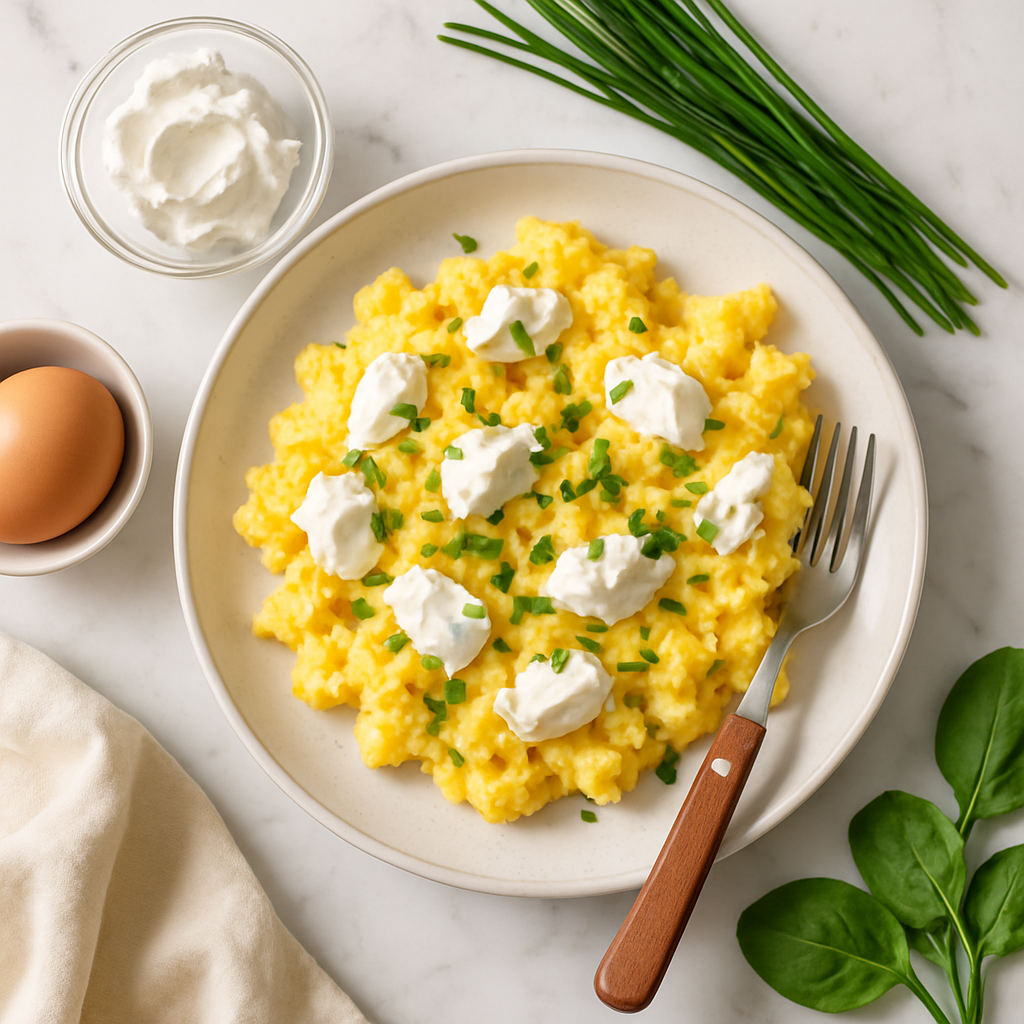
When you make this scramble for the first time, the smell that comes off the pan is warm and savoury, somewhere between a good omelette and something you might order at a brunch spot that actually cares about its food. The key to the texture is low heat and patience. You whisk the eggs, egg whites, milk, garlic powder, salt, and pepper together until the mixture looks uniform and slightly frothy, then pour it into a lightly oiled pan set over medium-low heat. You do not touch it immediately. You let the edges just begin to set, then use a silicone spatula to gently fold the eggs from the outside inward in slow, deliberate strokes. The cream cheese goes in about halfway through, broken into small pieces so it melts in ribbons rather than one lump. The spinach follows shortly after, and by the time it has wilted, the eggs should be just barely set, still glossy and soft. The finished dish looks pale yellow with green streaks of spinach and chive scattered throughout, and the curds are large and pillowy rather than dry and broken.
This recipe is built for anyone managing their blood sugar, following a ketogenic approach, or simply trying to increase daily protein intake without adding a lot of calories. The low carbohydrate content of 3 grams makes it appropriate for strict keto and also for people with type 2 diabetes who need to avoid blood sugar spikes in the morning. The combination of protein and fat creates lasting satiety, which research consistently links to reduced calorie intake later in the day. Athletes and people doing resistance training will find the 21 grams of complete protein useful for muscle repair, especially when consumed within a couple of hours of a morning workout. It is naturally gluten-free, so anyone with coeliac disease or gluten sensitivity can eat it without any substitutions. The spinach adds micronutrients that are easy to miss in a typical Western breakfast, particularly folate and iron, both of which support energy production at a cellular level. This is a recipe that works for a wide range of eating goals without needing to be modified for each one.
For meal prep, the dry seasoning mix of garlic powder, salt, and pepper can be pre-measured and stored in a small jar, and the chives can be snipped in advance and kept in an airtight container in the fridge for up to three days. Scrambled eggs are best eaten fresh because they do not reheat particularly well without losing some of their soft texture, but if you need to prep ahead, cook them until just barely set and refrigerate for up to one day. Reheat gently in a pan over low heat with a few drops of water to restore some moisture. One variation worth trying is swapping the baby spinach for finely chopped roasted red peppers, which adds a slightly sweet contrast to the savoury eggs. Another option is replacing the chives with dill and adding a tablespoon of smoked salmon flakes stirred in at the end. For a dairy-free version, skip the cream cheese and milk and use a tablespoon of full-fat coconut cream instead, which keeps the eggs equally tender. Scroll down to the recipe card for exact measurements and step-by-step cooking instructions.
Ingredients
- 4 large eggs (2 whole eggs plus 2 additional egg whites for extra protein)
- 2 large egg whites (from fresh eggs or a carton)
- 3 tablespoons reduced-fat cream cheese (at room temperature for even melting)
- 2 tablespoons semi-skimmed milk (or unsweetened oat milk for dairy-free)
- 1 teaspoon olive oil
- 1 large handful baby spinach (roughly 30g, fresh)
- 2 tablespoons fresh chives (finely chopped)
- 0.3 teaspoon garlic powder
- 0.3 teaspoon fine sea salt (adjust to taste)
- 0.1 teaspoon black pepper (freshly cracked)
Instructions
- 1
Crack the 2 whole eggs into a medium mixing bowl. Add the 2 extra egg whites, milk, garlic powder, salt and black pepper. Whisk together well until the mixture is uniform and slightly frothy, about 30 seconds.
Whisking vigorously incorporates air into the eggs, which is one of the key steps for achieving a genuinely fluffy result.
- 2
Place a non-stick frying pan over medium-low heat. Add the olive oil and swirl to coat the base of the pan. Allow the oil to warm for about 30 seconds but do not let it smoke.
Medium-low heat is essential here. If the oil starts to shimmer aggressively, remove the pan from the heat for a moment before adding the eggs.
- 3
Pour the egg mixture into the pan. Leave it undisturbed for about 20 seconds until you can see the edges beginning to set very slightly.
- 4
Using a silicone spatula, gently fold the eggs from the outer edges toward the centre. Continue folding slowly every 10 to 15 seconds, creating large, soft curds. Do not stir continuously.
Resist the urge to stir constantly. Patient, infrequent folds build the large fluffy curds that make this recipe special.
- 5
When the eggs are about halfway set, about 2 to 3 minutes in, drop small spoonfuls of the room-temperature cream cheese across the surface of the eggs. Fold gently so the cream cheese begins to melt into the curds.
Room-temperature cream cheese melts much more evenly than cold cream cheese, so take it out of the fridge at least 15 minutes before cooking.
- 6
Add the baby spinach to the pan and fold it gently into the eggs. Continue cooking for another 30 to 60 seconds until the eggs look almost set but still have a very slight gloss to them.
- 7
Remove the pan from the heat immediately. The residual heat will finish cooking the eggs perfectly over the next 30 to 45 seconds. Scatter the fresh chives over the top.
Pulling the pan off the heat just before the eggs look fully done is the single most important step. Overcooked scrambled eggs lose their fluffiness instantly.
- 8
Divide the scrambled eggs between two plates and serve immediately. Enjoy on their own or alongside wholegrain toast or sliced avocado.
Nutrition per serving
220kcal
Calories
21g
Protein
3g
Carbs
13g
Fat
1g
Fibre
2g
Sugar
390mg
Sodium
Pro Tips
- ✓
Always use room-temperature cream cheese. Cold cream cheese creates uneven lumps rather than smooth creamy pockets.
- ✓
A non-stick pan in good condition is the best tool for this recipe. Stainless steel pans require more oil and higher heat, which works against the low-and-slow technique.
- ✓
Whisk the eggs thoroughly before cooking to incorporate air, which contributes directly to a fluffier texture.
- ✓
Never walk away from the pan. Scrambled eggs cook fast, and the difference between perfect and overcooked is only about 30 seconds.
- ✓
Serve immediately once plated. Scrambled eggs continue to cook from their own heat and will firm up quickly if left sitting.
- ✓
For extra protein without extra calories, swap the milk for a tablespoon of full-fat Greek yogurt. It adds a subtle tang and keeps the eggs incredibly moist.
Frequently Asked Questions
Variations
- •
Smoked Salmon and Cream Cheese Scrambled Eggs
Fold 60g of flaked hot-smoked salmon into the eggs at the same time as the cream cheese. Finish with capers and fresh dill instead of chives for a brunch-worthy upgrade that is rich in omega-3 fatty acids.
- •
Sun-Dried Tomato and Basil Scrambled Eggs
Stir 2 tablespoons of finely chopped sun-dried tomatoes into the egg mixture before cooking, and finish the dish with torn fresh basil leaves instead of chives. The sweetness of the tomatoes pairs beautifully with the tangy cream cheese.
- •
Spicy Sriracha Scrambled Eggs
Add half a teaspoon of sriracha sauce to the egg mixture before whisking. Finish with sliced spring onions and a tiny drizzle more sriracha on top for a bold, protein-packed scramble with a gentle heat.
- •
Greek-Style Scrambled Eggs
Replace the cream cheese with the same quantity of reduced-fat feta, crumbled directly into the eggs. Add diced cucumber and cherry tomatoes on the side, and finish with a pinch of dried oregano for a Mediterranean twist.
Substitutions
- •Reduced-fat cream cheese → Full-fat cream cheese (Works equally well and produces an even richer result. The calorie and fat content will increase slightly but the texture improves.)
- •Reduced-fat cream cheese → Dairy-free cream cheese (Use any good-quality dairy-free cream cheese alternative. Oat-based or cashew-based versions melt well and keep a similar creamy texture.)
- •Semi-skimmed milk → Unsweetened oat milk or almond milk (Both work well and keep the recipe dairy-free. Avoid sweetened plant milks as the added sugar can affect the flavour.)
- •Baby spinach → Kale or rocket (Both work but kale should be added 1 to 2 minutes earlier than the spinach as it is tougher and takes longer to wilt. Rocket can be scattered fresh over the finished eggs off the heat.)
- •Fresh chives → Spring onion tops or fresh flat-leaf parsley (Both are excellent alternatives. Spring onion gives a slightly stronger flavour, while parsley keeps things milder and adds a fresh herby note.)
- •Olive oil → Avocado oil or a small knob of unsalted butter (Avocado oil has a higher smoke point and a neutral flavour. A small knob of unsalted butter adds a lovely richness if you are not limiting saturated fat.)
🧊 Storage
Scrambled eggs are best eaten immediately and do not store particularly well. If you have leftovers, transfer them to an airtight container and refrigerate for up to 1 day. Reheat gently in a non-stick pan over low heat for 1 to 2 minutes, adding a small splash of milk to loosen the texture. Avoid microwaving as it tends to make the eggs rubbery.
📅 Make Ahead
You can whisk the egg mixture together and store it covered in the fridge for up to 12 hours before cooking. Give it a quick stir before pouring into the pan. The cream cheese should be brought to room temperature just before you start cooking. The actual cooking step is so quick that full make-ahead preparation is not really necessary for this recipe.