Dairy Free Keto Chia Seed Pudding with Coconut Milk and Vanilla Collagen
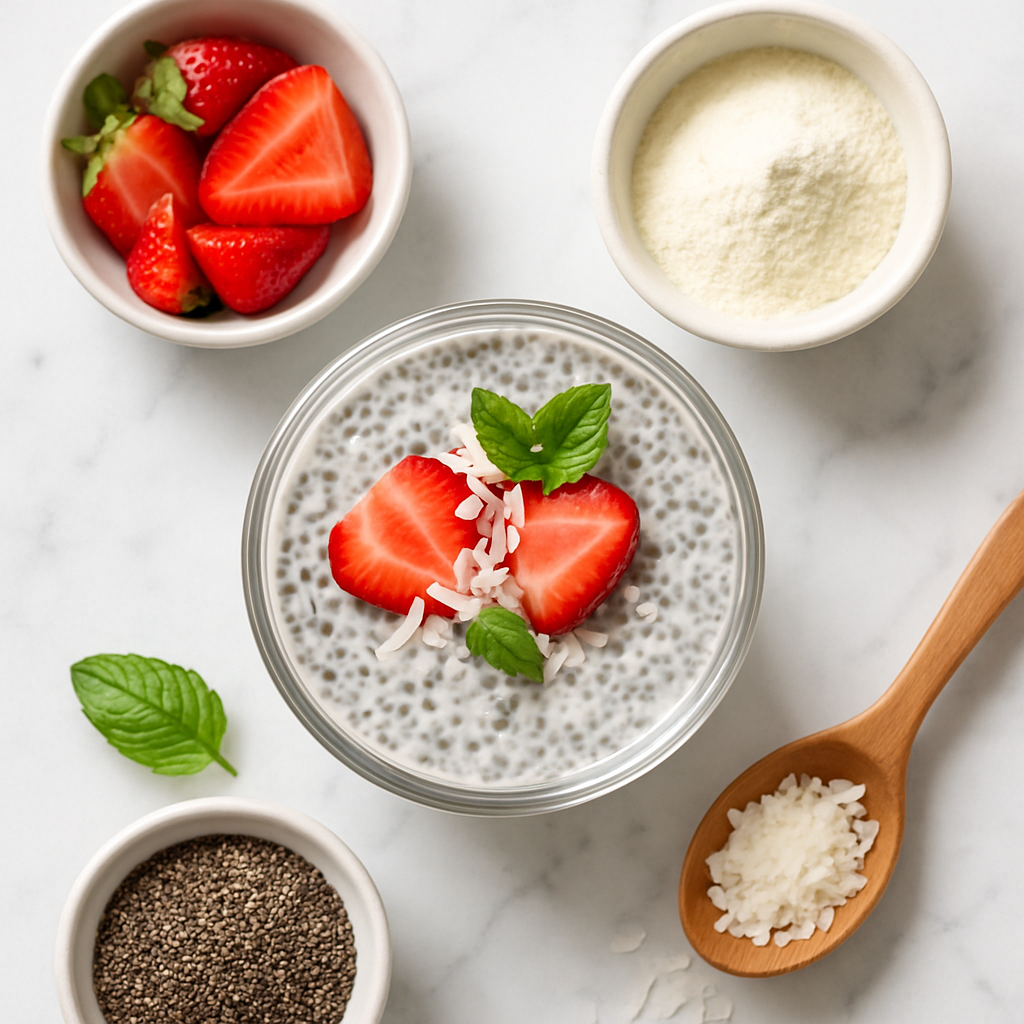
Dairy Free Keto Chia Seed Pudding with Coconut Milk and Vanilla Collagen is one of those recipes that earns its place in a regular breakfast rotation fast. The headline benefit here is protein, a serious 18 grams per serving, which is unusually high for a chia pudding that contains no eggs, no Greek yoghurt and no dairy of any kind. Most plant-based chia puddings land somewhere between 5 and 8 grams of protein and leave you hungry before mid-morning. This one closes that gap by combining two complementary protein sources in a base that is already rich and satisfying from full-fat coconut milk. At 4 grams of net carbs per serving it sits comfortably within ketogenic targets, and because it takes around 5 minutes of active effort before the fridge does the rest of the work, it fits into busy mornings without any stress. If you have been searching for a breakfast that genuinely holds you until lunch without relying on grains or dairy, this pudding makes a strong case for itself.
The ingredient list is short but every item is doing real work. Full-fat canned coconut milk provides the creamy base and brings roughly 5 grams of healthy saturated fat per 100 ml, mostly from medium-chain triglycerides, which the body metabolises differently to long-chain fats and can use quickly for energy. White chia seeds contribute the structure of the pudding through their gel-forming soluble fibre. Six tablespoons delivers around 12 grams of fibre per serving, which supports digestive health and slows glucose absorption. The two scoops of unflavoured collagen peptides are where the protein number gets a significant lift, adding roughly 18 grams of protein between them while dissolving completely into the liquid without changing the flavour or texture. Monk fruit sweetener brings sweetness with zero glycaemic impact, making it suitable for blood sugar management. Hemp seeds add a further 3 to 4 grams of protein plus omega-3 fatty acids. Fresh raspberries keep net carbs low while contributing vitamin C and antioxidants. Toasted coconut flakes finish it with texture and a little extra fat.
The pudding is thick. Not pourable-thin the way some chia puddings turn out when the ratio is off. When you scoop into it the following morning the texture is almost spoonable-firm, close to a set panna cotta but with the slight graininess that chia seeds always bring. The coconut milk base smells faintly sweet and tropical even before any vanilla goes in. Once the vanilla extract is stirred through the whole bowl takes on a warmth that makes it feel more indulgent than the ingredient list suggests. The process is genuinely quick. You whisk the collagen peptides into the coconut milk first so they dissolve properly without clumping, then add the chia seeds, monk fruit sweetener, vanilla and salt and stir well. A second stir around ten minutes later stops the chia seeds from clumping at the bottom. The hemp seeds and coconut flakes go on top right before serving so they stay crisp. Raspberries add a sharp, bright contrast to the creamy base that keeps each bite interesting.
This recipe supports several specific health goals at once. The high fat and very low net carb profile makes it a straightforward fit for ketogenic and low-carb diets, keeping the body in or near ketosis when eaten as part of a broader keto eating pattern. The collagen peptides make it relevant for anyone prioritising skin, joint or connective tissue health, since collagen protein provides glycine, proline and hydroxyproline, the amino acids the body uses to build and repair collagen structures. The complete absence of dairy makes it appropriate for people with lactose intolerance or a casein sensitivity. It is also certified gluten-free by its ingredients, which matters for those managing coeliac disease or non-coeliac gluten sensitivity. The paleo community will recognise this as on-plan too, given that it avoids grains, legumes and processed sweeteners. Active people doing early-morning training will find the combination of fast-available MCT fats and a solid protein hit useful for recovery. Older adults focused on maintaining muscle mass benefit from the collagen and hemp seed protein combination.
Meal prep is where this recipe genuinely shines. You can make up to four servings in one go on a Sunday evening by simply scaling the quantities and dividing the mixture between individual jars or containers before refrigerating. The pudding keeps well for up to four days in the fridge with a tight-fitting lid. It does not need reheating and is best eaten cold or at room temperature straight from the fridge. The hemp seeds and coconut flakes should be stored separately and added at serving time to preserve their texture. There is no need to freeze this one since the fridge shelf life is long enough for a full working week of breakfasts. For variations, you can swap the raspberries for blueberries or sliced strawberries without meaningfully changing the nutrition profile. A tablespoon of unsweetened cacao powder stirred into the base before chilling creates a chocolate version that works well with the coconut milk. You can also use vanilla-flavoured collagen peptides instead of unflavoured if you want a more pronounced vanilla note throughout. The full ingredient amounts and step-by-step method are in the recipe card below.
Ingredients
- 400 ml full-fat canned coconut milk (shaken well before opening)
- 6 tbsp white chia seeds (or black chia seeds, both work equally well)
- 2 scoops unflavoured collagen peptides (approximately 20g total, look for a grass-fed variety)
- 2 tsp monk fruit sweetener (adjust to taste, start with 1.5 tsp if you prefer less sweet)
- 1 tsp pure vanilla extract (not vanilla flavouring, the real extract makes a big difference)
- 1 pinch fine sea salt
- 2 tbsp hemp seeds (for topping)
- 60 g fresh raspberries (for topping, can swap for blueberries)
- 2 tbsp unsweetened toasted coconut flakes (for topping, toast in a dry pan for 2 minutes)
Instructions
- 1
Pour the full-fat coconut milk into a medium mixing bowl or large measuring jug. Add the collagen peptides, monk fruit sweetener, vanilla extract and sea salt.
Whisk the collagen in vigorously for about 30 seconds. It dissolves best when you add it to the liquid before the chia seeds go in.
- 2
Add the chia seeds to the coconut milk mixture and stir well with a fork or small whisk, making sure the seeds are evenly distributed and not clumping together.
Chia seeds like to cluster at the bottom. Give the mixture a really thorough stir so every seed is separated and coated in the liquid.
- 3
Leave the mixture to sit at room temperature for 10 minutes, then stir again. This second stir is the secret to a smooth, even pudding with no clumps settling at the bottom.
- 4
Divide the mixture evenly between two jars or airtight containers. Seal with lids and transfer to the fridge. Leave to set overnight or for a minimum of 6 hours.
Mason jars or glass meal prep containers with lids are ideal here. They make it easy to grab and go in the morning.
- 5
When ready to serve, give the pudding a stir. If it seems thicker than you like, stir in a tablespoon of extra coconut milk to loosen it slightly.
- 6
Top each jar with a tablespoon of hemp seeds, half the fresh raspberries and a tablespoon of toasted coconut flakes. Serve immediately.
Add toppings just before eating rather than the night before so they keep their texture and freshness.
Nutrition per serving
387kcal
Calories
18g
Protein
16g
Carbs
29g
Fat
12g
Fibre
2g
Sugar
115mg
Sodium
Pro Tips
- ✓
Always use the second stir at the 10-minute mark. Skipping it is the main reason chia puddings end up with a dense, gluey layer at the bottom.
- ✓
Full-fat coconut milk from a can gives a far creamier result than carton coconut milk. The higher fat content is also better for staying in ketosis.
- ✓
Taste the base before it goes into the fridge and adjust sweetness then. Monk fruit sweetener can vary in intensity between brands.
- ✓
If your coconut milk has separated in the can, tip the whole thing into a small saucepan and warm it gently for a minute while stirring, then let it cool before using.
- ✓
Batch prep up to 5 jars at once for a full week of breakfasts. Simply multiply the ingredient quantities and keep the toppings separate in a small container until serving.
Frequently Asked Questions
Variations
- •
Matcha Coconut Keto Chia Pudding
Whisk 1 teaspoon of ceremonial-grade matcha powder into the coconut milk base along with the other ingredients. The earthy, slightly bitter matcha balances the sweetness beautifully and adds a gentle caffeine boost. Top with a few blueberries and a sprinkle of sesame seeds.
- •
Chocolate Almond Keto Chia Pudding
Add 1 tablespoon of raw cacao powder and replace the vanilla extract with a tiny drop of almond extract. The result is a rich, truffle-like chocolate pudding that tastes deeply indulgent. Top with a few crushed roasted almonds and a couple of raspberries for a classic chocolate-raspberry combo.
- •
Turmeric Golden Milk Chia Pudding
Stir half a teaspoon of ground turmeric, a quarter teaspoon of ground ginger and a small pinch of black pepper into the base. The black pepper activates the curcumin in the turmeric, giving this version a genuinely functional anti-inflammatory edge. A light drizzle of pure MCT oil on top before serving is a nice keto-boosting finish.
Substitutions
- •Collagen peptides → Unflavoured pea protein powder (Use the same quantity. This makes the recipe fully vegan. The texture may be very slightly grainier so whisk thoroughly.)
- •Monk fruit sweetener → Pure stevia drops (Start with 4 drops and taste as you go. Stevia is considerably sweeter than monk fruit so use sparingly.)
- •Full-fat canned coconut milk → Carton unsweetened coconut milk with 2 tbsp coconut cream stirred in (This replicates the fat content and creaminess of canned coconut milk if you only have the carton version available.)
- •Fresh raspberries → Frozen raspberries, thawed (Thaw them in a small bowl in the fridge overnight so they are ready at the same time as the pudding. The flavour is nearly identical to fresh.)
- •Hemp seeds → Sunflower seeds (Sunflower seeds are nut-free and similarly rich in healthy fats and minerals. Use the same quantity.)
🧊 Storage
Store the chia pudding in sealed glass jars or airtight containers in the refrigerator for up to 5 days. Always keep toppings separate and add just before serving. Do not freeze, as the texture becomes grainy once thawed.
📅 Make Ahead
This recipe is ideal for weekend meal prep. Make a full batch of up to 5 jars on Sunday evening and store them in the fridge. Toppings such as fresh berries, hemp seeds and coconut flakes can be portioned into small bags or containers and added each morning. The pudding base actually improves in flavour after 24 hours as the vanilla and coconut notes deepen.