Chia Seed Pudding with Almond Milk and Mango Dairy Free
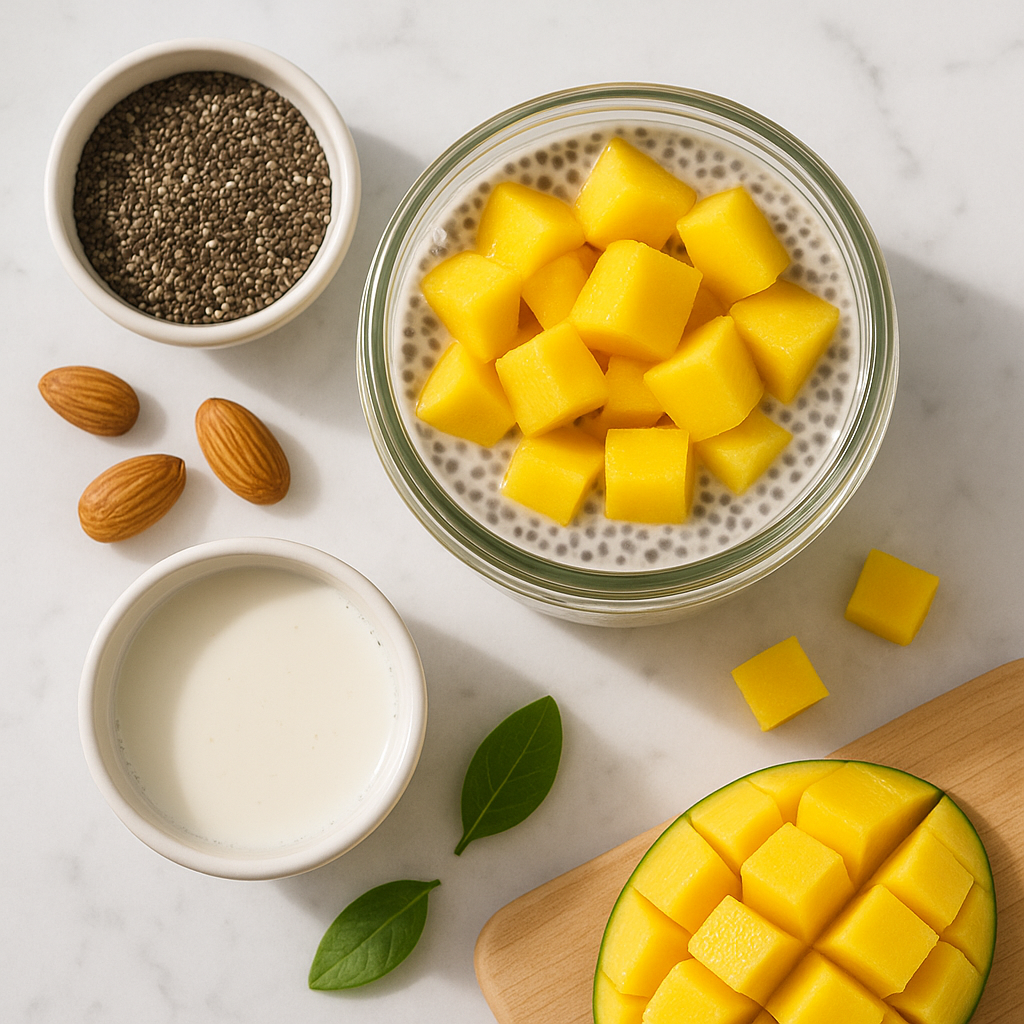
Chia Seed Pudding with Almond Milk and Mango is one of those breakfast recipes that earns a permanent spot in your weekly rotation once you make it the first time. The primary appeal here is the fibre content: 11 grams per serving is substantial, and that kind of fibre intake in the morning sets the tone for how your digestion works through the rest of the day. What separates this version from a basic chia pudding is the combination of almond butter stirred directly into the base, which adds creaminess and protein without any dairy, and the mango layer on top, which is made separately and brings genuine tropical brightness rather than just dropping fruit chunks on top as an afterthought. The recipe is also naturally sweetened with maple syrup, and the amount used is genuinely minimal, just enough to coax out the flavour of the mango without loading the pudding with added sugar. At 278 calories with 9 grams of protein and 15 grams of healthy fat, this is a breakfast that keeps you full.
Each ingredient in this recipe is doing real work. The white chia seeds are the foundation, and six tablespoons gives you the bulk of that 11 grams of fibre, along with omega-3 fatty acids and plant-based protein. Chia seeds absorb liquid and swell to roughly ten times their size, which is what creates the thick, pudding-like texture. Unsweetened almond milk keeps the recipe dairy-free and low in saturated fat while providing enough liquid for the chia to hydrate properly. The two tablespoons of plain almond butter add roughly 3 to 4 grams of additional protein and contribute monounsaturated fats, which support heart health and help the body absorb fat-soluble vitamins. Vanilla extract adds warmth and rounds out the flavour without sweetness. The mango chunks, whether fresh or frozen, bring vitamin C and beta-carotene alongside natural sugars balanced by fibre. Fresh lime juice brightens the mango layer and adds a small amount of vitamin C. Hemp seeds on top add another 2 grams of protein and a mild, nutty finish, and toasted coconut flakes contribute texture.
The texture of this pudding is thick and spoonable, almost like a soft tapioca, with a slight chew from the swollen chia seeds. The base itself smells faintly of vanilla and almond, warm and a little sweet. When you spoon through the mango layer into the pudding beneath, you get a contrast between the cool, silky pudding and the soft, bright fruit on top. The process is straightforward. You whisk the chia seeds into the almond milk along with almond butter, vanilla, maple syrup, and a pinch of sea salt, making sure everything is evenly combined before refrigerating. That pinch of salt is not optional, it amplifies all the other flavours in a way that skipping it will make you notice. The mango layer is blended or mashed separately with lime juice and a small amount of maple syrup, creating something between a coulis and a puree. After the pudding sets overnight, you spoon the mango mixture on top, add fresh mango cubes, hemp seeds, and toasted coconut, and you have something that looks put-together and tastes genuinely fresh.
This recipe is built for people working toward specific health goals. The high fibre content makes it supportive for gut health and digestive regularity. The combination of fibre, fat, and protein gives it a low glycaemic impact, meaning blood sugar rises slowly rather than spiking, which matters for anyone managing energy levels or working with metabolic health. It fits vegan, gluten-free, dairy-free, and paleo eating patterns without modification. Paleo followers should confirm their almond butter has no additives, but otherwise the recipe is naturally compliant. It is particularly useful for people who find high-protein breakfasts hard to stomach early in the morning, because the pudding is light in texture while still delivering 9 grams of protein. Athletes doing morning training will find the carbohydrates from mango and the fats from chia and almond butter provide steady fuel. It also works well for those managing cholesterol, given the absence of saturated fat and the presence of omega-3 fatty acids from the chia seeds and alpha-linolenic acid from the hemp seeds.
For meal prep, this recipe is one of the most practical options available. You can make three or four portions at once by scaling up the chia base and storing it in individual jars in the fridge for up to five days. The mango layer keeps separately in a sealed container for up to three days, so you can add it fresh each morning. The pudding does not freeze particularly well once set, as the texture becomes grainy after thawing, so fridge storage is the way to go. If the pudding thickens too much overnight, stirring in a small splash of almond milk before serving brings it back to the right consistency. Variations worth trying include swapping mango for papaya, which has a more subtle sweetness and adds digestive enzymes, or using frozen pineapple for a sharper, tangier fruit layer. You could also stir a tablespoon of cacao powder into the chia base for a chocolate version that pairs well with banana instead of mango. The full ingredient amounts and step-by-step method are in the recipe card below.
Ingredients
- 6 tbsp white chia seeds (or black chia seeds, both work equally well)
- 1.5 cups unsweetened almond milk (use a brand with no added sugar for lowest calorie count)
- 2 tbsp plain unsweetened almond butter (smooth variety blends in more evenly)
- 1 tsp pure vanilla extract
- 1 tsp pure maple syrup (for the chia base, adjust to taste)
- 1 pinch fine sea salt
- 1.5 cups fresh or frozen mango chunks (thawed if frozen, ripe for best sweetness)
- 1 tbsp fresh lime juice (about half a lime)
- 0.5 tsp pure maple syrup (for the mango layer, optional depending on mango sweetness)
- 2 tbsp unsweetened toasted coconut flakes (for topping)
- 2 tsp hemp seeds (optional topping for extra protein)
- 0.3 cup fresh mango cubes (for topping)
Instructions
- 1
Add the almond milk and almond butter to a medium bowl or large measuring jug. Whisk vigorously until the almond butter is fully dissolved into the milk with no lumps remaining. This step is important because it ensures the almond butter is evenly distributed throughout the pudding rather than sitting in pockets.
If your almond butter is very thick, warm it in the microwave for 10 seconds first to loosen it up before whisking.
- 2
Add the vanilla extract, one teaspoon of maple syrup, and the pinch of sea salt to the almond milk mixture. Stir well to combine.
- 3
Pour in the chia seeds and stir thoroughly with a spoon or small whisk, making sure every seed is submerged in the liquid. Wait five minutes, then stir again. This second stir prevents clumping as the seeds begin to absorb liquid.
That second stir is the most important step in the whole recipe. Skipping it causes the seeds to clump together in one big gel mass at the bottom.
- 4
Divide the chia mixture evenly between two glass jars or serving glasses. Cover with lids or plastic wrap and refrigerate for a minimum of four hours, or ideally overnight for eight hours. The pudding will become thick and creamy as the seeds fully hydrate.
- 5
When you are ready to serve, make the mango layer. Add the mango chunks, lime juice, and half teaspoon of maple syrup to a blender or small food processor. Blend until completely smooth and silky. Taste and add a little more lime or maple syrup if needed.
For a chunkier texture you prefer, mash the mango with a fork instead of blending for a more rustic fruit topping.
- 6
Spoon the mango puree generously over each chilled chia pudding jar. Top with fresh mango cubes, toasted coconut flakes, and hemp seeds if using. Serve immediately and enjoy.
For a beautiful layered presentation, add the mango puree gently by pouring it slowly down the inside edge of the jar.
Nutrition per serving
278kcal
Calories
9g
Protein
28g
Carbs
15g
Fat
11g
Fibre
12g
Sugar
145mg
Sodium
Pro Tips
- ✓
Use a jar with a lid for easy overnight storage and a great grab-and-go breakfast.
- ✓
The pudding thickens more over time, so if it seems too thick in the morning, stir in a splash of extra almond milk to loosen it to your preferred consistency.
- ✓
Ripe Ataulfo or Alphonso mangoes are the sweetest and creamiest varieties for the topping. They make a noticeable difference in flavour.
- ✓
Always use unsweetened almond milk to keep the sugar content low. Sweetened varieties add unnecessary calories without adding nutrition.
- ✓
If you find chia seeds have an unpleasant texture when whole, try blending the entire chia pudding base in a high-speed blender after chilling for a smooth, mousse-like consistency.
- ✓
Hemp seeds stirred into the base or sprinkled on top add about 3 extra grams of protein per tablespoon without changing the flavour noticeably.
Frequently Asked Questions
Variations
- •
Coconut Mango Chia Pudding
Replace the almond milk with full-fat coconut milk from a carton for a richer, creamier base with a stronger tropical flavour. Add a teaspoon of toasted coconut flakes into the base itself before chilling for extra depth.
- •
Mango Turmeric Chia Pudding
Add a quarter teaspoon of ground turmeric and a pinch of black pepper to the chia base before chilling. Turmeric gives a warm golden colour and anti-inflammatory benefits that complement the mango beautifully.
- •
High-Protein Mango Chia Pudding
Whisk one scoop of unflavoured or vanilla plant-based protein powder into the almond milk before adding the chia seeds. This brings the protein content up to around 20 grams per serving, making it a substantial post-workout breakfast.
- •
Mango Passionfruit Chia Pudding
Stir the pulp of two fresh passionfruits into the mango puree before layering on top. The tartness of passionfruit cuts through the sweetness of the mango for a more complex and sophisticated flavour profile.
Substitutions
- •Almond butter → Sunflower seed butter or tahini (Use sunflower seed butter for a nut-free version. Tahini adds a slightly earthy flavour that works surprisingly well with tropical fruit. Use the same quantity.)
- •Maple syrup → Medjool date paste or raw honey (Blend two pitted Medjool dates with a splash of water for a whole-food sweetener with extra fibre. Raw honey works if you are not strictly vegan and prefer a different flavour note.)
- •Fresh lime juice → Fresh lemon juice (Lemon juice works as a direct swap. It is slightly less tropical in flavour but still brightens the mango layer nicely and prevents oxidation.)
- •Unsweetened almond milk → Oat milk or soy milk (Soy milk adds the most protein of any plant milk. Oat milk creates a slightly creamier texture. Both work as a one-to-one swap in the same quantity.)
- •Fresh mango → Frozen mango chunks, thawed (Frozen mango is a convenient and affordable alternative that blends just as smoothly. Thaw completely before blending for the best consistency.)
🧊 Storage
Store the chia pudding base in sealed glass jars in the refrigerator for up to 4 days. Keep the mango puree in a separate airtight container in the fridge for up to 3 days. Add toppings only when ready to serve to prevent sogginess. Do not freeze the assembled pudding as the texture becomes watery on thawing.
📅 Make Ahead
This recipe is built for meal prep. Make a batch of 4 to 5 jars of the chia base on Sunday evening and refrigerate. Blend a larger batch of mango puree and store in a jar. Each morning, spoon the mango on top and add your toppings in under 2 minutes. It is one of the easiest make-ahead breakfasts in any healthy eating routine.