British Soft Boiled Eggs and Buttered Soldiers Recipe with Wholegrain Toast
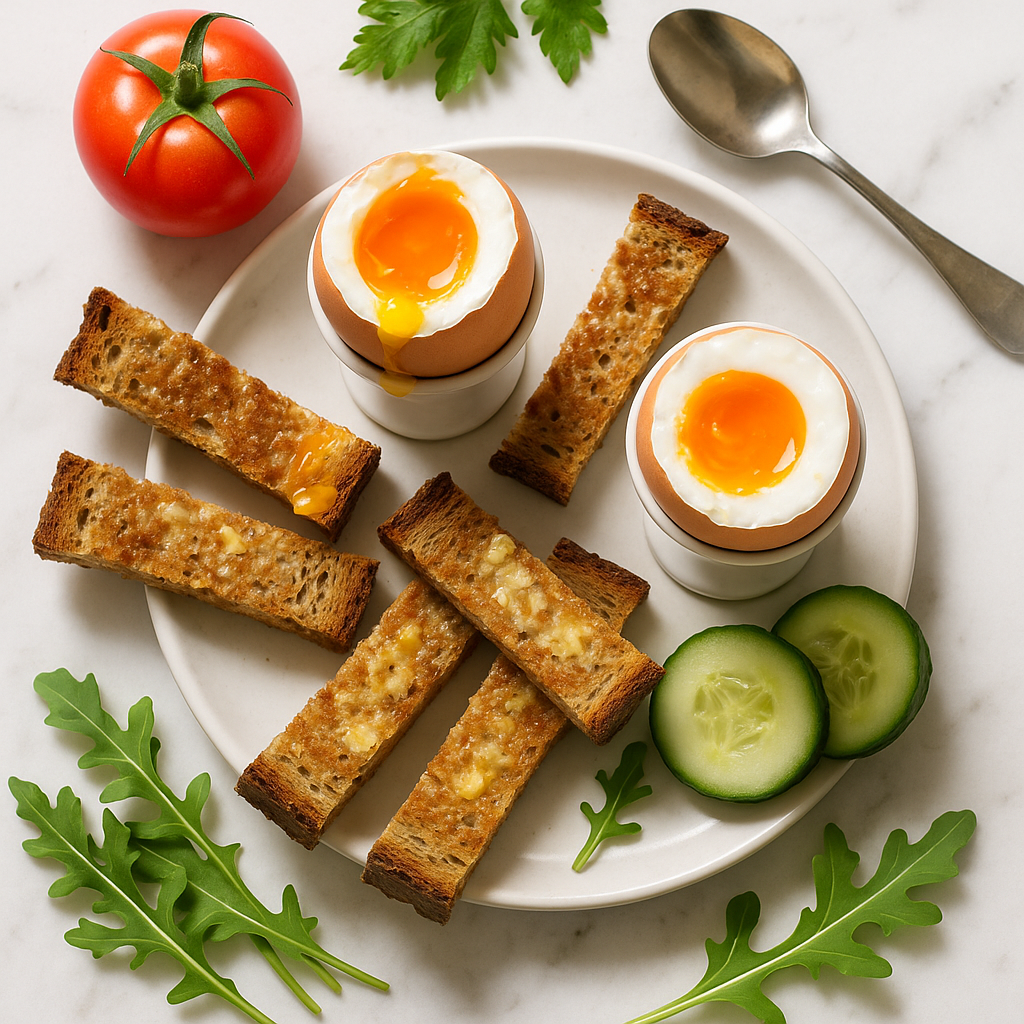
British Soft Boiled Eggs and Buttered Soldiers with Wholegrain Toast is one of those breakfast recipes that manages to be deeply satisfying without requiring much effort or many ingredients. The primary benefit here is the high protein content, 18 grams per serving, which makes it a genuinely filling morning meal that supports muscle maintenance and keeps hunger at bay well into the late morning. What sets this version apart from a generic soft boiled egg recipe is the deliberate choice of wholegrain or seeded bread over white toast, which adds fibre, slower-releasing carbohydrates, and a nuttier flavour that pairs beautifully with a runny yolk. The whole thing comes together in around 10 minutes, which means it works on busy weekday mornings just as well as on a slow Sunday. It is not a trendy recipe. It is a classic British breakfast done properly, with a few thoughtful ingredient upgrades that make the nutrition profile genuinely worth talking about. That combination of speed, simplicity, and solid macros is why this one keeps coming back to the breakfast table.
The two large free-range eggs are the backbone of this recipe, and their nutritional contribution is significant. Each large egg contains roughly 6 to 7 grams of protein, along with a good supply of choline, which supports brain function, and fat-soluble vitamins including vitamin D, vitamin A, and vitamin B12. Free-range eggs tend to have a richer yolk colour and a more rounded flavour because of the varied diet the hens receive. The two slices of thick-cut wholegrain or seeded bread bring around 4 grams of dietary fibre to the meal, which supports digestive health and contributes to that slower energy release compared to white bread. Seeded loaves in particular add extra minerals like magnesium and zinc from seeds such as sunflower, pumpkin, or flaxseed. The single teaspoon of unsalted butter keeps fat content controlled while still providing the fat needed to absorb those fat-soluble vitamins from the yolk. Flaky sea salt and freshly cracked black pepper are not afterthoughts here. They sharpen the flavour of the egg considerably, especially when the yolk is still warm and liquid.
The visual appeal of this breakfast is part of why it has endured in British households for generations. When the egg is cut open at the top, the white should be fully set but tender, and the yolk should be glossy, thick, and just fluid enough to coat a soldier without running straight off. The toast, cut into strips about two centimetres wide, should be properly golden and slightly crisp at the edges from the toaster, with the butter melted into the surface rather than sitting on top in a cold slab. The smell when you combine a buttered soldier with a fresh soft boiled egg is warm and savoury, with the slight sulphurous note of cooked egg balanced by the toasty, slightly nutty aroma of wholegrain bread. The method is precise but not complicated. The eggs go into boiling water for exactly six minutes for a set white and a runny yolk, then straight into cold water for thirty seconds to stop the cooking. That timing is the key to getting the texture right every single time.
From a health perspective, this recipe is well-suited to anyone focused on maintaining a healthy weight, building lean muscle, or managing their energy levels throughout the morning. The combination of 18 grams of protein and 4 grams of fibre creates a genuinely satiating breakfast that can reduce the likelihood of mid-morning snacking, which matters for anyone managing their overall calorie intake. At 310 calories, the meal is nutritionally dense without being excessive. It fits naturally into high protein diets, and because it contains no added sugar and uses unsalted butter, it is also compatible with low-sugar eating patterns. The wholegrain bread makes it unsuitable for strict gluten-free or grain-free diets, but for anyone following a standard omnivore, flexitarian, or Mediterranean-style diet, it sits comfortably within those frameworks. Athletes, active individuals, and anyone who has a physically demanding morning would find this breakfast particularly useful because of the sustained energy from both the protein and the complex carbohydrates in the wholegrain bread. It is also a solid option for older adults who need to maintain muscle mass and bone health.
Meal prep for this recipe is honestly minimal, but there are a couple of things worth doing in advance. The bread can be pre-sliced into soldiers before storing, so cutting is already done when you wake up. Eggs can be soft boiled in batches of four or five and stored unpeeled in the fridge for up to two days, then reheated by sitting them in hot water for one to two minutes rather than reboiling, which can toughen the white. They do not freeze well once cooked. For variations, try spreading a very thin layer of miso paste on the toast instead of butter for a fermented, umami-rich twist that adds beneficial gut bacteria to the meal. Another option is to sprinkle the yolk with smoked paprika and a few chilli flakes for gentle heat. If you want more protein, adding a third egg and an extra slice of toast scales the macros up without disrupting the balance of the dish. All of the ingredients and timings are laid out clearly in the recipe card below.
Ingredients
- 2 large free-range eggs (brought to room temperature before cooking)
- 2 slices thick-cut wholegrain or seeded bread (a dense seeded loaf adds extra fibre and flavour)
- 1 tsp unsalted butter (softened, use a light spread for lower calories)
- 1 pinch flaky sea salt (for seasoning the egg once opened)
- 1 pinch freshly cracked black pepper (optional but highly recommended)
- 1 litre water (for boiling, enough to fully submerge the eggs)
Instructions
- 1
Take your eggs out of the fridge at least 15 minutes before cooking. Cold eggs straight from the fridge are far more likely to crack when they hit the hot water, and they also give you less predictable yolk consistency.
Room temperature eggs give you much more reliable timing. This single step makes the biggest difference.
- 2
Fill a small saucepan with enough water to fully cover the eggs. Bring the water to a gentle simmer over medium heat, not a rolling boil. You want small steady bubbles, not a vigorous boil.
A gentle simmer rather than a hard boil reduces cracking and gives you a more evenly cooked white.
- 3
Using a slotted spoon, lower the eggs carefully into the simmering water. Start your timer immediately. For a runny yolk with a fully set white, cook for exactly 6 minutes for medium eggs or 6 minutes 30 seconds for large eggs.
Do not walk away from the pan during this step. The difference between a runny and a jammy yolk is often just 45 seconds.
- 4
While the eggs are cooking, pop your wholegrain bread into the toaster. You want it toasted to a medium golden colour, firm enough to hold its shape when dipped but not so dark it turns bitter.
Start toasting at the 3 minute mark so the toast and eggs finish at roughly the same time.
- 5
When the toast is done, spread it immediately with the softened unsalted butter while it is still hot so the butter melts into the surface evenly. Use just enough to coat lightly rather than loading it on.
Spreading butter on hot toast immediately gives you better coverage with less butter overall.
- 6
Cut each slice of buttered toast into four or five long thin strips, roughly 1.5 cm wide. These are your soldiers. Line them up on the plate next to your egg cups while you finish the eggs.
Cutting them while you wait keeps everything warm and gets the satisfying presentation right.
- 7
When the timer goes off, remove the eggs immediately with a slotted spoon and place them in egg cups. Do not run them under cold water as this continues to cook the inside through residual steam. Serve straight away.
The eggs will keep cooking slightly after removal, so getting them into cups quickly matters for that perfect runny yolk.
- 8
Use a sharp knife or egg topper to slice off the top of each egg. Season the exposed yolk with a tiny pinch of flaky sea salt and cracked black pepper. Dip a soldier in immediately and enjoy.
Slicing rather than tapping the top gives you a cleaner opening and less shell debris in the egg.
Nutrition per serving
310kcal
Calories
18g
Protein
28g
Carbs
12g
Fat
4g
Fibre
2g
Sugar
310mg
Sodium
Pro Tips
- ✓
Always bring your eggs to room temperature before boiling for the most consistent results.
- ✓
Use a timer rather than guessing. Even 30 extra seconds changes the yolk from runny to jammy.
- ✓
A seeded or multigrain loaf adds significantly more fibre than standard wholemeal, making the soldiers more nutritious.
- ✓
If you are cooking for two or more people, add eggs to the water 30 seconds apart so everyone gets a perfect yolk at the same time.
- ✓
Flaky sea salt on the yolk is not optional if you want the full British experience. It really does elevate the flavour.
- ✓
If you prefer a slightly firmer yolk that still has some give, add 30 seconds to the cooking time.
- ✓
Older eggs are less likely to crack during boiling than very fresh ones, as the air pocket inside gives more pressure relief.
Frequently Asked Questions
Variations
- •
Avocado Soldiers
Replace the butter with a thin layer of mashed avocado seasoned with lemon juice and a pinch of chilli flakes. This swaps saturated fat for heart-healthy monounsaturated fat and adds extra fibre and potassium to the meal.
- •
Rye Bread Soldiers
Use dense dark rye bread instead of wholegrain wheat bread for soldiers. Rye has a lower glycaemic index than most wheat breads and a rich earthy flavour that pairs beautifully with runny egg yolk.
- •
Za'atar Dusted Eggs
Sprinkle the opened egg yolk with a small pinch of za'atar spice blend instead of plain salt and pepper. The dried herbs and sesame in za'atar add a lovely Middle Eastern flavour twist while keeping the dish just as simple.
- •
Extra Protein Soldiers
Add a couple of slices of turkey breast or a small portion of smoked salmon alongside the soldiers for an extra protein boost. This takes the meal to around 25 to 30 grams of protein, making it an excellent post-workout breakfast option.
Substitutions
- •Unsalted butter → Dairy-free spread or mashed avocado (Works well for anyone avoiding dairy. Avocado adds healthy fats and a creamy texture that complements the egg yolk nicely.)
- •Wholegrain bread → Gluten-free seeded loaf (Use a gluten-free seeded bread to make this recipe suitable for coeliacs. Look for one with seeds like sunflower and pumpkin for the best fibre content.)
- •Free-range eggs → Pasteurised eggs (If you are concerned about food safety with a runny yolk, pasteurised eggs are available in some supermarkets and are safe to eat at this level of doneness.)
- •Flaky sea salt → Nutritional yeast flakes (A small pinch of nutritional yeast on the yolk adds a savoury umami note with extra B vitamins, and reduces the sodium content of the dish.)
🧊 Storage
Soft boiled eggs are best eaten immediately and do not store well once cooked to this stage. If needed, you can refrigerate unpeeled cooked eggs for up to one day, but the yolk will firm up. Toast soldiers should always be made fresh as they lose their crispness quickly.
📅 Make Ahead
There is no meaningful make-ahead option for this dish as both the eggs and toast are best served immediately after cooking. However, you can bring your eggs to room temperature in advance and have your bread sliced and ready to go in the toaster to cut morning prep time down to just a few minutes.