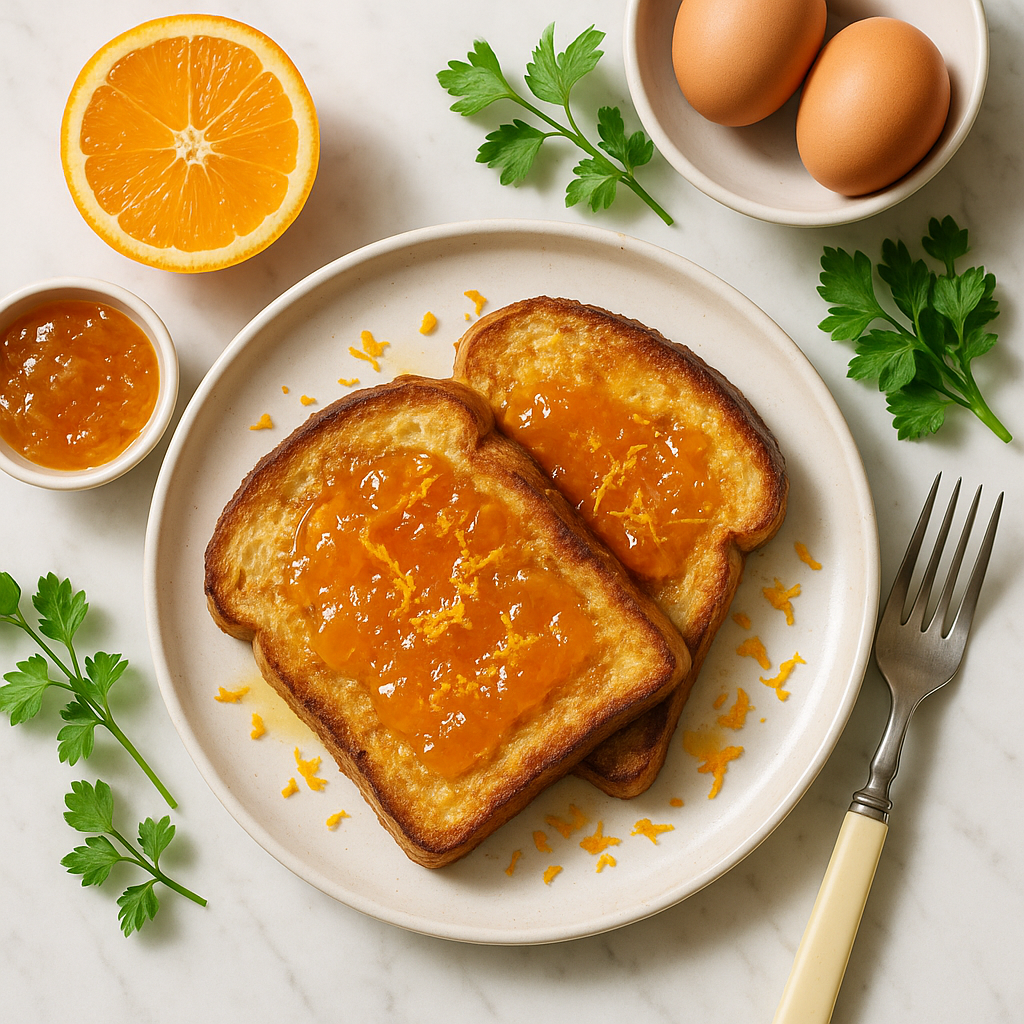
British Eggy Bread French Toast with Marmalade and Orange Zest is a high-protein take on one of the most nostalgic breakfasts in the British kitchen. Eggy bread has been a weekend staple in homes across the UK for generations, usually made with white bread, fried in butter, and served with lashings of sugary marmalade. This version keeps everything that makes it satisfying, the golden crust, the custardy middle, the sweet orange hit, while building in real nutritional substance. At 18 grams of protein per serving and 310 calories, it holds you up through the morning without the mid-morning slump that comes with a sugar-heavy breakfast. The fibre content sits at 5 grams, which is meaningful for a breakfast that still feels like a treat. What sets it apart from similar French toast recipes is the combination of fresh orange zest in the egg mixture and a warm marmalade glaze made with fresh juice and honey. That layering of orange flavour at every stage is what makes this recipe worth making over a standard eggy bread.
Seeded wholegrain bread is the foundation here, and it does a lot of work beyond just being a vessel. Compared to white bread, wholegrain contains significantly more fibre, B vitamins, and minerals including magnesium and zinc. The seeds add a small but useful amount of healthy fats and extra texture. Three large eggs bring the bulk of the protein to this recipe, each egg contributing around 6 grams of complete protein along with vitamins D, B12, and choline, which supports brain function. Semi-skimmed milk loosens the egg mixture just enough to help it soak into the bread evenly without making it soggy. Coconut oil is used for cooking in a small amount, giving a very light sweetness without the heaviness of butter. The reduced-sugar marmalade cuts the sugar load compared to standard marmalade while still delivering that bitter orange quality. Fresh orange juice and raw honey in the glaze add natural sweetness with a small amount of antioxidants. The Greek yoghurt served alongside contributes an additional protein boost and acts as a cooling contrast to the warm toast.
The egg mixture smells of vanilla and orange before it even hits the pan. Once the bread has soaked for about a minute on each side, it absorbs the egg fully, which is what creates that soft, almost creamy interior once cooked. The coconut oil needs to be properly hot before the bread goes in, hot enough that it sizzles immediately on contact. That initial heat sets the exterior quickly, giving you a firm, golden crust that holds together when you cut through it. The inside stays tender. The colour is a deep amber on the outside with a pale, yielding centre. The marmalade glaze is made separately by warming the reduced-sugar marmalade with fresh orange juice and a small amount of honey until it loosens into a pourable sauce. It smells bright and slightly caramelised as it heats. Spooned over the toast just before serving, it soaks slightly into the crust and pools at the edges. The Greek yoghurt alongside adds a cool, lightly tangy note that balances the sweetness of the glaze. The overall flavour is warm, citrusy, and satisfying without being cloying.
This recipe supports a high-protein breakfast goal, which is useful for anyone managing appetite through the morning, building or maintaining muscle, or following a diet that prioritises satiety over calorie restriction. The protein comes from whole food sources, eggs and Greek yoghurt, rather than protein powders or supplements, making it a clean option for anyone eating for performance or general wellbeing. With 36 grams of carbohydrates, mostly from wholegrain bread and the small amount of natural sugars, it fits well within a balanced diet and provides steady energy rather than a spike. The 5 grams of fibre support digestive health and contribute to that feeling of fullness. This recipe suits people following a vegetarian diet, as it contains no meat. It is not suitable for those avoiding gluten or dairy in its current form, though swaps are possible. Athletes, busy professionals, and anyone who wants a proper weekend breakfast without spending the rest of the day regretting it will find this hits the right balance of comfort and nutrition.
This recipe comes together in about 15 minutes on the day, but you can prepare parts of it ahead to save time. The egg mixture can be whisked and stored in a covered jug in the fridge the night before. The marmalade glaze can also be made ahead and kept in a small jar in the fridge for up to four days, then reheated in a small pan over low heat for a minute. Cooked eggy bread is best eaten fresh, but if you are batch cooking, you can cook multiple slices and refrigerate them for up to two days. Reheat in a dry frying pan over medium heat or in a toaster oven for a few minutes until warmed through. The texture will not be quite as custardy as fresh but it is still very good. For a dairy-free version, swap the milk for oat milk and use a coconut yoghurt in place of Greek yoghurt. For extra protein, add a second egg to the mixture and reduce the milk slightly. A pinch of mixed spice in place of cinnamon gives a warmer, more complex flavour that works well in autumn and winter. Full ingredient quantities and timing are in the recipe card below.
Ingredients
- 4 slices seeded wholegrain bread (medium-thick slices, about 1.5cm)
- 3 large eggs (free-range if possible)
- 3 tbsp semi-skimmed milk
- 1 tsp vanilla extract
- 0.3 tsp ground cinnamon
- 1 medium orange, zest only (save the juice for the glaze)
- 1 tsp coconut oil (or a small knob of unsalted butter)
- 3 tbsp reduced-sugar fine-cut marmalade (such as a no-added-sugar variety)
- 2 tbsp fresh orange juice (from the zested orange above)
- 1 tsp raw honey (optional, omit to reduce sugar further)
- 4 tbsp thick Greek yoghurt (to serve, adds extra protein)
Instructions
- 1
Crack the eggs into a wide, shallow dish. Add the milk, vanilla extract, ground cinnamon, and orange zest. Whisk everything together thoroughly until the mixture is smooth and the zest is evenly distributed.
Use a shallow dish that is wide enough to lay a slice of bread flat. This gives you an even soak without needing to flip repeatedly.
- 2
Place two slices of wholegrain bread into the egg mixture and leave them to soak for 60 seconds. Flip and soak the other side for another 30 to 45 seconds. You want the bread to absorb the custard but not become soggy or falling apart. Repeat with the remaining two slices.
Wholegrain bread is denser than white, so give it a full 60 seconds on the first side to ensure the custard soaks all the way through.
- 3
Heat a large non-stick frying pan over a medium heat. Add the coconut oil and let it melt, swirling to coat the base. Once shimmering, carefully lay two soaked slices into the pan.
Do not overcrowd the pan. Cook in two batches so each slice sits flat and gets even contact with the heat.
- 4
Cook the first side for 2 to 3 minutes until deep golden and the edges look set. Flip each slice gently and cook the other side for a further 2 minutes. Transfer to a warm plate and repeat with the remaining two slices.
Resist the urge to press the bread down with a spatula. Leaving it undisturbed helps it build that classic golden crust.
- 5
While the second batch cooks, make the marmalade glaze. Spoon the reduced-sugar marmalade into a small saucepan with the fresh orange juice and honey if using. Warm over a low heat for 1 to 2 minutes, stirring gently, until the marmalade loosens into a pourable, glossy sauce.
Do not let the glaze boil hard or it will reduce too quickly and become sticky rather than pourable. A gentle warm is all it needs.
- 6
Arrange the eggy bread slices on two plates. Spoon the warm marmalade glaze evenly over each serving. Add a generous dollop of thick Greek yoghurt on the side and serve immediately.
A small grating of fresh orange zest on top just before serving lifts the colour and adds an extra burst of citrus fragrance.
Nutrition per serving
310kcal
Calories
18g
Protein
36g
Carbs
9g
Fat
5g
Fibre
11g
Sugar
320mg
Sodium
Pro Tips
- ✓
Use bread that is at least a day old if you can. Slightly stale bread absorbs the egg custard more readily without falling apart in the pan.
- ✓
For extra protein, stir a tablespoon of unflavoured protein powder directly into the egg and milk mixture. It blends in invisibly and adds around 5g of protein per serving.
- ✓
Keep the heat at medium rather than medium-high. Wholegrain bread contains more natural sugars than white bread and can catch and burn at higher temperatures.
- ✓
If your marmalade glaze thickens too much in the pan, just add a tiny splash more orange juice and stir over low heat to loosen it again.
- ✓
Serve with fresh berries alongside the Greek yoghurt for added fibre and antioxidants.
Frequently Asked Questions
Variations
- •
Lemon and Ginger Eggy Bread
Replace the orange zest with lemon zest and add a quarter teaspoon of ground ginger to the egg soak. Use a lemon curd mixed with a little warm water as the topping instead of marmalade. Bright, zingy, and a little unexpected.
- •
Protein-Packed Eggy Bread
Add one tablespoon of unflavoured whey or plant protein powder to the egg custard mixture and use four eggs instead of three. Serve with a large portion of Greek yoghurt and a scattering of chopped walnuts for a high-protein post-workout breakfast.
- •
Spiced Eggy Bread with Blood Orange Marmalade
Add a pinch of cardamom and a tiny pinch of nutmeg to the egg soak alongside the cinnamon. Use blood orange marmalade in the glaze for a deeper, slightly more tart flavour and a beautiful ruby colour on the plate.
Substitutions
- •Semi-skimmed milk → Unsweetened oat milk or almond milk (Use in a 1:1 ratio. Oat milk gives a slightly creamier result and a gentle sweetness that works well with the orange flavours.)
- •Coconut oil → Unsalted butter or light olive oil (Butter gives a richer flavour. Light olive oil keeps the calories slightly lower and is a good neutral option.)
- •Seeded wholegrain bread → Sourdough or rye bread (Sourdough has a lower glycaemic index than standard white bread and soaks up the custard well. Rye gives extra fibre and a slightly earthier taste that pairs nicely with marmalade.)
- •Reduced-sugar marmalade → Standard fine-cut orange marmalade (A standard marmalade works perfectly. It will add a little more sugar per serving but the flavour is excellent. Look for varieties with orange as the first ingredient.)
- •Greek yoghurt → Coconut yoghurt or skyr (Skyr is a great choice as it is even higher in protein than Greek yoghurt. Coconut yoghurt is ideal for a dairy-free version.)
🧊 Storage
Store any leftover eggy bread in an airtight container in the fridge for up to 2 days. The marmalade glaze keeps in a sealed jar in the fridge for up to 5 days. Reheat the eggy bread in a toaster or dry pan. Do not microwave or it will turn rubbery.
📅 Make Ahead
You can mix the egg custard the evening before and store it covered in the fridge overnight. The marmalade glaze can also be made ahead and gently rewarmed in a small pan before serving. The bread itself is best soaked and cooked fresh to order.