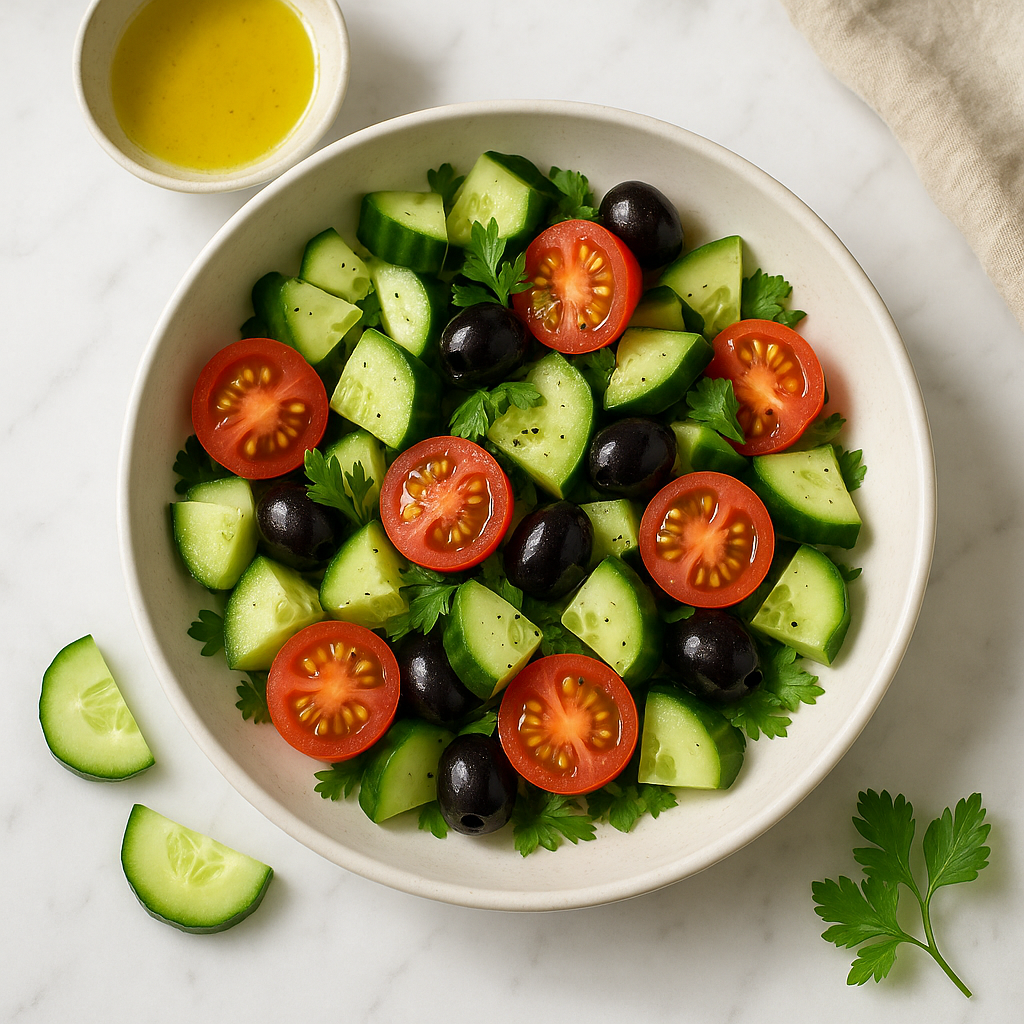
Bazlama Soft Turkish Flatbread Recipe with Greek Yogurt and Whole Wheat
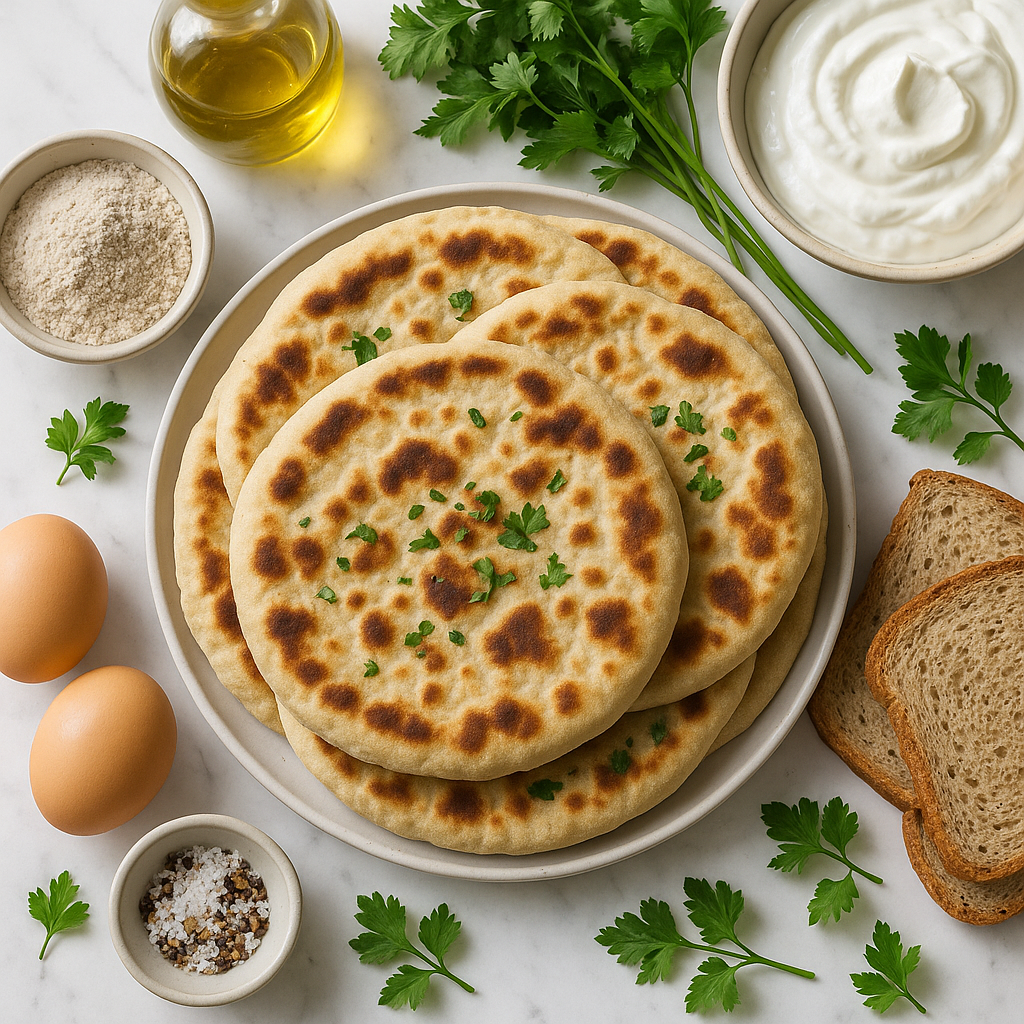
There is something deeply satisfying about pulling a warm, pillowy flatbread off a hot skillet and knowing you made it yourself in under an hour. This bazlama soft Turkish flatbread recipe is built on that exact joy, but with a genuinely nutritious twist that makes it a brilliant choice for breakfast. By swapping a portion of plain white flour for whole wheat flour and folding in thick Greek yogurt, the result is a soft, tender flatbread with a notable protein boost and far more fibre than the traditional version. No oven required. No mixer. One bowl and a skillet are all you need.
Bazlama has been a staple of Turkish home cooking for centuries, traditionally cooked on a convex griddle called a sac over an open flame. Village cooks would prepare large batches early in the morning to serve alongside eggs, olives, fresh tomatoes and creamy white cheese. It sits somewhere between a pita and a thick tortilla in texture, soft enough to fold, sturdy enough to scoop, and completely delicious with almost any topping you can think of. This version honours that heritage while quietly upgrading the nutritional profile. The Greek yogurt not only adds around 6 grams of protein per serving but also creates an incredibly tender crumb without needing excessive oil or butter. A small amount of ground flaxseed is stirred into the dough as well, adding omega-3 fatty acids and extra fibre that you genuinely cannot taste but will absolutely benefit from.
For breakfast, these flatbreads shine in so many directions. Spread one with mashed avocado and a sprinkle of chilli flakes, then top with a poached egg for a protein-rich morning plate. Layer another with hummus, sliced cucumber and a handful of fresh herbs for something lighter and Mediterranean-inspired. They are also brilliant simply torn and dipped into thick labneh or a bowl of spiced lentil soup if you are the kind of person who does not draw strict lines between breakfast and brunch. The dough comes together in about ten minutes, needs only a short thirty-minute rest to allow the yeast to do its gentle work, and each round cooks in roughly two to three minutes per side. The whole process is quick enough to fit into a weekday morning if you prep the dough the night before and let it rest in the fridge overnight.
A few things will help you get the best results from this recipe. First, do not rush the resting time. Even thirty minutes of rest makes the dough significantly more pliable and easier to roll. Second, use a dry, lightly oiled heavy skillet or cast iron pan and make sure it is properly hot before the first flatbread goes in. A medium-high heat gives you that characteristic golden-spotted surface with a soft, slightly chewy interior. Third, keep the rolled rounds to about 5 to 6 millimetres thick. Going too thin makes them more cracker-like and too thick means the inside can feel dense rather than fluffy. Stack the cooked flatbreads under a clean kitchen towel as you go, which traps steam and keeps every single one beautifully soft until you are ready to serve.
Ingredients
- 150 g whole wheat flour (plus extra for dusting)
- 150 g plain white flour (or bread flour for a chewier texture)
- 1 tsp instant dried yeast
- 1 tsp fine sea salt
- 1 tsp honey (or maple syrup)
- 2 tbsp ground flaxseed (for added fibre and omega-3s)
- 160 g full-fat plain Greek yogurt (at room temperature)
- 80 ml warm water (around 40 degrees Celsius, not boiling)
- 1 tbsp extra virgin olive oil (plus a little extra for the pan)
Instructions
- 1
Combine the warm water, honey and instant yeast in a small bowl. Stir gently and leave for 5 minutes until slightly foamy. This confirms your yeast is active and ready to work.
If nothing happens after 5 minutes, your water may have been too hot and killed the yeast. Start again with fresh yeast and water that feels comfortably warm on your wrist, not hot.
- 2
In a large mixing bowl, whisk together the whole wheat flour, plain white flour, salt and ground flaxseed until evenly combined.
- 3
Add the Greek yogurt and olive oil to the flour mixture, then pour in the yeast mixture. Use a fork to bring everything together into a rough, shaggy dough, then turn it out onto a lightly floured surface.
The dough will feel slightly sticky at first. Resist adding too much extra flour straight away as it will become smoother as you knead.
- 4
Knead the dough for about 5 to 6 minutes until it is smooth, slightly tacky and springs back lightly when you poke it. Shape it into a ball.
Use the heel of your hand to push the dough away from you, fold it back, rotate, and repeat. It is a meditative few minutes and well worth it for the final texture.
- 5
Place the dough ball in a lightly oiled bowl, cover with a clean damp cloth or cling film, and leave to rest in a warm spot for 30 minutes. The dough does not need to double in size, just relax and puff slightly.
A switched-off oven with just the light on makes an ideal warm resting spot in cooler kitchens.
- 6
Once rested, divide the dough into 6 equal portions. Roll each one into a smooth ball, then use a rolling pin on a lightly floured surface to roll each ball into a round about 18cm in diameter and 5 to 6mm thick.
Keep the unrolled portions covered with the damp cloth while you work so they do not dry out.
- 7
Heat a heavy skillet or cast iron pan over medium-high heat. Brush the surface with a tiny amount of olive oil using a folded piece of kitchen paper, then cook each flatbread for 2 to 3 minutes per side until golden brown spots appear on the surface and the bread puffs up slightly.
Do not press the flatbread down while it cooks. Those bubbles and puffs are a good sign that steam is trapped inside, which is exactly what gives bazlama its characteristic softness.
- 8
Transfer each cooked flatbread to a plate and cover with a clean kitchen towel while you cook the remaining rounds. This traps steam and keeps them soft and pliable.
- 9
Serve warm with your favourite breakfast toppings. Mashed avocado with a poached egg, hummus with sliced tomatoes, or simply a drizzle of olive oil and a pinch of flaky salt all work beautifully.
Nutrition per serving
178kcal
Calories
8g
Protein
29g
Carbs
4g
Fat
4g
Fibre
2g
Sugar
210mg
Sodium
Pro Tips
- ✓
Rest time is not optional. Thirty minutes makes the dough far easier to roll and improves the final texture significantly.
- ✓
Keep the pan dry between flatbreads and just use the lightest trace of oil each time to avoid a greasy finish.
- ✓
Stack cooked flatbreads under a towel immediately. This steaming step is the secret to that classic pillowy softness.
- ✓
Roll the rounds to an even thickness for consistent cooking. Uneven thickness means some parts cook faster than others.
- ✓
For extra flavour, brush each freshly cooked flatbread with a small amount of olive oil and a pinch of dried thyme or za'atar straight off the pan.
- ✓
If making these for a week of breakfasts, cook all six and store them. They reheat in 60 seconds in a warm dry pan.
Frequently Asked Questions
Variations
- •
Za'atar and Sesame Bazlama
Brush each flatbread with a thin layer of olive oil as soon as it comes off the pan, then sprinkle generously with za'atar spice blend and toasted sesame seeds. A classic Turkish breakfast combination.
- •
Herb and Garlic Bazlama
Add 1 teaspoon of garlic powder and 2 tablespoons of finely chopped fresh parsley or dill directly into the dough at the mixing stage. Adds fragrance and a flavour boost without extra calories.
- •
Seed-Boosted High-Fibre Bazlama
Add 2 tablespoons of mixed seeds, such as sunflower, pumpkin and sesame, into the dough alongside the flaxseed. This increases the fibre, healthy fat and micronutrient content significantly.
- •
Spelt Flour Bazlama
Replace the whole wheat flour with an equal weight of light spelt flour. Spelt has a naturally nutty, slightly sweet flavour and is often easier to digest. The flatbreads will be a touch lighter in colour but just as soft.
Substitutions
- •Greek yogurt → Plain coconut yogurt (Use a thick, unsweetened variety for a dairy-free version. The flatbreads will be slightly less protein-rich but just as soft and tender.)
- •Whole wheat flour → Spelt flour or oat flour (Spelt works as a 1:1 swap. Oat flour absorbs liquid differently so you may need a tablespoon or two less water. Both add nutritional value.)
- •Honey → Maple syrup or a pinch of coconut sugar (Any mild sweetener works here. The amount is very small and purely to help activate the yeast, so the sugar content remains minimal.)
- •Ground flaxseed → Chia seeds or wheat germ (Both add fibre and nutrients. Chia seeds can be used in the same quantity without grinding. Wheat germ has a nuttier flavour and works equally well.)
- •Extra virgin olive oil → Avocado oil or melted coconut oil (Both are healthy fat substitutes. Avocado oil has a neutral flavour. Coconut oil adds a very subtle sweetness that actually pairs nicely with Middle Eastern toppings.)
🧊 Storage
Store cooled flatbreads in an airtight container or zip-lock bag at room temperature for up to 2 days, or in the refrigerator for up to 5 days. Reheat in a dry skillet over medium heat for 60 to 90 seconds per side, or wrap in a damp paper towel and microwave for 20 to 30 seconds.
📅 Make Ahead
The dough can be made the night before and stored in an oiled, covered bowl in the refrigerator overnight. The slow cold ferment actually improves the flavour. Remove from the fridge 20 minutes before shaping and cooking to let it come back to room temperature. Alternatively, cook all flatbreads in advance and store as directed.
You might also like
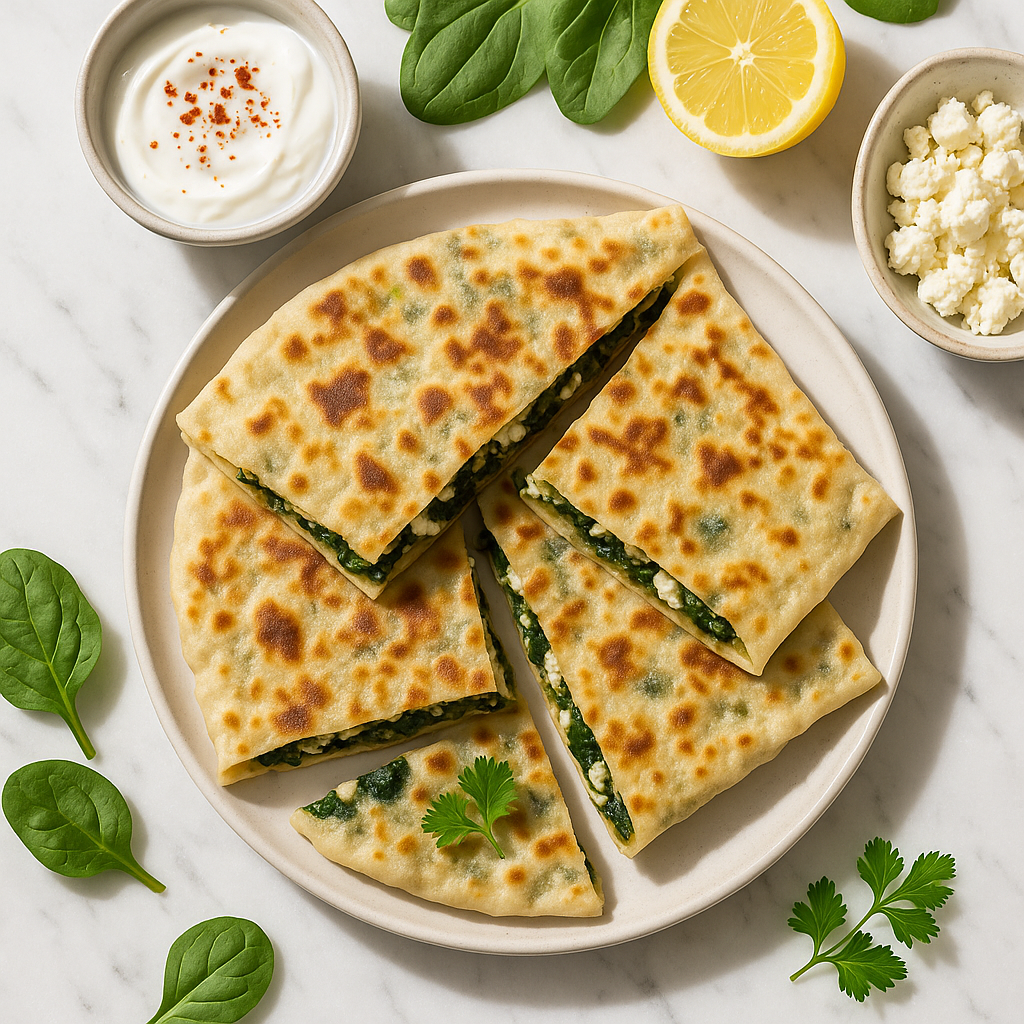
Gozleme Turkish Stuffed Flatbread with Spinach and Feta (High-Protein Healthy Version)
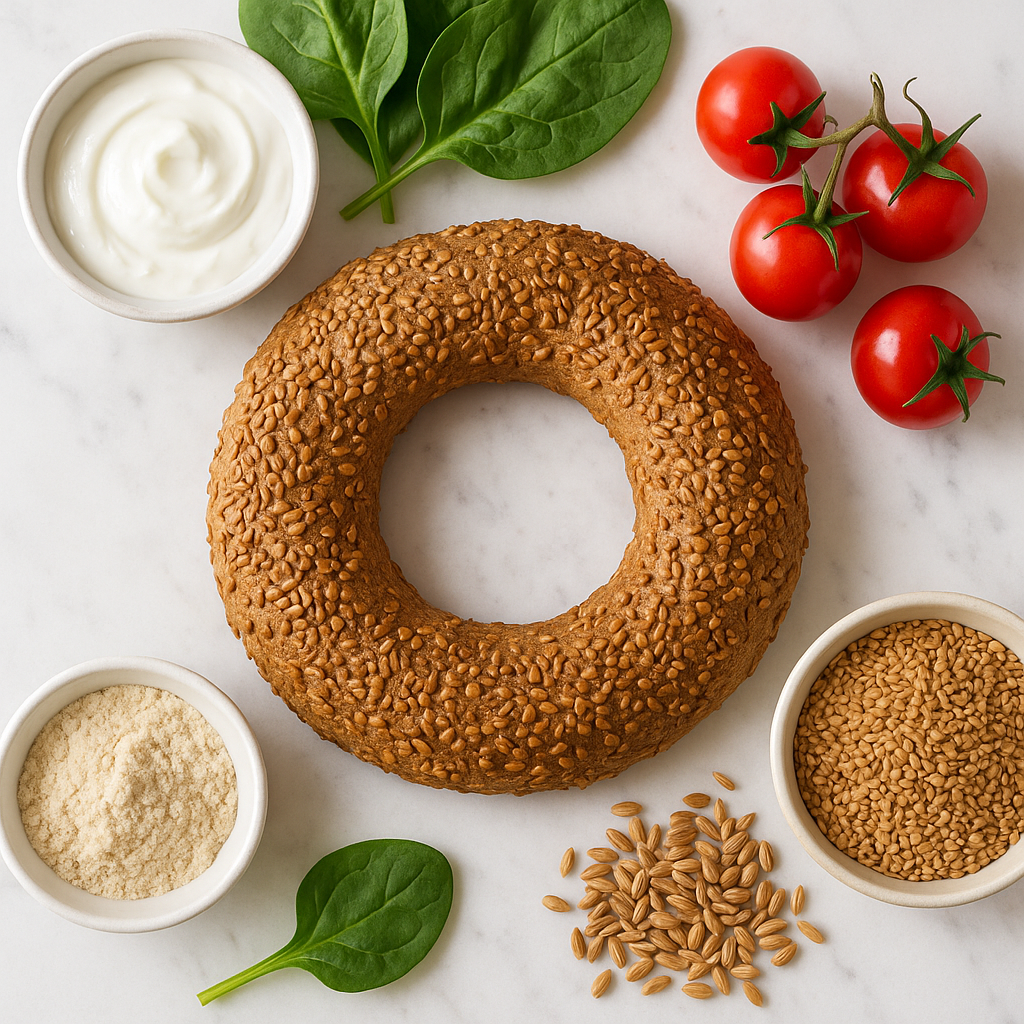
Healthy Simit Turkish Sesame Bread Ring Recipe with Whole Wheat and Protein Boost