Savory French Baked Eggs in Tomato Sauce with Herbs and Feta
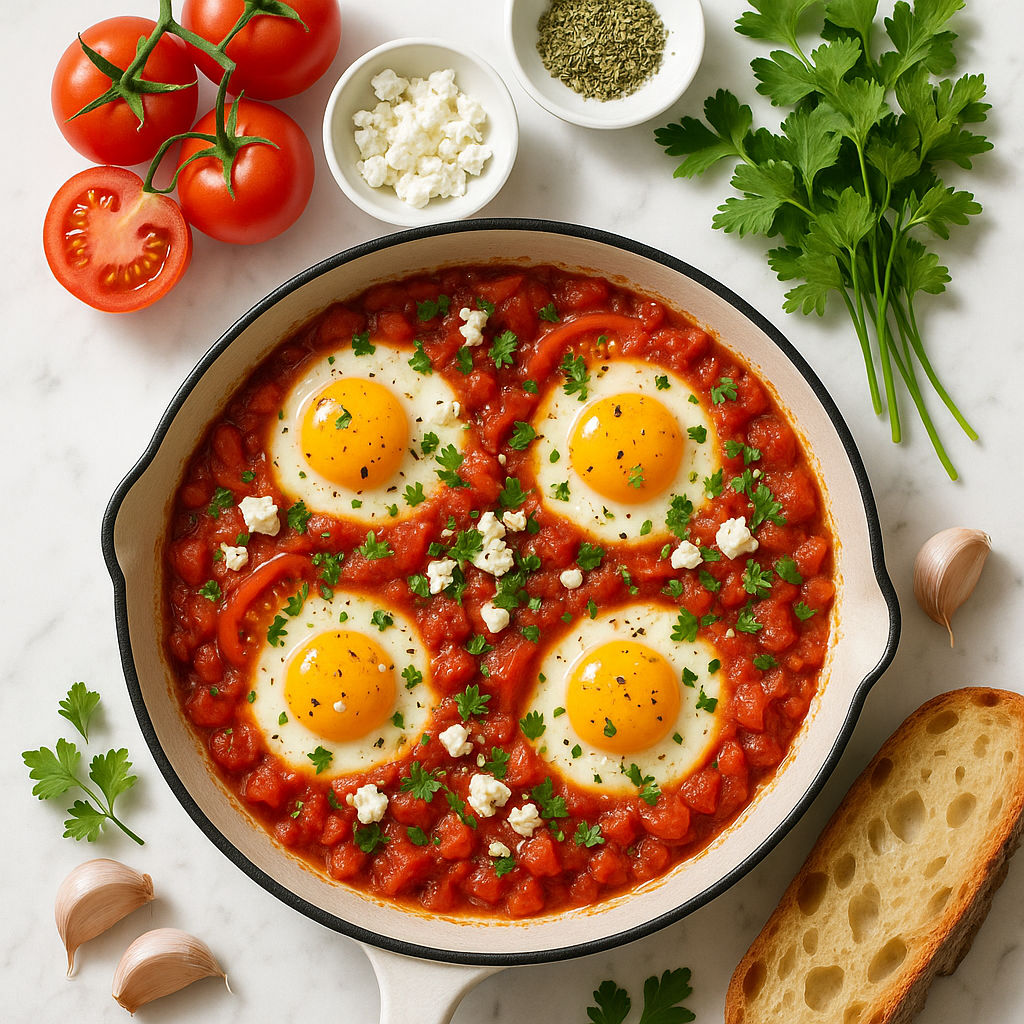
Savory French Baked Eggs in Tomato Sauce with Herbs and Feta brings together the warmth of a slow-cooked tomato base with the richness of eggs baked directly into the sauce, all finished with salty feta and a handful of wilted spinach. This recipe sits at 272 calories per serving while delivering 19 grams of protein, which puts it well ahead of most egg-based breakfasts that rely heavily on butter, cheese or pastry to create satisfaction. What sets it apart from a standard shakshuka or a basic baked egg dish is the French seasoning profile: herbes de Provence, fresh thyme, and a bay leaf give the tomato sauce a distinctly aromatic quality that feels more like something served in a Provençal kitchen than a weekday breakfast. The addition of capers introduces a briny, slightly sharp note that lifts the whole dish and stops it tasting heavy. At only 14 grams of carbohydrates and 4 grams of fibre, this meal keeps blood sugar steady through the morning without any grains or processed ingredients involved.
Extra virgin olive oil forms the cooking fat here and does more than prevent sticking. It carries the fat-soluble flavour compounds from the garlic and smoked paprika into the sauce and contributes heart-supportive monounsaturated fats to the meal. Yellow onion, cooked low and slow at the start, breaks down into natural sweetness that balances the acidity of the 400 grams of canned crushed tomatoes, which themselves bring lycopene, vitamin C and a deep savoury body to the sauce. Garlic adds allicin, a compound linked to immune support, and blends with the tomato paste to create a concentrated umami backbone. Smoked paprika contributes both colour and a subtle smoky warmth without any added sodium. The herbes de Provence, fresh thyme and bay leaf are not just garnish. They are working ingredients that layer dried floral notes, earthy pine flavour and a clean finish into a sauce that tastes like it cooked for far longer than it did. Capers bring sodium and a sharp pickled flavour that cuts through the richness of the eggs and feta. The 60 grams of baby spinach wilt down to almost nothing but add iron, folate, and vitamins A and K. The four free-range eggs are the protein anchor of the whole recipe, each one providing roughly 6 grams of complete protein along with choline, B12 and vitamin D.
When the sauce is finished and the eggs go into the pan, the whites begin to set at the edges while the yolks stay soft and slightly glossy in the centre. The smell at that point is genuinely hard to ignore: garlic-forward, smoky and herbal, with the faint tang of the capers rising through the steam. The texture of the final dish contrasts nicely between the silky cooked egg white, the jammy tomato base, and the crumbled feta sitting on top, which softens slightly from the heat without fully melting. The sauce itself has a thick, rustic quality from the crushed tomatoes and the reduced tomato paste. It clings to a spoon rather than running off. The spinach loses its raw bitterness during wilting and takes on the flavour of the sauce, making it easy to eat even for people who do not usually reach for greens at breakfast. The entire dish comes together in one oven-safe skillet, which matters when you are cooking in the morning and want minimal cleanup. The edges of the eggs develop a slight blush from the paprika-red sauce surrounding them.
This recipe supports several specific health goals. The protein-to-calorie ratio is strong for anyone managing their weight while still needing to feel full through a long morning. Nineteen grams of protein at 272 calories makes it genuinely filling without excess energy. Because there are no grains, bread or thickeners in the recipe, it is naturally gluten-free and fits comfortably into a Mediterranean-style eating pattern. The high fibre content from the tomatoes, onion and spinach supports digestive health and contributes to that sustained fullness. People following a low-carb or reduced-glycaemic diet will find the 14 grams of carbohydrates manageable, particularly since the fibre content reduces the net carb impact. Anyone recovering from illness or managing iron levels will benefit from the spinach and egg combination, which pairs non-haem iron from the greens with the protein needed for absorption support. The dish is also useful for people who train in the morning and need a hot, protein-focused meal quickly after exercise without relying on processed protein products.
For meal prep, the tomato sauce can be made up to four days ahead and stored in an airtight container in the fridge. When you are ready to eat, reheat the sauce gently in a skillet, create small wells, crack the eggs in and cover to finish cooking. The full cooked dish does not freeze well because the egg texture suffers, but the sauce base freezes for up to two months and defrosts quickly in a pan over medium heat. One variation worth trying is adding a few kalamata olives to the sauce along with the capers for a deeper, earthier flavour. Another option is swapping the feta for a soft goat cheese if you prefer a creamier, milder finish. You can also add a small handful of chickpeas to the sauce before baking the eggs to increase the fibre and plant protein content without changing the overall character of the dish. The full ingredient quantities, cook times and step-by-step method are all in the recipe card below.
Ingredients
- 1 tbsp extra virgin olive oil
- 1 medium yellow onion (finely diced)
- 3 cloves garlic (minced)
- 1 tbsp tomato paste (no added sugar)
- 400 g canned whole crushed tomatoes (no added salt or sugar variety)
- 1 tsp smoked paprika
- 1 tsp herbes de Provence (or a mix of dried thyme and oregano)
- 1 sprig fresh thyme (leaves only)
- 1 small bay leaf
- 1 tbsp capers (rinsed and roughly chopped)
- 60 g baby spinach (roughly 2 large handfuls)
- 4 large free-range eggs
- 40 g reduced-fat feta cheese (crumbled)
- 0.3 tsp black pepper (freshly ground)
- 0.3 tsp sea salt (adjust to taste)
- 1 tbsp fresh flat-leaf parsley (chopped, for garnish)
- 0.5 tsp chili flakes (optional, for a little heat)
Instructions
- 1
Preheat your oven to 190°C (375°F) fan-bake. Place a medium oven-safe skillet or shallow cast iron pan over medium heat on the stovetop.
A 24 cm cast iron skillet is ideal here. It holds heat evenly and goes straight from hob to oven without fuss.
- 2
Add the olive oil to the pan. Once the oil shimmers, add the diced onion and cook for 4 to 5 minutes, stirring occasionally, until softened and just beginning to turn golden at the edges.
- 3
Add the minced garlic and cook for 1 minute until fragrant. Stir in the tomato paste and cook for another 60 seconds, letting it caramelise slightly against the hot pan. This step deepens the flavour significantly.
Do not skip the tomato paste step. Cooking it briefly in the oil before adding the canned tomatoes removes the raw, tinny taste and adds a subtle sweetness and richness.
- 4
Pour in the crushed tomatoes. Add the smoked paprika, herbes de Provence, fresh thyme leaves, bay leaf, capers, salt and pepper. Stir everything together and reduce the heat to medium-low. Let the sauce simmer uncovered for 6 to 8 minutes until it thickens slightly.
- 5
Add the baby spinach to the sauce in two batches, stirring gently until each batch wilts into the tomatoes. Remove and discard the bay leaf.
The spinach shrinks down dramatically, so do not be alarmed by how much you are adding at first.
- 6
Use a spoon to create 4 small wells in the tomato sauce, evenly spaced around the pan. Crack one egg carefully into each well. Season the eggs lightly with a pinch of extra salt and pepper.
Crack each egg into a small cup first before sliding it into the well. This way you avoid any shell in the sauce and can control placement.
- 7
Scatter the crumbled feta over the sauce around the eggs. Transfer the pan to the preheated oven and bake for 7 to 9 minutes. Check at 7 minutes: the whites should be fully set but the yolks still soft and jammy.
Baking time varies by oven and pan depth. For fully set yolks, give it the full 9 to 10 minutes. Keep in mind the eggs continue to cook briefly once you pull them from the oven.
- 8
Remove from the oven carefully using oven mitts. Scatter fresh parsley and chili flakes over the top if using. Serve immediately, straight from the pan, with whole grain toast or your preferred side.
Nutrition per serving
272kcal
Calories
19g
Protein
14g
Carbs
15g
Fat
4g
Fibre
7g
Sugar
480mg
Sodium
Pro Tips
- ✓
Use the freshest eggs you can find. Fresh eggs hold their shape better when cracked into the sauce and give you a cleaner presentation.
- ✓
Taste the tomato sauce before adding the eggs and adjust seasoning. Once the eggs are in, you cannot stir.
- ✓
If your sauce looks too thick before the eggs go in, add 2 to 3 tablespoons of water and stir through to loosen it slightly.
- ✓
For even cooking, make sure the sauce is hot and gently bubbling before you transfer the pan to the oven.
- ✓
Letting the pan rest on the table for 1 to 2 minutes after baking helps the sauce settle and makes scooping servings much easier.
Frequently Asked Questions
Variations
- •
High-Protein White Bean Version
Stir 120 grams of rinsed canned cannellini beans into the tomato sauce before nestling in the eggs. This adds around 7 extra grams of protein per serving and keeps you full even longer.
- •
Roasted Pepper and Artichoke Version
Add 60 grams of roasted red peppers (from a jar, drained) and 4 quartered marinated artichoke hearts to the sauce alongside the spinach. This gives the dish a more substantial, antipasto-style depth.
- •
Spiced North African Inspired Version
Swap the herbes de Provence for 1 teaspoon of cumin, half a teaspoon of ground coriander and a pinch of cinnamon. Add harissa paste instead of chili flakes for a shakshuka-adjacent flavour while keeping the French baked egg technique.
- •
Green Olive and Sun-Dried Tomato Version
Replace the capers with 6 sliced pitted green olives and stir in 2 tablespoons of finely chopped sun-dried tomatoes for an intensely savory, umami-rich sauce.
Substitutions
- •Baby spinach → Kale or Swiss chard (Remove tough stems and chop roughly before adding. Kale needs an extra 2 minutes to wilt fully compared to spinach.)
- •Reduced-fat feta → Goat cheese (Goat cheese crumbles beautifully over the sauce and melts slightly in the oven, adding a tangier, creamier finish.)
- •Capers → Sliced green olives (Olives deliver a similar briny, salty contrast. Use about 6 to 8 small olives, halved or sliced.)
- •Canned whole crushed tomatoes → Passata (strained tomatoes) (Passata gives a smoother, silkier sauce. Use the same quantity but reduce simmering time to 4 to 5 minutes as it thickens faster.)
- •Herbes de Provence → Dried thyme and dried oregano (Use half a teaspoon of each as a straightforward 1:1 swap that replicates the core flavour profile.)
🧊 Storage
Store any leftover tomato sauce (without cooked eggs) in an airtight container in the refrigerator for up to 3 days. Reheat gently on the stovetop, then crack in fresh eggs and bake as directed. Already-baked eggs do not store or reheat well, so cook only what you plan to eat.
📅 Make Ahead
The herbed tomato sauce can be made up to 2 days in advance and stored in the fridge. When ready to serve, reheat the sauce in your oven-safe skillet over medium heat until bubbling, then proceed from step 6 with cracking in the eggs and baking.