Quick Scrambled Eggs with Spinach and Feta (High Protein, 10 Minutes)
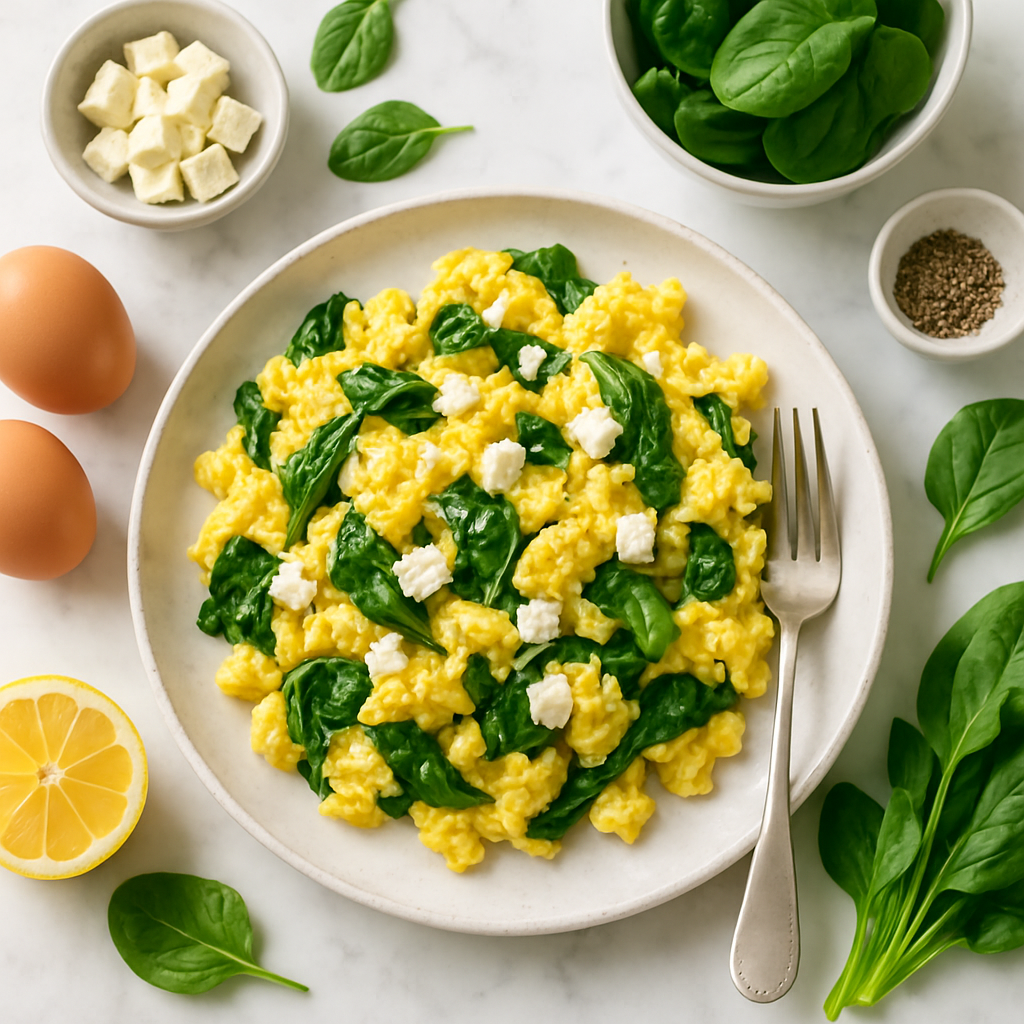
Some mornings call for something that feels a little special without demanding much of your time or energy. These quick scrambled eggs with spinach and feta deliver exactly that. Soft, creamy eggs folded with wilted baby spinach, crumbled feta, and a handful of aromatics come together in under ten minutes. It is the kind of breakfast that feels indulgent but is actually doing a lot of good work for your body, providing sustained energy, quality protein, and a solid dose of vitamins and minerals before you have even had your second cup of coffee.
What makes this version genuinely healthier than most scrambled egg recipes is the combination of whole eggs and egg whites. Using two whole eggs alongside two egg whites per serving keeps the fat content in check while pushing the protein content significantly higher, landing at around 28 grams per portion. The spinach adds iron, folate, and vitamin K without contributing any meaningful calories. Feta is used more strategically here too, just enough to give that salty, tangy creaminess without the sodium load you get when it is piled on generously. A small drizzle of extra virgin olive oil replaces butter, bringing in those beneficial monounsaturated fats instead. The result is a macro-friendly breakfast that genuinely keeps you full well past mid-morning.
The technique matters more than most people realise with scrambled eggs. Low and slow is the golden rule. Cooking over a medium-low heat and using a rubber spatula to make gentle folding movements, rather than aggressive stirring, gives you soft creamy curds rather than rubbery broken pieces. Removing the pan from the heat just before the eggs look fully set is also key because residual heat will finish the job perfectly. The spinach goes in first so it wilts down and releases its excess moisture before the eggs are added, which stops things from turning watery. A splash of cold water beaten into the eggs, rather than milk or cream, creates a little steam as it evaporates and keeps the texture light and airy without the extra calories that dairy adds.
This recipe works beautifully on its own or served alongside a slice of wholegrain toast or a handful of cherry tomatoes for some extra fibre and colour. It is also incredibly flexible. You can swap the spinach for kale or rocket, add a pinch of dried chilli flakes if you like a gentle kick, or throw in some sun-dried tomatoes for a deeper, more intense flavour. Meal preppers will appreciate that the spinach and aromatics can be sauteed ahead of time and kept in the fridge, so all you need to do in the morning is beat the eggs and fold everything together. Quick scrambled eggs with spinach and feta might just become the most reliable recipe in your breakfast rotation.
Ingredients
- 4 large whole eggs (free-range preferred)
- 4 large egg whites (from fresh eggs or carton egg whites)
- 2 tbsp cold water (beaten into the eggs)
- 2 tsp extra virgin olive oil (divided)
- 2 cloves garlic (finely minced)
- 3 cups fresh baby spinach (loosely packed, roughly 90g)
- 60 g reduced-fat feta cheese (crumbled)
- 1 tbsp fresh chives (finely chopped, plus extra to serve)
- 1 tsp dried oregano
- 0.3 tsp black pepper (freshly ground)
- 0.1 tsp sea salt (adjust to taste, feta is already salty)
- 0.3 tsp red chilli flakes (optional, for a gentle kick)
Instructions
- 1
Crack the whole eggs and egg whites into a medium bowl. Add the cold water, black pepper, and a small pinch of sea salt. Beat with a fork until fully combined and slightly frothy. Set aside.
Do not over-beat, just enough to fully combine the yolks and whites into a uniform mixture.
- 2
Place a medium non-stick skillet over medium heat. Add 1 teaspoon of olive oil and heat for about 30 seconds. Add the minced garlic and cook, stirring frequently, for about 45 seconds until fragrant but not browned.
Keep an eye on the garlic, it burns quickly and turns bitter. Lower the heat if needed.
- 3
Add all of the baby spinach to the pan in one go. It will look like a lot but it wilts down dramatically. Toss it with tongs or a spatula and cook for about 1 to 2 minutes until fully wilted. If any liquid pools in the pan, tilt the pan and use a spoon to discard it before moving on.
Removing excess moisture is important. Watery spinach will make your eggs wet and loose rather than creamy.
- 4
Reduce the heat to medium-low. Push the spinach to the edges of the pan to create a clear space in the centre, then add the remaining teaspoon of olive oil to that space. Pour the beaten egg mixture into the centre of the pan.
Cooking on medium-low is the key to soft, creamy scrambled eggs. High heat leads to rubbery, dry curds.
- 5
Leave the eggs undisturbed for about 20 to 30 seconds so the base just begins to set. Then use a rubber spatula to make slow, wide folding movements across the pan, gently bringing the cooked egg from the edges towards the centre. Continue this every 20 to 30 seconds.
Folding rather than constant stirring keeps the curds large and creamy. Resist the urge to over-work them.
- 6
When the eggs are about 80 percent set and still look slightly glossy and soft, remove the pan from the heat. Add the crumbled feta, dried oregano, and chilli flakes if using. Gently fold everything together. The residual heat will finish cooking the eggs to a perfectly soft, set consistency.
Taking the pan off the heat early is crucial. The eggs will keep cooking from residual heat for another 30 to 60 seconds.
- 7
Divide between two plates. Scatter over the fresh chives and a little extra black pepper. Serve immediately on its own or alongside wholegrain toast or sliced cherry tomatoes.
Scrambled eggs are best eaten right away. They continue to firm up as they sit on the plate.
Nutrition per serving
265kcal
Calories
28g
Protein
4g
Carbs
14g
Fat
1.5g
Fibre
1g
Sugar
420mg
Sodium
Pro Tips
- ✓
Use a good quality non-stick pan so you can cook with minimal oil and the eggs release easily without sticking.
- ✓
Cold water beaten into the eggs creates steam during cooking, keeping the texture light and fluffy without any added dairy.
- ✓
Reduced-fat feta gives you all the tangy, creamy flavour with less saturated fat and slightly lower sodium than full-fat versions.
- ✓
If you are using frozen spinach, thaw it fully and squeeze out as much water as possible before adding it to the pan.
- ✓
Always taste before adding extra salt. Feta is quite salty on its own and in most cases you will not need much additional seasoning.
- ✓
For a higher fibre meal, serve on a thick slice of toasted wholegrain or sourdough bread.
- ✓
A small squeeze of fresh lemon juice over the finished eggs brightens all the flavours beautifully.
Frequently Asked Questions
Variations
- •
Sun-Dried Tomato and Basil
Add 2 tablespoons of roughly chopped sun-dried tomatoes to the pan along with the spinach, and swap the chives for a small handful of fresh basil leaves torn and stirred in at the very end. The tomatoes add a rich, concentrated sweetness that pairs beautifully with the feta.
- •
Spiced Za'atar Version
Replace the dried oregano with 1 teaspoon of za'atar spice blend and add a pinch of sumac over the finished eggs for a warm, earthy, Middle Eastern flavour profile. Serve with warm wholemeal pitta for a more substantial meal.
- •
Mushroom and Spinach Boost
Slice 1 cup of chestnut mushrooms and sauté them in the pan with the garlic for 3 to 4 minutes until golden before adding the spinach. The mushrooms add extra fibre, a meaty texture, and boost the overall nutrient density of the dish.
- •
Cherry Tomato and Herb
Halve 10 cherry tomatoes and add them to the pan with the garlic, cooking for 1 to 2 minutes until they just begin to soften. Then add the spinach and proceed as normal. Finish with fresh dill instead of chives for a bright, fresh flavour.
Substitutions
- •Fresh baby spinach → Frozen spinach or baby kale (Frozen spinach works just as well nutritionally. Thaw and squeeze dry before using. Baby kale gives a slightly more robust, peppery flavour.)
- •Reduced-fat feta cheese → Full-fat feta or goat cheese (Full-fat feta will give a richer, creamier result but will add extra calories and saturated fat. Soft goat cheese has a similar tangy creaminess and works beautifully.)
- •Egg whites → Additional whole eggs (If you prefer to use all whole eggs, use 3 whole eggs per serving instead. This will increase the fat content slightly but still produces a delicious and nutritious result.)
- •Extra virgin olive oil → Avocado oil or coconut oil spray (Avocado oil has a similar healthy fat profile to olive oil. Coconut oil spray reduces the total fat content further if you are tracking calories closely.)
- •Fresh chives → Spring onions or fresh parsley (Thinly sliced spring onions give a similar mild onion flavour. Fresh flat-leaf parsley adds a brighter, slightly more herbal note to the finished dish.)
🧊 Storage
Scrambled eggs are best eaten fresh immediately after cooking. If you do have leftovers, store them in an airtight container in the refrigerator for up to 1 day. Reheat gently in a pan over low heat with a tiny drizzle of olive oil, stirring slowly. Avoid the microwave as it tends to make the eggs tough and rubbery.
📅 Make Ahead
The garlic and spinach base can be prepared up to 2 days in advance and stored in an airtight container in the fridge. In the morning, simply reheat the spinach mixture in the pan for 1 to 2 minutes before adding your freshly beaten eggs. This cuts the active morning cooking time to about 4 minutes.