Quick Cottage Cheese Scrambled Eggs High Protein Skillet
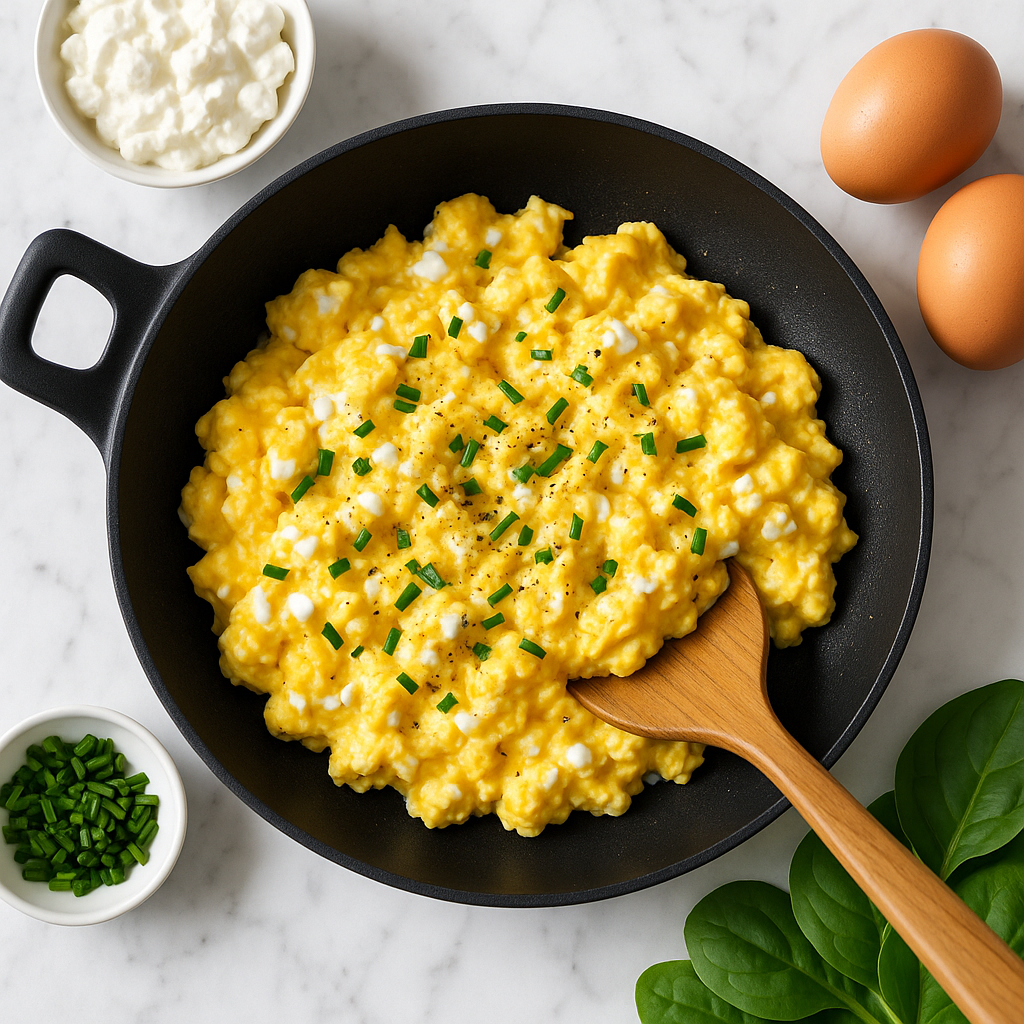
Quick Cottage Cheese Scrambled Eggs High Protein Skillet is the kind of breakfast that earns its place in your weekly rotation fast. The headline benefit here is straightforward: 24 grams of protein in a single serving, cooked and on the table in six minutes flat. Most high-protein egg breakfasts ask you to pile on meat or protein powder, but this skillet gets there through a smarter combination of whole eggs, egg whites, and cottage cheese. That combination keeps the calorie count at 218 while the fat stays at a lean 10 grams. Compared to a plain scramble, you get a noticeably creamier result without adding cream or butter. Compared to a protein shake, you get an actual hot meal with real texture and real flavour. For anyone tracking macros on a keto or gluten-free plan, the 5 grams of carbohydrates make it easy to fit into a tight daily budget. This is a breakfast that works on a rushed Tuesday morning and holds up equally well on a slow Sunday when you want something satisfying without a lot of effort.
Each ingredient in this skillet is pulling real nutritional weight. The four large whole eggs form the base, contributing roughly 24 grams of protein on their own across the full recipe, along with choline for brain function and fat-soluble vitamins D and B12. The three egg whites add extra protein without extra fat, which is why the macros tip so favourably toward protein. The half cup of low-fat cottage cheese is the key move here. It melts into the eggs during cooking, adding roughly 14 grams of protein per half cup while also delivering calcium and phosphorus for bone support. Baby spinach brings iron, folate, and vitamin K, and because it wilts quickly in the hot pan, it integrates seamlessly without making the dish watery. Sun-dried tomatoes contribute lycopene, a carotenoid linked to cardiovascular health, and they bring a concentrated sweetness that balances the savoury notes. Smoked paprika adds vitamin A through its beta-carotene content. The teaspoon of extra virgin olive oil carries monounsaturated fats that support cholesterol balance and helps carry fat-soluble nutrients from the spinach and paprika into your system.
The moment the egg mixture hits the lightly oiled skillet over medium-low heat, the smell of smoked paprika blooms first, warm and faintly earthy, followed quickly by the gentle fragrance of wilting spinach. The cottage cheese disappears visually into the eggs as they cook, which surprises people who expect white curds floating around in their scramble. What you get instead is a glossy, almost custardy texture with soft, pillowy folds rather than the tight, rubbery curds that come from high heat. Cooking on medium-low is non-negotiable here. The lower temperature gives the proteins time to set gently, and the moisture in the cottage cheese creates a natural steam that keeps everything tender. The sun-dried tomatoes add little pockets of chewy, tangy intensity throughout. The fresh chives go on at the very end, scattering a mild onion brightness across the top that cuts through the richness. The colour contrast of deep green spinach, red tomato, and pale yellow egg against the white plate is genuinely appetising. This is a scramble that looks like effort, even when it took under ten minutes.
The nutrition profile of this recipe targets a few specific health goals at once. For anyone working on body composition, the high protein to calorie ratio supports muscle protein synthesis without loading up on excess fat or refined carbohydrates. The ketogenic community will recognise that this skillet fits comfortably within standard keto macros, as the carbohydrate count comes entirely from vegetables rather than grains or added sugars. People managing blood sugar levels will appreciate that the 5 grams of carbs come with 1.5 grams of fibre, which slows glucose absorption. Athletes eating before a morning workout get a fast-digesting, high-quality protein source from the eggs and cottage cheese that supports muscle recovery without sitting heavily in the stomach. This recipe also suits people who are gluten intolerant or have coeliac disease, since every ingredient is naturally free from gluten with no substitutions needed. Older adults focused on preserving muscle mass through adequate daily protein intake will find that this single breakfast covers a meaningful portion of their recommended protein target for the day.
For meal prep, you can whisk together the whole eggs, egg whites, cottage cheese, and all the dry seasonings the night before and store the mixture covered in the fridge for up to 24 hours. The spinach and sun-dried tomatoes can be measured out at the same time so the morning cook is genuinely a one-pan, six-minute job. Fully cooked scrambled eggs are best eaten fresh, but if you need to make them ahead, they will keep in an airtight container in the refrigerator for up to two days. Reheat gently in a non-stick pan over low heat with a small splash of water to restore some moisture, or use a microwave on 50 percent power in 30-second intervals. For variations, swap the baby spinach for finely chopped kale or wilted arugula. Replace the sun-dried tomatoes with diced roasted red pepper for a sweeter, milder flavour. Add a tablespoon of crumbled feta cheese on top for a Mediterranean angle that pairs well with the existing paprika and chives. The full ingredient quantities and step-by-step cooking instructions are in the recipe card below.
Ingredients
- 4 large whole eggs (free-range preferred)
- 3 large egg whites (from fresh eggs or carton)
- 1 cup low-fat cottage cheese (small curd, 1% or 2% milkfat)
- 1 cup baby spinach (loosely packed)
- 3 tablespoons sun-dried tomatoes (oil-packed, drained and finely chopped)
- 2 tablespoons fresh chives (finely sliced)
- 1 teaspoon smoked paprika
- 1 teaspoon garlic powder
- 1 teaspoon fine sea salt (adjust to taste)
- 1 teaspoon black pepper (freshly ground)
- 1 teaspoon extra virgin olive oil (for the pan)
Instructions
- 1
Crack the 4 whole eggs into a medium bowl and add the 3 egg whites. Whisk briskly for about 30 seconds until the yolks and whites are fully combined and the mixture looks slightly frothy.
Whisking in a little air now gives you fluffier curds later. Do not skip this step.
- 2
Add the cottage cheese, smoked paprika, garlic powder, salt, and black pepper to the egg mixture. Stir gently until the cottage cheese is evenly distributed through the eggs. You will still see small curds of cottage cheese and that is exactly what you want.
If you prefer a smoother texture with no visible curds, blend the cottage cheese briefly before adding it.
- 3
Heat a medium non-stick skillet over medium-low heat. Add the olive oil and let it warm for about 30 seconds. Add the baby spinach and stir for 60 seconds until just wilted. Add the chopped sun-dried tomatoes and stir to combine.
Keep the heat gentle. The pan should feel warm, not hot, when you add the eggs.
- 4
Pour the egg and cottage cheese mixture into the pan over the wilted spinach and tomatoes. Let it sit undisturbed for 20 seconds until you see the edges just beginning to set.
- 5
Using a silicone spatula, gently pull the eggs from the outer edges of the pan toward the centre. Continue doing this every few seconds, creating soft, large folds. Cook for 3 to 4 minutes total, stirring almost constantly.
Resist the urge to turn up the heat if it feels slow. Low and slow is the key to creamy eggs.
- 6
When the eggs look about 80 percent set but still slightly glossy and moist, remove the pan from the heat. The residual heat will finish cooking them in the next 30 to 60 seconds.
Pulling the pan off early is the single most important trick for avoiding rubbery scrambled eggs.
- 7
Divide between two plates and scatter the fresh chives over the top. Serve immediately on its own or alongside a slice of wholegrain toast or sliced avocado.
Nutrition per serving
218kcal
Calories
24g
Protein
5g
Carbs
10g
Fat
1.5g
Fibre
3g
Sugar
430mg
Sodium
Pro Tips
- ✓
Use low-fat rather than full-fat cottage cheese to keep the calories lower without sacrificing protein.
- ✓
Always cook on medium-low heat. High heat makes scrambled eggs rubbery and watery.
- ✓
Take the pan off the heat before the eggs look fully done. They will finish cooking from residual heat.
- ✓
Drain sun-dried tomatoes well on a paper towel before chopping to prevent the eggs from going watery.
- ✓
Season after tasting rather than adding lots of salt upfront, as cottage cheese already contains some sodium.
- ✓
For even more protein, swap one whole egg for two additional egg whites.
- ✓
A non-stick skillet is really the best tool here. Cast iron tends to cook too hot and unevenly for delicate scrambled eggs.
Frequently Asked Questions
Variations
- •
Herb Garden Version
Swap the smoked paprika for fresh dill and flat-leaf parsley, and replace the sun-dried tomatoes with halved cherry tomatoes. This gives the dish a fresher, lighter flavour that works especially well in warmer months.
- •
Spicy Sriracha Kick
Add half a teaspoon of sriracha or a pinch of cayenne pepper to the egg mixture before cooking. Top with thinly sliced spring onions instead of chives. The gentle heat works brilliantly with the creamy cottage cheese.
- •
Mediterranean Style
Add two tablespoons of crumbled reduced-fat feta cheese, a handful of roughly chopped Kalamata olives, and a pinch of dried oregano. Serve with sliced cucumber and a squeeze of lemon juice over the top.
- •
Veggie Boost Version
Add finely diced red bell pepper and a handful of sliced mushrooms to the pan before the spinach and cook for 2 to 3 minutes to soften. This adds extra fibre, vitamin C, and B vitamins without significantly changing the calorie count.
Substitutions
- •Low-fat cottage cheese → Greek yogurt (plain, full-fat or 2%) (Use the same quantity. Greek yogurt creates a similar creamy texture and protein boost, though the flavour is slightly tangier.)
- •Baby spinach → Kale or arugula (Chop kale finely and cook for an extra minute as it is tougher than spinach. Arugula can be stirred in at the very end for a peppery bite.)
- •Sun-dried tomatoes → Fresh cherry tomatoes, halved (Add cherry tomatoes with the spinach and cook until just softened, about 1 to 2 minutes. The flavour is fresher and less intense than sun-dried.)
- •Fresh chives → Spring onion tops or fresh dill (Both work well as finishing herbs. Spring onions add a slightly stronger flavour. Dill gives a more delicate, herby note.)
- •Egg whites → Whole eggs (Use 2 additional whole eggs instead of 3 egg whites. This increases the fat content slightly but the dish remains high in protein.)
- •Olive oil → Avocado oil or coconut oil spray (All work well for cooking scrambled eggs. Avocado oil has a neutral flavour and a high smoke point.)
🧊 Storage
These scrambled eggs are best eaten immediately after cooking. If you have leftovers, store them in an airtight container in the refrigerator for up to 1 day. Reheat gently in a non-stick pan over low heat for about 1 to 2 minutes, stirring carefully. Do not microwave as this makes scrambled eggs rubbery.
📅 Make Ahead
You can whisk the eggs, egg whites, and cottage cheese together with the spices the night before and keep the mixture in a sealed container in the refrigerator for up to 24 hours. Wilt the spinach and prep the sun-dried tomatoes in advance too. In the morning you simply heat the pan and cook, making the total hands-on time under 5 minutes.