Overnight Egg and Vegetable Breakfast Casserole with Spinach, Peppers and Feta
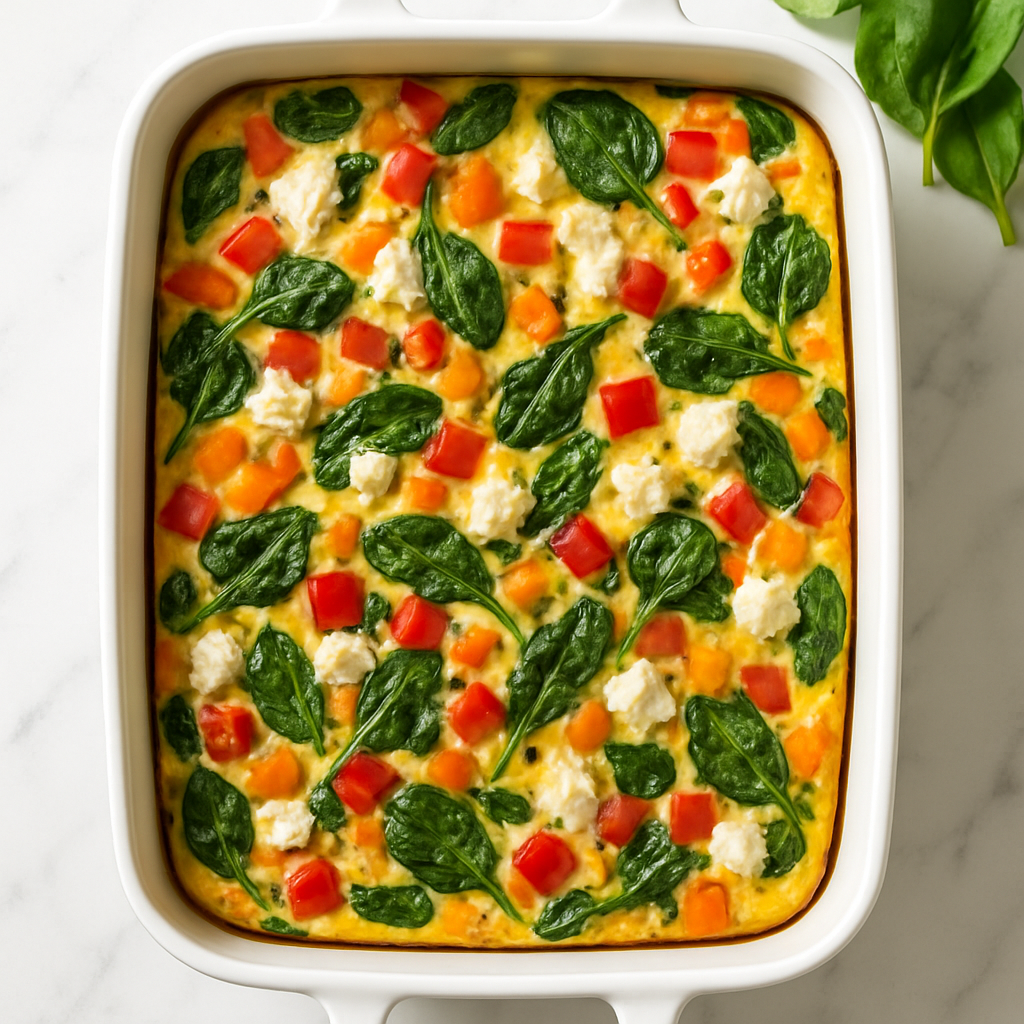
There is something genuinely magical about waking up to a breakfast that is already done. This overnight egg and vegetable breakfast casserole is built for real life, the kind of morning where you need something nourishing on the table without standing over a hot stove. You assemble everything the night before, slide the dish into the fridge, and by the time your oven preheats the next day, you are already halfway there. It is warm, savoury, loaded with colourful vegetables, and it tastes like you put in way more effort than you actually did.
What makes this recipe genuinely healthier than traditional breakfast casseroles is the combination of whole eggs with egg whites, which pushes the protein content up without the extra saturated fat you would get from adding cheese by the bucketful or using fatty sausage. Instead of heavy cream, we use plain low-fat Greek yogurt blended with unsweetened almond milk. That swap keeps the egg custard silky and rich while adding an extra hit of protein and trimming unnecessary calories. The vegetables do serious work here too. Spinach, red and yellow peppers, courgette, cherry tomatoes and spring onions all bring fibre, vitamins and natural sweetness, so every slice feels genuinely filling without sitting heavy.
The base of this casserole uses a thin layer of cooked brown rice instead of the white bread or croissants you often see in traditional versions. Brown rice adds a satisfying, slightly nutty texture, soaks up the egg mixture beautifully overnight, and keeps the fibre content high enough to support steady energy through the morning. A generous crumble of reduced-fat feta cheese goes over the top before baking, which gives you that salty, tangy flavour hit without piling on excess saturated fat. A little smoked paprika, garlic powder and dried oregano season the whole thing so every bite has warmth and depth.
This casserole serves eight people comfortably, which makes it ideal for meal prepping on a Sunday or feeding a household through a busy week. Slice it cold straight from the fridge the next morning if you want a no-fuss option, or reheat individual portions in the microwave for two minutes and they come back to life beautifully. You can swap in whatever vegetables you have on hand, use any leafy green in place of spinach, or add some flaked tinned salmon or shredded cooked chicken if you want an even bigger protein boost. The recipe is flexible, forgiving and genuinely delicious, which is exactly what a great make-ahead breakfast should be.
Ingredients
- 1 cup cooked brown rice (cooled, from about 1/3 cup dry)
- 8 large whole eggs
- 6 large egg whites (from approximately 6 eggs)
- 1 cup plain low-fat Greek yogurt (2% or 0% both work)
- 1 cup unsweetened almond milk (or any low-fat milk)
- 1 teaspoon smoked paprika
- 1 teaspoon garlic powder
- 1 teaspoon dried oregano
- 1 teaspoon fine sea salt (adjust to taste)
- 1 teaspoon black pepper (freshly ground)
- 1 tablespoon extra virgin olive oil (for sauteing vegetables)
- 1 medium red bell pepper (deseeded and diced)
- 1 medium yellow bell pepper (deseeded and diced)
- 1 medium courgette (diced into small cubes)
- 150 g baby spinach (roughly chopped)
- 150 g cherry tomatoes (halved)
- 4 large spring onions (thinly sliced)
- 2 cloves garlic (minced)
- 80 g reduced-fat feta cheese (crumbled)
- 2 tablespoons fresh flat-leaf parsley (chopped, for finishing)
Instructions
- 1
Lightly spray a 9x13 inch baking dish with cooking spray or brush with a little olive oil. Spread the cooked and cooled brown rice in an even layer across the bottom of the dish.
Cooling the rice before adding it prevents it from partially cooking the egg mixture overnight, which can affect the final texture.
- 2
Heat the olive oil in a large non-stick frying pan over medium heat. Add the diced red and yellow peppers and courgette. Cook, stirring occasionally, for 4 to 5 minutes until the vegetables begin to soften and pick up a little colour.
Do not overcrowd the pan. If your frying pan is small, cook the vegetables in two batches so they saute rather than steam.
- 3
Add the minced garlic and spring onions to the pan and stir for 1 minute until fragrant. Add the chopped spinach and stir until it wilts completely, about 1 to 2 minutes. Remove the pan from the heat and let the vegetable mixture cool for 10 minutes.
Letting the vegetables cool is important. Adding hot vegetables directly to the raw egg mixture can start to cook the eggs unevenly before the casserole even goes into the fridge.
- 4
In a large mixing bowl, whisk together the whole eggs, egg whites, Greek yogurt, almond milk, smoked paprika, garlic powder, dried oregano, salt and black pepper. Whisk until the yogurt is fully incorporated and the mixture looks smooth and slightly frothy.
Blend the yogurt in gradually rather than all at once to avoid lumps in the egg custard.
- 5
Scatter the sauteed vegetable mixture evenly over the rice layer in the baking dish. Distribute the halved cherry tomatoes across the top of the vegetables.
- 6
Pour the egg mixture slowly and evenly over the vegetables. Use the back of a spoon to gently press the vegetables down so they are mostly submerged. Scatter the crumbled feta cheese over the top.
Pour the egg mixture from a low height to avoid splashing and to ensure it settles evenly between the vegetables.
- 7
Cover the dish tightly with plastic wrap or an airtight lid. Transfer to the fridge and leave to rest overnight, or for a minimum of 6 hours.
The overnight rest allows the rice to absorb the egg mixture and the flavours to meld together, which gives a much more cohesive, custardy result than baking immediately.
- 8
When ready to bake, remove the casserole from the fridge and let it sit on the counter for 15 minutes while you preheat the oven to 180 degrees Celsius (350 degrees Fahrenheit, fan 160 Celsius).
Bringing the dish slightly closer to room temperature helps it bake more evenly and prevents the centre from being undercooked while the edges overcook.
- 9
Remove the plastic wrap and bake the casserole uncovered for 40 to 45 minutes, until the egg is fully set in the centre and the top is golden. Insert a knife into the middle and it should come out clean with no liquid egg on it.
If the feta starts to brown too quickly, loosely lay a sheet of foil over the top for the last 10 minutes of baking.
- 10
Remove from the oven and leave to rest for 5 minutes before slicing. Scatter the chopped fresh parsley over the top and serve in generous squares.
Resting allows the egg custard to firm up a little more so your slices hold their shape cleanly on the plate.
Nutrition per serving
198kcal
Calories
18g
Protein
14g
Carbs
8g
Fat
3g
Fibre
4g
Sugar
340mg
Sodium
Pro Tips
- ✓
Squeeze excess moisture from the wilted spinach before adding it to the baking dish. Too much water from the spinach can make the casserole watery in the centre.
- ✓
Use a glass or ceramic baking dish for the most even heat distribution and to avoid any metallic flavour transferring to the eggs.
- ✓
If you prefer a crustier top, switch the oven to grill mode for the final 3 minutes, keeping a close eye on it.
- ✓
Make sure your brown rice is fully cooked and not undercooked before assembling. Undercooked rice will stay hard even after overnight soaking and baking.
- ✓
For neat, clean slices, use a sharp knife and wipe it clean between cuts.
Frequently Asked Questions
Variations
- •
High Protein Turkey Sausage Version
Brown 200g of crumbled lean turkey or chicken sausage in the frying pan before cooking the vegetables. Drain any excess fat, then layer the sausage with the vegetables before pouring over the egg mixture. This adds significant extra protein per serving and makes the casserole more substantial for very active mornings.
- •
Mediterranean Style
Add a handful of pitted kalamata olives, a tablespoon of sun-dried tomatoes and a teaspoon of dried basil to the vegetable layer. Swap the feta for a small amount of crumbled reduced-fat goat cheese and finish with fresh basil leaves instead of parsley.
- •
Dairy Free Version
Replace the Greek yogurt with an equal amount of plain unsweetened coconut yogurt and use oat milk instead of almond milk. Omit the feta cheese entirely and top with a generous scattering of nutritional yeast and a light drizzle of olive oil before baking for a savoury, cheesy flavour without any dairy.
- •
Spicy Southwest Style
Add a drained tin of black beans to the vegetable layer for extra fibre and plant protein. Include half a diced red chilli with the peppers, stir in half a teaspoon of ground cumin with the other spices, and top with sliced avocado and a little salsa when serving.
Substitutions
- •Brown rice → Cooked quinoa (Quinoa adds even more protein and has a lighter texture than brown rice. Use the same quantity, fully cooked and cooled.)
- •Baby spinach → Kale or Swiss chard (Remove tough stalks and chop finely. Kale and chard are slightly more robust and hold their colour well during baking.)
- •Courgette → Broccoli florets (Chop broccoli into very small pieces and blanch for 2 minutes before adding to the casserole to ensure it is tender after baking.)
- •Almond milk → Skimmed dairy milk or oat milk (Any low-fat milk works well here. Avoid full-fat coconut milk as it changes the flavour profile and significantly increases the calorie count.)
- •Reduced-fat feta → Light ricotta or reduced-fat goat cheese (Drop small spoonfuls of ricotta across the top before baking. It creates a creamier finish than feta.)
- •Fresh garlic → Garlic powder (Use an additional quarter teaspoon of garlic powder if fresh garlic is unavailable. Add it directly to the egg mixture.)
🧊 Storage
Store leftover casserole covered in the fridge for up to 4 days. Reheat individual slices in the microwave for 1 to 2 minutes on high, or in an oven preheated to 160 Celsius for 15 minutes, covered loosely with foil to prevent drying out.
📅 Make Ahead
Assemble the entire casserole the night before and refrigerate for 6 to 12 hours before baking. This is the intended method and produces the best results. You can also fully bake the casserole up to 2 days in advance, refrigerate it, and reheat portions as needed throughout the week.