High Protein Cottage Cheese Scrambled Eggs with Herbs
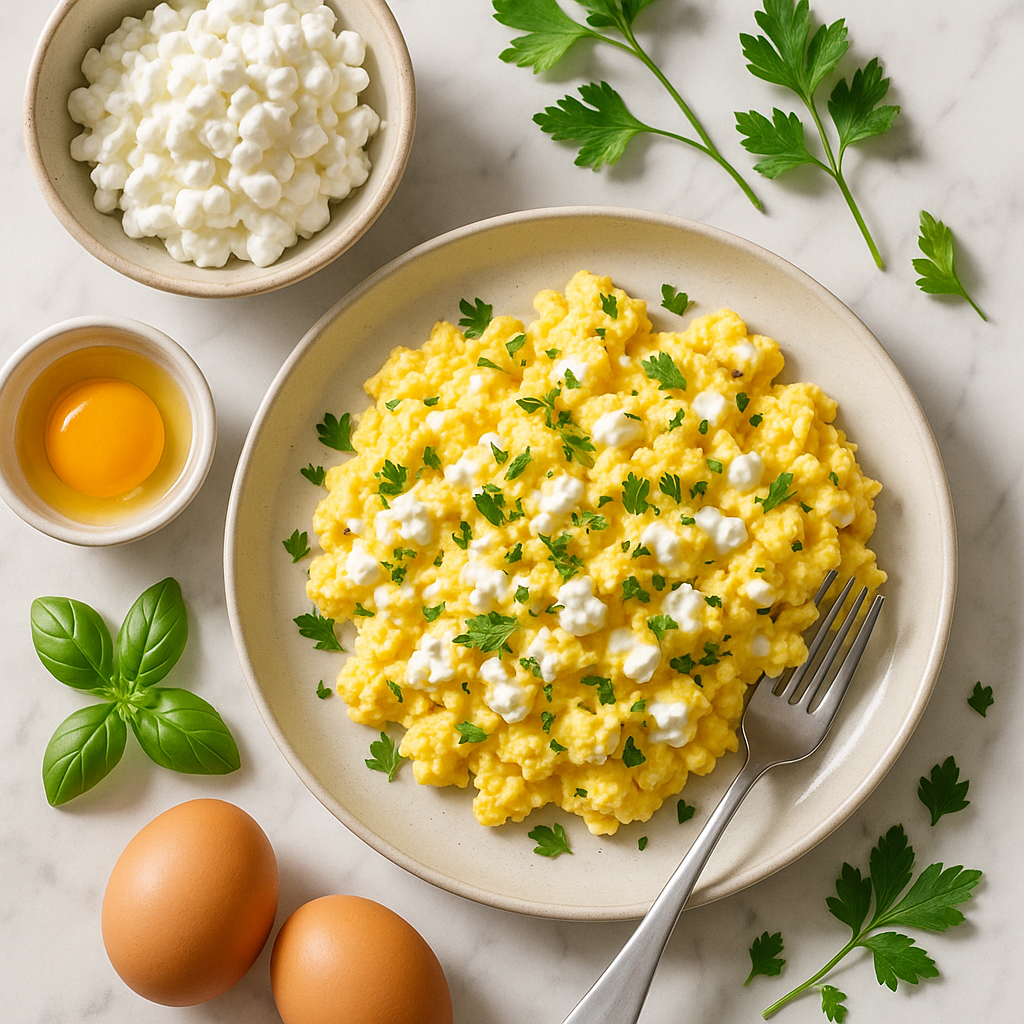
Some mornings call for a breakfast that genuinely sets you up for the day, not just something that fills the gap between waking up and your first coffee. These high protein cottage cheese scrambled eggs with herbs do exactly that. The combination of whole eggs, egg whites and full-fat cottage cheese pushes the protein count well above what regular scrambled eggs can offer, while fresh chives, dill and flat-leaf parsley bring a brightness that makes the whole plate feel like something you actually looked forward to making.
The secret here is the cottage cheese itself. Blending it briefly before adding it to the pan keeps the texture silky rather than lumpy, and it melts into the eggs during cooking to create the kind of soft, creamy curds you usually only get with butter and cream. The difference is that cottage cheese brings casein protein, calcium and a fraction of the saturated fat. A single serving lands at around 215 calories with 22 grams of protein, which is genuinely impressive for a breakfast that takes under ten minutes from fridge to fork. The fibre comes from the handful of baby spinach stirred through at the end, which wilts beautifully without making anything soggy.
Herbs are doing real work here, not just looking pretty. Chives add a gentle onion note that lifts the richness of the eggs without overpowering them. Dill brings a slightly grassy, almost lemony quality that pairs brilliantly with the tang of the cottage cheese. Flat-leaf parsley rounds everything out with clean, fresh flavour. If you only have dried herbs to hand, use them, but halve the quantity because dried herbs are significantly more concentrated. A tiny squeeze of fresh lemon juice stirred in at the very end ties the whole dish together in a way that might surprise you. It does not make the eggs taste citrusy, it just makes every other flavour taste more like itself.
This recipe works beautifully as a standalone breakfast, or served on a slice of wholegrain toast for extra fibre and slow-release carbohydrates. It also pairs well with sliced avocado if you want to add some healthy fats. The low-heat cooking method is intentional and important. Rushing scrambled eggs over high heat gives you rubbery, dry curds and a slightly sulphurous smell. Cooking them low and slow, moving them gently and pulling the pan off the heat a few seconds before they look fully done means the residual warmth finishes the job perfectly. Take your time with these and they will reward you every single morning.
Ingredients
- 2 large free-range eggs (whole eggs)
- 2 large egg whites (from free-range eggs or carton egg whites)
- 3 tablespoons low-fat cottage cheese (blend briefly for smoother texture)
- 1 tablespoon fresh chives (finely chopped)
- 1 tablespoon fresh dill (roughly chopped, stems removed)
- 1 tablespoon fresh flat-leaf parsley (finely chopped)
- 1 large handful baby spinach (approximately 30g)
- 1 teaspoon extra virgin olive oil (for cooking)
- 1 small squeeze fresh lemon juice (just a few drops, stirred in at the end)
- 1 pinch flaky sea salt (to taste)
- 1 pinch freshly ground black pepper (to taste)
- 1 pinch smoked paprika (optional, for a subtle smoky finish)
Instructions
- 1
Add the cottage cheese to a small blender or use a stick blender to blitz it for about 10 seconds until smooth. This step is optional but gives you a much creamier, more uniform texture in the finished eggs.
If you like a little texture and do not mind small curds of cottage cheese in your eggs, simply skip the blending step.
- 2
Crack the 2 whole eggs into a medium bowl, add the egg whites and whisk everything together well until fully combined and slightly frothy. Add the blended cottage cheese and whisk again until evenly incorporated.
Whisking vigorously introduces air, which helps create lighter, fluffier curds.
- 3
Stir in the chopped chives, dill and parsley, along with a pinch of salt and black pepper. Mix well so the herbs are distributed evenly throughout the egg mixture.
Reserve a small pinch of each herb to scatter on top as a garnish once plated.
- 4
Heat a small non-stick pan over a low to medium-low heat. Add the olive oil and let it warm for about 30 seconds. The pan should feel warm but not hot enough to make oil shimmer aggressively.
Low and slow is the rule here. High heat is the enemy of creamy scrambled eggs.
- 5
Pour the egg mixture into the pan. Leave it undisturbed for about 20 seconds until the very edges just begin to set, then use a silicone spatula to gently fold and move the eggs from the outside of the pan toward the centre in slow, deliberate strokes.
Do not stir constantly. Letting the eggs sit briefly between folds creates larger, softer curds.
- 6
When the eggs are about 80 percent set but still look slightly glossy and wet in places, add the baby spinach and fold it gently through the eggs. The residual heat will wilt the spinach within about 30 to 45 seconds.
Pull the pan off the heat a few seconds before the eggs look fully done. Residual heat will finish cooking them perfectly.
- 7
Remove the pan from the heat completely. Add a tiny squeeze of lemon juice and fold through once more. Taste and adjust salt and pepper if needed.
The lemon juice brightens every other flavour in the dish without making the eggs taste citrusy.
- 8
Transfer immediately to a warm plate. Scatter the reserved fresh herbs over the top, add a pinch of smoked paprika if using, and serve straight away while the curds are still soft and glossy.
Serve on wholegrain toast or alongside sliced avocado to make this a more substantial meal.
Nutrition per serving
215kcal
Calories
22g
Protein
3g
Carbs
11g
Fat
1.5g
Fibre
2g
Sugar
340mg
Sodium
Pro Tips
- ✓
Always cook scrambled eggs on low heat. Medium-low is the highest you should go for creamy results.
- ✓
Blending the cottage cheese before adding it to the egg mixture eliminates any lumpy texture and makes the eggs noticeably silkier.
- ✓
Pull the pan from the heat slightly before the eggs look fully cooked. The residual warmth finishes them without overcooking.
- ✓
Fresh herbs make a real difference here. If using dried, use half the stated quantity as dried herbs are more concentrated.
- ✓
Adding a tiny squeeze of lemon juice at the end is a small step with a big payoff. It sharpens every flavour without making anything taste sour.
- ✓
For extra protein, serve alongside a small portion of smoked salmon or a slice of wholegrain toast topped with hummus.
- ✓
A warm plate rather than a cold one helps keep your scrambled eggs at the right temperature from first bite to last.
Frequently Asked Questions
Variations
- •
Mediterranean Style
Add 4 halved cherry tomatoes, a tablespoon of crumbled feta cheese and swap the dill for fresh oregano. The tomatoes soften nicely in the pan alongside the spinach.
- •
Spiced Turmeric Version
Add a quarter teaspoon of ground turmeric and a small pinch of ground cumin to the egg mixture before cooking. Swap the parsley for fresh coriander and finish with a few drops of hot sauce.
- •
Mushroom and Thyme
Saute 6 to 8 sliced chestnut mushrooms in the pan with a little olive oil and fresh thyme leaves before adding the egg mixture. Omit the spinach or add both for extra greens and fibre.
- •
Sun-Dried Tomato and Basil
Stir 2 tablespoons of finely chopped sun-dried tomatoes into the egg mixture and swap all other herbs for fresh torn basil leaves. A small handful of rocket stirred through at the end instead of spinach works beautifully here.
Substitutions
- •fresh chives → spring onion greens (The green tops of spring onions have a very similar mild onion flavour and work just as well here. Use the same quantity.)
- •fresh dill → dried dill (Use half a teaspoon of dried dill in place of one tablespoon of fresh. The flavour is more intense when dried.)
- •baby spinach → kale or watercress (Tender kale leaves work well though they need an extra 30 to 45 seconds to soften. Watercress adds a pleasant peppery bite but only needs about 15 seconds of heat.)
- •low-fat cottage cheese → full-fat cottage cheese (Full-fat cottage cheese gives a richer, creamier result with slightly higher calories and fat. The protein content is similar.)
- •extra virgin olive oil → avocado oil or light coconut oil (Both have a high enough smoke point for this gentle cooking method. Avocado oil is the most neutral in flavour.)
- •fresh flat-leaf parsley → fresh coriander (Coriander gives a distinctly different but equally vibrant flavour. Use it if you enjoy the taste, but be aware it is not to everyone's liking.)
🧊 Storage
Scrambled eggs are best eaten fresh and are not well suited to storing. If you do have leftovers, transfer them to an airtight container and refrigerate for up to 1 day. Reheat very gently in a non-stick pan over the lowest heat possible, adding a splash of water to prevent drying out. Avoid reheating in a microwave if you can, as it tends to make the eggs rubbery.
📅 Make Ahead
You can whisk together the eggs, egg whites, cottage cheese and herbs up to 12 hours in advance and store the mixture covered in the fridge. Give it a good stir before cooking. Do not cook ahead, as scrambled eggs lose their texture quickly once cooked and stored.