High Protein Cottage Cheese Scrambled Eggs with Spinach and Chives
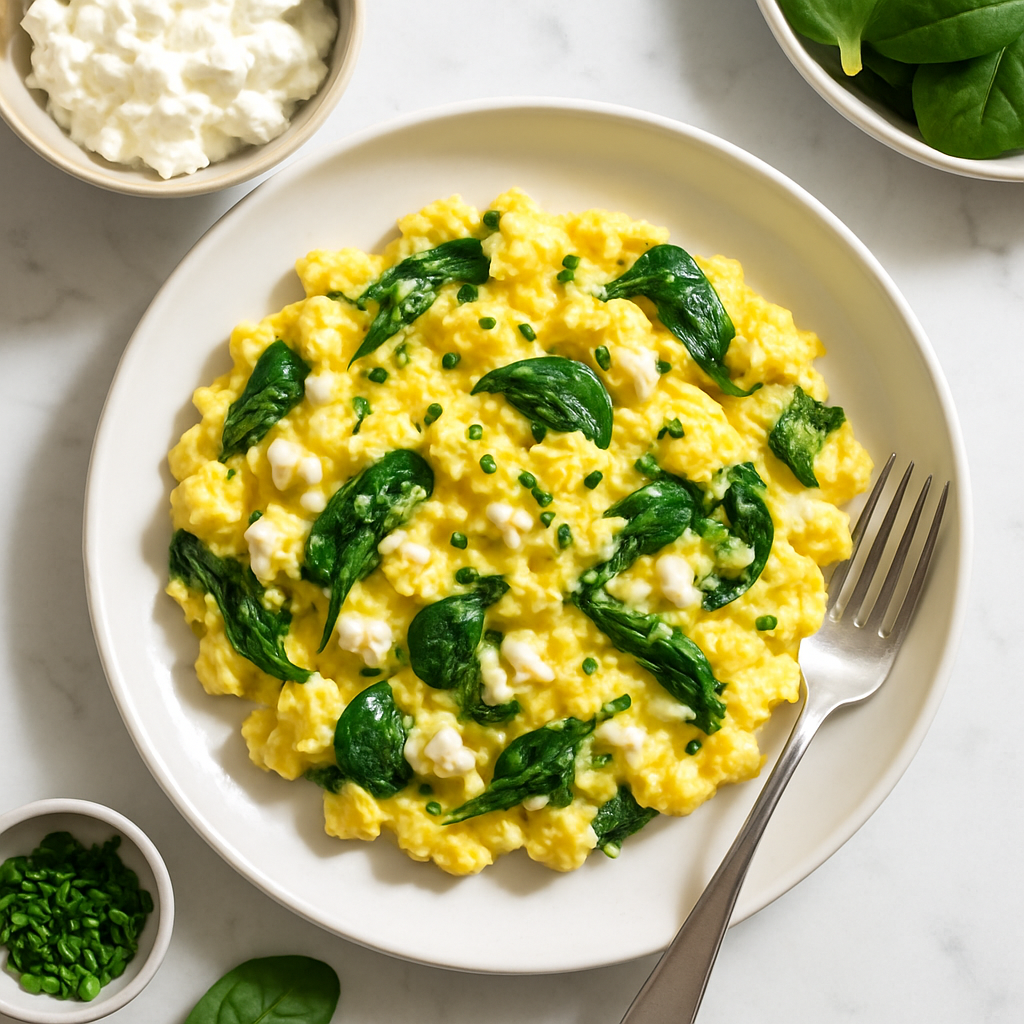
If you have ever wondered how to turn a simple plate of scrambled eggs into a genuinely filling, muscle-fuelling breakfast, cottage cheese is your answer. These high protein cottage cheese scrambled eggs deliver 22 grams of protein per serving without any powders, supplements or complicated techniques. The secret is folding low-fat cottage cheese directly into beaten eggs just before they hit the pan, which creates a texture that is softer and creamier than anything you will get from butter or cream alone.
Cottage cheese is one of those ingredients that earns its place in a healthy kitchen on pure nutritional merit. It is packed with casein protein, a slow-digesting form that keeps you satisfied for hours rather than leaving you hunting for snacks at 10am. When you combine it with whole eggs, you get a full amino acid profile alongside B vitamins, choline and selenium. Adding a handful of baby spinach brings in iron, folate and a little extra fibre, which most of us could honestly use more of at breakfast. The chives add a gentle onion flavour without overpowering anything, plus a lovely pop of green colour.
The cooking method here is worth paying attention to because scrambled eggs can go wrong quickly. Low heat is everything. A medium-low pan and a silicone spatula that keeps things moving gently will give you large, glossy folds rather than dry, rubbery curds. The cottage cheese melts into the eggs as they cook, and you pull the pan off the heat about 30 seconds before you think they are done. Residual heat finishes the job beautifully. Some people worry the cottage cheese will make things watery, and the fix for that is simple: use 2% or full-fat cottage cheese rather than fat-free, drain it briefly if it looks particularly wet, and do not rush the cooking.
This recipe fits neatly into a low-carb or keto lifestyle, sits comfortably within a high-protein meal plan, and takes just six minutes from fridge to table. It works on its own on busy mornings, or you can pile it onto a slice of whole grain toast when you want extra fibre and staying power. The quantities scale up easily if you are cooking for two or doing a small batch for a weekend brunch situation. Once you try eggs made this way, going back to plain scrambled eggs feels like a bit of a downgrade.
Ingredients
- 3 large eggs (free-range if possible)
- 80 g low-fat cottage cheese (2% milkfat recommended, drained briefly if watery)
- 1 handful baby spinach (roughly 20g, fresh)
- 1 tbsp fresh chives (finely chopped)
- 0.3 tsp garlic powder
- 0.1 tsp fine sea salt (adjust to taste)
- 0.1 tsp black pepper (freshly cracked)
- 1 tsp olive oil (or avocado oil)
- 1 pinch red chilli flakes (optional, for a little warmth)
Instructions
- 1
Crack the three eggs into a bowl and beat them well with a fork until the yolks and whites are fully combined and slightly frothy. This takes about 30 seconds of energetic whisking.
Beat thoroughly for a more even, fluffy texture throughout.
- 2
Add the cottage cheese, garlic powder, salt and black pepper to the beaten eggs. Stir everything together gently until combined. You do not need the cottage cheese to fully dissolve, small curds throughout are fine and will melt as they cook.
If your cottage cheese looks watery, tip it into a fine mesh sieve for a minute before adding it.
- 3
Place a small non-stick frying pan over medium-low heat and add the olive oil. Let it warm for about 30 seconds until it shimmers slightly but does not smoke.
Lower heat than you think you need is always better for scrambled eggs. High heat makes them rubbery.
- 4
Add the baby spinach to the pan and stir for about 45 seconds until it wilts down. It will reduce dramatically in volume, which is completely normal.
- 5
Pour the egg and cottage cheese mixture over the wilted spinach. Leave it undisturbed for about 15 seconds until you can see the edges just beginning to set.
Resist the urge to stir immediately. Letting the base set slightly first creates better folds.
- 6
Using a silicone spatula, gently push the eggs from the outside edges of the pan toward the centre in slow, sweeping folds. Continue doing this every 10 to 15 seconds, keeping the heat at medium-low throughout.
Large, slow folds make a big difference to the final texture compared to constant stirring.
- 7
When the eggs look just slightly underdone and still have a soft, glossy sheen, remove the pan from the heat. The residual warmth will finish cooking them to the perfect consistency over the next 30 seconds.
This is the single most important step. Pulling them early is the difference between creamy and dry.
- 8
Transfer to a plate immediately. Scatter the fresh chives over the top, add a pinch of red chilli flakes if you like, and serve straight away.
Nutrition per serving
285kcal
Calories
22g
Protein
4g
Carbs
18g
Fat
1g
Fibre
2g
Sugar
480mg
Sodium
Pro Tips
- ✓
Use 2% milkfat cottage cheese rather than fat-free for a creamier result and better texture.
- ✓
Always cook scrambled eggs on medium-low heat. Patience here is what separates good eggs from great ones.
- ✓
Pull the pan off the heat while the eggs still look slightly wet. They will finish cooking from the residual heat of the pan.
- ✓
Fresh chives add the best flavour, but dried chives work fine if that is what you have to hand.
- ✓
If you want to scale this up for two people, use 5 eggs and 150g cottage cheese and use a wider pan so the eggs cook evenly.
- ✓
Serve immediately because scrambled eggs do not wait well. Have your plate and toppings ready before you start cooking.
Frequently Asked Questions
Variations
- •
Mushroom and Thyme
Swap the spinach for 60g of sliced chestnut mushrooms, cooked down in the pan for 3 minutes before adding the egg mixture. Add a small pinch of dried thyme along with the garlic powder for an earthy, savoury flavour.
- •
Sun-Dried Tomato and Basil
Stir 2 tablespoons of chopped sun-dried tomatoes directly into the egg mixture before cooking, and finish the plate with a few torn fresh basil leaves instead of chives. This version has a Mediterranean feel and pairs beautifully with whole grain toast.
- •
Smoked Salmon Upgrade
Skip the spinach and instead lay a few thin slices of smoked salmon over the finished eggs on the plate. The cold silky salmon against the warm creamy eggs is a brilliant contrast, and it pushes the protein content even higher.
- •
Spiced Turmeric
Add a quarter teaspoon of ground turmeric and a small pinch of cumin to the egg mixture. This gives the eggs a warm golden colour and an anti-inflammatory boost. Finish with a squeeze of fresh lemon juice over the plate.
Substitutions
- •Baby spinach → Kale or rocket (Kale needs an extra minute in the pan to soften properly. Rocket can be scattered raw over the finished eggs instead of cooking it.)
- •Fresh chives → Spring onion greens or dried chives (Finely sliced spring onion greens give a slightly stronger onion flavour. Use half a teaspoon of dried chives if fresh are not available.)
- •Olive oil → Avocado oil or a light spray of cooking oil (Avocado oil has a higher smoke point and a neutral flavour. A cooking spray works well if you are keeping calories very low.)
- •Cottage cheese → Ricotta cheese (Ricotta gives a slightly richer, less tangy result and a smoother texture. The protein content is a little lower but still a solid addition.)
- •Whole eggs → 2 whole eggs plus 2 egg whites (This reduces fat and calories while keeping protein high. The texture will be slightly less rich but still very good with the cottage cheese helping to compensate.)
🧊 Storage
Scrambled eggs are best eaten immediately after cooking. If you have leftovers, store them in an airtight container in the fridge for up to 1 day. Reheat gently in a pan on low heat with a tiny splash of water to help revive the texture. Avoid microwaving if possible as it makes them rubbery.
📅 Make Ahead
You can whisk together the eggs and cottage cheese the evening before and store the mixture in a sealed container or jar in the fridge overnight. Give it a quick stir before cooking. This saves about 2 minutes in the morning and the texture is not affected.