Gluten Free Banana Oat Muffins (Healthy, High Protein)
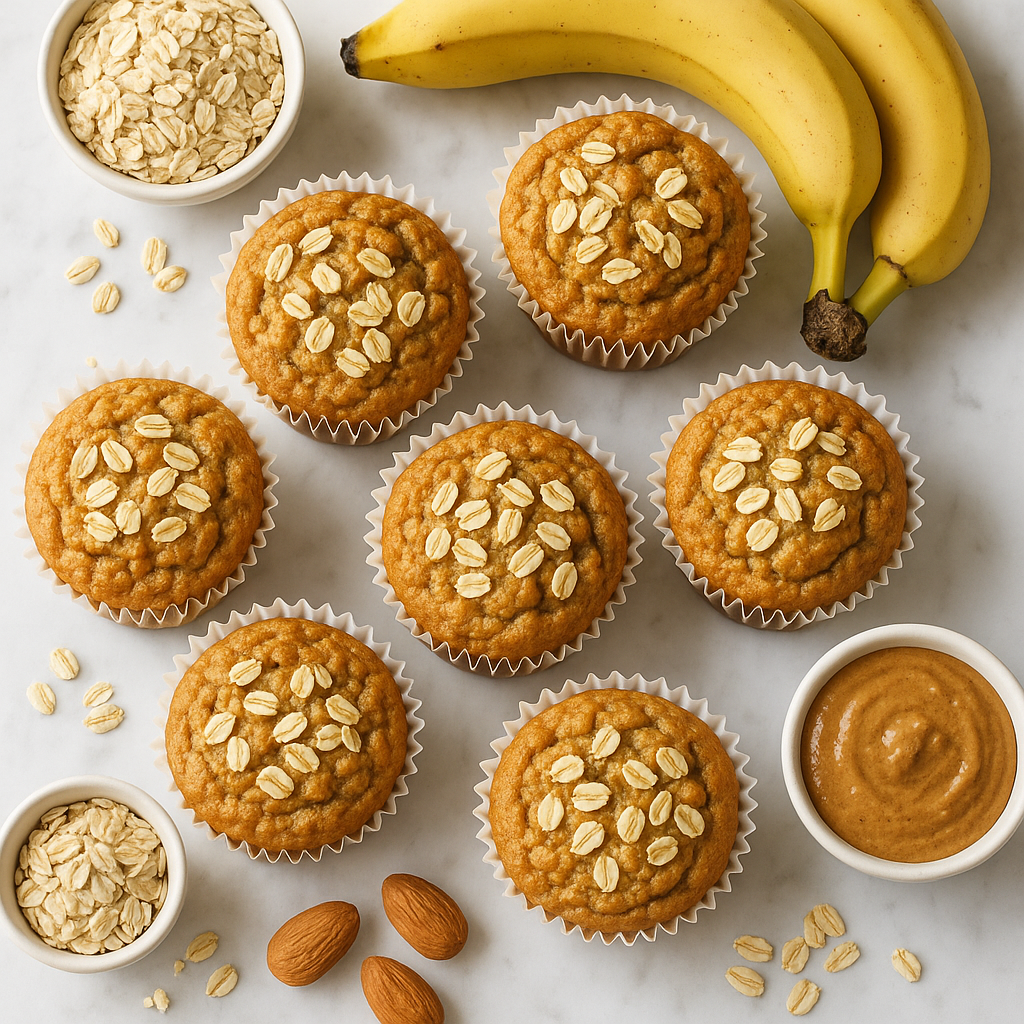
If you have a bunch of overripe bananas sitting on your counter, this recipe is calling your name. These gluten free banana oat muffins are genuinely healthy, not just marketed that way. We are talking higher protein, lower sugar, more fibre, and fewer calories than the traditional coffee shop version. The base uses a combination of certified gluten free oat flour and almond flour, which gives you that soft, tender crumb without any gummy texture that gluten free baking sometimes brings. A big scoop of plain Greek yogurt quietly boosts the protein content and keeps every muffin wonderfully moist. No one will guess.
The sweetness here comes almost entirely from the ripe bananas themselves, with just a small amount of pure maple syrup added to round things out. Ripe bananas are nature's dessert. The darker and spottier they are, the sweeter and more intensely flavoured your muffins will be. We use three medium bananas, which sounds like a lot but it replaces most of the added fat and sugar you would normally need. Two eggs and a tablespoon of chia seeds work together to bind everything and add a quiet fibre boost that you genuinely will not taste. A splash of vanilla and a generous pinch of cinnamon bring warmth and depth, turning a simple healthy muffin into something that actually feels like a treat.
These muffins come together in a single bowl, which matters on a busy morning. You mash the bananas, whisk in the wet ingredients, fold in the dry, and fill your muffin tin. That is genuinely it. The whole process from start to finish takes around 30 minutes, and the smell coming out of your oven will make the wait very much worth it. Each muffin delivers around 7 grams of protein, 3 grams of fibre and sits at roughly 185 calories, which means you can have two alongside a coffee and still feel properly fuelled rather than sluggish. They are sturdy enough to pack in a lunchbox, freeze beautifully, and reheat in 20 seconds flat.
If you are new to gluten free baking, this recipe is a brilliant starting point because the technique is forgiving and the ingredients are straightforward. Certified gluten free oats are widely available in most supermarkets now, and you can blend rolled oats into oat flour at home in about 30 seconds using a blender or food processor if you cannot find pre-made oat flour. Almond flour also contributes healthy monounsaturated fats, vitamin E and extra protein, making it a far more nutritious choice than plain rice flour or white gluten free blends. Altogether, these are the kind of gluten free banana oat muffins that genuinely belong in your healthy breakfast rotation, not just your occasionally-I-feel-like-baking one.
Ingredients
- 3 medium very ripe bananas (mashed, about 1 cup mashed, the spottier the better)
- 2 large eggs (room temperature)
- 120 g plain full-fat Greek yogurt (about half a cup, adds protein and moisture)
- 3 tbsp pure maple syrup (or raw honey)
- 2 tbsp coconut oil (melted and slightly cooled)
- 1 tsp pure vanilla extract
- 160 g certified gluten free oat flour (about 1.5 cups, blend rolled oats if needed)
- 80 g blanched almond flour (about three-quarters of a cup, not almond meal)
- 1 tbsp chia seeds (adds fibre and binding)
- 1.5 tsp baking powder (check it is gluten free certified)
- 0.5 tsp bicarbonate of soda
- 1.5 tsp ground cinnamon
- 0.3 tsp fine sea salt
- 40 g dark chocolate chips (optional, use 70% or higher for less sugar)
- 2 tbsp certified gluten free rolled oats (for topping, optional)
Instructions
- 1
Preheat your oven to 180 C (350 F) fan forced, or 190 C (375 F) conventional. Line a standard 12-hole muffin tin with paper liners or grease it well with coconut oil.
Paper liners make cleanup easy and stop any sticking, which can be more of an issue with gluten free baked goods.
- 2
Peel the ripe bananas and add them to a large mixing bowl. Mash thoroughly with a fork until almost no large lumps remain. A few small lumps are absolutely fine and add texture.
The riper and darker your bananas, the sweeter your muffins will be, which means you can reduce the maple syrup if you like.
- 3
Add the eggs, Greek yogurt, maple syrup, melted coconut oil and vanilla extract to the mashed banana. Whisk everything together until smooth and well combined.
Make sure your coconut oil is not too hot or it may scramble the eggs. Let it cool for a couple of minutes after melting.
- 4
Add the oat flour, almond flour, chia seeds, baking powder, bicarbonate of soda, cinnamon and salt directly to the wet ingredients. Fold gently with a spatula until just combined. Do not overmix.
Overmixing can make any muffin dense and tough. Stop folding as soon as you can no longer see dry flour streaks.
- 5
If using chocolate chips, fold them in now with a few gentle strokes. Let the batter rest in the bowl for 3 minutes while you get your muffin tin ready. This short rest allows the oat flour to absorb the moisture and gives a better texture.
- 6
Divide the batter evenly between the 12 muffin holes, filling each about three-quarters full. Scatter a few rolled oats on top of each muffin if you like the look and a little extra texture.
An ice cream scoop makes dividing the batter quick and mess-free, and helps all your muffins come out the same size.
- 7
Bake for 20 to 22 minutes until the tops are golden and a toothpick inserted into the centre of a muffin comes out clean with no wet batter attached.
Gluten free muffins can look set on top before they are fully cooked inside, so always do the toothpick test rather than going by colour alone.
- 8
Remove the tin from the oven and allow the muffins to cool in the tin for 5 minutes, then transfer them to a wire rack to cool completely. They firm up nicely as they cool.
Resist the urge to eat one immediately if you can. Gluten free baked goods continue to set as they cool and the texture is noticeably better after 10 minutes on the rack.
Nutrition per serving
185kcal
Calories
7g
Protein
22g
Carbs
8g
Fat
3g
Fibre
8g
Sugar
145mg
Sodium
Pro Tips
- ✓
Use certified gluten free oats and oat flour if you have coeliac disease, as regular oats are often cross-contaminated with wheat.
- ✓
Freeze bananas ahead of time when they go very ripe. Thaw them at room temperature and drain the extra liquid before mashing.
- ✓
Do not swap almond flour for coconut flour in a 1:1 ratio. Coconut flour absorbs far more liquid and will make the batter too dry.
- ✓
Adding a tablespoon of ground flaxseed alongside the chia seeds increases the omega-3 content and adds more fibre without affecting flavour.
- ✓
For extra protein, stir in 2 tablespoons of unflavoured or vanilla protein powder and add an extra tablespoon of Greek yogurt to balance the moisture.
- ✓
These muffins are best eaten within 3 days at room temperature, but taste just as good straight from the freezer when reheated.
Frequently Asked Questions
Variations
- •
Peanut Butter Banana Oat Muffins
Swirl 2 tablespoons of natural peanut butter into the batter after filling the muffin tin. Use a toothpick to create a marbled effect on top. This adds healthy fats and extra protein while complementing the banana flavour brilliantly.
- •
Blueberry Banana Oat Muffins
Fold 80 g of fresh or frozen blueberries into the batter in place of chocolate chips. Frozen blueberries work especially well and add a beautiful purple swirl throughout each muffin. No need to thaw them first.
- •
Walnut and Banana Oat Muffins
Fold 50 g of roughly chopped walnuts into the batter for added crunch, omega-3 fatty acids and a nutty depth that pairs perfectly with cinnamon and banana. Scatter a few halved walnuts on top before baking for a nice visual finish.
- •
Chocolate Banana Protein Muffins
Add 2 tablespoons of raw cacao powder and 2 tablespoons of vanilla protein powder to the dry ingredients. Reduce the oat flour by 2 tablespoons to compensate. The result is a rich, chocolatey muffin that still hits your protein targets for the morning.
Substitutions
- •Greek yogurt → Unsweetened coconut yogurt or thick dairy-free yogurt (Use the same quantity. Makes the recipe fully dairy free without affecting the texture noticeably.)
- •Maple syrup → Raw honey or date syrup (Use the same amount. Date syrup adds extra fibre and a slight caramel flavour that works beautifully with banana.)
- •Coconut oil → Light olive oil or avocado oil (Use the same quantity. These oils have a more neutral flavour if you prefer not to taste any coconut in your muffins.)
- •Almond flour → Sunflower seed flour or extra oat flour (Sunflower seed flour is a great nut-free alternative with a similar fat content. Using extra oat flour alone will make the muffins slightly less rich but still delicious.)
- •Eggs → Flax eggs (1 tbsp ground flaxseed plus 3 tbsp water per egg) (Allow each flax egg to gel for 5 minutes before using. Makes the recipe fully vegan and egg free.)
- •Chia seeds → Ground flaxseed (Use the same quantity. Ground flaxseed provides similar binding and fibre benefits.)
🧊 Storage
Store cooled muffins in an airtight container at room temperature for up to 3 days. For longer storage, refrigerate for up to 5 days. To freeze, wrap each muffin individually in cling film or place them in a zip-lock freezer bag and freeze for up to 3 months. Reheat from frozen in the microwave for 20 to 30 seconds or in an oven at 160 C for 8 minutes.
📅 Make Ahead
These muffins are an ideal meal prep breakfast. Bake a full batch on Sunday and store in the freezer in individual portions. Pull one out the night before and let it thaw in the fridge overnight, or reheat straight from frozen in the morning. The batter can also be mixed the night before and stored covered in the fridge for up to 12 hours before baking.