Baked Egg and Spinach Breakfast Cups Low Calorie with Feta and Sun-Dried Tomato
Baked Egg and Spinach Breakfast Cups Low Calorie with Feta and Sun-Dried Tomato deliver a genuinely satisfying morning meal at only 85 calories per cup, with 7 grams of protein packed into each small, self-contained portion. That protein-to-calorie ratio is what sets these apart from most grab-and-go breakfast options. A standard muffin or croissant gives you calories without much nutritional return, whereas these cups work hard in both directions, keeping calories low while fueling your body with real, whole ingredients. Each cup holds together beautifully, making it easy to eat on busy mornings without needing a plate. The format also matters practically. You bake a full batch of twelve at once, which means one cooking session covers your breakfasts for nearly two weeks if you freeze them. That kind of efficiency is rare in recipes that also taste genuinely good. These are not diet food in the depressing sense. They are a smart, well-seasoned recipe that happens to fit neatly into a low-calorie, high-protein approach to eating.
The ingredient list here is doing specific, intentional work. The twelve large eggs form the base and carry the bulk of the protein, contributing roughly six grams of protein per egg along with essential B vitamins, choline, and healthy fats. Using three cups of tightly packed baby spinach adds volume, colour, and a meaningful dose of iron, folate, and vitamin K, all without adding significant calories or carbohydrates. The reduced-fat feta cheese brings saltiness, creaminess, and a small additional protein boost while keeping saturated fat lower than full-fat cheeses would. Sun-dried tomatoes packed in water rather than oil are important here. The water-packed variety contributes concentrated tomato flavour, lycopene, and a slight chew without the excess oil and calories that oil-packed versions carry. Garlic provides allicin, which has well-documented anti-inflammatory properties. Smoked paprika and dried oregano are not filler seasonings. They add depth that makes these cups taste far more complex than their ingredient list suggests. The almond milk keeps the egg mixture tender without adding dairy-heavy saturated fat.
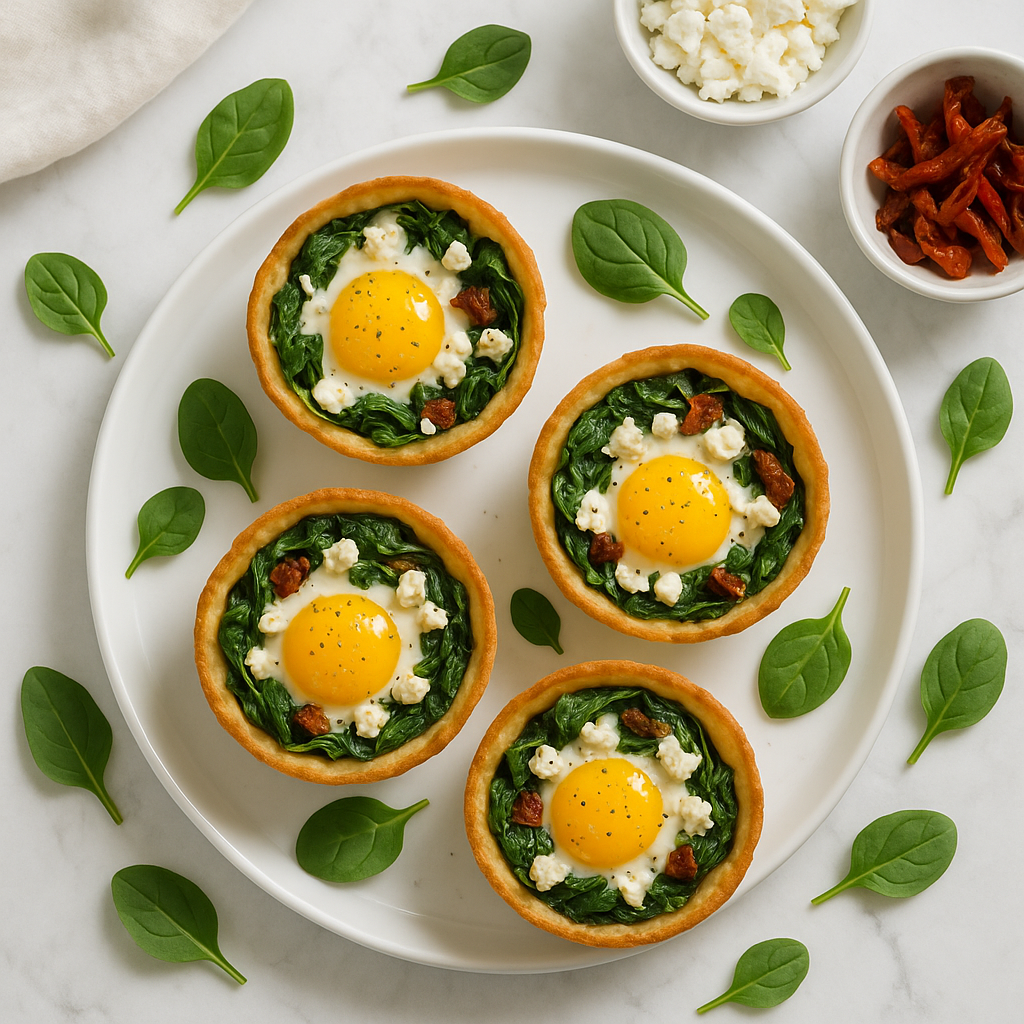
The finished cups come out of the oven with gently set, slightly springy centres and lightly golden edges where the egg meets the muffin tin. The baby spinach wilts inside during baking and creates streaks of deep green throughout the pale egg, which makes each cup look colourful and appetising. The feta stays soft rather than melting fully, so you get small, slightly creamy pockets distributed through the egg. The sun-dried tomatoes add a chewy, intensely savoury contrast. The smell coming out of the oven is warm and herby, with smoked paprika giving a subtle, slightly smoky background note. The texture overall is firmer than a scrambled egg but much softer than a fully baked frittata. Spraying the muffin tin well with olive oil cooking spray is essential to getting the cups to release cleanly without tearing. The garlic softens as it bakes into the egg mixture, losing its raw sharpness and becoming mellow and sweet. Fresh chives scattered on top just before serving add a mild onion note and a pop of green colour.
These cups are built for specific health goals. The macros, 7 grams of protein, 2 grams of carbohydrates, and 5 grams of fat at 85 calories, make them straightforwardly compatible with a ketogenic diet, a low-carb approach, or a calorie-controlled eating plan. They are gluten-free without any modification, making them safe for anyone with coeliac disease or gluten sensitivity. For people managing blood sugar levels, the very low carbohydrate content means these cups cause minimal glucose response compared to grain-based breakfasts. The high protein content supports muscle retention, which matters for anyone doing strength training, recovering from illness, or managing weight through a calorie deficit. Two or three cups at breakfast gives you 14 to 21 grams of protein, which is enough to maintain satiety well into the late morning. Older adults who need to prioritise protein intake without eating large volumes of food will find these practical. They are also a genuinely useful option for anyone returning to cooking after a period of relying on convenience food, because the technique is forgiving and the results are consistent.
These cups are designed with meal prep in mind from the start. You can prepare the full batch on a Sunday and refrigerate them for up to four days in an airtight container. They reheat in thirty seconds in a microwave or five minutes in a low oven. For longer storage, place cooled cups on a baking tray, freeze until solid, then transfer to a freezer bag where they will keep well for up to three months. Reheat from frozen in the microwave for about ninety seconds. For variations, swap the feta for goat's cheese if you want a creamier, tangier result. You can replace the baby spinach with finely chopped kale or Swiss chard, though kale benefits from a brief sauté first to soften it before adding it to the egg mixture. A small amount of diced roasted red pepper works well in place of the sun-dried tomatoes if you prefer a milder, sweeter flavour profile. You can also add a small amount of lean turkey or chicken mince, cooked and crumbled, to push the protein content higher still. All of the specific quantities and the full method are in the recipe card below.
Ingredients
- 12 large eggs (free-range if possible)
- 3 cups baby spinach, tightly packed (wilted before use)
- 3 tablespoons unsweetened almond milk (or any low-calorie milk of choice)
- 80 g reduced-fat feta cheese (crumbled)
- 60 g sun-dried tomatoes in water (drained and roughly chopped, not in oil)
- 2 cloves garlic (finely minced)
- 1 teaspoon dried oregano
- 0.5 teaspoon smoked paprika
- 0.3 teaspoon black pepper, freshly ground
- 0.3 teaspoon fine sea salt (optional, feta adds saltiness)
- 1 spray olive oil cooking spray (for greasing the muffin tin)
- 2 tablespoons fresh chives (finely chopped, for garnish)
Instructions
- 1
Preheat your oven to 190 degrees Celsius (375 degrees Fahrenheit). Spray a 12-hole standard muffin tin generously with olive oil cooking spray, making sure to coat the sides as well as the base of each cup.
A silicone muffin tray works even better here as the cups release without any sticking at all.
- 2
Place a non-stick pan over medium heat. Add the baby spinach and the minced garlic and toss for about 2 minutes until the spinach has fully wilted down. Remove from the heat and allow to cool for a couple of minutes, then press the spinach gently with the back of a spoon to squeeze out any excess moisture.
Removing the moisture from the spinach is the most important step. Watery cups are the number one reason people end up disappointed with this style of recipe.
- 3
Divide the wilted spinach mixture evenly between the 12 muffin holes, pressing it gently into the base and slightly up the sides to create a small nest shape in each cup.
- 4
Scatter the chopped sun-dried tomatoes evenly over the spinach in each cup. Follow with the crumbled feta, distributing it as evenly as you can across all 12 cups.
- 5
In a small bowl or jug, lightly whisk together 8 of the 12 eggs with the almond milk, smoked paprika, dried oregano, black pepper and salt if using. Pour a small amount of this egg mixture into each cup, filling them roughly one-third of the way up.
Using a jug with a spout makes pouring the egg mixture into the cups much neater and quicker.
- 6
Carefully crack one whole egg into each of the remaining 4 cups so that the yolk sits whole on top of the filling. Then add a spoonful of the whisked egg mixture to the remaining 8 cups to finish filling them to about three-quarters full. This gives you a mix of whole-yolk cups and scrambled-style cups in the same batch.
If you prefer all cups to have a whole cracked egg, simply skip the whisked egg mixture and crack one egg into each of the 12 cups instead.
- 7
Slide the tray into the preheated oven and bake for 15 to 18 minutes. The egg whites should be fully set and the tops should look just slightly puffed. If you like a firmer yolk, give them the full 18 minutes.
Start checking at 15 minutes. Overbaking will make the eggs rubbery, so it is better to pull them slightly early.
- 8
Remove the tray from the oven and allow the cups to cool in the tin for 3 to 4 minutes before running a thin butter knife or small spatula around the edge of each cup to loosen them. Lift them out gently, scatter with fresh chives and serve warm.
Nutrition per serving
85kcal
Calories
7g
Protein
2g
Carbs
5g
Fat
0.5g
Fibre
1g
Sugar
180mg
Sodium
Pro Tips
- ✓
Always wilt and drain the spinach before baking. Excess moisture is the main cause of soggy, undercooked cups.
- ✓
Do not overfill the muffin cups. Filling to three-quarters full gives the egg room to puff up without overflowing.
- ✓
Let the cups rest in the tin for a few minutes after baking. They firm up as they cool and release much more cleanly.
- ✓
Sun-dried tomatoes packed in water rather than oil keep the calorie count significantly lower without losing any flavour.
- ✓
For a more golden top, switch the oven to the grill setting for the final 2 minutes of cooking.
- ✓
Add a pinch of chilli flakes to the egg mixture if you like a gentle kick of heat in the morning.
Frequently Asked Questions
Variations
- •
Mediterranean Artichoke
Swap the sun-dried tomatoes for chopped marinated artichoke hearts and add a few sliced black olives. Sprinkle with a little dried thyme instead of oregano for a slightly different herby note.
- •
Spicy Turkey Sausage
Add a small amount of cooked, crumbled turkey sausage to the base of each cup before the spinach. This bumps the protein content up further and makes each cup more substantial for bigger appetites.
- •
Mushroom and Thyme
Sauté finely diced mushrooms with the garlic and spinach for an earthy, umami-rich version. Replace the oregano with fresh thyme leaves and skip the feta for a fully dairy free option.
- •
Roasted Red Pepper and Goat Cheese
Replace the feta with a small amount of crumbled soft goat cheese and swap the sun-dried tomatoes for finely chopped jarred roasted red peppers. The combination is slightly sweeter and very satisfying.
Substitutions
- •Almond milk → Oat milk or skimmed dairy milk (Any low-fat milk works here. The quantity is small so it will not significantly affect the flavour or calorie count.)
- •Reduced-fat feta → Crumbled firm tofu with nutritional yeast (Use the same quantity and add half a teaspoon of nutritional yeast for a dairy free, similarly savoury result.)
- •Baby spinach → Chopped kale or Swiss chard (Both work well but take a minute longer to wilt down in the pan. Chop kale finely before cooking for the best texture in the cups.)
- •Sun-dried tomatoes in water → Fresh cherry tomatoes, halved (Fresh tomatoes will release a little more moisture so pat them dry with a kitchen towel before adding to the cups.)
- •Fresh chives → Spring onion greens or fresh parsley (Both add a fresh herby finish. Spring onion has a slightly stronger flavour so use a little less if you prefer a milder garnish.)
🧊 Storage
Store cooled cups in an airtight container in the refrigerator for up to 5 days. To reheat, microwave individual cups for 40 to 50 seconds. You can also reheat them in a 170 degree Celsius oven for 8 minutes if you prefer a less rubbery texture. Freeze for up to 2 months in a sealed freezer-safe bag.
📅 Make Ahead
These cups are ideal for Sunday meal prep. Bake the full batch, cool completely, and refrigerate. They hold their texture and flavour well throughout the working week. For best results, add the fresh chive garnish just before serving rather than before storing.