Avocado Baked Eggs in Shell Healthy Breakfast with Chilli and Dukkah
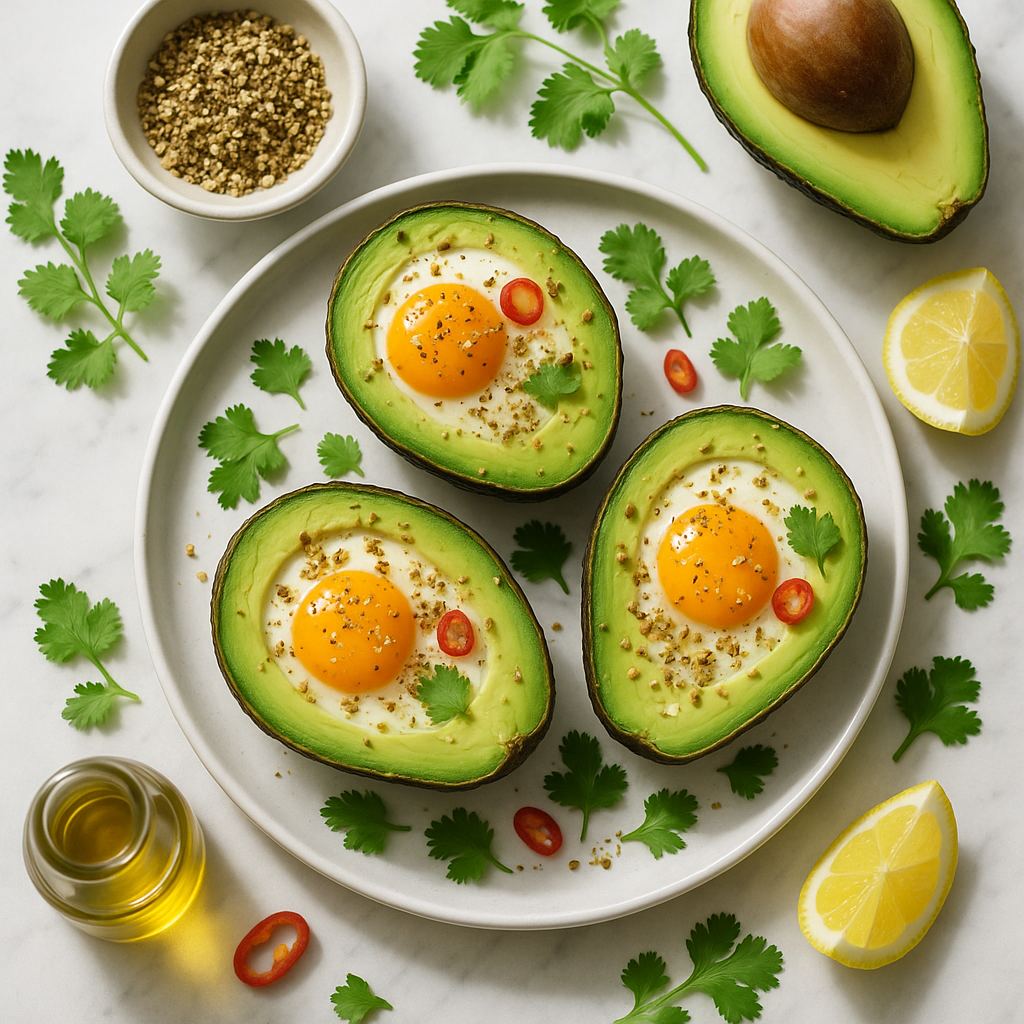
There is something wonderfully satisfying about cracking into a baked avocado shell and finding a perfectly set egg nestled inside. This avocado baked eggs in shell healthy breakfast takes that simple concept and builds on it with bold flavour, smart nutrition, and a few clever touches that make it feel genuinely special on a weekday morning. It is one of those meals that looks far more impressive than the effort it requires, and your body will thank you long before lunchtime.
What makes this version genuinely healthier than most you will find is the combination of ingredients working together. Avocados bring heart-healthy monounsaturated fats, potassium, and a generous hit of dietary fibre that keeps you full without any bloating. The eggs sitting inside each avocado half are a complete protein source, delivering all nine essential amino acids in one neat little package. On top of that, a sprinkle of homemade-style dukkah, which is a fragrant blend of crushed nuts, seeds, and warm spices, adds extra protein, healthy fats, and a satisfying crunch without any added sugar or unnecessary calories. A pinch of dried chilli flakes brings a gentle warmth that fires up your metabolism, while fresh lemon juice brightens everything and helps your body absorb the iron from the egg yolk more efficiently. Together, this breakfast clocks in at around 290 calories per serving with over 13 grams of protein and nearly 8 grams of fibre. That is a seriously impressive nutritional profile for something that takes only 25 minutes from start to finish.
The technique here is straightforward, but a couple of small details make all the difference. First, you need to scoop out a little extra flesh from the avocado cavity before adding the egg. Most avocado baked egg recipes skip this step, which is why the egg overflows and you end up with a messy oven tray. Removing just a tablespoon of flesh from each half creates enough space for the egg white to settle properly. Keep that scooped-out avocado flesh and mash it onto your plate as a base, because wasting it would be a shame. Second, placing the avocado halves in a muffin tin or snug baking dish keeps them upright and steady during cooking, so the yolk stays centred and the white bakes evenly. These two small habits turn a good idea into a genuinely great result every single time.
This recipe is naturally gluten free, dairy free, and paleo friendly, which means it fits comfortably into a wide range of eating styles without requiring any substitutions. It also works beautifully as part of a meal prep routine. You can prep the avocados, pre-measure your toppings, and have everything ready to go the night before, so your morning is as low-stress as possible. Serve these straight from the oven with a side of rocket leaves dressed in a little lemon and olive oil, or alongside a slice of toasted gluten free sourdough if you want something more substantial. However you plate it, this is the kind of breakfast that genuinely sets a positive tone for the whole day.
Ingredients
- 1 large ripe but firm avocado (halved and pitted)
- 2 large free-range eggs (as fresh as possible for a firmer white)
- 1 teaspoon extra virgin olive oil (for drizzling)
- 1 teaspoon fresh lemon juice (squeezed just before serving)
- 1 tablespoon dukkah (store-bought or homemade nut and seed blend)
- 0.3 teaspoon dried chilli flakes (adjust to your heat preference)
- 1 tablespoon fresh flat-leaf parsley (roughly chopped)
- 1 pinch flaky sea salt
- 1 pinch freshly ground black pepper
- 1 tablespoon sesame seeds (lightly toasted, for extra crunch and calcium)
- 0.5 teaspoon smoked paprika (adds depth and colour without extra calories)
Instructions
- 1
Preheat your oven to 200 degrees Celsius, or 180 degrees fan. Place a standard 6-cup muffin tin on your bench and set it aside.
The muffin tin is the key to keeping your avocado halves stable. Wobbly avocados lead to uneven eggs.
- 2
Halve the avocado and remove the pit. Using a teaspoon, scoop out about one tablespoon of flesh from the centre of each half to widen the cavity slightly. Place the scooped flesh onto your serving plates and set aside.
Do not skip the scooping step. A standard avocado cavity is too small for a whole egg, and skipping this causes the white to spill over the sides.
- 3
Sit each avocado half, cut side up, in a cup of the muffin tin. Gently crack one egg into a small bowl first, then carefully pour it into the avocado cavity. This two-step method gives you control over where the yolk lands.
If your egg white immediately starts running, your avocado may be too ripe or the cavity too small. Add the white gradually, pausing if needed.
- 4
Season each egg with a pinch of flaky sea salt, black pepper, and smoked paprika. Drizzle the olive oil lightly over the tops.
- 5
Carefully transfer the muffin tin to the centre rack of your preheated oven. Bake for 12 to 15 minutes, depending on how you like your yolk. Twelve minutes gives a runny yolk with just-set whites. Fifteen minutes gives a fully set, jammy yolk.
Check at the 12-minute mark by gently shaking the tin. The whites should not wobble, but a slight jiggle in the centre yolk means it is still runny.
- 6
While the avocados bake, mash the reserved avocado flesh on each plate with a small fork. Add a squeeze of lemon juice and a tiny pinch of salt, then spread it as a thin base on the plate.
- 7
Remove the muffin tin from the oven using oven mitts. Let the avocados rest for one minute before carefully lifting them out with a spoon. Place each baked avocado half on the mashed avocado base.
A serving spoon slid underneath the avocado lifts it out cleanly without cracking the skin.
- 8
Finish each avocado with a scattering of dukkah, toasted sesame seeds, chilli flakes, and freshly chopped parsley. Add a final squeeze of lemon juice and serve immediately.
Serve within two minutes of finishing for the best texture contrast between the warm egg and the cool avocado shell.
Nutrition per serving
290kcal
Calories
13g
Protein
9g
Carbs
23g
Fat
8g
Fibre
1g
Sugar
210mg
Sodium
Pro Tips
- ✓
Choose avocados that are just ripe, giving slightly under gentle pressure. Overripe avocados will collapse in the oven and release too much liquid.
- ✓
Crack eggs into a small bowl before pouring into the avocado. This lets you fish out any shell and control the pour much more precisely.
- ✓
Room temperature eggs bake more evenly than cold eggs straight from the fridge. Take them out 10 minutes before you start.
- ✓
If you want to cook more than two servings at once, use a large baking dish filled with crumpled foil to cradle each avocado half upright.
- ✓
Dukkah varies widely by brand. Look for one with hazelnuts, sesame, cumin, and coriander for the most complex flavour against the creamy egg and avocado.
- ✓
Adding lemon juice to the mashed avocado base before serving prevents browning and adds a brightness that balances the richness of the baked egg.
Frequently Asked Questions
Variations
- •
Smoked Salmon and Dill
Replace the dukkah with a few thin slices of smoked salmon folded on top after baking, plus a scattering of fresh dill and a dollop of low-fat cream cheese. This boosts the omega-3 content significantly and adds a luxurious brunch feel.
- •
Turkey Bacon and Chive
Crisp up two slices of turkey bacon in a dry pan, crumble them, and scatter over the baked avocado eggs just before serving. Snip fresh chives over the top. This adds extra protein and a savoury depth without any pork products.
- •
Caprese Style
After baking, top with halved cherry tomatoes, a few torn basil leaves, and a very light drizzle of balsamic glaze. Skip the dukkah for this version. The result is fresh, bright, and Italian-inspired.
- •
Spiced Za'atar
Swap the dukkah for a generous pinch of za'atar and a tiny crumble of low-fat feta cheese. Add a drizzle of pomegranate molasses for a sweet-sour contrast. This version leans into Middle Eastern breakfast flavours beautifully.
Substitutions
- •Dukkah → Za'atar or Everything Bagel Seasoning (Both deliver texture and flavour complexity without adding significant calories. Everything bagel seasoning adds a savoury, slightly salty crunch that works very well with egg and avocado.)
- •Fresh parsley → Fresh coriander or fresh chives (Coriander adds a brighter, more citrusy note. Chives are milder and more neutral. Both work well and keep the dish fresh tasting.)
- •Smoked paprika → Sweet paprika or ground cumin (Sweet paprika is milder and less smoky. Ground cumin adds a warmer, earthier spice note that pairs nicely with the chilli flakes.)
- •Sesame seeds → Hemp seeds or sunflower seeds (Hemp seeds add extra protein and omega-3s. Sunflower seeds add a mild crunch with a nutty flavour. Both are allergy-friendly alternatives.)
- •Lemon juice → Lime juice (Lime juice works equally well and adds a slightly more tropical brightness. Use the same quantity as the lemon juice in the recipe.)
🧊 Storage
Avocado baked eggs are best eaten immediately after cooking. If you do have leftovers, store them in an airtight container in the refrigerator for up to one day. Reheat gently in an oven at 160 degrees Celsius for 5 minutes rather than microwaving, which makes the egg rubbery. Note that the avocado will discolour slightly after refrigeration, which is normal and safe to eat.
📅 Make Ahead
You can halve and pit the avocados the night before. Brush the cut surfaces with a little lemon juice to prevent browning, wrap tightly in cling film, and refrigerate. In the morning, scoop out the extra flesh, add your eggs, and bake as directed. Pre-measure the dukkah, sesame seeds, and chilli flakes into a small bowl the night before so your morning topping routine is instant.